绿色出行

Search documents
国网邯郸市永年区供电公司:绿色能源护航景区畅游
Zhong Guo Neng Yuan Wang· 2025-10-09 02:48
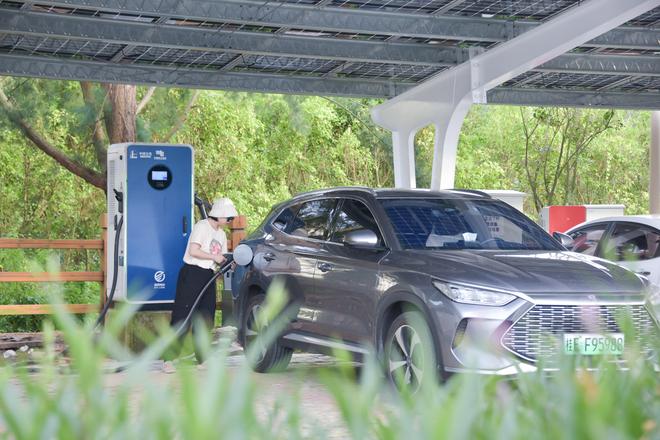
Core Insights - The company is enhancing charging infrastructure to support the increasing number of new energy vehicles during peak tourist seasons [1][2] - A specialized service team has been established to optimize power supply and charging point layout in the scenic area [1] - The company is integrating smart charging networks with cultural tourism to promote low-carbon travel experiences [2] Group 1: Charging Infrastructure Development - The company is actively collaborating with scenic area management to predict traffic peaks and optimize electricity resource allocation [1] - A smart charging network has been constructed, covering key areas of the scenic spot, including parking lots and visitor service centers [1] - The charging facilities are equipped with intelligent devices and some incorporate photovoltaic power generation technologies [1] Group 2: Tourism and Green Energy Integration - The company is expanding the charging network into rural areas and communities, enhancing convenience for tourists and supporting rural revitalization [2] - Future plans include integrating charging facilities with smart tourism platforms to provide value-added services like navigation and real-time queries [2] - The company aims to create a low-carbon tourism demonstration area, allowing visitors to enjoy historical and cultural attractions while promoting green travel [2]
绿色出行更便捷,拉萨持续构建绿色低碳交通体系
Xin Hua She· 2025-10-07 00:08
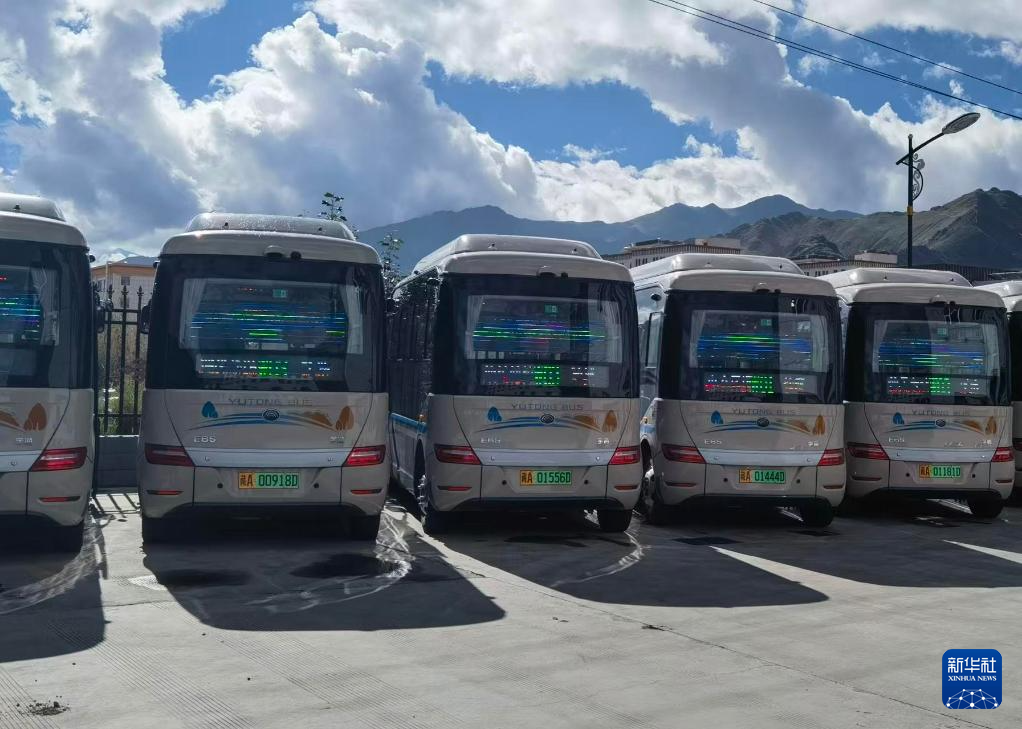
Core Points - Lhasa has prioritized the development of urban public transportation since 2019, achieving 100% electrification of its public buses [1] - The city has introduced micro-bus services to improve accessibility in narrow streets and residential areas, addressing the "last mile" transportation challenge [2] - The first batch of 320 battery-swapping electric taxis was launched in Lhasa, significantly reducing operational costs for drivers [4][5] - Lhasa's transportation system now includes shared electric bikes, catering to diverse commuting needs and promoting green travel [7] Summary by Category Public Transportation - Lhasa has 43 urban bus routes covering 975.6 kilometers, with 559 electric buses in operation [1] - The introduction of micro-buses has improved service frequency and reliability for residents [2] Electric Taxis - The city has 7,410 taxis, of which 5,720 are electric, reflecting a strong shift towards sustainable transportation [5] - The new electric taxis can be recharged in just 3 minutes and have a range of over 500 kilometers, enhancing operational efficiency [4] Green Transportation Initiatives - Shared electric bikes have been introduced to facilitate short-distance travel, contributing to a greener urban environment [7] - The overall transportation strategy in Lhasa emphasizes low-carbon and eco-friendly travel options, aligning with environmental sustainability goals [7]

广西:超1.8万个公共充电桩助推“双节”绿色出行
Xin Hua She· 2025-10-06 08:30
Group 1 - The popularity of self-driving tourism in Guangxi has increased during the National Day and Mid-Autumn Festival, with a notable presence of electric vehicles on the roads [1] - The development of charging infrastructure has enabled tourists to enjoy "green travel," with a significant number of public charging stations available [3] Group 2 - According to statistics from the Southern Power Grid Guangxi Electric Power Company, the number of public charging stations in Guangxi has rapidly increased, achieving coverage in all 1118 townships across the region [3] - As of September this year, the company has built 3191 charging stations, 18,400 charging piles, 14 battery swap stations, and 9 supercharging stations for electric heavy trucks, with full coverage in 14 cities for vehicle-network interaction [3] - By the end of this year, the company plans to have over 3200 charging stations, 20,000 charging piles, and 12 supercharging stations for heavy trucks, further enhancing the charging network layout [3]
宁企精彩亮相2025世界客车博览会
Nan Jing Ri Bao· 2025-10-06 01:58
Core Insights - The 2025 BusWorld Brussels showcased new electric vehicle models from Skyworth Auto, attracting significant attention from global industry guests and partners [1] - Skyworth Auto aims to provide green and intelligent transportation solutions, leveraging over 25 years of bus manufacturing experience and 15 years of new energy technology [1] Group 1: Event Overview - The BusWorld Brussels 2025 took place from October 3 to 9, featuring over 80 Chinese exhibitors presenting solutions for green travel [1] - The event is a biennial international exhibition for the bus and coach industry, gathering manufacturers, suppliers, and industry experts [1] Group 2: Product Launches - Skyworth Auto unveiled three new electric models: NJL6128BEV electric city bus, Skyworth Urban Spirit electric mini-bus, and the new electric VAN Skyworth Hongtu [1][2][3] - The NJL6128BEV features a range of over 420 kilometers, a powerful 3500Nm torque motor, and is designed to operate in extreme temperatures from -40°C to 65°C [2] - The Urban Spirit mini-bus is designed for narrow streets, with a turning radius of 6.8 meters and a low body height of 2.65 meters, achieving a 15% reduction in energy consumption [2] - The Skyworth Hongtu electric VAN offers a range of 410 kilometers with a 100kWh battery and supports 120kW fast charging, achieving 20% to 80% charge in 30 minutes [3] Group 3: Strategic Vision - The founder of Skyworth Auto emphasized the importance of the European market in the company's global strategy, showcasing its commitment to green, intelligent, and safe transportation [3] - The company plans to continue advancing new energy technology and intelligent applications, aiming to build a cleaner, more efficient, and smarter public transportation ecosystem [3]
南京造,闪耀比利时!
Nan Jing Ri Bao· 2025-10-05 23:22
Core Insights - The 2025 World Bus Expo was held in Belgium, showcasing new electric vehicle models from Nanjing-based Skyworth Auto, which received significant attention and praise from global industry guests and partners [1][3]. Group 1: Event Overview - The biennial international bus and coach industry event gathered manufacturers, suppliers, and industry experts from around the world to showcase the latest vehicle products and innovative technologies [3]. - Over 80 Chinese companies participated, highlighting the "Chinese solution" for green travel [3]. Group 2: Skyworth Auto's Offerings - Skyworth Auto, a key player in China's new energy commercial vehicle sector, presented three major new energy models at the expo: the 12-meter pure electric city bus NJL6128BEV, the Skyworth Urban Elf electric mini-bus, and the new electric VAN Skyworth Hongtu, targeting the European market [5][13]. Group 3: NJL6128BEV Specifications - The NJL6128BEV features aesthetic design, comfort, and advanced technology, with a low floor, barrier-free access, and subway-style handrails. It is equipped with a powerful 3500 Nm torque motor and an efficient battery thermal management system, capable of operating in extreme temperatures from -40°C to 65°C, with a range exceeding 420 kilometers [7]. Group 4: Urban Elf Mini-Bus Features - The Skyworth Urban Elf mini-bus, measuring approximately 5.4 meters, is designed for narrow streets and short-distance connections, with a turning radius of only 6.8 meters and a low height of 2.65 meters. It features a pioneering three-in-one low-floor chassis that reduces energy consumption by 15% and achieves an electric drive efficiency of 97.2% [8]. Group 5: Skyworth Hongtu Specifications - The new electric VAN Skyworth Hongtu redefines category standards with "larger space, stronger intelligence, and comprehensive safety." It includes both passenger and cargo versions, equipped with a maximum 100 kWh battery, a range of 410 kilometers, and supports 120 kW fast charging, allowing a 20% to 80% charge in 30 minutes. The vehicle also features a 12.8-inch smart screen, massage seats, and high-quality audio for a passenger car-level comfort experience [9][11]. Group 6: Strategic Vision - The founder of Skyworth Auto emphasized that the European market is a crucial part of the company's global strategy. The participation in the World Bus Expo not only showcased its technological strength and product layout in the new energy commercial vehicle sector but also demonstrated a commitment to advancing green, intelligent, and safe travel in collaboration with global partners [13].

80余家中国企业在世界客车博览会亮相
Xin Hua Wang· 2025-10-05 02:12
Core Viewpoint - The World Bus Expo opened in Brussels, Belgium, showcasing over 80 Chinese companies that presented solutions for green transportation [1] Group 1 - The event is held biennially, highlighting the significance of the World Bus Expo in the global transportation industry [1] - The participation of Chinese companies emphasizes China's commitment to promoting green travel solutions [1]

江西万载:绿色低碳 快乐骑行
Xin Hua Wang· 2025-10-04 03:32
Core Viewpoint - A recent event themed "Low Carbon Environmental Protection, Green Cycling" was held in Longhu Park, Wanzai County, Yichun City, Jiangxi Province, promoting healthy and low-carbon green travel methods [1] Group 1 - The event aimed to advocate for healthy and low-carbon travel through cycling [1]
苏州绿色出行保障举措获央视关注
Su Zhou Ri Bao· 2025-10-04 00:44
Core Viewpoint - During the National Day and Mid-Autumn Festival holiday, various regions actively adjusted charging resources to alleviate range anxiety for new energy vehicle owners, with Suzhou's innovative practices receiving attention from CCTV [1] Group 1: Charging Infrastructure Enhancements - Suzhou Power Supply Company added 20 units of 60 kW charging guns at the Yangcheng Lake service area, along with mobile charging vehicles, significantly enhancing the charging capacity of the service area [1] - A tiered discount mechanism for charging service fees was introduced, offering 30% discounts at less popular stations and 50-70% discounts at popular stations, effectively balancing charging loads across different stations and times [1] Group 2: Tourist Demand Management - With a surge in visitors to Tongli Ancient Town, Suzhou's power supply department launched a "light-storage-charging" integrated supercharging station near the scenic area, equipped with 8 charging piles, each with a maximum power of 180 kW, allowing for charging completion in about 20 minutes [1] - The station's photovoltaic system and energy storage devices operate in coordination, combined with time-of-use pricing strategies to guide vehicle owners to charge during off-peak hours, promoting green travel and further alleviating charging pressure at tourist sites [1] Group 3: Overall Impact - These initiatives systematically improved Suzhou's green travel service level during the holiday period, providing new energy vehicle owners with a more convenient and reassuring travel experience [1]
国庆中秋“双节”相遇,外媒:中国旅游业蓬勃发展,民众热情出游
Zhong Guo Xin Wen Wang· 2025-10-03 10:52
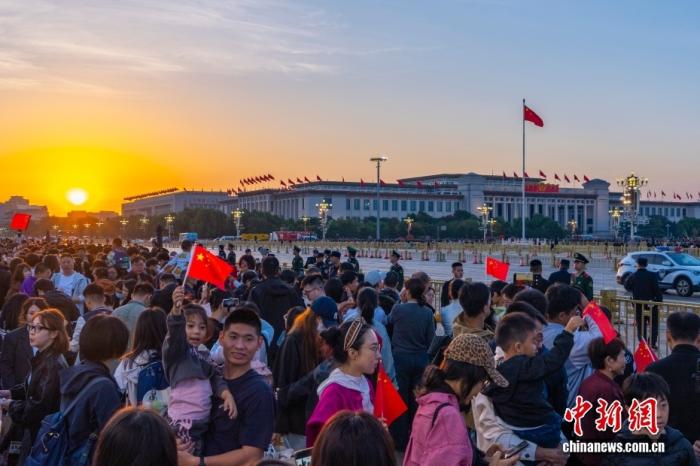
Group 1 - The National Day holiday coinciding with the Mid-Autumn Festival resulted in an extended 8-day holiday, significantly boosting travel and tourism activities across China [1][6] - A record high of 23.13 million railway passengers was reported on October 1, marking the highest single-day passenger volume in history [6] - The civil aviation sector is also experiencing a surge, with an expected passenger transport volume of 19.2 million during the holiday, reflecting a 3.6% increase compared to the previous year [6] Group 2 - The flag-raising ceremony at Tiananmen Square on October 1 attracted 121,000 visitors, showcasing a strong sense of national pride among attendees [4][2] - Various cultural and commercial activities, including fireworks, concerts, and exhibitions, were organized during the holiday, enhancing the festive atmosphere and promoting patriotism [4] - The tourism industry is thriving, with popular destinations extending operational hours to accommodate the increased visitor flow, indicating robust growth in domestic tourism [6][8]
秋日出游遇上丰收季 哪里景色美、美食多?来看出行指南
Yang Shi Xin Wen Ke Hu Duan· 2025-10-01 01:17
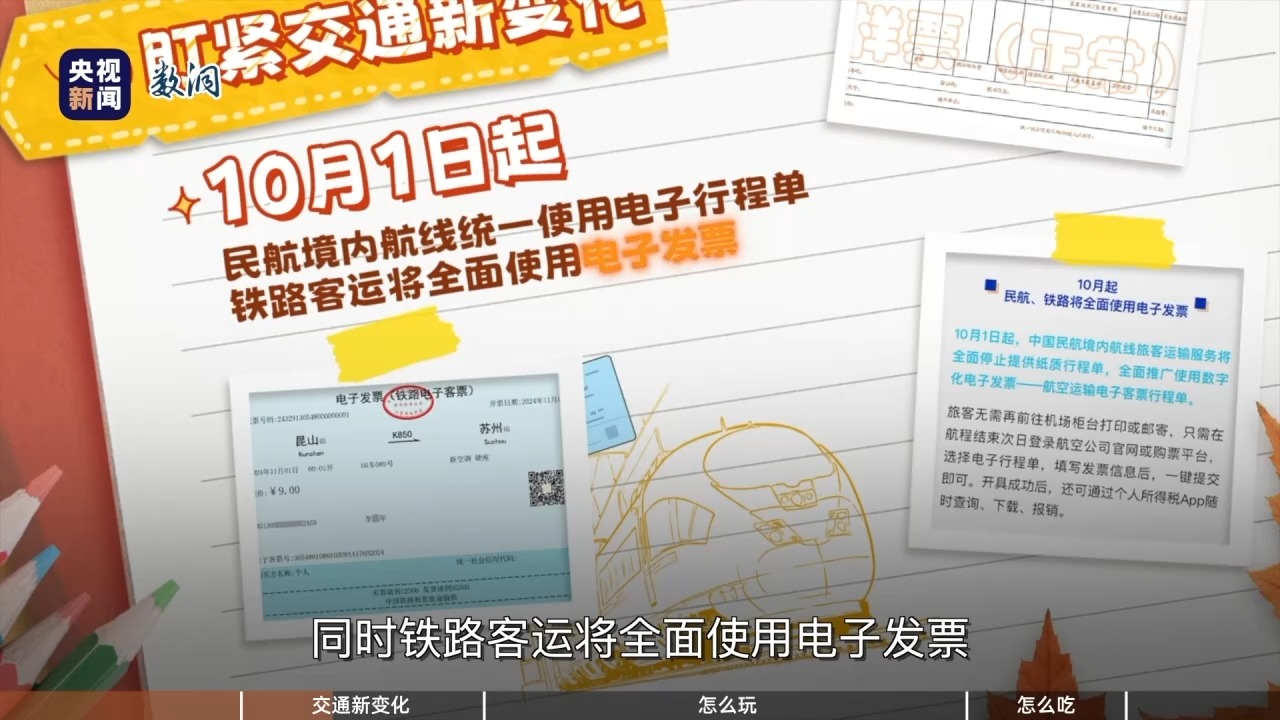
Core Insights - The upcoming holiday season is expected to see a 30% year-on-year increase in domestic travel intentions, with popular train tickets selling out quickly [1] Group 1: Transportation Changes - Starting October 1, domestic flights will transition to electronic travel itineraries, while railway services will fully adopt electronic invoices [2] - Approximately 150 million paper reimbursement vouchers are printed annually by China Railways, and the shift to electronic invoices supports a greener travel initiative [5] Group 2: Travel Trends - This autumn, travelers are more focused on unique landscapes and experiences rather than specific cities, with search terms like "autumn viewing," "red leaves," "beach," and "grassland" seeing a twofold increase compared to August [5] - Hotel bookings for the National Day holiday cover over 2,600 counties nationwide, with popular destinations including Jiuzhaigou in Sichuan and Kanas Lake in Xinjiang [5] Group 3: Events and Activities - Notable events in October include a major exhibition at the Palace Museum and the 12th Wuzhen Theatre Festival featuring 25 invited performances from 10 countries [8] Group 4: Seasonal Harvest - October marks the harvest season, with vibrant autumn scenes in Jiangxi and increased popularity of destinations like Pingtan in Fujian during the fishing season [10] - Data indicates a significant rise in the shipment of crabs, king oyster mushrooms, and edamame ahead of the holiday, with fresh autumn produce like winter jujubes, grapes, and pomegranates now in season [10] Group 5: Health Regulations - A new version of the "Chinese Pharmacopoeia" will be implemented on October 1, introducing stricter standards for pesticide residues and heavy metals in traditional Chinese medicinal materials [12]