中国式现代化

Search documents
强化政治担当 压紧压实责任 坚定坚决做好巡视“后半篇文章”
Zheng Zhou Ri Bao· 2025-12-22 00:50
刘宁强调,党的十八大以来,以习近平同志为核心的党中央高度重视巡视和巡视整改工作,推动巡 视成为党之利器、国之利器,发挥了标本兼治战略作用。抓好整改落实是深刻领悟"两个确立"的决定性 意义、坚决做到"两个维护"的具体检验,是推动高质量发展、高效能治理的重要契机,是勇于自我革 命、推进全面从严治党的有力抓手。要把思想和行动统一到习近平总书记重要讲话精神上来,旗帜鲜明 讲政治,全面落实"五个进一步到位"重大要求,不断深化拓展全面从严治党成果,确保中央巡视反馈意 见不折不扣落到实处。 刘宁强调,要逐条对照、逐项落实,以务实管用举措有力有序推进整改,确保条条改到位、件件有 着落、事事有回音。要提高政治站位,切实担负好党中央赋予我省的重大使命,深入落实中部地区加快 崛起战略部署,扎实推进黄河、丹江口库区等重点流域生态保护治理,深化大气污染防治,扛牢粮食安 全责任,推进乡村全面振兴,切实把党中央的战略部署转化为河南工作的具体举措、实际成效。要坚持 严的基调,纵深推进全面从严治党,拧紧管党治党责任链条,打好反腐败斗争攻坚战持久战总体战,坚 持不懈加强作风建设,提升巡视巡察工作规范化、法治化、正规化水平。要落实组织路线,坚持党 ...
为基层减负要“瘦身”更要“提质”(思想纵横)
Ren Min Ri Bao· 2025-12-21 22:41
Core Viewpoint - The effectiveness of grassroots governance is crucial for the overall work of the Party and the country, and reducing burdens on grassroots is essential for improving governance efficiency [1][4]. Group 1: Importance of Reducing Burdens - The emphasis on reducing burdens for grassroots work aligns with public expectations and reflects a new style of governance [1]. - There are still issues in some areas where the reduction of burdens is not fully implemented, leading to a resurgence of formalism and bureaucratic practices [1][2]. - The need to eliminate unnecessary tasks and interventions is highlighted to allow grassroots workers more time and space to focus on practical matters [3][4]. Group 2: Challenges and Root Causes - The persistence of new issues in reducing burdens stems from a lack of commitment among some party members and the prevalence of formalism and bureaucratic attitudes [2]. - There is a disconnect between the central decisions for reducing burdens and their implementation at local levels, indicating a need for stronger party discipline [2]. Group 3: Strategies for Improvement - It is essential to continue reducing unnecessary meetings and tasks, allowing grassroots workers to engage more directly with the community [3][4]. - Setting realistic goals and timelines for grassroots tasks is necessary to avoid overwhelming them with excessive demands [3]. - The focus should be on enhancing the quality of grassroots governance, ensuring that reductions in burdens lead to improved service delivery and policy execution [4].
全面贯彻习近平法治思想 在中国特色社会主义法治道路越走越宽广中坚定道路自信、法治自信
Ren Min Ri Bao· 2025-12-21 22:20
Core Viewpoint - The article emphasizes the significance of Xi Jinping's rule of law thought, marking its fifth anniversary and outlining the strategic direction for advancing the rule of law in China, which is seen as essential for national modernization and governance [1][2][3]. Group 1: Historical Achievements - The article highlights the historical achievements of the rule of law in China since the 18th National Congress, noting the establishment of a comprehensive legal framework and the continuous improvement of the socialist legal system [2]. - It underscores the importance of Xi Jinping's leadership in guiding the development of the rule of law, reflecting the party's confidence in its legal path [2]. Group 2: Strategic Goals - The article outlines the ambitious goals for the new journey of advancing the rule of law, including the construction of a more complete socialist legal system and a higher level of socialist rule of law [3]. - It notes that these goals are integrated into the broader context of deepening reforms and economic development strategies [3]. Group 3: Strategic Deployment - The article discusses the interconnectedness of law, reform, development, and stability, emphasizing the need for a coordinated approach to ensure social fairness and justice [4]. - It highlights the importance of comprehensive promotion of scientific legislation, strict law enforcement, fair justice, and public compliance with the law [4]. Group 4: Political Responsibility - The article stresses the responsibility of party committees and legal departments to implement major legal initiatives and tasks, reinforcing the need for a clear legal responsibility system [5][6]. - It calls for collaboration across various sectors to ensure the effective implementation of the central government's decisions regarding the rule of law [6]. Group 5: Development of Xi Jinping's Rule of Law Thought - The article describes Xi Jinping's rule of law thought as a significant theoretical innovation that aligns with the requirements of national rejuvenation, showcasing its comprehensive and systematic nature [7]. - It emphasizes the need to integrate this thought into various aspects of governance and legal practice [11]. Group 6: Implementation of Legal Framework - The article outlines the necessity of adhering to the party's leadership in the rule of law, highlighting the introduction of a foundational party regulation to guide the implementation of legal governance [12]. - It emphasizes the importance of strict adherence to legal processes and the need for effective communication with the central government regarding significant legal matters [12]. Group 7: Social Justice and Public Welfare - The article stresses the pursuit of social fairness and justice as a core value of the rule of law, aiming to enhance public welfare through legislative efforts in various social sectors [14]. - It calls for improved public legal services and the protection of vulnerable groups, ensuring that legal systems are accessible and equitable [14].
推动兵团民营经济健康发展高质量发展
Xin Lang Cai Jing· 2025-12-21 19:39
民营经济是推进中国式现代化的生力军,是高质量发展的重要基础,是推动我国全面建成社会主义现代 化强国、实现第二个百年奋斗目标的重要力量。党的二十届四中全会审议通过的《中共中央关于制定国 民经济和社会发展第十五个五年规划的建议》指出,"坚持和落实'两个毫不动摇',促进各种所有制经 济优势互补、共同发展""落实民营经济促进法,从法律和制度上保障平等使用生产要素、公平参与市场 竞争、有效保护合法权益,发展壮大民营经济。"立足新发展阶段,如何以更大力度、更实举措推动兵 团民营经济健康发展、高质量发展?本版编发相关文章,供读者学习参考。 编者按 ...
更好统筹发展和安全
Xin Lang Cai Jing· 2025-12-21 19:39
Group 1 - The core viewpoint emphasizes the necessity of balancing development and security as a fundamental principle for advancing Chinese-style modernization, responding to the complex global changes and internal challenges faced by the country [1][2] - The current development environment in China is characterized by both strategic opportunities and risks, with increasing uncertainties and challenges, necessitating a comprehensive understanding of the interplay between domestic and international factors [2][3] - The achievements during the 14th Five-Year Plan period demonstrate the effectiveness of integrating development and security, maintaining economic stability and continuity despite external pressures and risks [3][4] Group 2 - The need for institutional mechanisms to enhance the ability to coordinate development and security is highlighted, focusing on deepening reforms and aligning various systems to support high-quality development [4][5] - A new security framework is essential for ensuring the stability and sustainability of Chinese-style modernization, requiring a systematic approach to integrate development and security throughout the modernization process [5]
在推进中华民族共同体建设中作示范
Xin Lang Cai Jing· 2025-12-21 19:38
Core Viewpoint - The Chinese Communist Party emphasizes the importance of national unity and the construction of a shared Chinese national community, which is seen as essential for the great rejuvenation of the Chinese nation [1][2][3]. Group 1: Achievements and Historical Context - Since the founding of New China, all ethnic groups have achieved genuine equality and unity under the socialist system, leading to significant historical changes in the appearance of ethnic minorities and regions [2]. - The historical development of the Chinese nation is characterized by the joint efforts of various ethnic groups in creating a unified multi-ethnic state and a rich cultural heritage [3]. Group 2: Leadership and Ideological Guidance - The core leadership of Xi Jinping is crucial for steering the national unity and progress of ethnic groups, with the guiding principles rooted in Xi Jinping's Thought on Socialism with Chinese Characteristics for a New Era [2][3]. - The Party's leadership is essential for maintaining a common ideological and political foundation among all ethnic groups, ensuring effective governance and collaboration across various departments [4]. Group 3: Cultural and Social Integration - Cultural recognition is fundamental for fostering unity, with an emphasis on promoting socialist core values and enhancing education on patriotism and collectivism [4]. - Efforts are being made to strengthen the common spiritual home of the Chinese nation through the promotion of the national common language and the integration of various ethnic cultures [4][5]. Group 4: Economic Development and Modernization - Accelerating high-quality development in ethnic regions is vital for achieving common prosperity, with a focus on enhancing agricultural productivity and improving public services [6]. - The promotion of inter-ethnic exchanges and interactions is seen as a key approach to building a cohesive national community, with initiatives aimed at facilitating tourism and employment opportunities [6]. Group 5: Legal Framework and Governance - The establishment of the Ethnic Unity and Progress Promotion Law is a significant step towards creating a new framework for ethnic work, enhancing the legal basis for national unity and community building [6]. - Legal measures will support the governance of ethnic affairs and promote high-quality development in the ethnic unity and progress sector [6].
思想光芒照亮奋进路 理论力量激荡逐梦心
Xin Lang Cai Jing· 2025-12-21 19:38
本报记者 魏 爽 一场场精彩纷呈的宣讲,犹如春风化雨,统一思想、凝聚力量,激发起干事创业的精气神;一次次真诚 热烈的交流,碰撞思想火花、引发广泛共鸣。江源大地,气象万千,学习宣传贯彻党的二十届四中全会 精神的热潮在这里持续奔涌、生机勃发。 党的二十届四中全会是在即将进入基本实现社会主义现代化夯实基础、全面发力的关键时期召开的一次 十分重要的会议。全会审议通过的《中共中央关于制定国民经济和社会发展第十五个五年规划的建 议》,对"十五五"时期经济社会发展作出顶层设计和战略擘画,是乘势而上、接续推进中国式现代化建 设的又一次总动员、总部署,必将对党和国家事业发展产生重大而深远的影响。 按照省委统一部署,连日来,学习贯彻党的二十届四中全会精神省委宣讲团共开展宣讲活动100多场, 直接受众达3.8万人次。一场场主题鲜明、内容翔实的宣讲活动,将党的二十届四中全会精神全面、准 确、生动地传递到广大党员干部群众之中,有效统一了思想、凝聚了共识、激发了干劲,为推进中国式 现代化青海实践汇聚起磅礴力量。 统筹谋划精准施策 全面铺开宣讲工作 学习宣传贯彻党的二十届四中全会精神,是当前和今后一个时期全党全国的一项重大政治任务。省委高 ...
智者勇进•接续奋进新江苏|丹阳皇塘镇:解码“千年古镇”的辉“皇”篇章
Xin Lang Cai Jing· 2025-12-21 15:33
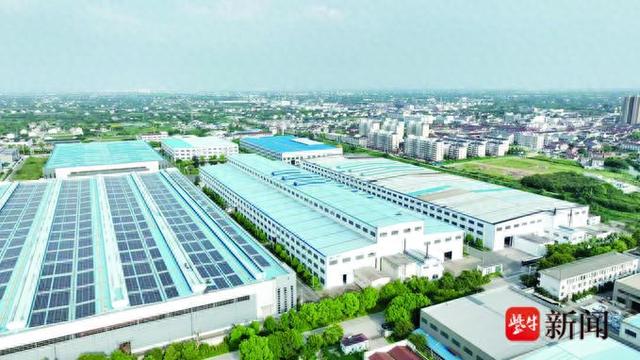
Core Viewpoint - Huangtang Town is leveraging its geographical advantages and focusing on industrial transformation, tourism development, and community spirit to achieve high-quality economic growth [1][3][8] Industrial Transformation - Huangtang Town is focusing on precision machinery and electronics, implementing smart transformation for 40 enterprises, resulting in three companies becoming provincial-level smart factories [3] - The town has nurtured 21 national high-tech enterprises and 35 technology-based SMEs, supported by a robust service environment that facilitates project execution and rapid responses to business needs [3][5] Investment and Infrastructure - The town has signed seven new industrial projects with a total investment of 2.208 billion yuan, emphasizing a "project-first" approach to enhance the park's capacity [4] - Investments include 18 million yuan for park infrastructure improvements and plans for a 30 million yuan substation to address land and labor challenges for enterprises [4][5] Tourism Development - Huangtang Town has developed diverse tourism offerings, attracting over 2,000 visitors daily during peak seasons, with activities ranging from agricultural experiences to cultural heritage [7] - The town is integrating ecological, industrial, and cultural tourism, enhancing its appeal through events and creative products [7] Community Spirit - The "Eight Sisters" militia team has been a local spiritual landmark, contributing significantly to community welfare and establishing a service alliance that benefits over 20,000 people annually [8] - The town is committed to promoting community values and governance through volunteerism and public service initiatives [8]

智者勇进•接续奋进新江苏|实干落笔 担当着墨,精心绘就现代化丹阳界牌新画卷
Xin Lang Cai Jing· 2025-12-21 15:33
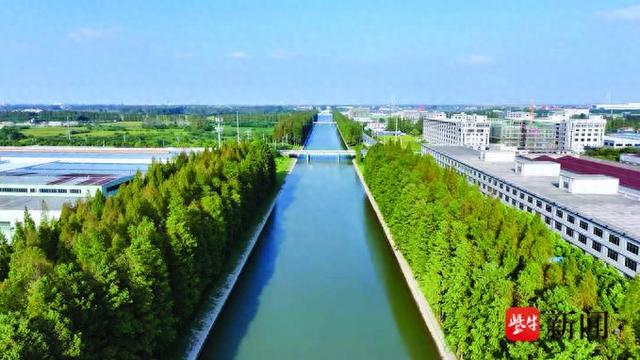
Group 1 - The core focus of Jiepai Town is on high-quality development, implementing municipal government decisions, and promoting modernization practices [2] - Economic indicators show significant growth, with public budget revenue and industrial sales achieving double-digit increases, with public budget revenue growth ranking first in the city [2] - A total of 13 key industrial projects are being advanced, with 8 signed projects totaling 1.652 billion yuan and 12 projects in reserve for next year with a total investment of 2.11 billion yuan [2] Group 2 - Environmental initiatives include maintaining water quality standards for three consecutive years and shutting down 10 polluting enterprises [3] - Traffic safety projects have been completed with an investment of 2.2 million yuan, and a temporary parking lot has been established on a vacant school site [3] - A comprehensive waste management campaign has been conducted, resulting in the closure of 15 recycling businesses and the improvement of 20 others [3] Group 3 - The town has introduced a three-year action plan for grassroots governance led by the Party, focusing on safety production for 2025 [4] - A digital platform is being utilized to monitor 2,759 enterprises, enhancing safety management [4] - A total of 67 illegal advertisements have been removed as part of a special action to improve urban governance [4] Group 4 - Community welfare initiatives include the launch of six key livelihood projects and the construction of sewage systems, with a total of 522,500 yuan in assistance provided to 130 low-income families [6] - Administrative reforms have streamlined processes, reducing average processing times by over 70% for frequently used services [6] - Legal aid services have resolved 153 disputes, contributing to community stability [6] Group 5 - Jiepai Town aims to address key areas and improve living conditions, focusing on collective efforts to create a better future [7]
尹艳林:“十五五”时期我国实现年均5%左右增长是完全有可能的
Xin Lang Cai Jing· 2025-12-21 13:35
来源:经济学家圈 尹艳林:"十五五"时期我国实现年均5%左右增长是完全有可能的 很高兴应邀参加腾讯财经愿景思享年会。今天的主题是"智变之时"。在世界百年变局和智能科技重塑经济的时代潮流中,中国经济发展面临巨 大机遇和新挑战。特别是"十五五"时期成为实现2035年远景目标乃至第二个百年奋斗目标的关键阶段。从中长期来看,中国经济的转型升级还 有哪些难点,哪些领域的改革亟待重点突破,如何推进下一阶段的改革发展,这个是大家很关心的问题。下面我想就这些问题跟大家做一些分 享。 但是我们必须看到,"十五五"时期我国发展环境面临深刻复杂变化,战略机遇和风险挑战并存,特别是国内发展不平衡不充分问题仍然突出, 有效需求不足,国内大循环存在卡点堵点,超大规模市场优势的发挥遇到障碍;新旧动能转换任务艰巨,制造业中传统产业仍占80%,先进制 造业和新兴产业占比还不高,原始创新能力不强,重点领域关键核心技术仍有待攻关突破,企业创新能力有待加强;农业农村现代化相对滞 本 后,城乡基本公共服务水平差距仍然较大,农业转移人口进城落户面临体制性障碍;就业和居民收入增长压力较大,居民财产性收入增长渠道 不畅,养老、医疗、教育、住房等民生保障存在 ...