银发经济

Search documents
养老金融赋能银发经济 护航老年人美好生活|服贸会
Zhong Guo Jing Ying Bao· 2025-09-15 19:59
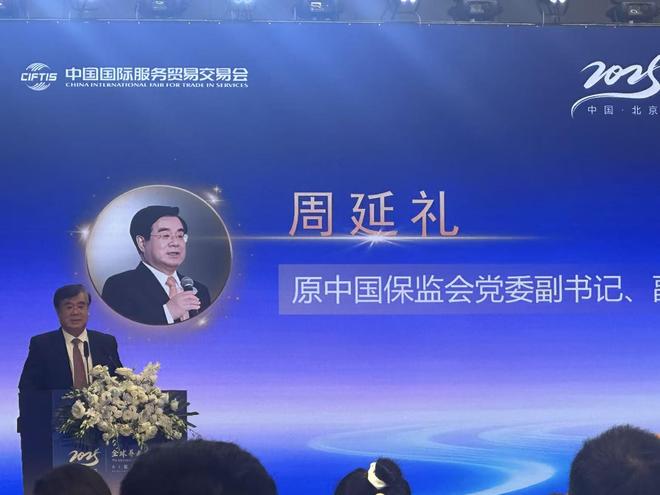
Core Insights - The need to optimize the development environment for pension finance and reduce financial risks faced by the elderly is emphasized by Zhou Yanli, former vice chairman of the China Insurance Regulatory Commission [1] Group 1: Financial Services for the Elderly - The aging population has heightened the focus on risk prevention in pension finance and the protection of elderly rights [2] - Enhancing financial service levels for the elderly is crucial for providing them with a sense of security, which requires expanding coverage and optimizing service processes [2] - Recent initiatives by the People's Bank of China and the National Financial Regulatory Administration aim to increase financial transparency to protect consumer rights, which is vital for pension finance [2] Group 2: Risks in Pension Finance - Current issues in the pension finance sector include various institutions exploiting the elderly for financial gain, leading to significant risks for this demographic [3] - Protecting the financial rights of the elderly is a top priority for financial and insurance institutions [3] - There is an urgent need to improve regulatory frameworks in pension finance to mitigate risks and protect consumers, particularly the elderly [3] Group 3: Regulatory Recommendations - Zhou Yanli suggests that a regulatory system should be established to match the development of pension finance, promoting the silver economy while enhancing risk prevention [3] - Utilizing multiple channels such as television, radio, and the internet to educate residents about pension finance is recommended to ensure that they understand and can effectively use these financial services [3] - Collaboration in implementing national pension policies and establishing a regulatory evaluation system is essential for making pension finance a reliable safety net for residents [3] Group 4: Perspectives on Elderly Care - Expert Yang Yeqing indicates that as long as elderly individuals maintain a healthy lifestyle, they can achieve adequate care within families or communities, suggesting that there is not excessive pressure regarding pension issues [4]
养老金融赋能银发经济 护航老年人美好生活 服贸会
Zhong Guo Jing Ying Bao· 2025-09-15 13:45
Group 1 - The core viewpoint emphasizes the need to optimize the development environment of pension finance and reduce financial risks faced by the elderly due to increasing population aging [2][3] - It is crucial to enhance financial service levels for the elderly, ensuring their basic rights are protected through expanded coverage and optimized service processes [2] - Recent initiatives by the People's Bank of China and the National Financial Regulatory Administration aim to increase financial transparency to protect consumer rights, which is vital for pension finance [2] Group 2 - Current issues in the pension finance sector include various institutions engaging in practices that pose significant risks to the elderly, highlighting the importance of protecting their financial rights [2][3] - A call for improved regulatory models in pension finance is made, emphasizing the need for support from central government departments to strengthen risk prevention and regulatory mechanisms [3] - The establishment of a regulatory system that aligns with the development of pension finance is necessary to promote the silver economy while ensuring consumer protection, particularly for the elderly [3] Group 3 - Experts suggest that elderly individuals need not overly worry about pension issues, as maintaining a healthy lifestyle can facilitate aging in place within families or communities [4]

北京市银发经济消费需求调查报告,一图带您了解——
Sou Hu Cai Jing· 2025-09-15 11:56
Core Viewpoint - The forum held on September 9, 2025, focused on deepening the reform of elderly care services and exploring comprehensive solutions for elderly care in Beijing, showcasing the achievements of the city's elderly care system reform [1] Demand Insights - Elderly food demand rate is 89.5%, indicating a strong focus on health and nutrition among the elderly population [3] - Elderly education demand rate is 84.5%, with health, arts, and social education being the most sought-after areas [3] - Elderly health service demand rate is 75.8%, primarily centered on health check-ups and chronic disease management [3] - Institutional elderly care demand rate is 75.7%, reflecting a rigid need for institutional care among the disabled and semi-disabled elderly, with community-based medical and nursing care institutions being more favored [3] - Elderly tourism demand rate is 64.8%, with a preference for slower-paced, longer-duration travel experiences [3] - Home care demand rate is 47.4%, lower than expected due to the majority of respondents being healthy elderly individuals and the varying quality of existing home services [3] - Demand for elderly financial products is at 45.7%, indicating a lack of understanding and appealing products in the market [3] Spending Behavior - Monthly spending on elderly food averages 1,033 yuan, exceeding the national average by 16.8 percentage points, suggesting a willingness to invest in health and nutrition [4] - Over 60% of elderly individuals prefer low-cost education options, and nearly 80% expect to spend no more than 6,000 yuan monthly on institutional care, highlighting price sensitivity [4] - 72.3% of elderly individuals prefer to spend less than 5,000 yuan on tourism, indicating a need for affordable travel products [5] Factors Influencing Demand - Key factors influencing elderly food demand include health and nutrition (68.9%) and food safety (68.5%) [5] - For elderly education, convenience of class location (56.2%) and course content richness (52.2%) are significant [5] - In institutional care, medical conditions (78.3%) and living environment (69.4%) are crucial [5] - For elderly tourism, climate suitability (73.0%) and accessibility (53.8%) are important [5] - Home care services are influenced by service quality (76.7%) and service price (54.3%) [5] - Financial products are affected by safety (66.3%) and policy subsidies (55.1%) [5] Recommendations for Silver Economy - Increase social security measures to encourage elderly consumption [6] - Create a safe and trustworthy consumption environment for the elderly [6] - Improve the supply of elderly care services to enhance willingness to consume [6] - Focus on research and development in the silver economy's niche markets to enhance enjoyment of consumption [6] Sector-Specific Suggestions - Elderly food: Focus on food safety and nutrition to promote healthy eating habits [6] - Elderly health: Emphasize affordable pricing and safety certification to improve service accessibility [6] - Elderly education: Utilize community settings and online platforms to offer diverse and regularly updated courses [6] - Institutional care: Prioritize community-based, integrated medical and nursing care facilities [6] - Elderly tourism: Develop destinations that are climate-friendly, accessible, and affordable [6] - Home care services: Strengthen industry regulation and quality control to meet elderly needs for reliable and affordable services [6] - Elderly financial products: Launch stable products and provide financial risk warnings and education [6]

2025宁夏养老服务业博览会促成签约项目15个 签约资金1.66亿元
Zhong Guo Xin Wen Wang· 2025-09-15 08:48
Group 1 - The 2025 Ningxia Elderly Care Industry Expo facilitated 15 signed projects with a total funding of 166 million yuan [1][3] - The expo covered a total exhibition area of 20,000 square meters, featuring seven major exhibition areas including smart elderly care, elderly services, and health management [3] - The event attracted 182 enterprises from 22 provinces, including major cities like Beijing, Shanghai, and Guangdong [3] Group 2 - The expo included six special activities such as opening ceremonies, supply-demand matching, and elderly talent showcases, enhancing its professional and social visibility [3] - A dedicated 5,000 square meter "Silver Economy Exhibition Area" was set up to address the practical needs of the elderly in areas like food, housing, and healthcare [3] - The expo promoted collaboration between Beijing and Ningxia in the elderly care tourism industry, signing a strategic cooperation framework agreement [3]

济南高新区市场监管部开展养老服务机构专项检查
Qi Lu Wan Bao Wang· 2025-09-15 07:58
Core Viewpoint - The article discusses a special inspection action organized by the Jinan High-tech Zone Market Supervision Department aimed at regulating the operations of elderly care institutions, addressing issues such as false advertising, pricing violations, and food safety to promote the healthy development of the "silver economy" [1] Summary by Relevant Categories Regulatory Actions - The Jinan High-tech Zone Market Supervision Department has initiated a special inspection of elderly care institutions focusing on key issues like false advertising, pricing violations, and food safety [1] - During the inspections, enforcement personnel checked the institutions' fee disclosures, service contracts, and public communications to ensure compliance with legal requirements [1] Compliance and Enforcement - The inspections aimed to identify illegal practices such as inaccurate public information, undisclosed fees, and false promotional content [1] - Comprehensive checks were conducted on the institutions' operational qualifications, facility conditions, staff health management, and food safety documentation [1] Support and Guidance - Enforcement personnel combined law enforcement with legal education, providing elderly care institutions with knowledge on pricing, advertising, and food safety laws [1] - The department offered practical suggestions for business operations and legal guidance to help institutions overcome challenges [1] Future Plans - The Jinan High-tech Zone Market Supervision Department plans to conduct comprehensive inspections across all elderly care institutions in the area [1] - There will be an emphasis on improving complaint and reporting channels, enhancing public awareness, and strengthening inter-departmental regulatory collaboration to ensure high-quality development of elderly care services [1]
积极发展银发经济的中国方案
Huan Qiu Shi Bao· 2025-09-15 04:50
Group 1 - The core viewpoint emphasizes the importance of developing the silver economy as a strategic response to China's aging population, which is seen as a significant opportunity for economic growth and modernization [1][2][3] - The Chinese government has integrated the development of the silver economy into national strategies and plans, with specific policies introduced to support this initiative, including the 2024 policy document focusing on enhancing the welfare of the elderly [2][4] - The silver population in China is projected to exceed 600 million by the mid-2030s, representing a substantial market potential for the silver economy, with 50% of the total population expected to be over 50 years old by the 2040s [3][4] Group 2 - The silver economy encompasses a wide range of economic activities aimed at providing products and services to the elderly, integrating various industries such as health, manufacturing, tourism, and finance [3][4] - By 2035, the scale of the silver economy in China is expected to reach 19.1 trillion yuan, accounting for 27.8% of total consumption and approximately 9.6% of GDP, with projections of 49.9 trillion yuan by 2050 [4][5] - The development of the silver economy is seen as a critical area for enhancing the quality of life for the elderly, focusing on expanding services such as elderly meal assistance, home care, and health optimization [5][6] Group 3 - The strategy for developing the silver economy includes leveraging technological advancements and fostering new industries that cater to the diverse needs of the elderly population, such as smart health care and rehabilitation products [5][6] - The government aims to create a supportive environment for the silver economy through measures that enhance market efficiency, government involvement, and collaboration between various sectors [6]
195款创新产品角逐康养机器人大赛
Nan Fang Du Shi Bao· 2025-09-14 23:18
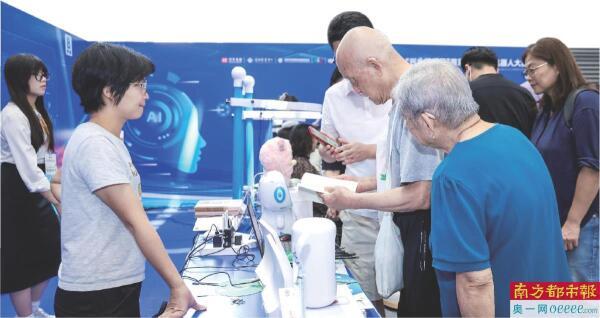
Core Insights - The 2025 Shenzhen International Smart Elderly Care Industry Expo opened on September 12, showcasing over 2,000 smart elderly care products and solutions from more than 260 companies globally, under the theme "Empowering Technology, Activating New Momentum for the Silver Economy" [2][3] - The expo features a 15,000 square meter exhibition space with seven themed areas covering various sectors such as smart home care, smart medical services, and elderly financial services, emphasizing immersive and interactive experiences for attendees [2][3] Industry Developments - The expo includes the inaugural "Xingye Bank Cup" Shenzhen Elderly Care Robot Competition, attracting 98 companies with 195 innovative products, focusing on core scenarios in health and elderly care services [3][4] - The competition aims to bridge the gap between expert recognition and market acceptance, providing support for participating companies in terms of resources, funding, and market access [4] International Collaboration - The expo hosted an international cooperation signing ceremony, promoting overseas enterprise recruitment and collaboration, including a partnership between Shenzhen and Finnish companies for remote medical cooperation [5][6] - A strategic cooperation was established between Shenzhen and Hong Kong to enhance resource sharing and complementarity in elderly care services [5][6] Consumer Engagement - The second Shenzhen Silver Age Consumption Festival was launched, featuring a 15,000 square meter elderly care product experience market, allowing seniors to interact with and purchase high-tech products with government subsidies of up to 10,000 yuan [7][8] - The festival aims to create a one-stop resource integration platform centered on the silver economy, facilitating connections between capital and innovative enterprises [8] Technological Innovations - The expo highlighted three major technology product launches, including Haier's smart elderly care scene upgrades and AI-driven health solutions from Meiya Industrial and Qisheng Technology [9] - Over 20 specialized forums were held during the expo, focusing on various aspects of the silver economy and technological solutions for aging populations [9]

六大趋势重塑银发经济格局
Bei Jing Shang Bao· 2025-09-14 16:57
Group 1 - The integration of various resources in healthcare, elderly care, health management, culture, tourism, and finance is fundamentally changing the fragmented nature of traditional elderly services, transitioning from "single-point services" to "platform-based, ecological, and one-stop" solutions [2] - Under the influence of technology, the elderly care industry is accelerating its shift from "labor-intensive" to "human-machine collaborative" models, combining age-friendly and intelligent transformations, which includes six major trends: elderly-friendly renovations, intelligent upgrades, elderly robots, large-scale integrated elderly care complexes, integrated innovation in elderly technology, and technology platform enterprises leading the way [2] - The emergence of elderly care robots is becoming the "new infrastructure" of the silver economy, with plans for the Ministry of Industry and Information Technology and the Ministry of Civil Affairs to launch pilot programs for intelligent elderly care service robots by 2025, enhancing their application in homes, communities, and institutions [2] Group 2 - The emergence of large-scale integrated elderly care complexes marks a new stage in industry development, representing a shift from simple "upgraded nursing homes" to comprehensive facilities akin to "Disneyland for the elderly" or fully intelligent "future communities" [3] - These complexes integrate living, healthcare, entertainment, social interaction, entrepreneurship, and even tourism, addressing all the needs of the elderly in one location, thus avoiding the hassle of moving between different institutions [3] - This transition signifies the evolution of the elderly care industry from "decentralized, small-scale, and functionally singular" to "centralized, large-scale, and functionally composite" advanced stages [3]

从养老到享老,北京已出台百项措施
Bei Jing Shang Bao· 2025-09-14 16:57
Group 1 - The core viewpoint is that China's rapid aging population has become a national strategy, with Beijing implementing nearly a hundred special policies to transition from "elderly care" to "enjoying old age" and from basic security to quality enhancement [2] - Currently, 1 in 4 people in China is an elderly person, totaling 310 million, which accounts for 22% of the population, while in Beijing, 1 in 3 registered residents is an elderly person, making up 30% [2] - The "14th Five-Year Plan" emphasizes the development of elderly human resources and the silver economy, which is crucial for the well-being of millions of elderly people and for optimizing economic structure [2] Group 2 - The silver economy shows significant potential, covering eight key areas such as smart elderly care, elderly education, and health management, with a projected scale of approximately 7 trillion yuan in 2023, accounting for 6% of GDP, and expected to exceed 30 trillion yuan by 2035, reaching 10% of GDP [3] - The integration of digital technology and the health industry is reshaping the industry ecosystem, with smart health monitoring devices and AI-assisted diagnosis playing a crucial role in addressing the supply-demand imbalance in elderly health services [3] - The Ministry of Industry and Information Technology and the Ministry of Civil Affairs are promoting the use of robots in elderly care, with the smart service robot market expected to reach 50 to 100 billion yuan by 2025-2027 [3] Group 3 - The penetration rate of smart elderly care products is only 3.8% within the 7 trillion yuan silver economy, indicating a significant opportunity for industry growth [4] - The silver economy is viewed as both a business opportunity and a social responsibility, requiring policy guidance, market participation, and technological innovation to create a safe and friendly environment for the elderly [4] - The essence of the silver economy is human-centered, focusing on maximizing quality of life at minimal cost, and promoting a shift from "treating existing diseases" to "preventing future diseases" [4]

智慧康养发力 银发经济开启万亿赛道
Bei Jing Shang Bao· 2025-09-14 16:57
Core Insights - The forum focused on the theme of "New Patterns of Silver Economy and Comprehensive Health and Wellness Ecosystem," aiming to explore new pathways, models, and mechanisms for the development of health and wellness in China [1][3] Industry Overview - The aging population in China is rapidly increasing, with the silver economy currently valued at approximately 7 trillion yuan, accounting for 6% of GDP, and expected to exceed 30 trillion yuan by 2035, representing 10% of GDP [3] - The integration of digital technology and health industries is reshaping the health and wellness ecosystem, with smart health monitoring devices and AI-assisted diagnosis playing crucial roles in addressing the supply-demand imbalance in elderly health services [3][7] Key Developments - The establishment of the "Deep Blue Think Tank Health Industry Research Institute" marks a new phase in the health and wellness forum, aiming to gather wisdom and link resources to drive innovation in the industry [1] - The concept of "full-domain collaboration" is emphasized as essential for breaking through challenges in the health and wellness industry, integrating finance, technology, and medical services to enhance service efficiency [4][5] Technological Innovations - The development of a credible data space is proposed as a means to empower the health and wellness industry, facilitating digital transformation and high-quality development [6] - The potential of humanoid robots in elderly care is highlighted, with advancements expected to address the limitations of traditional care models [8] Market Trends - The forum showcased various companies collaborating to create a comprehensive health and wellness service network, addressing needs from living environments to community support [9] - The demand for functional foods is expanding beyond older adults to younger demographics, with a focus on innovative product forms and health concerns [10] Product Development - The adaptation of home furnishings for the elderly is identified as a key area, with two main approaches: redesigning new products and modifying existing furniture to meet the needs of older consumers [11]