AI辅助诊疗

Search documents
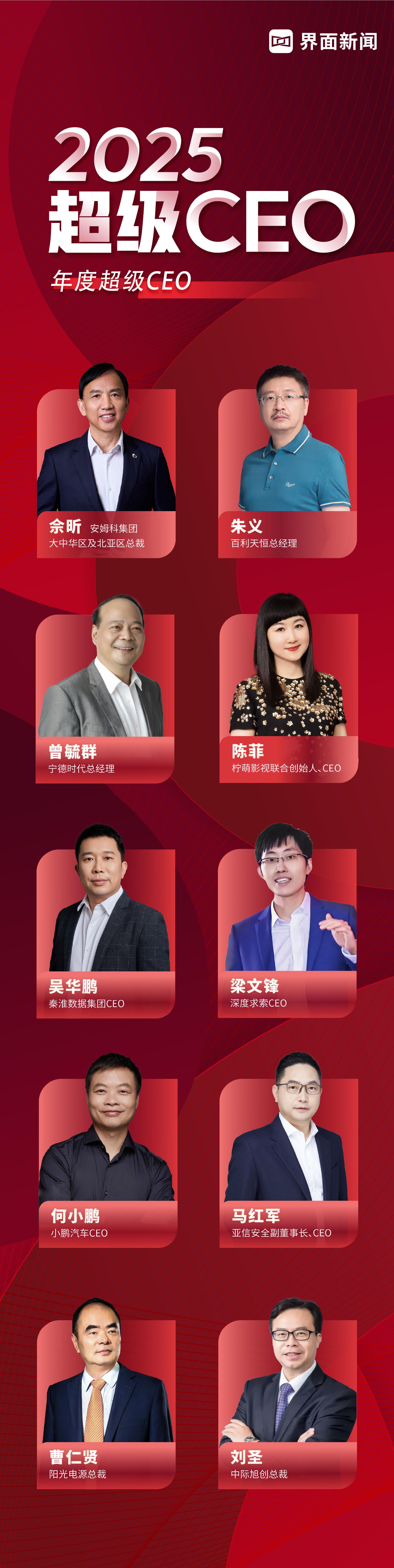
界面新闻揭晓2025年度超级CEO榜单:以远见破局,以实干领航
Xin Lang Cai Jing· 2025-12-16 08:08
Group 1: Economic Overview - In 2024, China's GDP exceeded 134.9 trillion yuan, growing by 5.0% year-on-year, ranking among the top major economies globally [2] - The economic structure continues to optimize, with the primary, secondary, and tertiary industries accounting for 6.8%, 36.5%, and 56.7% of GDP, respectively [2] - Consumption, investment, and net exports contributed 2.2, 1.3, and 1.5 percentage points to GDP growth, respectively [2] Group 2: Technological Advancements - China has made significant breakthroughs in cutting-edge technologies such as 6G communication, AI large models, and quantum computing [3] - The first international 6G field test network was established in July 2024, demonstrating potential 6G transmission capabilities [3] - China ranks second globally in the number of open-source participants, with rapid growth in the sector [3] Group 3: New Energy and Carbon Neutrality - The new energy sector has become a growth engine, with China accounting for over 60% of global new wind and solar installations in 2024 [4] - The installed capacity of new energy storage exceeded 70 million kilowatts, with leading companies like CATL and BYD holding a 65.5% market share in the global power battery market [4] - Solid-state battery technology has achieved mass production breakthroughs, with energy density exceeding 400 Wh/kg [4] Group 4: Healthcare Sector - The healthcare market is expanding due to aging population and rising health consumption demands, with government spending in the sector reaching 2.03 trillion yuan in 2024 [5] - AI-assisted diagnosis, gene editing, and telemedicine technologies are accelerating breakthroughs and applications in the industry [5] - Leading companies like WuXi AppTec and Mindray are actively pursuing globalization strategies to capture high-end medical equipment and biopharmaceutical markets [5] Group 5: Financial and Consumer Trends - The total assets of China's financial institutions reached 495.59 trillion yuan in 2024, growing by 7.5% year-on-year [6] - The banking sector's total assets were 444.57 trillion yuan, with a growth rate of 6.5% [6] - The rise of new retail and domestic brands is reshaping the consumer market, with companies like Luckin Coffee and Pop Mart leveraging data-driven strategies [6] Group 6: Emerging and Future Industries - Emerging industries such as new energy, aerospace, and quantum technology are driving economic growth and international competitiveness [7] - The low-altitude economy is projected to reach a market size of 1.5 trillion yuan by 2025 and 3.5 trillion yuan by 2035 [7] - The embodied intelligence market is expected to exceed 480 billion yuan in 2024, with potential to surpass one trillion yuan by 2031 [7] Group 7: Super CEO Recognition - The "Super CEO" list highlights leaders across various sectors, including healthcare, new energy, entertainment, and technology, showcasing their exceptional leadership and performance [8] - These CEOs have demonstrated resilience and strategic vision in navigating industry challenges and driving company growth [8]



长三角高价值专利运营大赛推出生物医药(大健康)赛道路演与对接平台
Xin Hua Cai Jing· 2025-10-29 06:38
Core Insights - The deep integration of artificial intelligence and biomedicine is driving significant changes in related industries [1][2] - The Long Triangle region is focusing on high-value patent operations in the biomedicine sector, with a recent competition showcasing 23 high-value patent projects [1] - Nantong is emerging as a key growth area in the Long Triangle biomedicine industry, leveraging its industrial foundation and resources [2] Group 1 - The Long Triangle high-value patent operation competition has launched a biomedicine (healthcare) track, featuring projects in gene technology, AI-assisted diagnosis, high-end medical devices, innovative drugs, and marine biomedicine [1] - Nantong has been identified as a strategic emerging industry, focusing on biomedicine as one of its five key areas for development [1][2] - The establishment of the National Intellectual Property Operation (Shanghai) International Service Platform Nantong Center aims to enhance the collaboration between Shanghai's research capabilities and Nantong's industrial advantages [1] Group 2 - Shanghai Trading Group plans to connect high-value biomedicine patent projects with Nantong's production capacity and capital, fostering a specialized industrial cluster [2] - The initiative includes deepening patent financial innovation to provide customized pledge financing services for enterprises [2] - The Long Triangle region aims to facilitate the transition of biomedicine results from "laboratory" to "production line," supporting the creation of a globally influential life and health industry cluster [2]
公募提前布局AI医疗赛道!商业化蓄势待发?
券商中国· 2025-09-28 10:05
Core Viewpoint - The AI healthcare sector is still in its nurturing phase, but the investment enthusiasm has attracted significant QDII fund allocations, with a focus on overseas revenue expansion to address high valuation concerns [1][3]. Group 1: Investment Trends - Public funds are increasingly focusing on AI healthcare, with companies like JingTai Holdings, GuShengTang, YiDu Technology, and iFlyTek actively seeking growth through international expansion [3][4]. - JingTai Holdings has successfully assisted a pharmaceutical company in obtaining clinical trial approval in Australia, highlighting its strong overseas business performance [3]. - YiDu Technology has reported that its international revenue growth significantly outpaces domestic growth, with contributions from Brunei reaching over 100 million yuan, accounting for 14.36% of its total revenue [3][4]. Group 2: Valuation Concerns - Despite the growth potential, fund managers express concerns over high valuations and profitability challenges faced by many AI healthcare companies, leading some QDII funds to prefer US stocks [6][7]. - For instance, Mirxes has a market capitalization exceeding 17 billion HKD, while its competitor Grail, despite having a much larger revenue, has a lower market cap, indicating a premium valuation in the Hong Kong market [6][7]. Group 3: Future Outlook - Some fund managers believe that the current high valuations are linked to the different stages of commercialization, with US companies having a head start [9]. - The AI healthcare sector is expected to see significant growth as domestic companies accelerate their development, particularly in areas like brain-computer interfaces, which are projected to transition from laboratory to clinical applications within 1-2 years [10].

AI医疗商业化有望加速 QDII基金积极重仓布局
Zheng Quan Shi Bao· 2025-09-24 18:06
Core Viewpoint - The AI healthcare sector is in a nurturing phase, with increasing interest from public funds, particularly in overseas expansion as a key growth driver for companies in this field [1][2][6]. Group 1: Investment Trends - Public funds are heavily investing in AI healthcare companies, with a focus on those expanding internationally, such as JingTai Holdings and YiDu Technology, which are seeing significant revenue growth from overseas markets [2][3]. - Companies like Mirxes have reported that approximately 70% of their revenue comes from international markets, indicating a strong reliance on overseas expansion for growth [3]. Group 2: Valuation Concerns - Despite the growth potential, many AI healthcare companies are facing high valuations, with some trading at sales multiples of tens or even hundreds, raising concerns about sustainability [4][5]. - For instance, Mirxes has a market capitalization exceeding HKD 17 billion, which is notably higher than its competitors like Grail, despite Grail having significantly larger revenue [4]. Group 3: Future Outlook - Fund managers believe that the current high valuations are linked to the varying stages of commercialization among companies, with U.S. firms having a head start in the market [6][8]. - The AI healthcare sector is expected to see accelerated growth in the coming years, particularly in areas like brain-computer interfaces, which are projected to transition from laboratory to clinical applications within 1-2 years [8].
从养老到享老,北京已出台百项措施
Bei Jing Shang Bao· 2025-09-14 16:57
Group 1 - The core viewpoint is that China's rapid aging population has become a national strategy, with Beijing implementing nearly a hundred special policies to transition from "elderly care" to "enjoying old age" and from basic security to quality enhancement [2] - Currently, 1 in 4 people in China is an elderly person, totaling 310 million, which accounts for 22% of the population, while in Beijing, 1 in 3 registered residents is an elderly person, making up 30% [2] - The "14th Five-Year Plan" emphasizes the development of elderly human resources and the silver economy, which is crucial for the well-being of millions of elderly people and for optimizing economic structure [2] Group 2 - The silver economy shows significant potential, covering eight key areas such as smart elderly care, elderly education, and health management, with a projected scale of approximately 7 trillion yuan in 2023, accounting for 6% of GDP, and expected to exceed 30 trillion yuan by 2035, reaching 10% of GDP [3] - The integration of digital technology and the health industry is reshaping the industry ecosystem, with smart health monitoring devices and AI-assisted diagnosis playing a crucial role in addressing the supply-demand imbalance in elderly health services [3] - The Ministry of Industry and Information Technology and the Ministry of Civil Affairs are promoting the use of robots in elderly care, with the smart service robot market expected to reach 50 to 100 billion yuan by 2025-2027 [3] Group 3 - The penetration rate of smart elderly care products is only 3.8% within the 7 trillion yuan silver economy, indicating a significant opportunity for industry growth [4] - The silver economy is viewed as both a business opportunity and a social responsibility, requiring policy guidance, market participation, and technological innovation to create a safe and friendly environment for the elderly [4] - The essence of the silver economy is human-centered, focusing on maximizing quality of life at minimal cost, and promoting a shift from "treating existing diseases" to "preventing future diseases" [4]

智慧康养领航 银发经济驶入新航道
Bei Jing Shang Bao· 2025-09-14 16:57
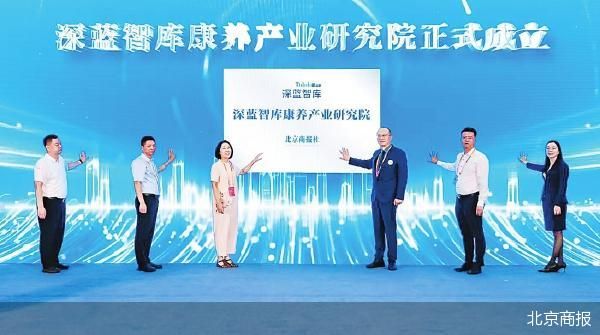
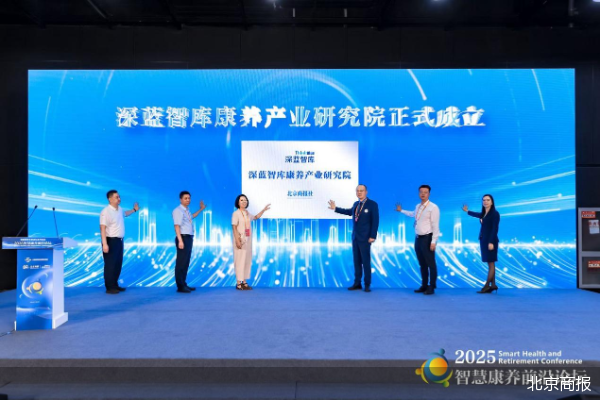
Group 1 - The 2025 Smart Health and Elderly Care Forum was successfully held in Shougang Park, focusing on the theme of "New Pattern of Silver Economy and All-domain Health and Elderly Care Ecosystem" [1] - The forum aims to explore new paths, models, and mechanisms for the development of health and elderly care that align with China's national conditions [1] - The establishment of the "Deep Blue Think Tank Elderly Care Industry Research Institute" marks a new phase for the Smart Health and Elderly Care Forum, aiming to drive innovation in the elderly care industry [1] Group 2 - The rapid aging of the population in China has become a national strategy, with nearly 100 special policies and implementation plans launched in Beijing [3] - The silver economy is projected to reach approximately 7 trillion yuan in 2023, accounting for 6% of GDP, and is expected to exceed 30 trillion yuan by 2035, representing 10% of GDP [3] - The penetration rate of smart elderly care products is only 3.8%, indicating both challenges and opportunities within the industry [3] Group 3 - The concept of "all-domain collaboration" is essential for breaking through challenges in the smart elderly care industry, integrating financial support, technological innovation, and medical services [4] - The Beijing Business Daily aims to continue being an observer, connector, and promoter of the industry, facilitating the transition from policy vision to practical implementation [5] Group 4 - The development path for the elderly care industry includes leveraging trustworthy data spaces to drive digital transformation and high-quality development [6] - The integration of technology in the elderly care ecosystem is seen as a market advantage, meeting the rigid demands of the elderly while creating new consumption needs [7] Group 5 - Various companies are collaborating to build a comprehensive elderly care service network, addressing aspects from living environments to community support [9] - The "Elderly Care Meal" project by Ele.me aims to provide safe and reliable meal delivery services to the elderly, addressing funding challenges through collaboration with government and enterprises [9] - The introduction of self-service dining models for elderly care by Huafang Catering addresses dietary needs, with standards established to promote industry development [10] Group 6 - There is a growing multi-dimensional focus on health, with 84% of people concerned about physical health and 81% about mental health, expanding the functional food consumer base [11] - Companies are innovating in product forms and expanding channels to enhance competitiveness in the functional food market [11] - The development of elderly-friendly furniture involves redesigning new products and adapting existing ones to meet the needs of elderly consumers [11]
2025服贸会|智慧康养引领产业升级,银发经济开启万亿赛道
Bei Jing Shang Bao· 2025-09-14 10:45
Core Insights - The 2025 Smart Health and Elderly Care Forum was successfully held in Shougang Park, focusing on the theme of "New Patterns of Silver Economy and Comprehensive Health and Elderly Care Ecosystem" [1] - The forum aims to explore new paths, models, and mechanisms for the development of the elderly care industry that align with China's national conditions [1] Industry Overview - The silver economy is a vast economic blue ocean, covering eight key areas including smart elderly care, elderly education, and health management, with a projected scale of approximately 7 trillion yuan in 2023, accounting for 6% of GDP, and expected to exceed 30 trillion yuan by 2035, reaching 10% of GDP [3] - The integration of digital technology and health industries is reshaping the elderly care ecosystem, with smart health monitoring devices and AI-assisted diagnosis playing crucial roles in addressing the supply-demand imbalance in elderly health services [3][4] Technological Innovation - The establishment of the "Deep Blue Think Tank Elderly Care Industry Research Institute" marks a new phase in promoting innovative development in the elderly care industry [1] - The integration of new information technologies is creating a "boundary-less" infrastructure for elderly care, enabling real-time health data monitoring and AI-driven risk alerts [7] - The development of humanoid care robots is anticipated to replace traditional caregiving methods, with advancements expected in functionality and adaptability [8] Collaborative Ecosystem - The concept of "full-domain collaboration" is emphasized as key to breaking through challenges in the elderly care industry, requiring integration of financial support, technological innovation, and medical services [4] - Various enterprises are collaborating to build a comprehensive elderly care service network, addressing needs from living environments to community support [9] Market Demand and Consumer Trends - There is a growing multi-dimensional focus on health among consumers, with a significant percentage of people concerned about weight and mental health, leading to an expansion in the functional food market [12] - The elderly care dining service is evolving, with companies like Ele.me implementing "Elderly Meal" projects to ensure safe and nutritious meal delivery [11] - The demand for age-friendly home modifications is increasing, with companies focusing on redesigning products to meet the safety and comfort needs of the elderly [13]
奖项评选延期!第二届全球医疗科技大会
思宇MedTech· 2025-06-06 12:26
Core Viewpoint - The deadline for the award application for the Global MedTech Innovation Awards has been extended to June 20, 2025, to allow more time for participants to prepare and submit their materials, aiming to showcase innovations and contributions in the medical device field [1]. Group 1: Event Overview - The Global MedTech Conference 2024 will take place on July 17, 2025, at the Zhongguancun Exhibition Center in Beijing, with an expected attendance of around 500 participants from various sectors including government, hospitals, leading enterprises, startups, investment institutions, and research institutes [5]. - The conference will feature a main stage for showcasing and awarding global medical technology innovations [5]. Group 2: Award Categories - The awards to be presented include: 1. 2025 Global MedTech Innovation Award 2. 2025 Global MedTech Clinical Application Award 3. 2025 Global MedTech Service Contribution Award 4. 2025 Global MedTech Supply Chain Excellence Award 5. 2025 Global MedTech Innovation & Translation Award (Individual) [4][8]. Group 3: Application Process - The application phase is open from now until June 20, 2025, followed by a review phase from June 21 to June 29, with results to be announced between June 30 and July 4, and the awards to be presented on July 17, 2025 [12]. - Participants must fill out a specific form or send an email with required details to apply for the awards [13]. Group 4: Evaluation Criteria - The awards are aimed at various entities including medical device companies, healthcare institutions, and service providers, with criteria focusing on originality, advanced technology, clinical application, and industry impact [7][10][11]. - Specific standards are set for each award category, emphasizing the need for innovative products or technologies that demonstrate clear clinical efficacy and potential for widespread application [10][11]. Group 5: Conference Agenda - The conference will cover topics such as global medical technology development trends, research and transformation paths for imaging platforms, new consumables, brain-machine interfaces, interventional devices, diagnostic equipment, and the integration of AI in healthcare [6]. - It will also address capital market interests in technology directions and enterprise profiles, as well as overseas market access and marketing strategies [6].

奖项评选延期!第二届全球医疗科技大会
思宇MedTech· 2025-06-05 18:08
Core Viewpoint - The deadline for the award application for the Global MedTech Innovation Awards has been extended to June 20, 2025, to allow more time for participants to prepare and submit their materials, aiming to showcase innovations and contributions in the medical device field [1]. Group 1: Event Overview - The Global MedTech Conference 2024 will take place on July 17, 2025, at the Zhongguancun Exhibition Center in Beijing, with an expected attendance of approximately 500 participants from various sectors including government, hospitals, leading enterprises, startups, investment institutions, and research institutes [5]. - The conference will feature a main stage for showcasing and awarding global medical technology innovations [5]. Group 2: Award Categories - The awards to be presented include: 1. 2025 Global MedTech Innovation Award 2. 2025 Global MedTech Clinical Application Award 3. 2025 Global MedTech Service Contribution Award 4. 2025 Global MedTech Supply Chain Excellence Award 5. 2025 Global MedTech Innovation & Translation Award (Individual) [4][8]. Group 3: Application and Evaluation Process - The application phase is open from now until June 20, 2025, followed by a review phase from June 21 to June 29, 2025, with results to be announced between June 30 and July 4, 2025 [11]. - The awards will be presented on July 17, 2025, after the confirmation of trophy production [11]. Group 4: Target Audience and Standards - The awards target various entities including medical device and digital health technology companies, clinical doctors, researchers, and key suppliers, with specific standards for originality, advancement, and potential for industrialization [7][10].

奖项评选延期!第二届全球医疗科技大会
思宇MedTech· 2025-06-05 10:08
Core Viewpoint - The deadline for the award application for the Global MedTech Innovation Awards has been extended to June 20, 2025, to allow more time for participants to prepare and submit their materials, aiming to showcase innovations and contributions in the medical technology field [1]. Group 1: Event Overview - The Global MedTech Conference 2024 will take place on July 17, 2025, at the Zhongguancun Exhibition Center in Beijing, with an expected attendance of approximately 500 participants from various sectors including government, hospitals, leading enterprises, startups, investment institutions, and research institutes [5]. - The conference will feature a main stage for showcasing and awarding global medical technology innovations [5]. Group 2: Award Categories - The awards to be presented include: 1. 2025 Global MedTech Innovation Award 2. 2025 Global MedTech Clinical Application Award 3. 2025 Global MedTech Service Contribution Award 4. 2025 Global MedTech Supply Chain Excellence Award 5. 2025 Global MedTech Innovation & Translation Award (Individual) [4][8]. Group 3: Application and Evaluation Process - The application phase is open from now until June 20, 2025, followed by a review phase from June 21 to June 29, with results to be announced between June 30 and July 4, and the awards to be presented on July 17, 2025 [11]. - Participants must meet specific criteria based on their roles, such as medical device companies, clinical doctors, researchers, and service providers, ensuring that the innovations are original, advanced, and have potential for large-scale industrialization [7][10].