
人民币国际化

Search documents
央行连续10个月增持黄金
Sou Hu Cai Jing· 2025-09-07 03:39
Group 1 - As of the end of August 2025, the official gold reserves have increased for the 10th consecutive month, but the increment has been low for the last 6 months, aligning with market expectations [3] - The recent increase in gold reserves by the central bank is driven by the expectation of rising international gold prices due to the current global political and economic situation, making it less necessary to pause gold purchases from a cost control perspective [3] - The proportion of gold in China's official international reserve assets is 7.3%, significantly lower than the global average of around 15%, indicating a need for continued accumulation of gold reserves to optimize the reserve structure [3] Group 2 - The central bank's strategy to increase gold reserves is also aimed at enhancing the credibility of the sovereign currency and facilitating the cautious internationalization of the Renminbi [3] - The central bank's gold accumulation is seen as a long-term direction, influenced by the changing international environment and the need to respond to these changes effectively [3]


央行连续第10个月增持黄金,持续增持成为常态
Di Yi Cai Jing· 2025-09-07 02:55
据世界黄金协会数据,2024年全球黄金需求总量达4974吨,创历史新高。欧洲中央银行6月11日发布的 报告称,2024年各国(或地区)央行持有的黄金储备达20%,仅次于美元的46%,超过欧元的16%,接 近布雷顿森林体系时期的水平,成为2024年按市场价格计算的第二大全球储备资产。 国家金融与发展实验室特聘高级研究员庞溟认为,从长期来看,黄金在避险、抗通胀、长期保值增值等 方面仍存在不可替代的优点,兼具金融和商品的多重属性,因此我国央行推进国际储备多元化、在组合 配置中加入和动态调整黄金储备的战术操作不会改变,持续增持黄金的战略方向也不会改变。 东方金诚首席宏观分析师王青也判断,未来央行增持黄金仍是大方向。截至7月末,我国官方国际储备 资产(主要由外汇储备和黄金储备构成)中黄金的占比为7.0%,明显低于15%左右的全球平均水平。从 优化国际储备结构角度出发,未来需要持续增持黄金储备,适度减持美债。此外,黄金是全球广泛接受 的最终支付手段,央行增持黄金能够增强主权货币的信用,为稳慎推进人民币国际化创造有利条件。由 此,从优化国际储备结构、稳慎扎实推进人民币国际化,以及应对当前国际环境变化等角度出发,未来 央行增 ...
央行连续第10个月增持黄金,持续增持成为常态
第一财经· 2025-09-07 02:54
央行数据显示, 中国8月末黄金储备7402万盎司,7月末黄金储备报7396万盎司,为连续第10个月 增持黄金。 7月31日,世界黄金协会(WGC)发布的二季度全球黄金需求报告显示,"购金主力军"全球央行的 购买量有所放缓,在二季度净购金166吨,增储量同比减少21%。但上半年总体维持在五年平均水 平以上,较十年平均水平高出40%以上,预计未来仍将成为购金主力。同时,此前美国非农数据"爆 雷"带动美联储9月降息预期大增,也有望助力金价。 据世界黄金协会数据,2024年全球黄金需求总量达4974吨,创历史新高。欧洲中央银行6月11日发 布的报告称,2024年各国(或地区)央行持有的黄金储备达20%,仅次于美元的46%,超过欧元的 16%,接近布雷顿森林体系时期的水平,成为2024年按市场价格计算的第二大全球储备资产。 国家金融与发展实验室特聘高级研究员庞溟认为,从长期来看,黄金在避险、抗通胀、长期保值增值 等方面仍存在不可替代的优点,兼具金融和商品的多重属性,因此我国央行推进国际储备多元化、在 组合配置中加入和动态调整黄金储备的战术操作不会改变,持续增持黄金的战略方向也不会改变。 东方金诚首席宏观分析师 王青也判 ...

出国就变称呼!人民币只在中国叫“人民币”?看完涨知识了
Sou Hu Cai Jing· 2025-09-06 11:32
Core Viewpoint - The article explores the different names for the Chinese currency, highlighting the cultural, historical, and financial implications behind the use of "CNY" and "Renminbi" in international contexts [1][2][13]. Group 1: Official Naming and International Codes - The official English abbreviation for the Renminbi is "CNY," which stands for "Chinese Yuan," following the ISO 4217 international standard code [2]. - "CN" represents China, while "Yuan" is a transliteration of the currency unit "元," aligning with international naming conventions similar to USD for the US dollar and EUR for the euro [2]. Group 2: Usage of "Renminbi" Abroad - International media and financial institutions prefer "Chinese Yuan" over "Renminbi" due to historical familiarity with the term "Yuan," ease of pronunciation, and the need for concise currency codes in the foreign exchange market [5]. - The frequency of "Renminbi" usage is increasing, particularly after the IMF included it in the Special Drawing Rights (SDR) basket, recognizing both "RMB" and "CNY" [5]. Group 3: Cultural Differences in Currency Naming - Various colloquial names for the Renminbi exist, such as "红票" (red ticket) in Southeast Asia, "中元" (Chinese Yuan) in Hong Kong and Macau, and "软妹币" (soft sister currency) among younger demographics in China [7]. - These names reflect the social and cultural attributes of the currency, with different regions adopting unique terms based on local contexts [7]. Group 4: Geopolitical Implications of Currency Naming - The international naming of currencies is closely tied to national economic status, with the US dollar's dominance leading to its use as a generic term for multiple currencies [9]. - As of 2023, the Renminbi's share in cross-border payments is approximately 3.2%, significantly lower than the US dollar's 40%, indicating challenges in its internationalization [9]. - Initiatives like the Belt and Road Initiative aim to enhance the Renminbi's global presence, with some countries already engaging in direct trading using the currency [9]. Group 5: Identity and Currency Naming - The evolution of currency names reflects the historical development of the nation, with terms like "Renminbi" symbolizing the establishment of a socialist economic system [11]. - Different regions may intentionally differentiate the political and economic attributes of the currency, as seen in Taiwan and Japan, which impacts the perception and usage of the currency [11]. Conclusion - The transition from "Renminbi" to "CNY" illustrates the standardization of international financial rules, the expansion of China's economic influence, and the effects of cultural soft power [13]. - The future of currency naming may see a unification of "Renminbi" and "CNY," contingent on China's growing authority in the global economic arena [13].
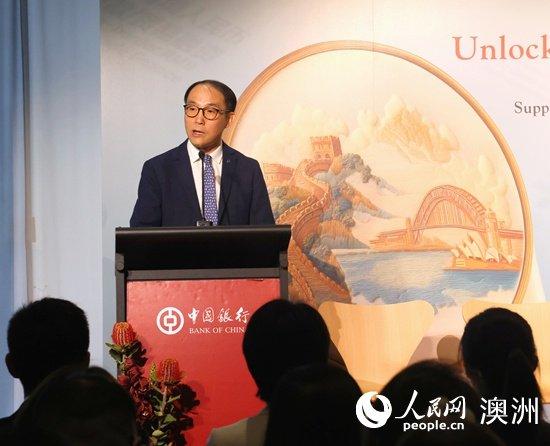
2025年全球人民币国际化系列路演活动澳大利亚站在悉尼举办
Ren Min Wang· 2025-09-06 00:45
Group 1 - The event in Sydney on September 4, 2023, focused on the internationalization of the Renminbi (RMB) and was attended by over 100 representatives from the financial and business sectors of China and Australia [1] - The President of the Bank of China Sydney Branch, Li Mang, emphasized that the internationalization of the RMB reflects global confidence in China's long-term development and highlighted the deepening financial cooperation between China and Australia [3] - The Deputy Consul General of China in Sydney, Wang Chunsheng, noted the steady progress of RMB internationalization and its increasing use in cross-border transactions, urging the Bank of China Sydney Branch to seize cooperation opportunities [5] Group 2 - Liang Heng, Director and General Manager of the Central Government Securities Depository and Clearing Co., Ltd., stated that more Australian financial institutions are participating in RMB clearing and settlement, which injects new momentum into RMB internationalization [7] - A representative from the Shanghai RMB Trading Business Headquarters of the Bank of China provided insights on the RMB bond market and investment opportunities, fostering discussions on RMB internationalization and high-quality trade development [10] - The event celebrated the 40th anniversary of the Bank of China's operations in Australia, themed "Forty Years of Partnership, Building New Opportunities for the RMB," marking a significant step in promoting RMB internationalization and financial openness [10]
印度网友:中国别做梦了,想让人民币取代美元?全球第二大经济体的印度还没吭声
Sou Hu Cai Jing· 2025-09-05 17:10
Core Viewpoint - The discussion revolves around the increasing international use of the Chinese yuan (RMB) and whether it aims to replace the US dollar as the global settlement currency. The consensus suggests that while RMB internationalization is a trend, it does not necessarily mean it will replace the dollar, but rather enhance global trade options and stability [2][11][12]. Group 1: RMB Internationalization - The RMB's usage in global payment systems has risen significantly, reaching 4.14% in December 2023, an increase of nearly 2 percentage points in just two years, making it the fourth-largest payment currency globally [11]. - The International Monetary Fund (IMF) increased the RMB's weight in the Special Drawing Rights (SDR) basket to 12.28% as of August 2022, indicating its growing importance in global reserves [11]. - The trend of "de-dollarization" is evident, with more international market participants using RMB for trade, and an increasing number of contracts priced in RMB [11]. Group 2: Global Economic Impact - The RMB's rise is seen as a natural outcome of China's economic strength, rather than a deliberate attempt to displace the dollar [11]. - The dollar still holds a dominant position, accounting for nearly 50% of international payments and about 60% of global foreign exchange reserves, indicating that the RMB has a long way to go before it can challenge the dollar's supremacy [11]. - The internationalization of the RMB is viewed as a positive development for global economic diversification, providing more choices and opportunities while enhancing the stability of the international financial system [12].

人民币只在中国叫“人民币”,出国就变名字了?这叫法确实高大上
Sou Hu Cai Jing· 2025-09-05 16:57
Group 1 - The article discusses the evolution and significance of the Renminbi (RMB) and its international designation as CNY, highlighting its journey from a domestic currency to a globally recognized one [1][11][17] - The first issuance of the Renminbi by the People's Bank of China occurred in 1948, during a tumultuous period in Chinese history, marking the establishment of a currency that represented the people [3][5][6] - The name "Renminbi" directly translates to "people's currency," symbolizing its purpose to serve the common people, contrasting with previous currencies that were associated with the elite [5][6][12] Group 2 - The international code for the Renminbi, CNY, is derived from the first letters of "China" (CN) and "Yuan" (Y), which facilitates global financial transactions [8][9] - The article compares the internationalization of the Renminbi to the global acceptance of Shaoxing rice wine, illustrating how the currency has gained traction in international markets [11][12] - The increasing use of the Renminbi in international trade, such as in transactions for goods and commodities, reflects its growing acceptance and stability compared to other currencies like the US dollar [12][14] Group 3 - The article emphasizes the importance of the Renminbi's internationalization, noting that it allows for direct transactions without the need for conversion to other currencies, benefiting both Chinese consumers and international partners [11][14] - The narrative highlights the shift in perception of the Renminbi, from being a domestic currency to being recognized as a reserve currency by other nations, indicating China's growing economic influence [15][17] - The article concludes with a reflection on the Renminbi's role as a symbol of national strength and economic progress, linking the currency's value to the overall prosperity of the country [16][17]
再聊“磁升芯”背后的多重考量
凤凰网财经· 2025-09-05 12:28
Core Viewpoint - The announcement of the upgrade of UnionPay-Visa dual-branded magnetic stripe cards to chip cards marks a significant step in the internationalization of the Renminbi, providing enhanced security and user experience compared to single-branded chip cards [1][6]. Group 1: Security and Acceptance - The chip card offers a substantial upgrade in security compared to traditional magnetic stripe cards, utilizing dynamic authentication to prevent data copying and fraud [2][3]. - Chip cards have a broader acceptance range, especially in cross-border scenarios, where they have become essential as many markets no longer accept magnetic stripe transactions [4][5]. Group 2: Strategic Considerations - The transition from magnetic stripe to chip cards reflects a strategic shift in the market, driven by the need for enhanced security and the internationalization of the Renminbi [6][7]. - The collaboration between UnionPay and Visa in launching the chip card is seen as a mutually beneficial outcome, aligning their strategic interests in expanding market presence [8]. Group 3: Evolution of Payment Tools - The upgrade to chip cards signifies an evolution in credit card functionality, transforming them from mere payment tools to international bridges for commerce and communication [9]. - Banks are enhancing their product offerings to cater to cross-border needs, providing additional benefits and rewards for overseas transactions [9][10]. Group 4: Market Performance - The performance of credit cards, particularly from China Merchants Bank, indicates a strong market position, with significant overseas transaction volumes and a leading industry presence [10].


人民币只在中国叫“人民币”,出国就变了称呼?叫法确实更高大上
Sou Hu Cai Jing· 2025-09-05 04:46
Core Viewpoint - The article reflects on the evolution of the Renminbi (RMB) over the past 70 years, highlighting its significance to the Chinese people and its journey from a domestic currency to an internationally recognized one, now known as CNY in global markets [1][3][16]. Group 1: Historical Context of RMB - The RMB was once a precious commodity, carefully stored and protected by families, symbolizing their hopes and livelihoods [3][5]. - In the past, the RMB was associated with the struggles of ordinary people, who relied on it for basic necessities, contrasting with the current ease of digital payments [5][7]. - The currency has evolved from being a tool for survival to a symbol of national pride and economic strength, reflecting the journey of the Chinese people from poverty to prosperity [12][16]. Group 2: Significance of "People" in RMB - The term "People" on the RMB signifies a shift in power dynamics, allowing ordinary citizens to participate in the economy, contrasting with historical currency systems that favored the wealthy [8][9]. - The emotional connection to the RMB remains strong among the Chinese, who view it as a representation of their hard work and aspirations, regardless of its international designation as CNY [9][10]. Group 3: Internationalization of RMB - The RMB has gained international recognition, now traded as CNY on global exchanges, reflecting China's growing economic influence [10][12]. - Despite its international success, the RMB faces challenges in the global financial market, including competition from established currencies like the USD and EUR [13][14]. - The Chinese government is actively promoting the RMB's internationalization through various initiatives, including trade agreements and the establishment of offshore RMB centers [13][14]. Group 4: Future Outlook - The article emphasizes the importance of ensuring that the benefits of the RMB's internationalization translate into improved living standards for the Chinese people [16][17]. - The narrative concludes with a hopeful vision for the future, where the RMB continues to serve as a foundation for the prosperity and well-being of the Chinese populace [16][17].
陈世杰总领事出席人民币国际化路演新西兰站活动
Shang Wu Bu Wang Zhan· 2025-09-04 16:51
Group 1 - The event in New Zealand, hosted by the Bank of China, focused on the internationalization of the Renminbi, with over 120 representatives from financial institutions attending [1][3] - This year marks the beginning of the second decade of the comprehensive strategic partnership between China and New Zealand, with recent high-level meetings indicating a positive direction for bilateral relations [3] - The economic relationship between China and New Zealand is highly complementary, with China continuing to expand its financial openness, creating new opportunities for cooperation and development for financial institutions, exporters, and investors [3] Group 2 - Attendees engaged in in-depth discussions on topics such as the outlook for China's macroeconomy and investment opportunities in Renminbi bonds, as well as successful applications of Renminbi internationalization in enterprises [5]

