个人养老金

Search documents
显著回暖!
中国基金报· 2025-07-27 11:46
Core Viewpoint - The personal pension fund market in China has shown significant growth in both performance and scale this year, with a positive outlook for future expansion driven by policy optimization and product diversification [1][3]. Group 1: Fund Performance - Personal pension funds have achieved an average net value increase of 6.56% year-to-date, with some funds like ICBC Pension 2050 Y achieving over 20% [3]. - Over 90% of personal pension funds have positive returns since inception, with nearly 20% of products seeing net value growth exceeding 10% [3]. - The best-performing fund, GF Pension Target 2060, has achieved over 30% returns since its establishment [3]. Group 2: Fund Scale Growth - The total scale of 296 personal pension funds Y shares reached 12.41 billion yuan, marking a 35.7% increase from the end of last year [3][4]. - The Huatai-PB Dividend Low Volatility ETF Link Y saw the largest scale increase in Q2, growing by over 311.85% to 187 million yuan [4]. Group 3: Market Expansion and Product Diversification - As of June 30, 2025, the number of personal pension funds is expected to reach 297, with 9 new products launched in Q2 from 8 different institutions [6]. - Several fund companies are introducing new Y share offerings for index-enhanced funds, indicating ongoing product expansion [7]. - The personal pension system is seen as a market-driven engine to address aging population challenges, supported by tax incentives, reduced fees, and long-term capital lock-in mechanisms [1][7]. Group 4: Future Development Strategies - To strengthen the personal pension fund sector, continuous scale growth and investor education are essential [8]. - Innovation in product offerings is encouraged to enhance the attractiveness of pension target funds, including establishing long-term payment mechanisms for investors [8]. - A tailored approach to meet diverse investor needs is necessary, moving away from one-size-fits-all solutions in pension services [8].


每日钉一下(这波上涨,A股港股算进入牛市么?)
银行螺丝钉· 2025-07-25 13:58
Group 1 - The core viewpoint is that investing in personal pensions can enhance retirement security while benefiting from tax deferral advantages [1]. Group 2 - Information on how to open a personal pension account and the five major investment options available is provided [2]. - A free course is offered to learn about personal pension investment methods, including course notes and mind maps for efficient learning [3].

个人养老金产品开始拼收益了:“存量客户”最高回报近30%
Sou Hu Cai Jing· 2025-07-23 07:14
Core Insights - The personal pension system aims to outperform inflation and interest rates, with early adopters reporting significant returns on their investments [2][7] - The number of personal pension products has surpassed 1,060, with a notable increase in high-risk, high-return funds, particularly FOF products [2][8] - The average return rate for FOF pension funds has reached 4.96% this year, with some funds achieving returns over 18% [4][5] Group 1: Market Performance - The capital market has shown a positive trend, leading to increased returns across various personal pension products, especially in the high-risk category [3][6] - The FOF series has become a dominant player, with 297 products now available, accounting for nearly one-third of the total personal pension offerings [2][6] - The total scale of personal pension funds has exceeded 11.39 billion yuan, marking a 21.28% increase since the beginning of the year [6] Group 2: Product Diversity - The market now offers a wide range of personal pension products, including 466 savings products, 297 fund products, 262 insurance products, and 35 wealth management products [8] - The Y series of pension funds, particularly the FOF type, has shown exceptional performance, with several funds reporting returns exceeding 11% [4][5] - Despite the overall positive performance, not all funds have performed well, with some experiencing losses exceeding 15% over the past two years [8] Group 3: Investor Sentiment - Investors are increasingly drawn to personal pension products due to the attractive returns, leading to a rise in additional investments [8][9] - The trend indicates a shift in investor preferences towards funds that focus on growth, as opposed to traditional savings and insurance products [10] - Tax incentives associated with personal pension contributions are also influencing investment decisions, highlighting the importance of considering overall benefits beyond just product returns [10]

7.23犀牛财经早报:个人养老金基金正收益的产品接近九成 亚马逊收购可穿戴设备制造商Bee
Xi Niu Cai Jing· 2025-07-23 01:38
Group 1 - The Hong Kong stock market has seen nearly 80 billion yuan inflow through ETFs this year, with a strong preference for technology and internet sectors [1] - Personal pension fund scale has surpassed 12 billion yuan, with nearly 90% of products yielding positive returns since inception [1] - A new efficient and environmentally friendly lithium-ion battery recycling method has been developed, achieving over 92% recovery of key metals [2] Group 2 - A new RSV preventive drug, SIBP-A16, has received clinical trial approval, representing an upgrade in China's preventive antibody research system [3] - The Chinese Urban Public Transport Association issued an apology for misleading information regarding the ban on fuel vehicles in ride-hailing platforms [4] - Starbucks China has introduced "Starbucks Study Room" in some Guangdong stores to provide a study space for consumers [5] Group 3 - Coca-Cola announced the launch of a new cane sugar version of its product in the U.S. this fall as part of its innovation strategy [5] - Amazon is acquiring wearable device manufacturer Bee AI to enhance its AI capabilities [5] - Carlyle Group has hired a Goldman Sachs executive to expand its private credit business [5] Group 4 - China Rare Earth's executive director is involved in overdue debts exceeding 200 million yuan, with no reasonable explanation provided [6] - Guangji Pharmaceutical's vice president resigned following a penalty from the Hubei Securities Regulatory Commission, with expected losses of 67 to 83.5 million yuan for the first half of 2025 [7] - Guanglian Aviation's controlling shareholder is under investigation, but it is stated that this will not significantly impact normal operations [7] Group 5 - U.S. stock indices showed mixed results, with the Dow Jones rising by 0.4% while the Nasdaq fell by 0.39% [8] - General Motors' stock dropped over 8% due to performance decline influenced by tariffs, while Texas Instruments provided a pessimistic outlook for Q3 [9] - Bitcoin rose by 2.3%, while gold increased by over 1%, reaching a one-month high [9]




个人养老金基金规模突破120亿元 成立以来获得正收益的产品接近九成
Shang Hai Zheng Quan Bao· 2025-07-22 18:16
Group 1 - The personal pension fund market is experiencing increased attention, with nearly 90% of funds achieving positive returns since inception, and total scale surpassing 12 billion yuan by the end of Q2 this year [1][2] - The average net value increase of personal pension funds reached 5.5% year-to-date, with over 10% of products showing net value growth exceeding 10% [1][2] - The number of personal pension funds has expanded to 297, with the latest additions being nine new funds, all categorized as pension FOFs [2] Group 2 - There is a growing recognition of the need for personal pension products, with 65% of respondents in a recent survey indicating a preference for additional personal pension investments over social security and annuities [3] - The "systematic dividend" of personal pension accounts is gradually being released, with expectations for continued product line expansion to cater to various risk preferences and life cycles [3] - Professional investment advisory services are anticipated to play a crucial role in the maturation of personal pension investments, becoming essential for investors to achieve their retirement goals [3]
来了!个人养老金重要名单更新
Zhong Guo Ji Jin Bao· 2025-07-18 13:34
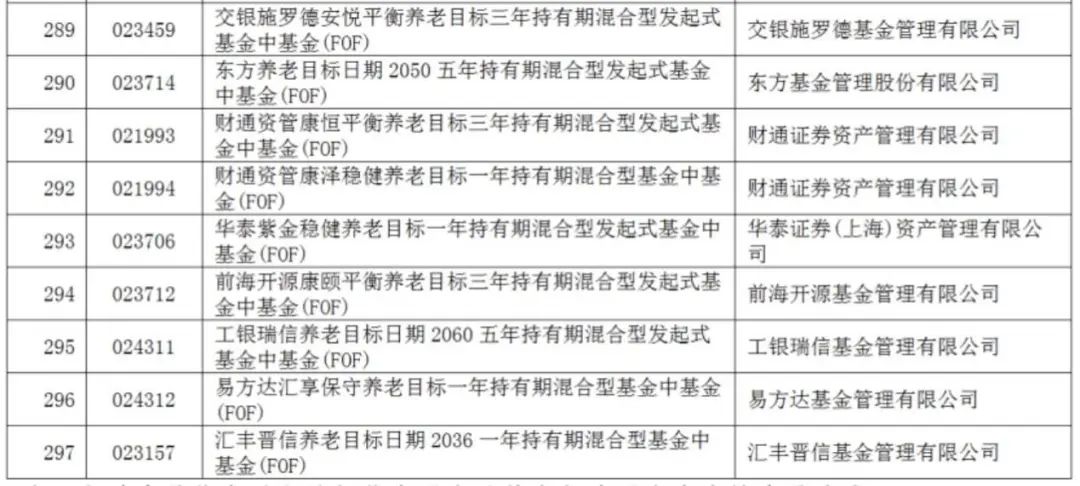
Core Insights - The personal pension fund sector is expanding, with a total of 297 funds and 52 sales institutions as of June 30, 2025 [1][2][4] - Nine new funds of funds (FOFs) have been added, focusing on various holding periods and target dates [2][3] - The total scale of personal pension funds has surpassed 100 billion yuan, with significant growth in Y share sizes [5][6] Fund Expansion - As of June 30, 2023, the personal pension fund list includes 297 products, with 9 new FOFs introduced in Q2 [2][3] - The newly added FOFs include various target dates and holding periods, indicating a diverse range of investment options [2][3] Sales Institutions - The number of personal pension fund sales institutions remains unchanged at 52, comprising 25 securities companies, 19 commercial banks, and 8 independent fund sales institutions [4] Fund Scale Growth - The total scale of personal pension fund Y shares reached 113.9 billion yuan by the end of Q1 2023, marking a growth of over 20% from the previous year [5] - By the end of Q2 2023, the disclosed Y share scale of 71 funds was 23.07 billion yuan, reflecting a 7.45% increase from the previous quarter [5] Popular New Funds - In H1 2023, the top two new fund issuances were both FOFs, with significant initial scales of 65.73 billion yuan and 60.01 billion yuan respectively [6] - A total of 30 FOFs were established in H1 2023, with a combined issuance of 327.52 billion shares, the highest since H1 2022 [6]
基本养老金≠个人养老金 这两笔钱要分清
Yang Shi Wang· 2025-07-15 00:28
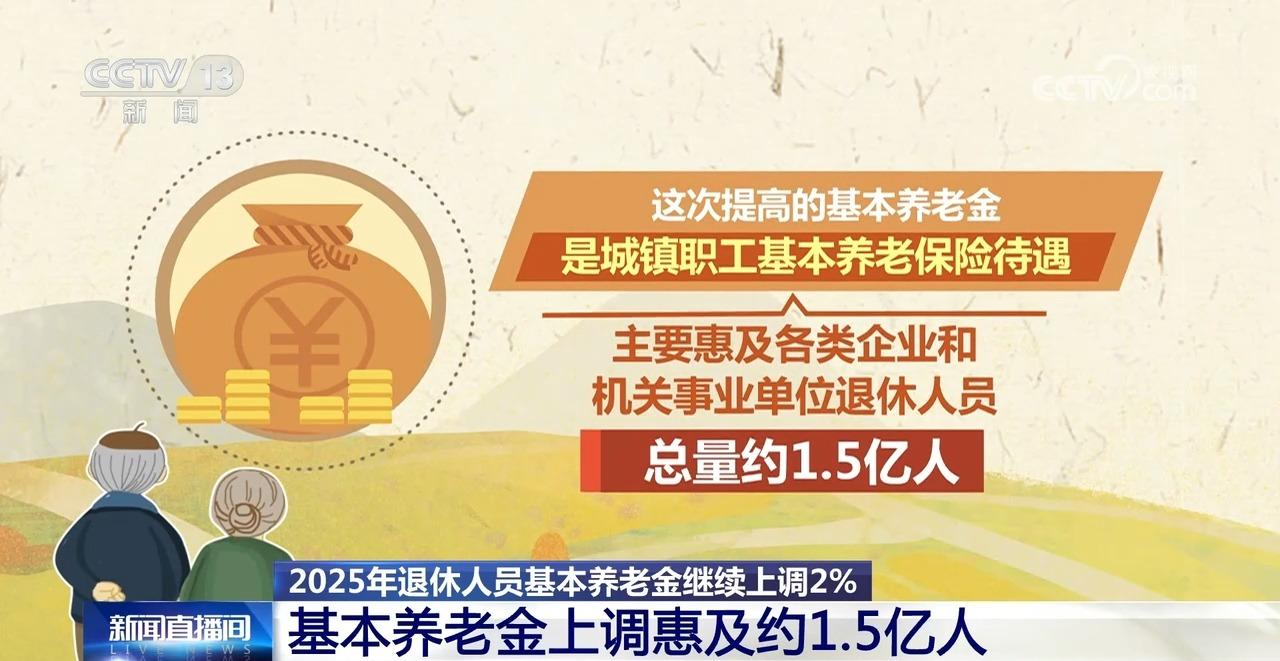
Core Viewpoint - The Ministry of Human Resources and Social Security and the Ministry of Finance of China announced an adjustment to the basic pension level for retirees, effective January 1, 2025, with an overall increase of 2% based on the average monthly basic pension for retirees in 2024 [1] Group 1 - The increase in basic pensions primarily benefits approximately 150 million retirees from various enterprises and government institutions, highlighting the importance of the basic pension as a key component of China's multi-tiered pension system [3] - Basic pension contributions are shared among the state, employers, and individuals, while personal pensions are voluntary and depend on individual financial capacity [3][6] - Basic pensions are tax-exempt upon receipt, while personal pensions offer tax deferral benefits and are subject to personal income tax at a rate of 3% upon withdrawal [5][6] Group 2 - Personal pensions allow individuals to contribute up to 12,000 yuan annually, providing additional retirement savings beyond the basic pension [6] - The attractiveness of personal pensions increases with higher income levels due to the progressive nature of income tax, making them a strategic choice for wealthier individuals [6] - Basic pensions are considered essential for stable retirement income, while personal pensions serve as an optional tool for future financial security [6]
别再分不清楚了!来看~退休领取基本养老金免征个税,个人养老金按3%征收个税
蓝色柳林财税室· 2025-07-12 11:01
Core Viewpoint - The article discusses the taxation policies related to personal pensions and basic pensions in China, highlighting that basic pensions are exempt from individual income tax, while personal pensions are subject to a 3% tax upon withdrawal [3][6][7]. Summary by Sections Basic Pension Taxation - Basic pensions, as per the Personal Income Tax Law, are exempt from individual income tax, including retirement benefits and allowances for retired officials and employees [3][6]. Personal Pension Taxation - Personal pensions will be implemented nationwide starting December 15, 2024, with a deferred tax policy effective from January 1, 2024. Contributions to personal pension accounts are deductible up to 12,000 yuan per year from comprehensive or business income [3][9]. - Investment income accrued in personal pension accounts is not subject to individual income tax until withdrawal, at which point a flat tax rate of 3% applies [3][7][9]. Personal Pension Overview - Personal pensions are a government-supported, voluntary, market-oriented system aimed at supplementing basic pension benefits. Participants can choose various financial products for their contributions, which are capped at 12,000 yuan annually [4][6]. Contribution and Account Management - Participants can open personal pension accounts through designated online platforms or commercial banks, with the option to change their account bank twice a year. Contributions can be made monthly, in installments, or annually, adhering to the 12,000 yuan limit [10].

每日钉一下(量化的高中低频,是如何划分的?)
银行螺丝钉· 2025-07-11 13:51
Group 1 - The core viewpoint is that investing in personal pensions can enhance retirement security while benefiting from tax deferral advantages [1]. Group 2 - Information on how to open a personal pension account and the five major investment options available is provided [2]. - A free course is offered to learn about personal pension investment methods, including course notes and mind maps for efficient learning [3].

个人养老金全面开闸,平安人寿发布首款个人养老金保险产品
Qi Lu Wan Bao· 2025-07-09 10:54
Core Viewpoint - Ping An Life Insurance has launched its first personal pension insurance product, "Ping An Shengshi Youxiang Pension Annuity Insurance (Participating)," to meet the diverse pension savings and security needs of consumers and to support tax incentive policies [1][9]. Product Features - The "Shengshi Youxiang" product emphasizes "saving now, peace of mind later," providing valuable pension savings options for customers [2]. - Customers can enjoy tax benefits, with a maximum annual tax saving of 5,400 yuan during the contribution period [2][11]. - The product offers flexible payment options with up to nine different payment periods, catering to various financial capabilities and preferences [2][11]. Customer Example - A case study of a 35-year-old customer illustrates the potential savings and benefits: by contributing 12,000 yuan annually until age 60, the customer could save 75,000 yuan in taxes over 25 years, with potential annual pension payouts of approximately 21,865 yuan or 27,940 yuan depending on dividend participation [3][5][7]. Additional Services - Customers meeting specific criteria can access the "Zhenxiang Family Medical" service, which includes health consultations and regular check-ups, enhancing their overall retirement experience [4][8]. Company Background - Ping An Life has been a leader in pension finance for 30 years, serving around 14 million pension insurance customers and continuously expanding its product offerings to meet market demands [5][6]. - The company has optimized its asset-liability matching and maintained stable investment performance, aiming to provide long-term returns for policyholders [5][6]. Market Context - The personal pension system in China, supported by government policies, has gained popularity since its pilot launch in November 2022, with over 70 million accounts opened and nearly 500 billion yuan in contributions by the end of November 2024 [8][9]. - The recent announcement to implement the personal pension system nationwide is expected to further stimulate participation and strengthen the pension security framework in China [8][9].