
代币化

Search documents
城堡证券:美国证交会将对代币化持谨慎态度。倾向于制定代币化的正式规则。
news flash· 2025-07-21 22:34
城堡证券:美国证交会将对代币化持谨慎态度。倾向于制定代币化的正式规则。 ...
Citadel Securities要求美国证券交易委员会(SEC)对代币化持谨慎态度。该公司倾向于正式对代币制定规章制度。
news flash· 2025-07-21 22:30
Citadel Securities要求美国证券交易委员会(SEC)对代币化持谨慎态度。 该公司倾向于正式对代币制定规章制度。 ...
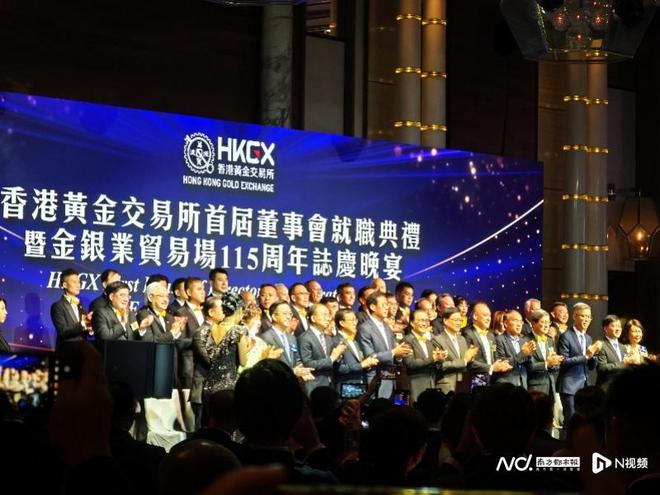
香港黄金交易所首届董事会成立!携手湾区伙伴推进多项新战略
Nan Fang Du Shi Bao· 2025-07-19 04:44
Group 1 - The demand for gold as a safe-haven asset has significantly increased, becoming an important component of global capital allocation, with the Asian market now accounting for over 60% of annual global gold demand [1] - The average daily trading volume of "9999 gold" on the Hong Kong Gold and Silver Exchange increased by 28% year-on-year to over HKD 9.4 billion last year, with the first quarter of this year exceeding HKD 12 billion, indicating the exchange's vital role in the Hong Kong gold market [3] - The Hong Kong Gold Exchange aims to attract more metals and commodities for storage and trading in Hong Kong, promoting the development of gold-related businesses and financial services [5] Group 2 - The Hong Kong Gold Exchange signed multiple memorandums of cooperation with financial institutions from the Guangdong-Hong Kong-Macao Greater Bay Area, enhancing industry collaboration and aiming for breakthroughs in gold trading, delivery, and customs facilitation within the region [5] - The Hong Kong Gold Exchange plans to leverage its unique "one country, two systems" advantage to create efficient and transparent channels for wealth preservation and currency diversification [7] - The exchange will promote the development of digital and tokenized gold in Hong Kong, establishing a new generation of investment and trading platforms [7] Group 3 - Recent progress has been made in establishing Hong Kong as a gold trading center and a commodities trading hub, including the launch of an offshore gold delivery warehouse by the Shanghai Gold Exchange in Hong Kong and the inclusion of Hong Kong in the London Metal Exchange's global warehouse network [8]

美股前瞻 | 三大股指期货齐涨,特朗普或允许养老金投资加密货币、黄金
智通财经网· 2025-07-18 12:12
| I 德國DAX30 | 24,334.73 | 24,496.19 | | --- | --- | --- | | 兴 英國富時100 | 8,979.63 | 9,010.79 | | ll 法國CAC40 | 7,830.05 | 7,873.30 | | □ 歐洲斯托克50 | 5,372.35 | 5,404.75 | 3. 截至发稿,WTI原油涨1.23%,报68.37美元/桶。布伦特原油涨1.04%,报70.24美元/桶。 | ■ WTI原油 | 2025年8月 | 68.37 | 68.5 | | --- | --- | --- | --- | | 謡 倫敦布倫特原油 | 2025年9月 | 70.24 | 70.40 | 市场消息 1. 7月18日(周五)美股盘前,美股三大股指期货齐涨。截至发稿,道指期货涨0.13%,标普500指数期货涨0.11%,纳指期货涨0.09%。 | ■ US 30 | 44,542.00 | 44,65 | | --- | --- | --- | | 를 US 500 | 6,304.40 | 6.31 | | 틀 US Tech 100 | 23,099.30 ...

《天才法案》通过后SEC主席发声:正权衡与加密货币相关的监管“创新豁免”
智通财经网· 2025-07-18 01:40
Group 1 - The U.S. House of Representatives passed the "Genius Act" with a vote of 308 to 122, aimed at significant legislative reform for cryptocurrency regulation [1] - The SEC Chairman Paul Atkins expressed that the commission is considering a regulatory "innovation exemption" to encourage tokenization within the regulatory framework [1][3] - The "Genius Act" sets regulatory rules for stablecoins, requiring issuers to maintain a 1:1 reserve with short-term government securities or similar products [2] Group 2 - Supporters of the legislation believe it could lead to faster and lower-cost payment methods, potentially legitimizing a market currently valued at $265 billion, which is expected to grow to $3.7 trillion by 2030 [2] - Paul Atkins has a different stance on cryptocurrency compared to his predecessor Gary Gensler, planning to roll back many of Gensler's regulations [2] - Financial institutions are actively working on tokenizing popular U.S. stocks and creating tokenized products for privately held companies, indicating a trend towards asset migration to blockchain [3]
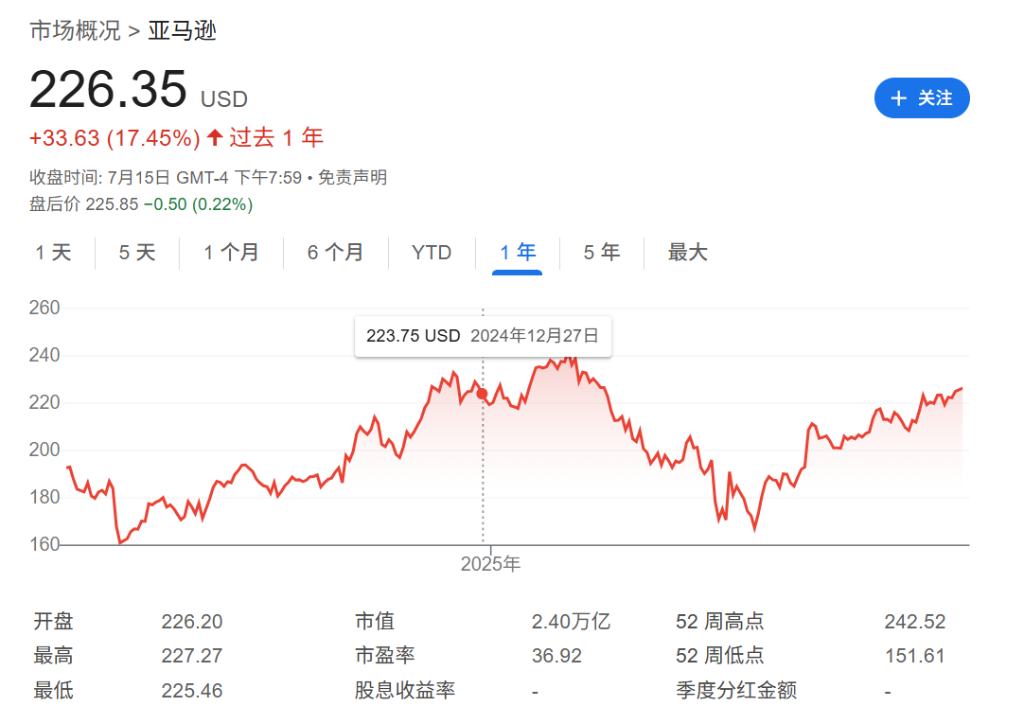
“美股代币化”推出两周:炒作严重,追踪亚马逊代币的价格是股价的4倍!
Hua Er Jie Jian Wen· 2025-07-16 00:50
Core Viewpoint - Blockchain technology is attempting to disrupt traditional stock markets, but the reality is more complex than the ideal scenario [1] Group 1: Tokenized Stocks - The launch of tokenized stocks has not gone smoothly, with significant price deviations from the underlying stocks since their introduction two weeks ago [2] - Tokenized stocks, referred to as "xStocks," were launched by Backed Finance in collaboration with Kraken and Bybit, targeting non-U.S. customers [5] - The price performance of tokenized stocks has been chaotic, with instances of extreme price surges, such as the AAPLX token reaching $236.72, a 12% premium over the actual stock price [3] Group 2: Regulatory Scrutiny - Robinhood is facing scrutiny from European regulators after launching a token that allows investors to bet on OpenAI without the company's permission [2] - The Bank of Lithuania has contacted Robinhood for explanations regarding the marketing of these tokens, which are linked to companies that are not publicly listed [5] - Concerns have been raised that tokenized stocks could become a means to circumvent regulations, as traditional stock markets have mechanisms to monitor and investigate suspicious activities [5] Group 3: Market Manipulation Concerns - Industry insiders worry that tokenized stocks create opportunities for insider trading and market manipulation, which are difficult to detect [2] - Backed Finance claims that public blockchain transactions are more transparent than traditional finance, potentially aiding in the monitoring of illegal activities [6] - However, other industry participants express concerns that trading tokenized stocks on anonymous platforms could lead to increased illegal activities, with one CEO describing it as a "Pandora's box" [6]



稳定币潮 涌头部公募谨慎试水新蓝海
Shang Hai Zheng Quan Bao· 2025-07-13 14:45
Group 1 - The core viewpoint is that the implementation of the Hong Kong Stablecoin Regulation on August 1 marks the beginning of a trillion-dollar market, prompting major public fund institutions to cautiously explore this new financial ecosystem while actively advancing their business layouts [2][4][9] - Major public fund institutions are adopting a dual approach, focusing on both business development and maintaining a prudent attitude towards the emerging investment landscape [2][11] - Compliance is emphasized as a critical factor in navigating the new investment environment, with institutions acknowledging the need to find their positioning and establish differentiated competitive advantages [2][4][11] Group 2 - The heat surrounding stablecoins is increasing as the regulation's effective date approaches, with significant stock price movements observed in related companies, such as Guotai Junan International, which saw a 198% increase [3] - The rise of stablecoins is expected to lead to a transformation in trading methods and financial infrastructure, with predictions of a 24/7 trading environment enabled by blockchain technology [6][9] - The potential for tokenization of real-world assets (RWA) is highlighted, with ongoing explorations into how stablecoins can facilitate transactions and improve efficiency in both virtual and traditional asset markets [4][6][9] Group 3 - The regulatory framework established by Hong Kong is seen as a significant step towards providing the necessary regulatory certainty for the stablecoin industry, which is crucial for fostering innovation in the financial sector [4][10] - Institutions are actively participating in sandbox initiatives to test new digital currency models and tokenized asset transactions, indicating a collaborative effort to explore the future of finance [9][10] - The introduction of virtual asset ETFs by major public funds in Hong Kong represents an initial attempt to engage with virtual currency assets, showcasing the growing interest and involvement of Chinese asset management firms in this space [10]

Bitget 集成 xStocks,将华尔街带入 Web3,并在 Onchain 上提供代币化股票
Globenewswire· 2025-07-10 14:23
Core Insights - Bitget has introduced support for tokenized stocks through its Onchain platform, integrating with xStocks to merge traditional stocks into the cryptocurrency ecosystem, allowing users to access top multinational companies without traditional channels [2][3] - The tokenized stock offerings include major companies such as Tesla, Nvidia, Microstrategy, SP500, Circle, and Apple, with assets issued by xStocks maintaining equal value to real-world assets [2][4] - Bitget Onchain combines centralized exchange user experience with decentralized asset exposure, enabling users to trade on-chain assets directly from their Bitget spot accounts without needing separate wallets or managing private keys [3][4] Product Features - The platform supports ecosystems like Solana, Base, and BNB Smart Chain, facilitating real-time trading of hundreds of tokens and offering features like smart analytics, gas fee control, and automated order types [3][5] - Users can trade tokenized stocks and cryptocurrencies on a unified platform, benefiting from faster settlement times, transparent ownership tracking, and lower transaction fees of only 0.3%, compared to traditional stock markets [4][5] - Advanced trading features such as limit orders, fee and slippage control, and price alerts are available, which are typically not offered by stock trading platforms outside centralized brokers [5][6] Market Positioning - The CEO of Bitget, Gracy Chen, emphasized that the integration of cryptocurrency, stocks, and traditional finance represents a new phase of market access where these elements coexist and complement each other [4] - Bitget Onchain simplifies the process of trading global stocks for a new generation of investors, providing faster, around-the-clock market access and creating a practical and scalable diversification pathway for cryptocurrency users [6][7] - Established in 2018, Bitget serves over 100 million users across more than 150 countries, aiming to enhance trading intelligence through innovative solutions and strategic partnerships [7]

稳定币专题研究之二:稳定币,看好场景拓展规模扩张
GUOTAI HAITONG SECURITIES· 2025-07-08 11:08
Investment Rating - The report rates the industry as "Buy" [1] Core Insights - The application scenarios for stablecoins are continuously expanding, with a future scale expected to reach $3.5 trillion [3][25] - Circle, as a leading company in the stablecoin sector, demonstrates growth potential and challenges in its business layout, ecosystem construction, and financial performance [3][25] Summary by Sections 1. Stablecoins: Continuous Expansion of Application Scenarios - Since the launch of the first stablecoin USDT in 2014, stablecoins have evolved from focusing solely on cryptocurrency trading to applications in payments and traditional finance [7] - Major developments include JPM Coin for cross-border trade settlements and PayPal USD for consumer payments, indicating a broadening of use cases [7][8] 2. Future Scale of Stablecoins - The future scale of stablecoins is projected to reach $3.5 trillion, driven by four main scenarios: cryptocurrency trading, cross-border payments, daily consumer payments, and traditional capital market applications [25][26] - In cryptocurrency trading, stablecoins are expected to reach $363.3 billion by 2030, assuming a 10% growth in the cryptocurrency market [15][26] - For cross-border payments, stablecoins could capture 20% of the market, leading to a demand of $2.9 trillion [15][26] - Daily consumer payments could see stablecoin demand of $121.6 billion, assuming a 10% market share [15][21] - In traditional capital markets, stablecoin demand is estimated at $133.3 billion under neutral scenarios [15][26] 3. Circle: The First Publicly Listed Stablecoin Company - Circle, founded in 2013, is set to go public in 2025 and focuses on its self-issued stablecoin USDC, which is expected to account for 99.1% of its revenue by 2024 [25][26] - The company has built an ecosystem around USDC, including stablecoin issuance, tokenized funds, liquidity services, and developer tools [25][31] - Circle's revenue is highly tied to reserve asset yields, benefiting from the Federal Reserve's interest rate hikes, with projected revenue of $1.676 billion in 2024 [25][41] 4. Financial Performance and Challenges - Circle's revenue has shown significant growth, from $772 million in 2022 to $1.45 billion in 2023, with a further increase to $1.676 billion expected in 2024 [44] - The company's gross margin has declined from 60% in 2022 to 39% in 2024 due to rising distribution and transaction costs [48] - Circle's financial model is sensitive to external economic variables, particularly interest rates and market events, which can lead to volatile profit margins [46][50]