
AI制药

Search documents
高瓴创投今日收获两大IPO:多年聚焦「AI+行业落地」的一次阶段性呈现
Xin Lang Cai Jing· 2025-12-30 03:38
Core Insights - The article discusses the simultaneous IPOs of two companies, Woan Robotics and Insilico Medicine, on December 30, 2025, highlighting their focus on AI applications in real-world scenarios [2][9] - Both companies, despite being in different sectors, represent a significant step in validating AI's ability to integrate into complex industrial environments [2][9] Woan Robotics - Woan Robotics focuses on embodied intelligence and home service robots, evolving from simple hardware solutions to a comprehensive AI-driven home robot system [4][11] - The company addresses the challenge of implementing AI in unstructured home environments, aiming for stability, cost-effectiveness, and scalability [4][11] - High-profile investor Hillhouse Capital has supported Woan Robotics since its A-round financing in 2021, indicating confidence in the long-term potential of embodied intelligence in everyday products [4][11] Insilico Medicine - Insilico Medicine aims to reconstruct the drug development process by embedding AI as a core engine rather than just a supportive tool [6][13] - The company's progress to the IPO stage signifies that its technology has undergone industry-level validation and has the potential for sustainable output and commercialization [6][13] - Hillhouse Capital's investment strategy in Insilico Medicine emphasizes long-term viability over short-term gains, focusing on the ability to navigate the complexities of the biopharmaceutical industry [6][13] Investment Philosophy - Hillhouse Capital prioritizes the practical application of AI in complex physical environments and uncertain life sciences, rather than merely focusing on model scale or technical metrics [7][14] - The investment decisions are made before the market consensus forms, reflecting a belief in the maturity of technology and the rhythm of industry integration [7][14] - Both projects share common traits such as long cycles, engineering complexity, and interdisciplinary challenges, while also demonstrating a unified investment approach towards solving real-world industrial problems [6][13][14]

英矽智能在港交所主板挂牌上市 成为港股“AI制药第一股”
Zheng Quan Shi Bao Wang· 2025-12-30 03:24
12月30日,英矽智能正式在港交所主板挂牌上市,成为港股"AI制药第一股"。 在本次提交港股IPO申请前,英矽智能已开展了5轮主要融资。其中,由宜兴市国控集团与锡创投联合 设立的锡创兴宜健康产业基金,于今年初共同领投英矽智能E轮融资,进一步夯实了企业发展基础。在 本次IPO发行中,英矽智能共引入15家顶级投资机构累计认购1.15亿美元,涵盖全球制药企业、互联网 龙头企业、国际主权基金、大型资产管理公司、全球主题基金、国内龙头公募和险资。 围绕宜兴"3+3+N"现代产业集群布局,近年来,宜兴通过构建全链条基金体系和多元化金融工具,系统 性推进基金赋能产业实践。一方面,积极发挥基金引导作用,围绕生物医药、集成电路、低空经济等前 沿产业布局子基金,引导社会资本投向新兴产业领域和高新技术领域。另一方面,用好陶都英才、兴宜 国金等自主管理基金,重点投向创业人才企业、科技创新企业。除此以外,与IDG资本、锡创投等知名 机构合作,吸引社会资本"投早、投小、投长期、投硬科技",助力宜兴新兴产业快速发展。 英矽智能成立于2014年,是一家业务遍布全球的AI驱动生物科技公司,其商业模式以自研人工智能 Pharma.AI平台为基础 ...
黄仁勋点赞的AI制药公司,英矽智能今日港股IPO
硬AI· 2025-12-30 03:05
AI正将一门依赖试错的实验科学,转变为一门可预测、可编程的数据科学。 作者 | 申思琦 编辑 | 硬 AI "未来,所有的生物学都将以'计算机模拟'(in silico)为起点,并以'计算机模拟'为很大程度的终点。"(Almost everything will largely start in silico, largely end in silico) 当英伟达(NVIDIA)创始人兼CEO黄仁勋在J.P. Morgan医疗健康大会和GTC大会的聚光灯下反复提及这一论断时,生物学正在从一门依赖试错的实验科学,转变 为一门可预测、可编程的数据科学。 而英矽智能(Insilico),正是这个被黄仁勋多次 点名 的"第一性原理"践行者。 2025年12月30日,英矽智能(3696.HK)在香港联合交易所主板正式挂牌, 开盘价报35港元,较发行价升45%,市值达到195亿港元 。 | 10 901 日 周 月 8 年 1分 5分 15分 30分 60分 8 80期 10图 | 角 九期 酮自选 ▼ 0007200 | | 英矽智能-B 03696 | | 60 95 | 35.000 9567 | 38.347 ...

六锣齐鸣!港股今日迎来六只新股上市,英矽智能高开45%,一手赚5475港元
Jin Rong Jie· 2025-12-30 02:53
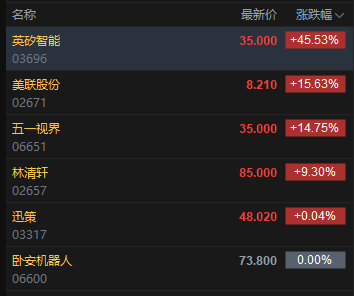
Core Viewpoint - On the penultimate trading day of 2025, the Hong Kong Stock Exchange witnessed a rare listing event with six new companies from various cutting-edge sectors going public, marking the first occurrence of six companies listing simultaneously since July 9 of the same year [1]. Group 1: Company Performances - The leading AI pharmaceutical company, Insilico Medicine, had a remarkable debut, with its stock price opening up by 45.53%, resulting in a profit of 5,475 HKD per lot, as its core Pharma.AI platform significantly reduces drug development cycles to nearly one-fourth of traditional methods [1]. - The digital twin technology company, Wuyi Vision, saw its stock rise by 14.75% at opening, focusing on building a "digital twin earth" and expanding real-time 3D technology applications beyond gaming [1]. - Meilian Holdings and Lin Qingxuan experienced stock increases of 15.63% and 9.3%, respectively, while Xunce and Woan Robotics opened nearly flat, with the former ranking first in the real-time data market for asset management and the latter being the retail sales champion in global home robotics systems [1]. Group 2: Stock Price Movements - Insilico Medicine: 35,000 HKD, +45.53% [2] - Meilian Holdings: 8.210 HKD, +15.63% [2] - Wuyi Vision: 35.000 HKD, +14.75% [2] - Lin Qingxuan: 85.000 HKD, +9.30% [2] - Woan Robotics: 73.800 HKD, 0.00% [2]
宜兴企业,港交所鸣锣上市!
Sou Hu Cai Jing· 2025-12-30 02:32
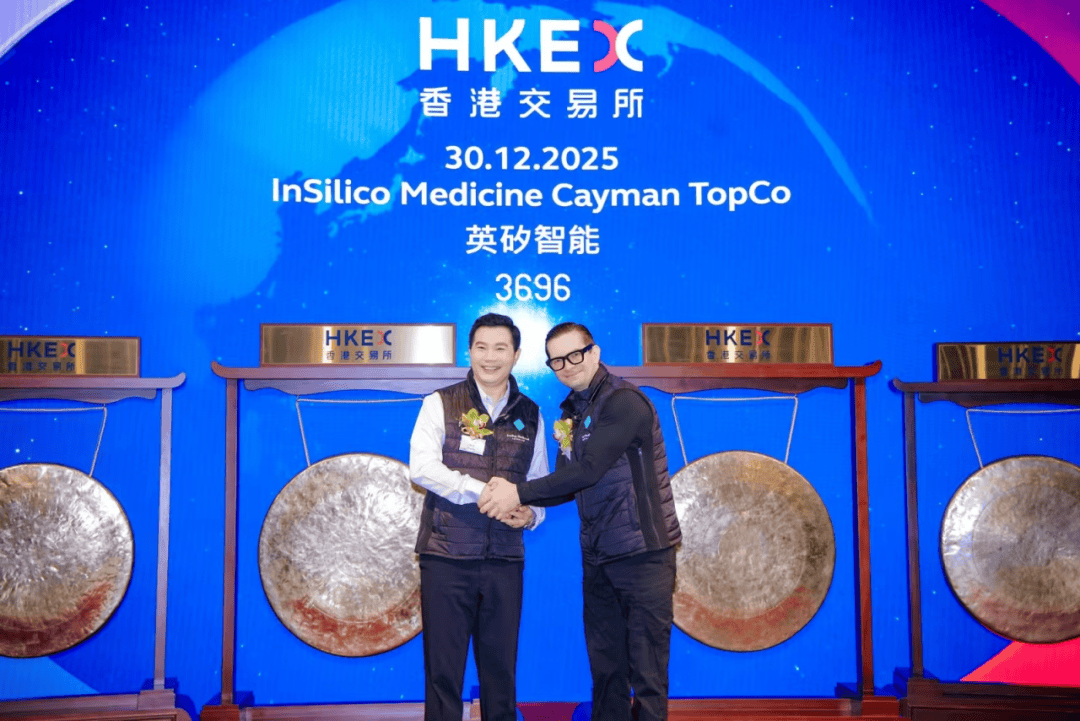
12月30日上午,香港证券交易所交易大厅内掌声雷动, 国内AI制药领军企业、宜兴赴港上市公司——英矽智能 (股票代码:03696.HK)InSilico Medicine Cayman TopCo(以下简称"英矽智能")正式在香港联交所挂牌交易,标志着这家深耕AI制药技术的硬科技企业迈入资本市场新阶段,也展示了宜兴通过 战略性股权投资带动新兴产业和未来产业发展的最新成果。 此次上市后,英矽智能将成为宜兴市第8家港交所上市企业,宜兴港交所上市企业数量位居无锡首位,全市上市企业总数也增至20家。 此次,英矽智能发行定价24.05港元/股,计划发行9469.05万股,预计募资约22.77亿港,将是2025年港股市场最大规模的生物科技IPO。发行募集的资金将 用于加大AI平台升级与自动化实验室建设,加速新分子、新机制、新靶点在多个疾病领域的研发推进,助力全球医药工业数智化转型。 今年初,英矽智能AI制药项目在市国控集团举行投资及落地签约活动,由市国控集团与锡创投联合设立的锡创兴宜健康产业基金,共同领投英矽智能E轮 1.23亿美元融资。此次合作不仅局限于资本层面,更在宜搭建了"基金+企业+项目"的平台,通过资本撬动创新 ...
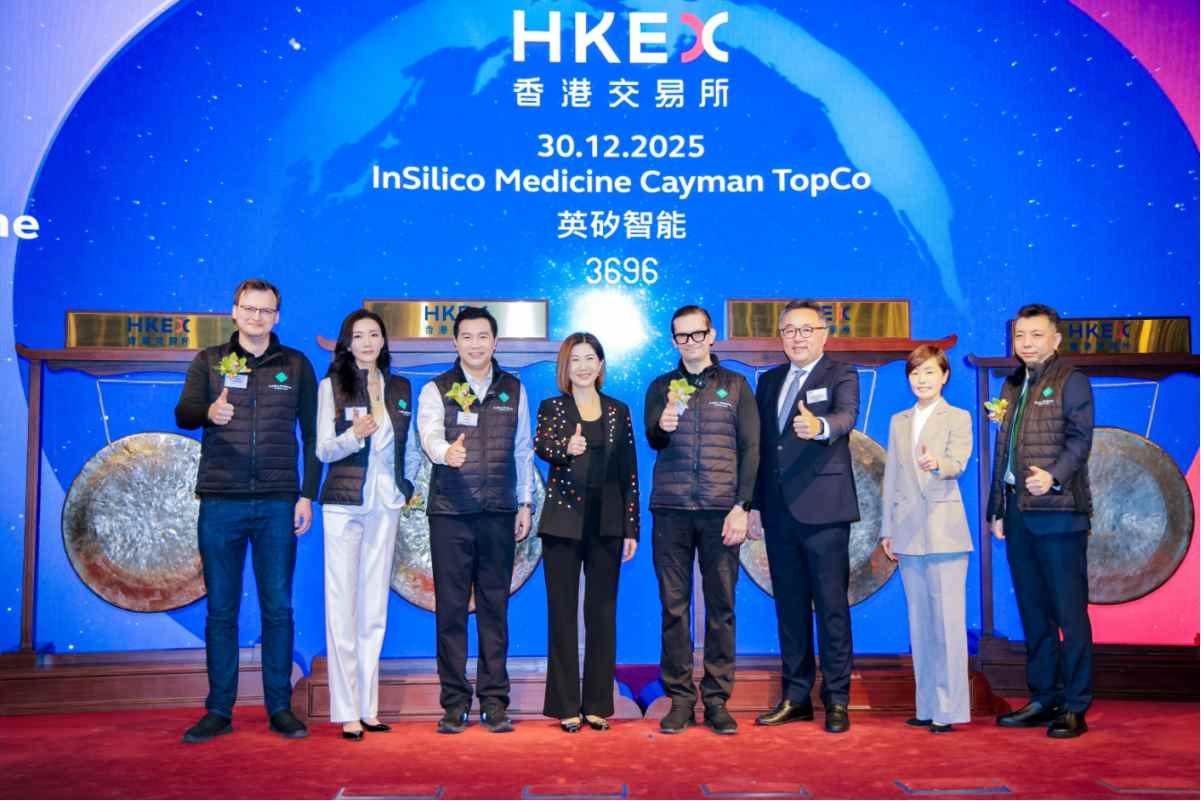
卡位港股AI技术赋能稀缺赛道,英矽智能背靠顶级投资阵容长期配置价值可期
Zhi Tong Cai Jing· 2025-12-30 02:16
近年来,人工智能(AI)正以惊人的速度从"技术突破"走向"全要素赋能"。尤其在AI制药领域,受益于AI算法和计算能力的深度赋能,生物医药研究达到了前 所未有的速度和精度,由此进入一个高效、个性化和革命性新时代。国际知名咨询公司麦肯锡在此前报告中预测,AI赋能每年有望为制药和医疗行业带来 600-1100亿美元的经济价值。 作为一家拥有独家AI技术平台,还能实现创新药研发及多领域深度赋能的独角兽企业,英矽智能(03696)如今登陆港股,为港股投资者在稀缺的AI赋能投资 赛道带来了一个重磅可选项。 12月30日,英矽智能正式在香港联交所主板挂牌交易。 在全球AI制药赛道更看重平台验证与商业化落地的下半场,作为全球少数实现AI药物发现和开发全流程覆盖的企业之一,英矽智能此次港股IPO能同时得到 豪华基石背书和市场投资者追捧,足以说明当下港股市场已在这家公司上达成了"价值共识"。 相较于随IPO进程逐渐对公司加深价投理解的众多散户投资者,更早之前就站队英矽智能的一众顶级资本,显然更深谙公司的长期价值。 此次IPO发行过程中,英矽智能集聚了包括全球制药巨头礼来公司、互联网龙头企业腾讯、新加坡主权基金淡马锡,以及施罗德、 ...
高瓴创投今日收获两大IPO:多年聚焦「AI+行业落地」的一次阶段性呈现
IPO早知道· 2025-12-30 01:50
Group 1 - The core viewpoint of the article is that AI is making significant inroads into real-world applications, as evidenced by the simultaneous IPOs of Woan Robotics and Insilico Medicine on December 30, 2025, both backed by Hillhouse Capital [2] - Hillhouse Capital has been an early investor in both companies, recognizing the potential of AI in transforming complex industries, with a focus on practical applications rather than just theoretical concepts [2][6] - The investment strategy of Hillhouse emphasizes the importance of AI's ability to operate in complex physical environments and high-uncertainty life sciences, prioritizing engineering feasibility and long-term validation over short-term hype [7][8] Group 2 - Woan Robotics aims to create embodied intelligent home service robots that can integrate with existing household devices, addressing the challenge of performing tasks in unstructured home environments [4] - Insilico Medicine focuses on restructuring the drug development process by embedding AI as a core engine rather than just a supportive tool, which is crucial in the high-risk, high-cost biopharmaceutical industry [6] - Both projects share common characteristics such as long cycles, complex engineering, and interdisciplinary challenges, indicating that Hillhouse's investment approach is consistent across different sectors, focusing on the real-world problem-solving capabilities of AI [6][8]
申万宏源:首次覆盖晶泰控股给予“买入”评级 从医药到AI4S全面布局
Zhi Tong Cai Jing· 2025-12-29 07:34
Core Viewpoint - The report from Shenwan Hongyuan highlights that Jingtai Holdings (02228) has established a complete closed loop for early drug research and development through its core technologies of "physical computing + AI + robotics" [1] Group 1: Technology and Business Model - The company has expanded its business from AI drug development to a broader "AI4S" platform, showcasing strong technological breadth and platform value [1] - The core technologies include breakthroughs in physical algorithms (crystal structure prediction + solid-state research), construction of underlying physical engines (XEF high-precision force field + XEP free energy perturbation), and expansion into drug modalities (small molecules + large molecules + peptides) [2] Group 2: Financial Performance - Revenue for 2022-2025H1 is projected to be 130 million, 170 million, 270 million, and 520 million yuan, with year-on-year growth rates of 112.3%, 30.8%, 52.8%, and 403.8% respectively [3] - The core business of drug discovery solutions secured a partnership with Dove Tree worth $5.99 billion, with an initial payment of $51 million received [3] Group 3: Market Potential and Technology Transfer - The company accelerates innovative drug development by enhancing efficiency in key stages such as target discovery, lead compound screening, and preclinical research, with multiple cases demonstrating the effectiveness of AI [4] - The underlying technology logic can be transferred to new materials and other fields, with the potential AI service market in drug research and materials development reaching nearly $50 billion in the long term [4] Group 4: Recent Developments and Future Projections - In 2025H1, the company made significant progress in its business, achieving important milestones in collaboration with Dove Tree and advancing multiple pipelines [5] - The company is expected to achieve revenues of 795 million, 985 million, and 1.421 billion yuan in 2025-2027, with year-on-year growth rates of 198%, 24%, and 44% respectively [5]

申万宏源:首次覆盖晶泰控股(02228)给予“买入”评级 从医药到AI4S全面布局
智通财经网· 2025-12-29 07:33
Core Viewpoint - The report from Shenwan Hongyuan highlights that Jingtai Holdings (02228) has established a complete closed loop for early drug research and development based on its core technologies of "physical computing + AI + robotics" [1] Group 1: Technology and Business Model - The company has expanded its business from AI drug development to a broader "AI4S" platform, showcasing strong technological breadth and platform value [1] - The core technologies include breakthroughs in physical algorithms (crystal structure prediction + solid-state research), construction of underlying physical engines (XEF high-precision force field + XEP free energy perturbation), and expansion into drug modalities (small molecules + large molecules + peptides) [2] Group 2: Revenue Growth - Revenue figures for 2022 to H1 2025 are projected at 130 million, 170 million, 270 million, and 520 million yuan, reflecting year-on-year growth rates of 112.3%, 30.8%, 52.8%, and 403.8% respectively [3] Group 3: Technological Migration and Market Potential - The technology can accelerate innovative drug development by enhancing key stages such as target discovery, lead compound optimization, and preclinical research, with AI demonstrating actual efficiency improvements [4] - The underlying technology logic can be migrated to new materials and other fields, with the potential AI service market in drug research and materials development reaching nearly 50 billion USD in the long term [4] Group 4: Laboratory Capabilities and Business Progress - The company possesses both dry and wet laboratory capabilities, with significant progress in business development, including a partnership with DoveTree and advancements in multiple pipelines [5] - The company has successfully established AI models for predicting synthetic reactions and optimizing reaction conditions, and has acquired Liverpool ChiroChem (LLC), a leading chiral molecule experimental library [5] Group 5: Profit Forecast - The company is expected to achieve revenues of 795 million, 985 million, and 1.421 billion yuan in 2025-2027, with year-on-year growth rates of 198%, 24%, and 44% respectively [5] - Adjusted net profit forecasts for 2025-2027 are projected at -23 million, 75 million, and 309 million yuan [5]
创新药行业:跨越拐点,迎接价值兑现新纪元
2025-12-29 01:04
Summary of Key Points from the Conference Call Industry Overview - The innovative drug sector is experiencing a valuation recovery in 2024, despite fluctuations caused by trade tensions and the Yipin Hong incident, achieving excess returns for the year. The market's heightened expectations for BD (business development) transactions are a significant driving factor [1][2] - Current deep adjustments in the sector are beneficial as they help eliminate valuation bubbles, directing funds towards companies with genuine global innovation capabilities and clear commercialization paths, thus supporting long-term industry development [1][4] Core Insights and Arguments - Multiple policies have been implemented to support the innovative drug industry, including comprehensive support across the supply chain, the introduction of insurance funds, and optimization of centralized procurement, creating a stable and predictable policy environment [1][5] - The medical insurance fund has a surplus, with total revenue around 3.5 trillion yuan and expenditures below 3 trillion yuan, resulting in a surplus rate of approximately 15%. The introduction of commercial insurance in 2025 will provide a more diversified payment system for high-value innovative drugs, achieving a win-win situation [1][5] - China has a significant advantage in biomedical engineering resources, characterized by a large scale, low cost, and a younger workforce. The number of science and engineering PhD graduates in China has surpassed that of the United States [1][8] - The output of biomedical papers in China is rapidly increasing, with R&D expenditures reaching 119 billion yuan in 2024, providing a solid foundation for innovative drug development [1][10] Market Performance and Trends - The overall performance of the innovative drug market in 2025 is expected to be driven by BD transactions, with H-shares leading over A-shares. The market experienced a recovery in liquidity, but did not achieve excess returns [2] - A significant drop in the innovative drug sector on December 15 was triggered by the Yipin Hong incident, which raised concerns about future sales and profitability due to a major acquisition by Sobie [3] - The current deep adjustment is seen as a necessary reset, allowing for a focus on companies with strong clinical data and clear commercialization paths, supported by policy backing and technological breakthroughs [4] Technological Developments - Advances in AI technology are accelerating new drug development, improving efficiency and success rates, and are being applied in disease diagnosis and treatment, promoting the intelligent development of the pharmaceutical health industry [1][11] Future Prospects - The domestic innovative drug market is entering a new phase of revenue and profit acceleration, driven by optimized medical insurance negotiations, technological advancements, and the potential for significant single products [12] - Since 2015, China's innovative drug R&D has surged, with its global share increasing to approximately 33%, and is expected to exceed 50% in the long term due to the engineer advantage [13] Investment Considerations - Investors in the pharmaceutical industry should be patient and maintain a long-term perspective, as the sector has lengthy R&D and market entry cycles. Key risks include R&D failures, regulatory changes, and intense market competition [18] - A diversified investment approach through index-based strategies is recommended to mitigate risks associated with individual companies or sectors [18][19] ETF Opportunities - The Hong Kong Stock Connect biotech ETF covers innovative drugs, CROs, medical devices, and AI healthcare, benefiting from reforms that facilitate financing for biotech companies [20] - In the A-share market, ETFs focusing on the innovative drug sector and related fields can help investors achieve asset diversification and reduce risks [21]