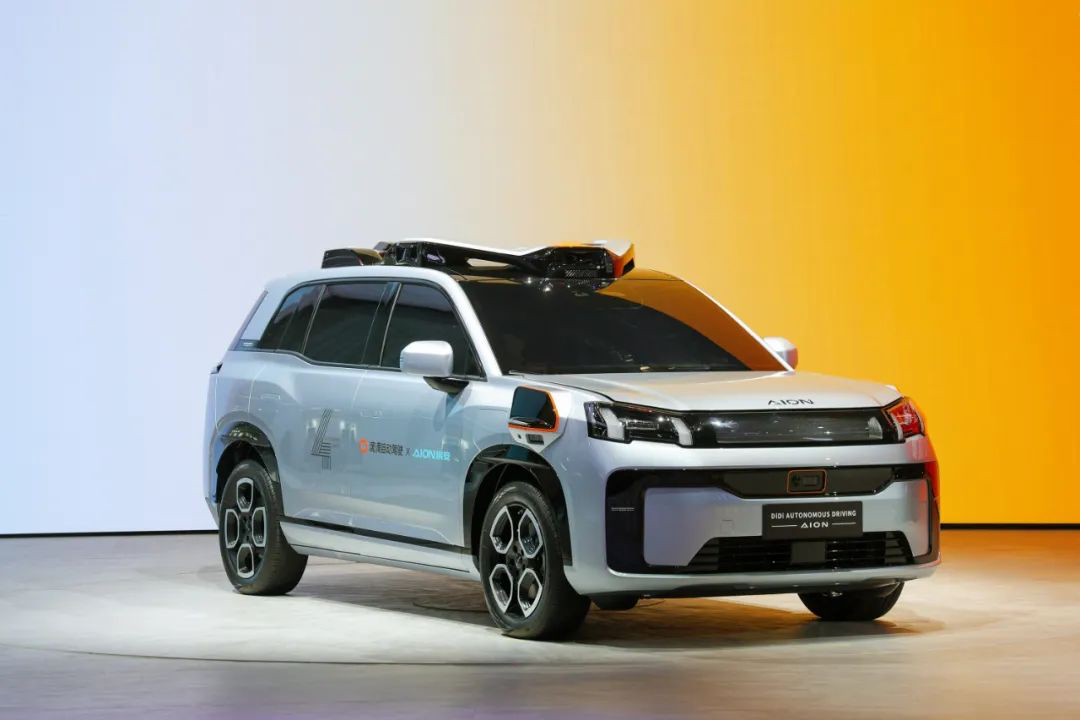
L4级自动驾驶

Search documents
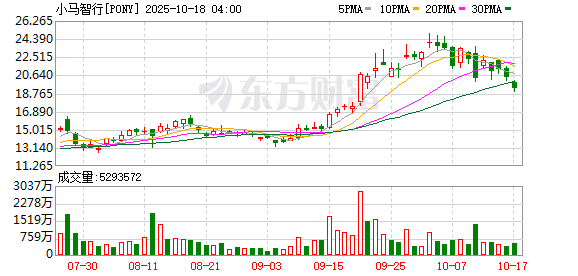
小马智行 港股IPO新消息
Shang Hai Zheng Quan Bao· 2025-10-18 05:54
Core Insights - Pony AI Inc. has successfully passed the Hong Kong Stock Exchange hearing and plans to issue up to 102,146,500 ordinary shares for a dual listing in Hong Kong and the US [2] - The company has shown significant revenue growth, particularly in its Robotaxi segment, which saw a 178.8% year-on-year increase in revenue for the first half of 2025 [5][6] - Pony AI is actively expanding its international operations, having received permits in Luxembourg, Singapore, and Dubai, and signed a memorandum of understanding with Stellantis to accelerate autonomous vehicle solutions in Europe [6][10] Revenue Growth - The company has maintained steady revenue growth since 2022, with a notable 43.3% increase in revenue to $3,543 million (approximately 254 million RMB) in the first half of 2025 [5] - The Robotaxi segment generated $325.6 million (approximately 23.19 million RMB) in revenue during the same period, reflecting a strong performance [5] International Expansion - In March, Pony AI received permission from the Luxembourg Ministry of Transport for operations [6] - In September, the company announced a partnership with ComfortDelGro in Singapore to deploy autonomous vehicles and services [6] - Pony AI has also obtained testing permits for autonomous driving in Dubai and signed a memorandum with Stellantis for collaboration in Europe [6] Autonomous Driving Development - The company is advancing its Level 4 autonomous driving capabilities, with plans for large-scale commercialization [8][10] - In 2025, Pony AI began testing fully autonomous vehicles on public roads in Beijing and Shanghai, and has launched paid autonomous ride-hailing services in major cities [10] - The company aims to achieve operational breakeven with a fleet of 1,000 autonomous taxis in urban areas [12] Strategic Partnerships - Since its US listing, Pony AI has attracted investments from notable institutions such as Baillie Gifford, Baron Capital, and ARK Invest [7] - The company has established strategic partnerships with OEMs and third-party fleet companies to enhance its market strategy for autonomous driving services [10][12]

汽车早报|新问界M7交付突破1万台 智界回应“换用宁德时代电芯”
Xin Lang Cai Jing· 2025-10-18 00:44
Group 1: National Standards and Industry Performance - The Ministry of Industry and Information Technology (MIIT) is soliciting public opinions on six mandatory national standards, including "Basic Requirements for Automotive Steering Systems," with a public consultation period from October 18 to October 24, 2025 [1] - In September, commercial vehicle production and sales reached 376,000 and 368,000 units respectively, showing a month-on-month increase of 19.3% and 16.3%, and a year-on-year increase of 27.7% and 29.6% [1] - From January to September 2025, commercial vehicle production and sales totaled 3.091 million and 3.117 million units, reflecting year-on-year growth of 9.4% and 7.8% [1] - The pickup truck market saw sales of 46,000 units in September, a year-on-year decrease of 1.9% but a month-on-month increase of 14.6%, maintaining a mid-high level compared to the past five years [1] - From January to September 2025, pickup truck sales reached 432,000 units, a year-on-year increase of 11.2% compared to the same period in 2024 [1] Group 2: User Satisfaction and Automotive Developments - The user satisfaction index for China's fuel vehicle industry stands at 81 points (out of 100), maintaining the highest historical level, with a user complaint rate dropping to 9% and loyalty score reaching 79 points, both marking the best performance in nearly a decade [2] - The new Wanjie M7 has surpassed 10,000 deliveries within 21 days of its launch, available in extended range and pure electric versions, starting at a price of 279,800 yuan [3] - Zhijie responded to the news of switching to CATL battery cells, stating that a batch of vehicles will use CATL batteries for concentrated delivery in October and November, while subsequent batches will switch to Zhongchuang ternary lithium batteries [3] - Xiaoma Zhixing announced a partnership with Stellantis to develop L4 autonomous vehicles for the European market, focusing initially on light commercial vehicles and planning to start testing in Luxembourg [3] Group 3: Corporate Leadership Changes - Porsche announced discussions regarding the potential succession of Oliver Blume as the executive board chairman, with former McLaren CEO Michael Leiter being considered as a candidate [4]

小马智行通过聆讯:「全球Robotaxi第一股」有望率先双重上市
Sou Hu Cai Jing· 2025-10-17 11:44
Core Viewpoint - Pony AI Inc. is set to achieve a dual listing in the U.S. and Hong Kong, marking a significant milestone as the first global Robotaxi company to go public, with a strong backing from major investment firms and a notable increase in stock price since its IPO [2][3][15]. Group 1: IPO and Market Performance - Pony AI has successfully passed the Hong Kong Stock Exchange hearing and plans to list under the code "PONY" on NASDAQ in November 2024, making it the largest IPO in the U.S. autonomous driving sector for 2024 [2]. - Since its U.S. IPO, Pony AI has attracted significant investments from renowned institutions, with its stock price rising over 42% from $15.05 to $21.39 [2][15]. - The company is expected to enhance its investor base and liquidity through the upcoming Hong Kong listing, potentially allowing for participation in the Stock Connect program [3]. Group 2: Business Operations and Growth - Pony AI operates over 680 Robotaxi vehicles, with plans to exceed 1,000 by the end of the year, and has accumulated over 55 million kilometers of autonomous driving testing mileage [4][9]. - The company reported a 157.8% year-on-year increase in Robotaxi business revenue for Q2, reaching 10.9 million RMB ($1.5 million), driven by a surge in user demand and vehicle scale [6]. - The unit economic model has improved significantly, with expectations to achieve operational breakeven for individual vehicles by 2025, marking a transition to profitable operations [9]. Group 3: Global Expansion and Partnerships - Pony AI has accelerated its global business expansion, establishing R&D centers in multiple countries and forming strategic partnerships with major platforms like Uber and local transportation authorities in Dubai and Qatar [10][11][13]. - The company aims to commercialize its Robotaxi services in international markets, with plans for testing and deployment in regions such as Singapore and the Middle East [10][11][13]. - According to forecasts, the global Robotaxi market is expected to reach $2.9 billion by 2025, with China projected to become the largest market [14]. Group 4: Investment Interest and Market Position - Pony AI has garnered attention from long-term investment funds, with significant purchases from ARK Invest and other international funds, indicating strong market confidence [15][16]. - The company has been included in the NASDAQ China Golden Dragon Index, attracting more investments from ETFs and hedge funds [16]. - Following the dual listing, Pony AI is anticipated to benefit from increased liquidity and capital reserves, enhancing its competitive position in the L4 autonomous driving sector [16].
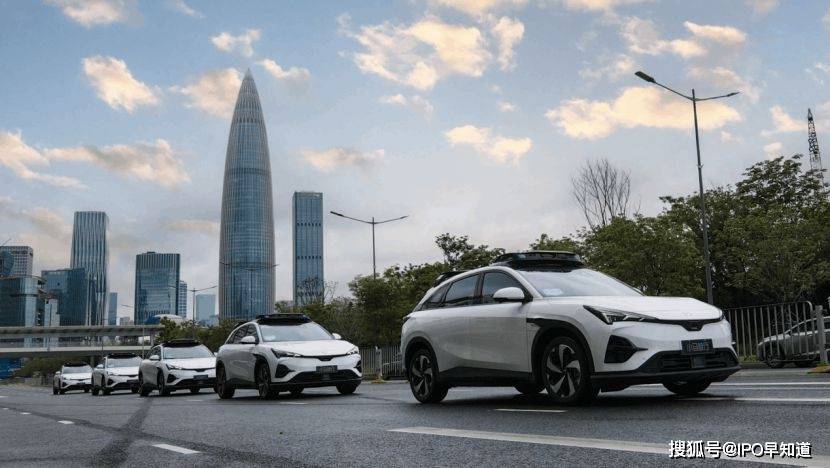
小马智行通过聆讯:「全球Robotaxi第一股」有望率先实现“美+港”双重上市
IPO早知道· 2025-10-17 11:14
Core Viewpoint - Pony AI Inc. is set to achieve a dual listing in the U.S. and Hong Kong, marking a significant milestone as the first global Robotaxi company to go public, with strong institutional backing and a notable increase in stock price since its IPO [3][4][19]. Group 1: IPO and Market Position - Pony AI has passed the Hong Kong Stock Exchange hearing and plans to list on NASDAQ under the code "PONY" in November 2024, potentially becoming the largest IPO in the U.S. autonomous driving sector for 2024 [3]. - The company has attracted significant investments from renowned institutions such as Baillie Gifford, Baron Capital, and ARK Invest, with its stock price rising over 42% since its Q2 2025 earnings report [3][19]. - The successful listing in Hong Kong is expected to broaden the investor base and enhance liquidity, potentially allowing for participation in the Hong Kong Stock Connect [4]. Group 2: Fleet and Operations - Pony AI operates a fleet of over 680 Robotaxi vehicles, with plans to exceed 1,000 by the end of the year, and aims to achieve operational profitability per vehicle by 2025 [5][11]. - The company has accumulated over 55 million kilometers of autonomous driving testing, including more than 10 million kilometers of fully autonomous testing [6]. - The Robotaxi service operates 24/7 in cities like Guangzhou and Shenzhen, with an average of over 15 orders per day, marking a significant milestone in commercial operations [6]. Group 3: Financial Performance - In Q2 2025, Pony AI's Robotaxi business revenue surged by 157.8% year-on-year to 10.9 million RMB (1.5 million USD), driven by increased user demand and an expanded fleet [8]. - The company has optimized its unit economic model, significantly improving its cost structure and aiming for a break-even point with a fleet of 1,000 vehicles [11]. Group 4: Global Expansion - Pony AI has established R&D centers in multiple locations, including Silicon Valley and Luxembourg, and is expanding its autonomous driving services in countries like South Korea, Saudi Arabia, and the UAE [13][14]. - Recent partnerships with Uber and local authorities in Dubai and Qatar aim to accelerate the commercialization of Robotaxi services in these regions [14][16]. - The global Robotaxi market is projected to reach 29 billion USD by 2025 and 666 billion USD by 2030, with China expected to dominate this market [17][18]. Group 5: Investment and Market Sentiment - The company has received multiple buy ratings from leading investment banks and has been included in the NASDAQ China Golden Dragon Index, attracting more long-term investors [21]. - Notable investments from long-term funds, including ARK Invest, indicate strong market confidence in Pony AI's future growth and technological capabilities [19][20].
滴滴自动驾驶张博:2026年底前在若干区域推出接近有人驾驶体验的Robotaxi出行服务
Guan Cha Zhe Wang· 2025-10-17 10:33
Core Insights - Didi's co-founder and CEO of Didi Autonomous Driving, Zhang Bo, presented a "three five-year plan" for autonomous driving at the 2025 World Intelligent Connected Vehicle Conference [1] - The first five-year plan (2016-2021) focused on developing L4-level autonomous driving core technologies, which have now been fully mastered [1] - The second five-year plan (2022-2026) aims to validate L4-level autonomous driving in the Chinese market, with plans to launch Robotaxi services by the end of 2026 that can cover operational costs through user revenue [1] - The third five-year plan (2027-2032) will focus on global expansion, integrating AI with vehicles in various countries, leveraging a user base of over 50 million daily rides [1] - Didi Autonomous Driving recently announced a Series D funding round totaling 2 billion yuan, aimed at enhancing AI research and promoting the application of L4 autonomous driving [1] Company and Industry Summary - L4 autonomous driving technology is considered one of the most significant technological transformations in the next decade, enhancing travel safety, efficiency, and experience [2] - Didi Autonomous Driving has nearly a decade of experience in AI, mass production, and operations, emphasizing responsible technological innovation while exploring new employment opportunities [2]


文远知行亮相2025世界智能网联汽车大会,展现L4级自动驾驶规模化实力
Ge Long Hui· 2025-10-17 08:54
Core Viewpoint - The 2025 World Intelligent Connected Vehicles Conference was held in Beijing, showcasing advancements in intelligent connected vehicles and featuring WeRide's autonomous driving solutions [1][2]. Group 1: Event Overview - The conference, themed "Gathering Wisdom and Energy, Connecting the Infinite," was co-hosted by China's Ministry of Industry and Information Technology, Ministry of Transport, and Beijing Municipal Government, attracting over 4,000 representatives from more than 10 countries and regions [2]. - WeRide showcased its new generation Robotaxi GXR and autonomous driving minibus Robobus, providing autonomous shuttle services across multiple key locations during the event [1][7]. Group 2: WeRide's Contributions - WeRide's founder and CEO, Han Xu, participated in a safety forum, emphasizing that safety is the top priority for the large-scale deployment of autonomous vehicles [2][5]. - The company deployed nearly 10 Robotaxi GXR and multiple Robobus vehicles to offer shuttle services, demonstrating its capabilities in L4-level autonomous driving technology and large-scale operations [7]. Group 3: Product Showcase - WeRide presented four autonomous driving products at the static display area, including Robotaxi GXR, Robobus, autonomous sanitation vehicle S6, and unmanned street sweeper S1, highlighting its technological layout and commercialization progress in smart mobility and sanitation [9]. - The Robotaxi GXR is designed for rapid deployment in any global city, supporting 24/7 fully unmanned commercial operations, while Robobus targets urban micro-circulation scenarios [9].

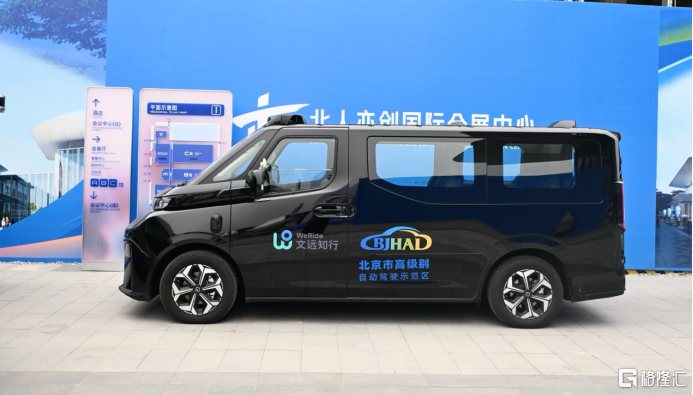
小马智行获港股上市备案!Robotaxi收入占比不足10%,何时盈利?
Sou Hu Cai Jing· 2025-10-16 11:08
Core Insights - Xiaoma Zhixing has received approval from the China Securities Regulatory Commission for its overseas listing, planning to issue up to 102 million ordinary shares on the Hong Kong Stock Exchange [2] - The company aims to achieve profitability in its Robotaxi business by scaling up to 50,000 vehicles, with a projected breakeven timeline of 2028-2029 [3] Financial Performance - In the first half of 2025, Xiaoma Zhixing reported revenue of $35.43 million, a year-on-year increase of 43.34%, but a net loss of $90.64 million, widening by 75.07% [2] - The revenue from Robotruck services decreased by 4.08% to $17.30 million, while revenue from technology licensing and application services surged by 169.68% to $14.88 million [4] - Robotaxi service revenue reached $3.26 million, up 178.77%, but accounted for less than 10% of total revenue [4] Operational Efficiency - The company is optimizing its "person-vehicle" remote ratio to improve operational efficiency, targeting a ratio of 1:30 by the end of 2025 [5] - Insurance costs for vehicles have decreased by 18% compared to the previous renewal cycle, contributing to improved unit economics for Robotaxi [5] Market Position and Investor Sentiment - Despite ongoing losses and fluctuating gross margins, Xiaoma Zhixing remains favored by capital markets, attracting investments from notable firms such as Sequoia Capital China and IDG Capital [6] - In the second quarter of 2025, 14 top international institutions increased their holdings in Xiaoma Zhixing, indicating strong institutional support [7] Competitive Landscape - Xiaoma Zhixing is the only L4 autonomous driving company included in the Nasdaq China Golden Dragon Index, contrasting with its competitor, WeRide, which has seen a nearly 30% decline in stock price since its listing [8] - While Xiaoma Zhixing's Robotaxi revenue contribution is lower than that of WeRide, both companies are expected to benefit from new funding following their Hong Kong listings, which will aid in technology advancement and fleet expansion [8]
小马智行、文远知行筹备香港IPO
Sou Hu Cai Jing· 2025-10-15 09:01
Group 1 - The core viewpoint of the articles highlights that Chinese Robotaxi companies, Xiaoma Zhixing and Wenyuan Zhixing, are planning to raise approximately $2.3 billion and $1.1 billion respectively through an IPO in Hong Kong [1][2] - Both companies have received approval from the China Securities Regulatory Commission to issue new shares within the next 12 months [1] - Xiaoma Zhixing and Wenyuan Zhixing are currently listed on the NASDAQ and plan to issue around 1.02 million shares each [1] Group 2 - UBS predicts that the number of Robotaxis in China's first-tier cities could reach 300,000 by 2030, and potentially grow to 4 million by the end of the 2030s as consumer acceptance increases [2] - Chinese Robotaxi companies are accelerating their overseas expansion, with Xiaoma Zhixing conducting public road tests in Doha, Qatar, and Wenyuan Zhixing testing in Riyadh, Saudi Arabia [2] - The trend of Chinese new energy vehicle companies seeking financing in Hong Kong is notable, with CATL completing an IPO raising $5.3 billion earlier this year [2]
焕新极氪001正式上市,全系升级900V高压架构;比亚迪中标新加坡L4级智驾巴士试点项目丨汽车交通日报
创业邦· 2025-10-12 10:47
Group 1 - Changan Automobile has published a patent for optimizing the aerodynamic performance of vehicles, which involves computer-aided engineering simulation techniques to establish control equations for the airflow around the vehicle [2] - The refreshed Zeekr 001 has been officially launched with a starting price of 269,800 yuan, featuring a 900V high-voltage architecture that allows for a 10% to 80% charge in just 7 minutes, and a 0-100 km/h acceleration in 2 seconds [2] Group 2 - BYD has won the bid for Singapore's L4 autonomous bus pilot project, which is the first official project for L4 level autonomous driving buses in Singapore, set to begin testing in mid-2026 [3] - Yueda Kia reported a total sales volume of over 187,000 vehicles in the first nine months of 2023, marking a year-on-year increase of 6.4%, with September production reaching 23,600 vehicles [3]

滴滴自动驾驶获20亿元融资
Shang Hai Zheng Quan Bao· 2025-10-11 08:52
Core Viewpoint - Didi Autonomous Driving has secured a Series D funding round totaling 2 billion yuan, aimed at enhancing AI research and advancing L4-level autonomous driving applications [1][2][3] Funding and Investment - The funding round includes investments from various entities such as Zhongguancun Science City Technology Growth Fund, Beijing Information Industry Development Investment Fund, Beijing Artificial Intelligence Industry Investment Fund, GAC Group, Guangzhou Guanghua Fund, and Didi itself [2] - The capital raised will be directed towards increasing investment in AI research and facilitating the implementation of L4-level autonomous driving [3] Autonomous Driving Development - The autonomous driving sector is experiencing rapid growth, with companies like Enjoy Travel and Ruqi Mobility accelerating their efforts in the L4-level autonomous driving field [3][13] - Didi's next-generation pre-installed autonomous vehicle is scheduled for delivery by the end of 2025, marking a significant milestone in the company's autonomous driving ambitions [4][10] - Didi has been actively testing autonomous vehicles on public roads in cities such as Beijing, Shanghai, Suzhou, Hefei, and Guangzhou, having obtained the necessary permits [6][9] Technological Advancements - Didi's autonomous driving division has adopted an innovative mixed dispatch model, integrating autonomous taxi services into the Didi app, which is expected to expedite the rollout of L4-level autonomous driving technology [7] - The company has launched a 24-hour autonomous driving operation and maintenance center, enhancing the safety and efficiency of its autonomous driving services [11] Industry Trends - The autonomous taxi sector is moving towards large-scale commercialization, with various players like Pony.ai, WeRide, and Baidu's Apollo actively pursuing scaled operations [17] - The industry is transitioning from a phase characterized by technology validation and pilot commercialization to one focused on large-scale development [17] - Companies in the mobility sector are increasingly recognizing the necessity of advancing towards autonomous taxi services, with 2025 anticipated to be a pivotal year for mass production and commercialization [16]