《国际紧急经济权力法》

Search documents
美最高法院裁定特朗普政府大规模加征关税违法
Zhong Guo Xin Wen Wang· 2026-02-21 00:57
Core Viewpoint - The U.S. Supreme Court ruled that the Trump administration's imposition of large tariffs using the International Emergency Economic Powers Act was illegal, emphasizing that the Constitution grants Congress the power to levy taxes, including tariffs [1][2]. Group 1: Supreme Court Ruling - The Supreme Court's decision was made with a 6-3 vote, with Chief Justice Roberts stating that the Constitution clearly assigns the power to tax to Congress, not the executive branch [1]. - Justice Kavanaugh, in a dissenting opinion, acknowledged the legality of the tariff policy based on textual, historical, and precedential grounds, despite questioning its wisdom [1]. Group 2: Implications of the Ruling - The ruling specifically limits the President's ability to impose tariffs under the International Emergency Economic Powers Act but does not entirely strip the President of the power to levy tariffs [1]. - The majority opinion did not address whether companies that paid substantial tariffs would receive refunds from the government [1]. Group 3: Background on the Law - The International Emergency Economic Powers Act was enacted in 1977, allowing the President to manage economic affairs in response to foreign threats during a declared national emergency [1]. - Trump was the first president to invoke this law to impose tariffs, announcing a national emergency in April of the previous year and implementing a 10% minimum baseline tariff on all trading partners [1].
史诗级利好!关税违法,市场大涨
Xin Lang Cai Jing· 2026-02-20 23:09
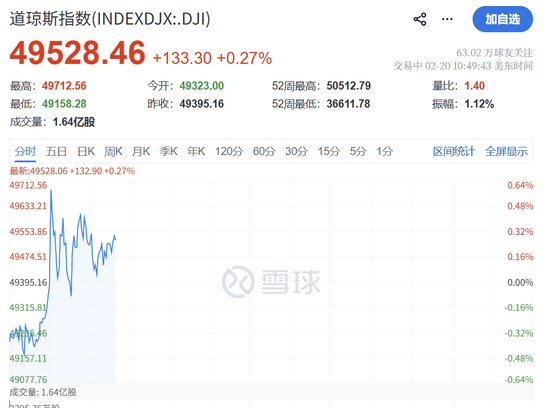
【导读】关税违法,市场大涨 中国基金报记者 泰勒 兄弟姐妹们啊,大年初五,美国最高法院送来史诗级利好! 2月20日晚间,美股三大指数盘中直线拉升。 | 高: 6909.87 | 今开:6843.26 | 52周最高: 7002.28 | 量比: 1.17 | | --- | --- | --- | --- | | E: 6836.33 | 昨收:6861.89 | 52周最低: 4835.04 | 振幅:1.07% | | 交量: 8.15亿股 | | | | 富时中国 A50 期货 CFD(2602) < ◀ 期 CHA50CFD 14831.00 +106.00 +0.72% it (00 .. 02-20 23:52:20 今开 最高 14831.00 持仓量 100.63万 14715.00 昨结算 振幅 1.01% 最低 14725.00 14683.00 富时中国 A50 指数 14745.08 -1.27% 上证指数 4082.07 -1.26% > MSCI中国A股 1476.11 0.00% > 分时 五日 ස (0) 均价:14745.12 最新:14831.00 +106.00 +0.7 ...

若最高法院裁决不利,美国面临超1750亿美元关税退款风险
Xin Lang Cai Jing· 2026-02-20 11:42
作者:戴维・劳德 宾夕法尼亚大学沃顿商学院预算模型(PWBM)的经济学家周五表示,如果美国最高法院裁定总统唐 纳德・特朗普广泛实施的紧急关税措施违法,美国将面临超过 1750 亿美元已征关税被退还的风险。 宾夕法尼亚大学无党派财政研究机构沃顿商学院预算模型的高级经济学家利斯尔・博勒称,该估算是应 路透社请求,通过自下而上的预测模型得出的。该模型依据特朗普政府依据《国际紧急经济权力法》 (IEEPA)等法律征收的、按产品和国家划分的具体关税税率进行测算。 最高法院裁决在即 美国最高法院最早可能于周五就依据《国际紧急经济权力法》征收关税的合法性作出裁决。若这些关税 被裁定无效,进口商预计将蜂拥向美国海关与边境保护局(CBP)申请退还过去一年缴纳的进口关税。 特朗普一直大力宣扬其各项关税带来的财政收入,美国国会预算办公室估算,未来十年这些关税年均收 入约为 3000 亿美元。但此次估算显示,若法院作出不利裁决,其中相当大一部分可能需要退还。 1750 亿美元的退款规模,将超过 2025 财年美国交通部(1276 亿美元)与司法部(449 亿美元)的财政 支出总和。 两种测算口径 博勒表示,专为长期收入预测构建的 P ...
美媒:美众议院通过决议,反对对加拿大加征关税
Huan Qiu Shi Bao· 2026-02-12 22:56
Group 1 - The U.S. House of Representatives passed a resolution opposing President Trump's tariffs on Canada, but the vote is largely symbolic as it requires Senate approval and presidential signature, which is unlikely to happen [1] - Trump threatened Republican lawmakers who oppose the tariffs with severe consequences in the upcoming elections, asserting that tariffs provide economic benefits and national security [1] - Trump has imposed a series of tariffs on Canada since his re-election, including a potential 100% tariff on Canadian imports [1] Group 2 - U.S. tariff revenue has significantly increased, reaching $30 billion in January alone, with a total of $124 billion for the fiscal year to date [2] - A survey indicated that a large number of American voters are dissatisfied with the current economic situation, with 54% opposing the government's tariff policy [2] - The U.S. Supreme Court is deliberating on the legality of tariffs imposed under the International Emergency Economic Powers Act (IEEPA), with potential refunds for businesses if deemed illegal [2]
国家紧急状态是“万能钥匙”?
Xin Lang Cai Jing· 2026-02-01 06:55
Group 1 - The core point of the article discusses President Trump's frequent declarations of a national emergency, which allows him to bypass Congress and utilize extraordinary powers to address perceived threats [1][2][3] - The national emergency status is defined under U.S. law as a specific legal condition that grants the President temporary authority to mobilize resources and take actions typically prohibited by law [1] - Trump has declared a national emergency 11 times since returning to the White House, making him the president with the most declarations since the National Emergencies Act was enacted [2] Group 2 - Declaring a national emergency allows the President to act without Congressional approval, enabling swift implementation of policies such as economic sanctions against foreign entities [2][3] - The use of national emergency status has been criticized for potentially leading to an abuse of power, as it allows the President to unilaterally impose measures that may not constitute genuine emergencies [3][4] - Legal challenges have arisen against Trump's use of the International Emergency Economic Powers Act for imposing tariffs, with courts ruling some of his actions as unlawful [4]
伦敦银处上涨趋势 关税暴露非约束条约问题
Jin Tou Wang· 2026-01-19 04:23
Group 1 - London silver is currently trading above $93.11, with an opening price of $90.61 per ounce and a current price of $93.28, reflecting a 3.71% increase [1] - The highest price reached was $94.36, while the lowest was $90.50, indicating a short-term oscillating trend in the market [1] Group 2 - The President announced new measures on the Truth Social platform, which seem to follow the precedent of the controversial International Emergency Economic Powers Act, granting broad powers in the face of "unusual and extraordinary threats" [1] - The Supreme Court may soon decide whether to overturn tariffs implemented under this act, potentially jeopardizing a new round of aid funding and openly challenging judicial intervention in a new trade war [1] - Scott Lincicome from the Cato Institute warned that the new threats expose the vulnerabilities of relying on unilateral agreements rather than binding treaties [1]
美国最高法院暂未公布对特朗普关税的判决,市场紧盯下周三
华尔街见闻· 2026-01-10 10:48
Core Viewpoint - The U.S. Supreme Court has not yet made a ruling on the legality of tariffs imposed by the Trump administration, leaving the future of this key economic policy uncertain [1][3]. Group 1: Supreme Court Ruling - The Supreme Court will not announce a decision on the Trump tariffs on January 9, with the next announcement scheduled for January 14 [1]. - The ruling will address two main issues: whether the government can impose tariffs under the International Emergency Economic Powers Act (IEEPA) and if refunds are necessary for importers who have already paid tariffs [3]. Group 2: Market Reactions and Implications - The lack of a ruling led to a decline in stocks related to tariffs, highlighting the market's sensitivity to the outcome [3]. - Analysts predict a mixed ruling, which may limit the government's ability to use tariffs as a tool for national security or negotiation, potentially impacting fiscal conditions [8][11]. Group 3: Alternative Strategies - Even if the court rules against the Trump administration, there are alternative methods to implement tariffs without relying on the IEEPA [6][10]. - The administration has backup plans in place to maintain tariff levels, indicating a proactive approach to potential legal setbacks [10]. Group 4: Financial Impact - Tariffs are projected to generate approximately $195 billion in revenue for the fiscal year 2025 and $62 billion for 2026, emphasizing their significance to the U.S. Treasury [9]. - The actual impact of tariffs has been less severe than expected, with limited inflation effects and a significant reduction in the trade deficit, which fell to its lowest level since the 2009 financial crisis [14].

关税,深夜重磅!美最高法院:暂缓裁决!
Zheng Quan Shi Bao· 2026-01-09 16:15
Group 1 - The U.S. Supreme Court will not make a ruling on the Trump administration's tariff case on January 9, focusing on the legality of tariffs imposed under the International Emergency Economic Powers Act (IEEPA) and potential refunds to importers if deemed illegal [1] - The Trump administration's tariffs were initially intended as an emergency measure to prevent fentanyl influx into the U.S. [1] - U.S. Treasury Secretary emphasized that a negative ruling could limit the President's flexibility in using tariffs as negotiation tools, which would be a loss for the American public [1] Group 2 - The actual impact of the Trump administration's tariff policy has differed from initial analyst predictions, showing limited effects on U.S. inflation while significantly reducing the trade deficit, which fell to its lowest level since the 2009 financial crisis by October 2025 [2] - The decline in imports associated with the trade deficit reduction is linked to the recession triggered by the financial crisis [2] - The implications of the tariff ruling on U.S. trade dynamics, fiscal health, and global economic interactions will gradually become apparent, warranting ongoing monitoring of policy adjustments and market responses [2]
美最高法院:暂缓裁决特朗普政府关税案!
Zheng Quan Shi Bao· 2026-01-09 15:42
Core Viewpoint - The U.S. Supreme Court will not make a ruling on the Trump administration's tariff case on January 9, focusing on the legality of tariffs imposed under the International Emergency Economic Powers Act (IEEPA) and potential refunds to importers if deemed illegal [1]. Group 1: Tariff Legality and Implications - The Supreme Court's review centers on whether the Trump administration had the authority to impose tariffs under IEEPA and if the government must refund tariffs paid by importers if the tariffs are found illegal [1]. - U.S. Treasury Secretary Scott Bansen emphasized the importance of maintaining tariff revenue levels, noting that an unfavorable ruling would limit the President's flexibility in using tariffs as negotiation tools, which could be detrimental to the American public [1]. Group 2: Economic Impact of Tariffs - The actual effects of the Trump administration's tariff policy have diverged from initial analyst predictions, showing limited impact on U.S. inflation while significantly reducing the trade deficit, which fell to its lowest level since the 2009 financial crisis by October 2025 [2]. - The upcoming tariff ruling is expected to gradually reveal its effects on U.S. trade dynamics, fiscal health, and global economic interactions, warranting ongoing monitoring of policy adjustments and market responses [2].
被中方说准,纸老虎一戳就破,美国传来好消息,特朗普骗了全世界
Sou Hu Cai Jing· 2026-01-09 05:43
Group 1 - The tariff policy promoted by Trump has revealed significant issues, particularly due to severe malfunctions in the U.S. customs system, leading to a halt in the collection of new tariffs [1][3] - The customs system's failure is not an isolated incident but a culmination of long-standing technical problems, exacerbated by budget cuts and staff shortages, which hinder the effective implementation of tariff policies [3][6] - The disconnect between policy design and execution capabilities indicates that Trump's tariff strategy is more of a political stance than a viable policy solution, with the emphasis on rhetoric over practical implementation [6][10] Group 2 - Legal uncertainties surrounding the tariffs, including questions of legality and potential overreach, have emerged, raising concerns for businesses about the stability of the regulatory environment [8][10] - The challenges faced by U.S. customs in managing the influx of small cross-border packages highlight the inadequacies of the current system, which lacks the necessary resources for effective tariff enforcement [13][15] - Despite the escalating rhetoric surrounding tariffs, the actual execution capabilities are diminishing, revealing vulnerabilities in the U.S. administrative system and the limitations of aggressive trade policies [15][17]