
专业化整合

Search documents
国企改革成绩单发布,央企重组仍是新一轮改革重点
Di Yi Cai Jing· 2026-01-13 12:33
Core Insights - The three-year action plan for deepening state-owned enterprise (SOE) reform has been largely completed, with significant achievements in areas such as structural layout, technological innovation, corporate governance, and regulatory mechanisms [1][2] Group 1: Reform Achievements - The latest round of SOE reform has shown fundamental changes in the overall landscape of state-owned enterprises, contributing significantly to economic and social development, although challenges remain in original innovation capabilities and safety support in key areas [3] - Central enterprises have established 97 original technology sources and led the construction of 23 innovation consortia, promoting collaborative research and development [3] - In the strategic emerging industries, central enterprises achieved revenue exceeding 11 trillion yuan from January to November 2025, with significant investments in biopharmaceuticals and low-altitude economy sectors [4] Group 2: Strategic Restructuring and Integration - The State-owned Assets Supervision and Administration Commission (SASAC) has promoted the restructuring and integration of state-owned enterprises to enhance efficiency and focus on core competencies, resulting in the formation of new central enterprises and significant asset consolidations [5] - Strategic restructuring efforts have involved 116 groups across various regions, enhancing the core competitiveness of enterprises [5] Group 3: Future Reform Directions - The "14th Five-Year Plan" and subsequent actions have transitioned SOE reform from institutional construction to efficiency enhancement, laying a foundation for deeper changes in the "15th Five-Year Plan" period [8] - Future reforms will focus on improving the modern enterprise system with an emphasis on integrating party leadership into corporate governance and enhancing the effectiveness of state asset supervision [9] - The ongoing restructuring of central enterprises, such as the merger between China Petroleum and Chemical Corporation and China Aviation Oil, is seen as a significant step towards optimizing the layout and responding to international competition and green transformation [10]

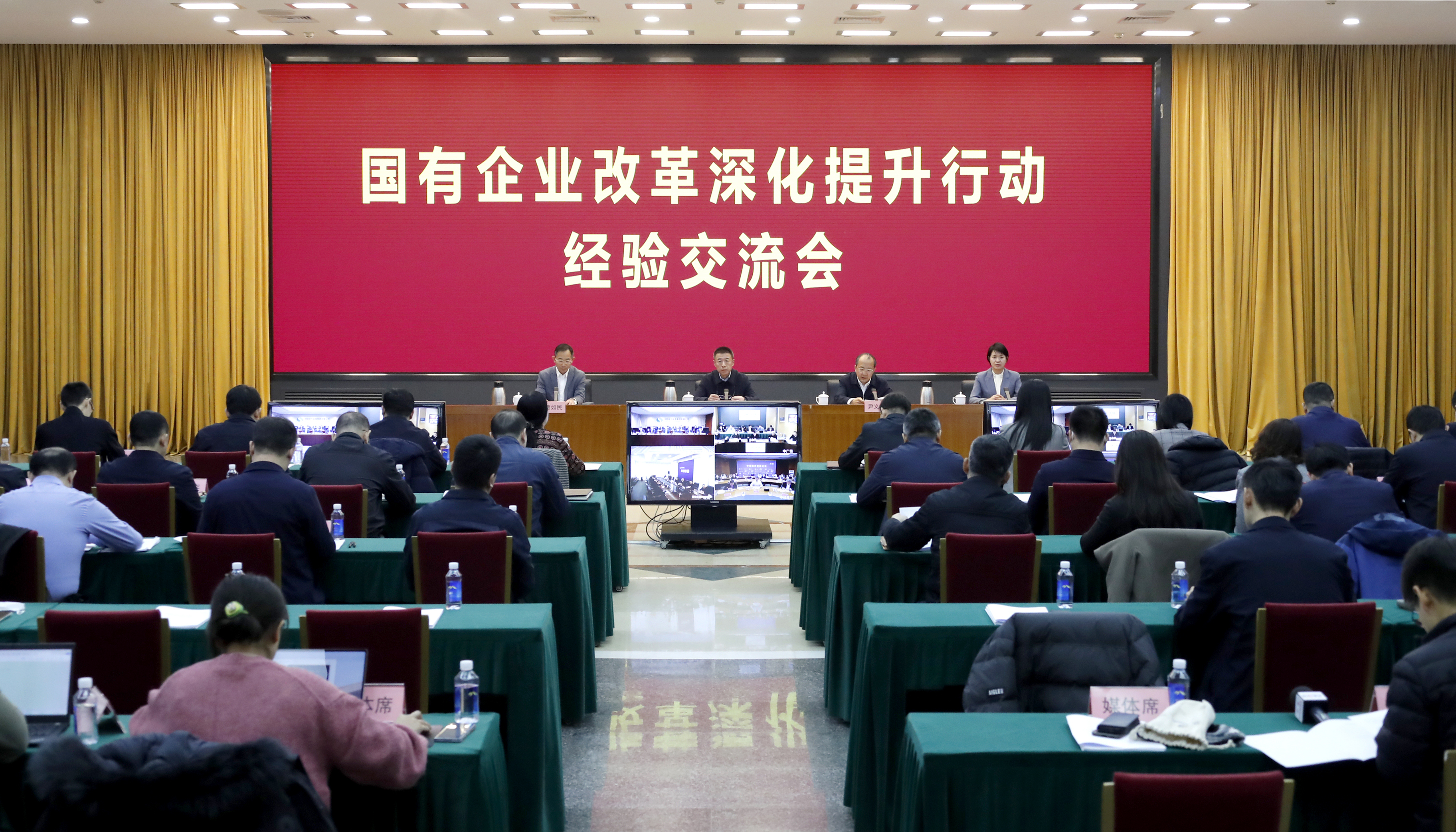
重组整合发力!国资委披露改革收官“成绩单”
Zhong Guo Zheng Quan Bao· 2026-01-09 13:40
Group 1 - The core message emphasizes that while the deepening reform actions have concluded, the reform process must continue without pause, with a focus on summarizing past actions and preparing for future reforms [1] - The establishment of new central enterprises such as China Yajiang Group and China Zihuan Group aims to enhance resource allocation efficiency and strengthen core competitiveness through strategic restructuring [3] - A total of 116 strategic restructuring initiatives have been launched across various regions, involving 229 primary enterprises, aimed at enhancing the core competitiveness of state-owned enterprises [3] Group 2 - By November 2025, central enterprises are projected to achieve over 11 trillion yuan in revenue from strategic emerging industries, indicating significant growth in this sector [4] - Various regions and central enterprises are actively developing new industry layouts and exploring innovative paths, such as the integration of green energy and computing power [4] - The establishment of 28 local "two non" and "two asset" disposal channels reflects a strengthened focus on core business responsibilities and the reduction of blind diversification [5] Group 3 - Central enterprises are leading the construction of 97 original technology sources, with many implementing long-term incentives for original innovation and innovation liability exemption systems [6] - The implementation of performance-based salary adjustments has affected over 20,000 managerial positions, indicating a shift towards a more market-oriented management mechanism [7] - A total of 89 central enterprises are piloting treasury supervision platforms linked to online procurement, enhancing transparency and accountability in procurement processes [8]
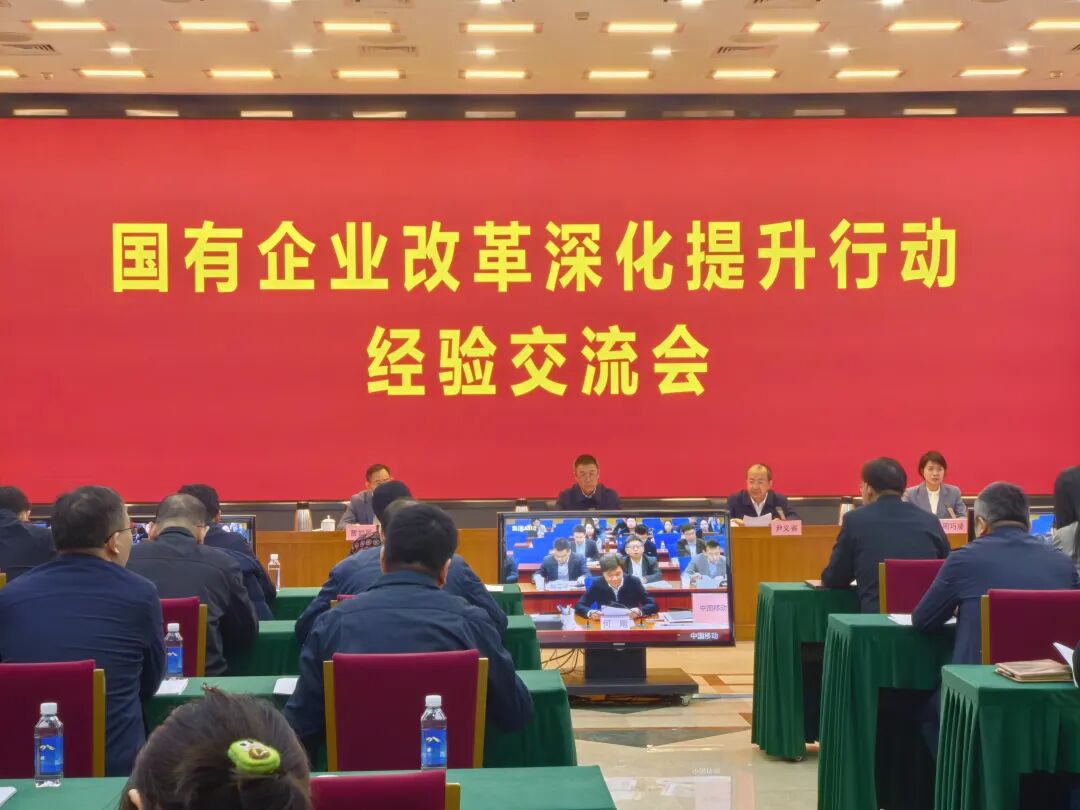
破局2.5万亿!中国并购市场:存量洗牌下的产业重构与科技突围
Zhong Guo Jing Ying Bao· 2026-01-09 12:53
Core Insights - The Chinese M&A market experienced significant growth in 2025, with a total of 8,151 disclosed transactions and a transaction volume of approximately 25,894 billion yuan, representing a year-on-year increase of about 16.12% [1] - The recovery of the M&A market is attributed to a combination of policy, industry, and capital resonance, marking a shift in China's economic development from "quantity increase" to "quality improvement" [1][3] - The trend indicates a transition in the regulatory framework from "fatherly" control to a "market-friendly" service model, significantly reducing institutional transaction costs and enhancing market vitality [1][3] Regional Distribution - Beijing led the M&A market with a transaction volume of 10,930 billion yuan, up 48.59% year-on-year; Shanghai followed with 6,092 billion yuan, down 14.92%; and Guangdong ranked third with 4,593 billion yuan, down 17.89% [2] - There were 28 M&A events exceeding 100 billion yuan, with notable transactions including China Shenhua's acquisition of Guoyuan Power at 1,335.98 billion yuan, and CICC's mergers with Dongxing Securities and Xinda Securities at 1,142.75 billion yuan [2] Industry Distribution - The industrial sector led M&A activity with a transaction volume of 7,605 billion yuan, up 11.67% year-on-year; the real estate sector saw a remarkable increase of 549.36% to 4,443 billion yuan; and the information technology sector reached 2,855 billion yuan, up 35.84% [2][3] - The significant growth in the real estate sector is attributed to necessary asset-liability restructuring, with many transactions aimed at project clearance and risk mitigation [3] M&A Trends and Strategies - The industrial sector's M&A activity reflects a shift from "spreading out" to "stepping up," focusing on enhancing supply chain resilience and precision [3][4] - Horizontal integration M&A events accounted for 5,966 billion yuan, representing 22.70% of total transaction volume, indicating a deep structural phase of "stock reshuffling" across various industries [4] - Companies are increasingly pursuing "structural power" through horizontal mergers, aiming to establish stronger competitive barriers and enhance management efficiency and technological innovation [4] Future Outlook - In 2026, two key areas of focus are expected: strategic acquisitions in hard technology industries, particularly in semiconductors and industrial software, and professional integration led by state-owned enterprises in sectors like new energy and high-end equipment [5] - Cross-border M&A in the high-tech sector is anticipated to gain momentum as Chinese companies seek to acquire advanced technologies and talent globally, enhancing their position in the global tech supply chain [5][6]




【新华解读】2026央企重组“第一枪”打响 未来合并同类项“化学合成”成趋势
Xin Hua Cai Jing· 2026-01-09 01:04
Group 1 - The core viewpoint of the news is that the restructuring of China Petroleum & Chemical Corporation (Sinopec) and China Aviation Oil Group (China Aviation Oil) is a strategic move aimed at optimizing state-owned assets and enhancing core competitiveness in the energy sector, which will significantly reshape the domestic aviation fuel market and the entire energy supply chain [1][4][5] - The restructuring aligns with recent trends in state-owned enterprise (SOE) reforms, focusing on core responsibilities and enhancing competitiveness through integration, which is expected to lead to a more efficient allocation of resources [3][6] - China Aviation Oil, as the only supplier of civil aviation fuel in China, controls over 98% of the market for aviation fuel at civil airports, and the integration with Sinopec is anticipated to create synergies that enhance market control and risk resistance [3][4] Group 2 - The restructuring is seen as a signal for future SOE reforms, emphasizing professional integration and resource optimization to achieve greater competitiveness in key sectors [5][6] - The trend of SOE restructuring is shifting from merely addressing overcapacity and reducing competition to focusing on upgrading emerging industries and enhancing supply chain resilience [7] - The integration is expected to facilitate a seamless connection between Sinopec's refining capabilities and China Aviation Oil's distribution network, thereby stabilizing fuel supply for the aviation industry [3][6]

中国中冶重大资产交易获股东会通过:聚焦主责主业、战略推进专业化整合
Zhong Zheng Wang· 2025-12-29 14:19
Core Viewpoint - China Metallurgical Group Corporation (China MCC) has successfully passed several key resolutions at its first extraordinary shareholders' meeting of 2025, marking a significant step in its structural adjustment and reform strategy aimed at focusing on core business and optimizing its business structure [1][2] Group 1: Shareholder Meeting Resolutions - The resolutions passed include proposals for asset sales, related party transactions, and changes in the use of funds raised from A-shares and H-shares [1] - The approval of these resolutions reflects the company's commitment to reform and aligns with the national strategy for high-quality development and professional integration of state-owned enterprises [1] Group 2: Strategic Focus and Resource Allocation - The asset sales and related transactions are aimed at systematically optimizing non-core, high-risk business areas, which will help reduce operational uncertainty and improve the company's asset structure and financial flexibility [1][2] - Following the completion of these transactions, China MCC is expected to achieve significant capital recovery, which will be directed towards strengthening its core business and supporting the development of its "one core, two main bodies, and five characteristic" business system [2] - The company plans to enhance its core metallurgy construction business and develop new industrialization and urbanization initiatives, while also fostering specialized sectors such as engineering services, new materials, high-end equipment, energy conservation, and smart applications [2]

四川九洲拟7.57亿收购集团射频业务资产
Ju Chao Zi Xun· 2025-12-21 01:21
Core Viewpoint - Sichuan Jiuzhou is strategically upgrading its core RF business through an associated transaction, marking a significant step towards providing subsystem-level solutions [1][2] Group 1: Transaction Details - The company plans to establish a wholly-owned subsidiary to acquire the RF business asset group from its controlling shareholder, Sichuan Jiuzhou Electric Group, for a transaction price of 757.10 million yuan [1] - The asset group includes assets, liabilities, business, and personnel related to RF, primarily engaged in the R&D, production, and sales of microwave RF and power systems [1][2] - The asset group has a strong technical foundation with 66 authorized patents, including 28 invention patents, and has previously supported projects that won significant awards [1] Group 2: Financial Performance - As of September 30, 2025, the net assets of the target asset group are 487.17 million yuan, with projected revenues of 592.87 million yuan and 518.14 million yuan for 2024 and the first nine months of 2025, respectively [2] - The net profits for the same periods are expected to be 15.47 million yuan and 42.96 million yuan, with a performance commitment from the seller to achieve a total net profit of no less than 208.57 million yuan from 2026 to 2028 [2] Group 3: Industry Context and Strategy - The RF industry has a large market size but low concentration, with a CR10 of only 8.2%, indicating a period of professional consolidation [2] - The company's strategy focuses on "chip," "module," and "array" products, aiming to build integrated capabilities in electronic systems and RF front-end solutions, positioning itself as a leader in the domestic microwave RF industry [2] - The acquisition is seen as a core move in this strategy, extending the company's reach into the downstream RF subsystem field and enhancing its competitive edge [2][4] Group 4: Market Implications - The asset group, previously an internal supplier for Jiuzhou Electric, is expected to operate independently in the market, potentially unlocking its technical and R&D capabilities [3] - Following the transaction, the company's related sales are projected to increase from approximately 470 million yuan to about 992 million yuan, raising the proportion of related sales in total revenue from 11.26% to 20.81% [3] - The acquisition reflects a broader trend in the RF microwave industry towards consolidation driven by domestic substitution, supply chain security, and cost control pressures [3][4]

山东省属国资国企深化改革推动高质量发展 省属控股上市公司总市值超1.2万亿元
Sou Hu Cai Jing· 2025-12-20 02:08
Group 1 - The core viewpoint of the news is the progress of state-owned enterprises (SOEs) in Shandong Province in deepening reforms and promoting high-quality development, with significant achievements in increasing the number of listed companies and improving financial performance [1][2] - As of the end of November, Shandong's state-owned enterprises have total assets of 5.7 trillion yuan, with operating income of 2.3 trillion yuan and total profits of 868.6 billion yuan, ranking among the top in the country [1] - The number of provincial-controlled listed companies has increased to 53, with a total market value exceeding 1.2 trillion yuan, including three companies with market values over 100 billion yuan [1] Group 2 - The provincial government has initiated a "New Growth Action" focusing on strategic emerging industries, selecting 249 enterprises and projects for nurturing, with 170 expected to be included for support [2] - Shandong's state-owned enterprises currently possess 78 national-level R&D platforms and have undertaken 487 major scientific research projects, leading in the country [2] - R&D expenditure by state-owned enterprises reached 42 billion yuan from January to November, ranking first among provincial-level regulated enterprises [2] Group 3 - The revenue from strategic emerging industries of state-owned enterprises reached 479.66 billion yuan in the first three quarters of 2025, showing a year-on-year growth of 42.26% [3] - The proportion of revenue and investment from strategic emerging industries has increased to 25.1% and 24.4%, respectively, compared to the previous year [3] - The provincial government has completed major reform tasks at the provincial level, with significant reductions in management structures and personnel in subordinate enterprises [3]
山东省属控股上市公司总市值超1.2万亿元
Xin Hua Wang· 2025-12-20 01:44
Group 1 - The core viewpoint of the news is that Shandong Province is making significant progress in the reform and development of state-owned enterprises (SOEs), with an emphasis on high-quality growth and the establishment of leading enterprises [1][2][3] - As of the end of November, Shandong's state-owned enterprises (SOEs) have a total asset value of 5.7 trillion yuan, with operating income of 2.3 trillion yuan and total profits of 868.6 billion yuan, ranking among the top in the country [1] - The number of provincial state-controlled listed companies has increased to 53, with a total market value exceeding 1.2 trillion yuan, including three companies valued over 100 billion yuan [1] Group 2 - The provincial government has initiated a "New Growth Action" focusing on strategic emerging industries, selecting 170 high-potential enterprises and projects for targeted support [2] - Shandong's SOEs currently possess 78 national-level R&D platforms and have undertaken 487 major scientific research projects, leading in both quantity and funding [2] - In the first eleven months, R&D expenditure by SOEs reached 42 billion yuan, ranking first among provincial-level regulated enterprises in China [2] Group 3 - The revenue from strategic emerging industries in Shandong's SOEs reached 479.66 billion yuan in the first three quarters of 2025, representing a year-on-year growth of 42.26% [3] - The proportion of revenue and investment from strategic emerging industries has increased by 6.2 and 1.3 percentage points, respectively, compared to the end of the previous year [3] - Shandong's provincial government has completed major reform tasks at the provincial level, focusing on optimizing the structure and management of SOEs [3]
山东省属国资国企深化改革推动高质量发展 省属控股上市公司总市值超1.2万亿元
Da Zhong Ri Bao· 2025-12-20 00:55
Group 1 - The Shandong provincial government has introduced three new state-owned listed companies this year, bringing the total to 53, with a total market value exceeding 1.2 trillion yuan, including three companies valued over 100 billion yuan [1] - As of November 2023, state-owned enterprises in Shandong reported total assets of 5.7 trillion yuan, with operating revenue of 2.3 trillion yuan and total profits of 868.6 billion yuan, maintaining strong performance nationally [1] - The provincial government is focusing on cultivating first-class enterprises, with four state-owned enterprises recognized as world-class industry leaders and 22 included in the "Double Hundred Enterprises" list, leading in several categories nationally [1] Group 2 - In July 2023, the provincial state-owned assets supervision and administration commission initiated a "New Growth Action" targeting strategic emerging industries, selecting 249 projects for potential support, with 170 projects set for incubation [2] - Shandong state-owned enterprises currently possess 78 national-level R&D platforms and have undertaken 487 major scientific research projects since the 14th Five-Year Plan, ranking first nationally [2] - From January to November 2023, R&D expenditure by state-owned enterprises reached 42 billion yuan, leading among provincial-level regulated enterprises [2] Group 3 - The state-owned assets commission has been optimizing the industrial structure of state-owned enterprises, with revenue from strategic emerging industries reaching 479.66 billion yuan in the first three quarters of 2025, a year-on-year increase of 42.26% [3] - The proportion of revenue and investment from strategic emerging industries has increased by 6.2 and 1.3 percentage points respectively compared to the end of the previous year [3] - The provincial government has completed major reform tasks at the provincial level, focusing on reducing management structures and personnel in state-owned enterprises by over 8% [3]
中央明确进一步深化国资国企改革,哪些举措值得期待
Di Yi Cai Jing· 2025-12-19 11:40
Core Viewpoint - The central economic work conference has outlined the need for further deepening the reform of state-owned enterprises (SOEs) in China, with a focus on functional, structural, and institutional reforms to enhance the quality and efficiency of state-owned capital [1][2]. Group 1: Reform Focus Areas - The next phase of SOE reform will concentrate on functional reforms, structural adjustments, and institutional mechanism improvements, aiming to optimize the layout and structure of state-owned capital [1][3]. - Key areas of focus include enhancing the evaluation system for SOEs, promoting original technology development, and ensuring that state-owned enterprises fulfill their strategic missions effectively [3]. - Structural reforms will emphasize strategic mergers and professional integration to facilitate the orderly flow of state capital [3][4]. Group 2: Progress and Achievements - By the end of this year, many central enterprises are nearing the completion of their reform goals, with notable completion rates such as 97% for China Nonferrous Metal Group [2]. - The reforms have transitioned from institutional construction to efficiency enhancement, accumulating valuable experience for deeper changes in the upcoming "15th Five-Year Plan" [2]. Group 3: Integration and Innovation - The focus on accelerating restructuring and integration of state-owned enterprises will continue, with an emphasis on enhancing strategic and professional mergers to avoid redundant construction and disorderly competition [4][5]. - The State-owned Assets Supervision and Administration Commission (SASAC) is promoting specialized integration in key sectors such as new materials and artificial intelligence, aiming to foster innovation and scale development in emerging industries [5][6]. - Future integration efforts will target both horizontal and vertical aspects of the industry, optimizing resource allocation and enhancing competitiveness in high-end markets [6].