
个人消费支出

Search documents
美联储理事称美关税政策将成推高通胀主因
news flash· 2025-06-02 11:07
Core Viewpoint - The tariff policy is expected to be a major factor driving inflation in the United States, with its impact likely to be most evident in the second half of the year [1] Group 1: Tariff Policy and Inflation - Federal Reserve Board Governor Chris Waller indicated that higher tariffs will reduce consumer spending and disrupt business operations [1] - The uncertainty surrounding U.S. trade policy is significant, contributing to inflationary pressures [1] Group 2: Consumer Spending Trends - Recent data from the U.S. Department of Commerce shows that personal consumption expenditures increased by 0.2% in April, a notable slowdown from the 0.7% increase in March [1] - The slowdown in personal consumption is primarily attributed to increased economic uncertainty stemming from fluctuating tariff policies [1]
特朗普大刀又来,砍向特斯拉,市值一夜蒸发2700亿元!再加关税!海外科技制裁加剧?美股巨震!知名投资大鳄清仓美股,发出警告
雪球· 2025-05-31 02:32
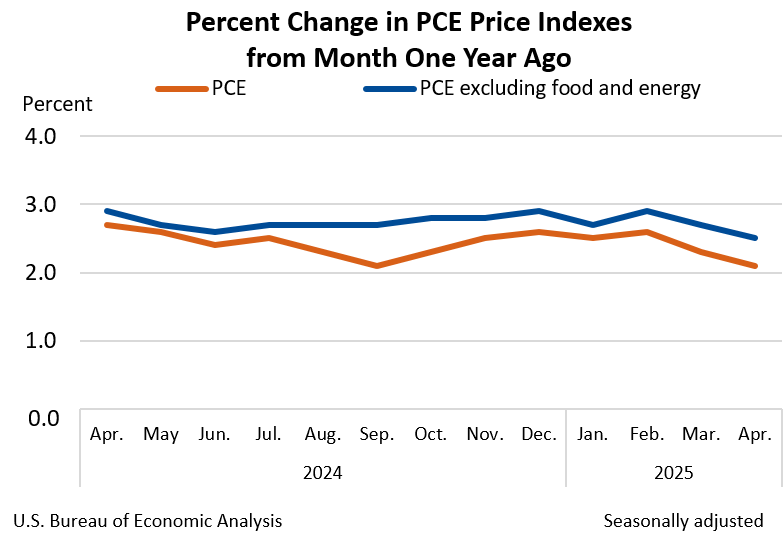
Group 1 - The U.S. stock market experienced significant volatility on the last trading day of May, with major indices showing a "V" shape recovery after a sharp decline triggered by Trump's announcement on tariffs and manufacturing policies [1][10] - Trump proposed to increase the import tariff on steel from 25% to 50% to protect the U.S. steel industry from foreign competition, which led to a rise in steel stocks post-announcement [4][5] - Trump also mandated that U.S. automakers, including Tesla, must produce entire vehicles and all parts domestically, causing Tesla's stock to drop over 3%, resulting in a market cap loss of approximately $38.6 billion [7][8] Group 2 - The S&P 500 and Nasdaq achieved their best monthly performance in nearly a year, with the S&P 500 rising over 6% and the Nasdaq nearly 10% in May [2][12] - The volatility in the market was exacerbated by increased policy uncertainty in the U.S., with notable investors like Jim Rogers and Michael Burry reportedly liquidating their U.S. stock holdings [3][26] - The U.S. personal consumption expenditure (PCE) growth slowed significantly in April, with core PCE prices at a four-year low of 2.5%, indicating potential economic challenges ahead [21][22]



特朗普突发,又加关税!美股巨震!
Zheng Quan Shi Bao Wang· 2025-05-30 23:50
Group 1: U.S. Tariff Policy Impact - The U.S. will increase the import tariff on steel from 25% to 50% to protect the domestic steel industry from foreign competition [1] - Following the announcement, U.S. steel stocks surged, with Cleveland-Cliffs seeing an increase of over 26% in after-hours trading [1] Group 2: Automotive Industry Developments - President Trump stated that U.S. automakers, including Tesla, must produce vehicles and all parts domestically rather than abroad, causing a significant drop in Tesla's stock by over 3% [2] - Several Chinese concept stocks experienced declines, with the Nasdaq Golden Dragon China Index falling by 2.69% [2] Group 3: Consumer Spending Trends - U.S. personal consumption expenditures (PCE) rose by 0.2% in April, a slowdown from the 0.7% increase in March, attributed to increased economic uncertainty from changing tariff policies [3] - The PCE price index is a key inflation indicator closely monitored by the Federal Reserve for monetary policy decisions [3] Group 4: EU-U.S. Trade Negotiations - The EU and U.S. are in critical trade negotiations, aiming for an agreement by July 9, amidst a complex global situation [4] - The EU remains committed to finding solutions to trade tensions, although the outlook for negotiations is uncertain [4]





美国4月消费支出温和增长 核心通胀仍“高烧不退”
Xin Hua Cai Jing· 2025-05-30 13:45
Core Insights - In April 2025, personal income in the U.S. increased by $210.1 billion, representing a month-over-month growth of 0.8% [1][4] - Disposable personal income (DPI) also rose by $189.4 billion, reflecting a 0.8% increase, while personal consumption expenditures (PCE) saw a smaller increase of $47.8 billion, or 0.2% [1][4] - The total personal expenditures, which include PCE, personal interest payments, and current transfer payments, increased by $48.6 billion in April [1] Personal Savings and Rates - Personal savings in April amounted to $1.12 trillion, with a personal savings rate of 4.9%, indicating the percentage of DPI that is saved [3] - The increase in personal income was primarily driven by government social welfare and wage increases [3][7] Consumer Spending Trends - Service expenditures rose by $55.8 billion, partially offsetting a $8 billion decrease in goods spending [3] - The PCE price index increased by 0.1% in April, with the core PCE price index also rising by 0.1% [7] - Year-over-year, the PCE price index increased by 2.1%, while the core PCE price index rose by 2.5% [7] Economic Outlook - Economists suggest that aggressive trade policies by the U.S. government may significantly hinder economic growth and elevate inflation [7] - Market participants anticipate that the Federal Reserve will lower the target interest rate for short-term borrowing in September, with another potential cut in December [7]
美国4月个人消费支出环比增长0.2%
news flash· 2025-05-30 12:36
Core Insights - In April, personal consumption expenditures in the U.S. increased by 0.2%, matching the forecast of 0.2% [1] - Personal income in April rose by 0.8%, surpassing the expected increase of 0.3% [1]
5月30日电,美国4月份个人消费支出环比增长0.2%,预估为0.2%。
news flash· 2025-05-30 12:31
Group 1 - The core point of the article is that personal consumption expenditures in the United States increased by 0.2% month-over-month in April, matching the forecast of 0.2% [1]
4月30日电,美国第一季度实际个人消费支出环比增长1.8%,预期1.2%,前值4.00%。
news flash· 2025-04-30 12:33
Core Viewpoint - The actual personal consumption expenditure (PCE) in the United States for the first quarter increased by 1.8% quarter-on-quarter, surpassing the expected growth of 1.2% and significantly lower than the previous value of 4.0% [1] Group 1 - The actual PCE growth of 1.8% indicates stronger consumer spending than anticipated [1] - The previous quarter's PCE growth was notably higher at 4.0%, suggesting a slowdown in consumer expenditure [1] - The expectation for PCE growth was set at 1.2%, highlighting a positive deviation from market forecasts [1]