中美贸易关系缓和

Search documents
多空僵持,煤焦震荡运行:煤焦日报-20251103
Bao Cheng Qi Huo· 2025-11-03 10:04
Industry Investment Rating - No relevant information provided. Core Viewpoints - **Coke**: As of the week ending October 31, the total daily coke output of all - sample independent coking plants and steel - mill coking plants was 1.108 million tons, with a slight weekly increase of 800 tons. After the second round of coke price hikes, the per - ton coke profit of 30 independent coking plants was - 32 yuan/ton, improving by 9 yuan week - on - week but still in a loss. Demand side, the daily hot - metal output of 247 steel mills was 2.3636 million tons, down 35,400 tons/day week - on - week, and the profitability rate dropped by 2.6 percentage points to 45.02%. Overall, coke supply stabilized while demand declined, but due to the Sino - US summit consensus, the coke futures remained high [6][35]. - **Coking Coal**: As of the week ending October 31, the daily output of clean coking coal from 523 coking coal mines was 758,000 tons, down 3,000 tons/day week - on - week and 22,000 tons/day lower than the same period last year. From October 20th to 25th, the total customs clearance of Mongolian coal at the 288 - port was 4,814 vehicles, down 2,406 vehicles week - on - week. Now, the port has returned to normal with a daily customs - clearance vehicle number of around 1,200. The total daily coke output of all - sample independent coking plants and steel - mill coking plants was 1.108 million tons, with a slight weekly increase of 800 tons. Overall, the supply - demand pattern of coking coal did not change significantly, and the upward drive came from macro - level benefits due to the easing of Sino - US trade relations and strong expectations for coking coal supply from safety inspections and anti - cut - throat competition [7][36]. Summary by Directory 1. Industry News - **Fed's Interest - Rate Stance**: Fed Governor Christopher Waller advocated for a rate cut in December, worried about the labor market slowdown, which contrasted with other Fed officials' warnings about inflation risks [9]. - **Coking Coal Price**: On November 3, the coking coal price in Linfen Anze market remained stable, with the ex - factory price of low - sulfur prime coking clean coal (A9, S0.5, V20, G85) at 1,600 yuan/ton cash - inclusive [10]. 2. Spot Market - **Coke**: The current price of Rizhao Port quasi - first - grade coke was 1,570 yuan/ton, up 3.29% week - on - week; Qingdao Port quasi - first - grade coke was 1,560 yuan/ton, up 4.70% week - on - week [11]. - **Coking Coal**: The current price of Mongolian coal at Ganqimao Port was 1,390 yuan/ton, up 6.11% week - on - week; Australian - produced coking coal at Jingtang Port was 1,660 yuan/ton, up 1.22% week - on - week; Shanxi - produced coking coal at Jingtang Port was 1,740 yuan/ton, with no weekly change [11]. 3. Futures Market - **Coke**: The closing price of the active coke futures contract was 1,771.5, down 1.17, with a trading volume of 21,422 and an open interest of 39,630 [14]. - **Coking Coal**: The closing price of the active coking coal futures contract was 1,284.5, down 0.85, with a trading volume of 1,020,691 and an open interest of 669,763 [14]. 5. Future Outlook - **Coke**: The supply stabilized and demand declined, but due to Sino - US trade relations improvement, the coke futures remained high [6][35]. - **Coking Coal**: The supply - demand pattern did not change significantly, and the upward drive came from macro - level benefits and supply - side expectations [7][36].
宝城期货煤焦早报(2025年11月3日)-20251103
Bao Cheng Qi Huo· 2025-11-03 03:20
1. Report Industry Investment Rating - There is no information about the report industry investment rating provided in the content 2. Core Viewpoints of the Report - For the 2601 contract of coking coal, the short - term, medium - term, and intraday views are shock, shock, and shock - biased - strong respectively, with a shock - based approach. It is supported by strong expectations and shows high - level shocks [1]. - For the 2601 contract of coke, the short - term, medium - term, and intraday views are shock, shock, and shock - biased - strong respectively, with a shock - based approach. It is supported by strong costs and operates at a high level [1]. 3. Summary by Relevant Catalogs 3.1 Coking Coal (JM) - **Core Logic**: As of the week ending October 31, the daily average output of clean coal from 523 coking coal mines nationwide was 75.8 thousand tons, a weekly decrease of 0.3 thousand tons per day, basically stable, and 2.2 thousand tons per day lower than the same period last year. From October 20th to 25th, the total number of Mongolian coal trucks passing through the 288 port was 4,814, a weekly decrease of 2,406 trucks. Due to the political turmoil in Mongolia in the middle of the month, the customs clearance efficiency dropped significantly in the short term, but it has returned to normal this week, with the daily number of trucks increasing to around 1,200. On the demand side, as of the week ending October 31, the total daily average output of coke from all - sample independent coking plants and steel - mill coking plants was 110.8 thousand tons, a weekly increase of 0.08 thousand tons. Overall, the supply - demand pattern of coking coal has no obvious change, and the upward drive mainly comes from the macro - level benefits brought by the relaxation of Sino - US trade relations, as well as the strong expectations for coking coal supply due to safety inspections and anti - cut - throat competition [5]. 3.2 Coke (J) - **Core Logic**: As of the week ending October 31, the total daily average output of coke from all - sample independent coking plants and steel - mill coking plants was 110.8 thousand tons, a weekly increase of 0.08 thousand tons. After the second round of price increases for coke, the profit per ton of coke for 30 independent coking plants monitored by Steel Union was - 32 yuan/ton, an improvement of 9 yuan week - on - week, but still in a loss state, and the production enthusiasm has not significantly improved, with coking enterprises still having the intention to raise prices. On the demand side, the daily average output of hot metal from 247 steel mills nationwide was 236.36 thousand tons, a weekly decrease of 3.54 thousand tons per day, and the profitability rate decreased by 2.6 percentage points to 45.02%. Overall, the coke supply is stable, the demand is declining, and the fundamentals are marginally weakening. However, during the week, the Chinese and US presidents met and reached multiple economic and trade consensuses, and the cooling of trade frictions has improved the market sentiment, so coke futures temporarily maintain high - level operation [6].
成本强支撑,焦炭高位震荡:煤焦日报-20251031
Bao Cheng Qi Huo· 2025-10-31 11:32
Report Industry Investment Rating - There is no information provided regarding the report industry investment rating in the given content. Core Viewpoints - Coke: As of the week ending October 31, the total daily coke output of all - sample independent coking plants and steel - mill coking plants was 1.108 million tons, with a slight weekly increase of 800 tons. After the second round of coke price hikes, the profit per ton of coke for 30 independent coking plants was - 32 yuan/ton, a weekly improvement of 9 yuan but still in a loss state. The daily hot - metal output of 247 steel mills nationwide was 2.3636 million tons, a significant weekly decrease of 35,400 tons per day, and the profitability rate dropped by 2.6 percentage points to 45.02%. Coke supply stabilized while demand declined, but due to the Sino - US summit and improved market sentiment, coke futures remained at a high level [6][35]. - Coking coal: As of the week ending October 31, the daily output of clean coal from 523 coking coal mines nationwide was 758,000 tons, a slight weekly decrease of 3,000 tons per day. From October 20th to 25th, the total customs clearance of Mongolian coal at the 288 port was 4,814 vehicles, a weekly decrease of 2,406 vehicles. The port has now returned to normal with a daily clearance of about 1,200 vehicles. The total daily coke output of all - sample independent coking plants and steel - mill coking plants was 1.108 million tons, with a slight weekly increase of 800 tons. The supply - demand pattern of coking coal had no significant change, and the upward drive came from macro - level benefits of Sino - US trade relations and strong expectations of supply due to safety supervision and anti - involution [7][36]. Summary by Directory Industry News - China Iron and Steel Association: In the first three quarters, China's steel exports increased year - on - year, but the pressure and risks also increased as the global trade environment tightened [9]. - Mongolia's ETT Company: On October 31, it held an online auction for coking coal. The starting price of 1/3 coking clean coal was $95.7/ton, up $5.3/ton from the previous auction on September 25th. All 19,200 tons were sold at $117.7/ton, up $17.3/ton from the previous auction [10]. Spot Market - Coke: The current price of quasi - first - grade coke at Rizhao Port's FOB was 1,570 yuan/ton, with a weekly increase of 3.29%, a monthly increase of 6.80%, and an annual decrease of 7.10%. At Qingdao Port's ex - warehouse, it was 1,560 yuan/ton, with a weekly increase of 4.70%, a monthly increase of 6.85%, and an annual decrease of 3.70% [11]. - Coking coal: The current price of Mongolian coal at Ganqimaodu Port was 1,390 yuan/ton, with a weekly increase of 6.11%, a monthly increase of 8.59%, and an annual increase of 17.80%. Australian - produced coking coal at Jingtang Port was 1,660 yuan/ton, with a weekly increase of 1.22%, a monthly increase of 3.11%, and an annual increase of 11.41%. Shanxi - produced coking coal at Jingtang Port was 1,740 yuan/ton, with no weekly change, a monthly increase of 1.75%, and an annual increase of 13.73% [11]. Futures Market - Coke: The closing price of the active contract was 1,777.0 yuan/ton, a decline of 1.11%. The highest price was 1,818.5 yuan/ton, the lowest was 1,770.0 yuan/ton. The trading volume was 20,417, an increase of 935, and the open interest was 39,453, a decrease of 289 [14]. - Coking coal: The closing price of the active contract was 1,286.0 yuan/ton, a decline of 0.92%. The highest price was 1,318.0 yuan/ton, the lowest was 1,276.0 yuan/ton. The trading volume was 1,034,091, a decrease of 25,967, and the open interest was 673,751, a decrease of 18,594 [14]. 后市 Judgment - Coke: The supply of coke stabilized while demand declined, but due to the Sino - US summit and improved market sentiment, coke futures remained at a high level [6][35]. - Coking coal: The supply - demand pattern of coking coal had no significant change, and the upward drive came from macro - level benefits of Sino - US trade relations and strong expectations of supply due to safety supervision and anti - involution [7][36].
Xi, Trump De-Escalate China Tensions, Cut Tariffs, Pause Restrictions. Now What?
Barrons· 2025-10-30 14:56
Core Insights - The de-escalation between China and the U.S. has removed a worst-case scenario for markets, indicating a potential stabilization in market conditions [1] Group 1 - The agreements made between China and the U.S. still require finalization, suggesting that uncertainties remain in the relationship and potential impacts on the market [1]


格林大华期货早盘提示:焦煤、焦炭-20251030
Ge Lin Qi Huo· 2025-10-30 05:58
Group 1: Report Industry Investment Rating - The investment rating for the black (coking coal and coke) sector is "oscillating with a bearish bias" [1] Group 2: Core View of the Report - The coking coal spot auction price continues to be strong, and after the second - round price increase of coke spot was finalized, a third - round price increase was initiated. Although the Sino - US trade relations eased this week and the market sentiment improved, the demand growth points in the fourth quarter are limited, and the steel mill's hot metal output is already at a high level with little room for growth. Technically, coking coal has strong short - term bottom support and may break through upwards today after a period of range - bound trading. The near - month contract has broken through the previous high and the range resistance level, so short positions are advised to stop losses reasonably according to the position, and long positions can continue to hold. The next resistance level is 1330 [1] Group 3: Summary According to the Catalog Market Quotes - Yesterday, the main coking coal contract Jm2601 closed at 1302.0, up 4.83% compared with the opening of the day session; the main coke contract J2601 closed at 1801.0, up 3.06% compared with the opening of the day session. Last night, Jm2601 closed at 1303.5, up 0.12% compared with the close of the day session; the J2601 contract closed at 1801.0, flat compared with the close of the day session [1] Important News - The Chinese President Xi Jinping will hold a meeting with US President Trump in Busan, South Korea on October 30th to exchange views on Sino - US relations and issues of common concern. The Federal Reserve cut interest rates by 25 basis points as expected, lowering the federal funds rate to 3.75% - 4.00%, the second rate cut this year, and announced the end of the balance - sheet reduction starting from December 1st. This week, the capacity utilization rate of 314 independent coal washing plants was 36.5%, a decrease of 0.41% compared with the previous period; the daily output of clean coal was 26.5 tons, a decrease of 0.2 tons compared with the previous period; the clean coal inventory was 284.4 tons, a decrease of 5.2 tons compared with the previous period [1] Market Logic - The coking coal spot auction price is strong, and coke spot initiates a third - round price increase after the second - round increase. Macroscopically, Sino - US trade relations have eased, but the fourth - quarter demand growth is limited, and steel mill's hot metal output has little room for growth. Attention should be paid to the traffic and inventory situation of Mongolian coal at Ganqimaodu Port to see if it can recover in the short term. Technically, coking coal has strong short - term bottom support and may break through upwards today after range - bound trading [1] Trading Strategy - The near - month contract has broken through the previous high and the range resistance level. Short positions are advised to stop losses reasonably according to the position, and long positions can continue to hold. The next resistance level is 1330 [1]
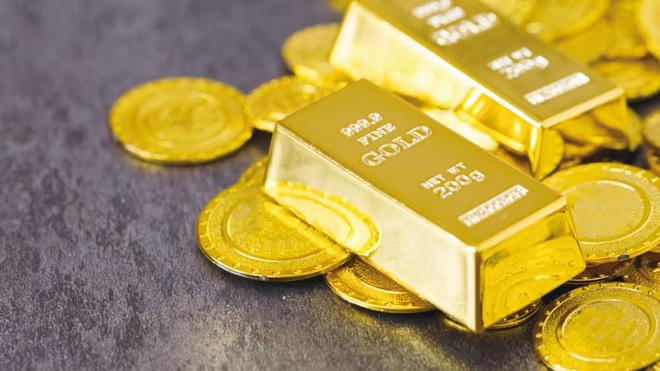
黄金“高台跳水”七日大跌500美元 深蹲还是转向?
2 1 Shi Ji Jing Ji Bao Dao· 2025-10-29 09:14
Core Viewpoint - The recent significant decline in gold prices, dropping nearly $500 per ounce in seven trading days, is attributed to improved risk appetite due to easing U.S.-China trade tensions and potential central bank gold sales [1][2][4]. Group 1: Gold Price Movement - As of October 28, spot gold prices fell to $3,886.3 per ounce, down from a peak of $4,381.11 per ounce [1]. - Gold-related ETFs experienced declines, with 14 ETFs dropping over 3.5%, and the largest decline seen in the gold fund ETF (159812) at 3.66% [1]. - The price of silver also dropped significantly, with a decline of 3.36% followed by an additional 2.2% drop, bringing its price down from $54.453 per ounce to around $46 per ounce, marking a maximum retracement of 16% [4]. Group 2: Market Sentiment and Analysis - Analysts suggest that the easing of U.S.-China trade relations and reduced risk aversion are key factors contributing to the decline in gold prices [2][6]. - Despite the recent downturn, long-term factors such as expectations of Federal Reserve rate cuts may support gold prices in the future [2][6]. - Market analysts believe that the current price adjustments are a temporary consolidation phase rather than a signal of a peak in gold prices, with expectations of a potential rise above $4,500 per ounce next year [6][7]. Group 3: Company Performance - Despite the drop in gold prices, companies like Zijin Mining reported a revenue of 254.2 billion yuan for the first three quarters, a year-on-year increase of 10.33% [5]. - Hunan Gold's third-quarter revenue reached 127.58 billion yuan, up 117.91% year-on-year, with a net profit increase of 63.13% [6]. - The performance of gold companies remains strong, with significant year-on-year growth in revenues and profits, indicating resilience despite market fluctuations [5][6].
黄金“高台跳水”
2 1 Shi Ji Jing Ji Bao Dao· 2025-10-28 23:08
Core Viewpoint - The recent sharp decline in gold and silver prices is attributed to a combination of easing U.S.-China trade tensions and reduced risk appetite among investors, despite the long-term bullish outlook for gold due to expectations of a Federal Reserve easing cycle [1][2][3]. Price Movements - Gold prices have dropped nearly $500 per ounce over the past week, falling from a peak of $4,381.11 to around $3,886.3, with significant support levels breached [2]. - Silver prices have also seen a substantial decline, with a maximum drop of 16% this month, falling from $54.453 to approximately $46 per ounce [3]. ETF and Stock Performance - Gold-related ETFs have suffered losses, with 14 ETFs declining over 3.5%, and the largest gold ETF, SPDR, reducing its holdings by 19.74 tons since October 22 [2][4]. - Gold mining stocks have experienced notable declines, with companies like Yuguang Gold Lead and Chifeng Jilong Gold seeing drops of 5.55% and 4.3%, respectively [2]. Market Sentiment and Analysis - Analysts suggest that the recent price drop is a temporary correction rather than a long-term trend reversal, with expectations that gold prices may rise again due to ongoing economic uncertainties and central bank policies [3][6][7]. - The market remains sensitive to central bank actions regarding gold reserves, as indicated by comments from former central bank officials about potential gold sales [3]. Company Performance - Despite the recent price declines, companies in the gold sector have reported strong financial performance, with Zijin Mining's revenue for the first three quarters reaching 254.2 billion yuan, a year-on-year increase of 10.33% [5]. - Hunan Gold's third-quarter revenue was 12.758 billion yuan, up 117.91% year-on-year, driven by significant increases in gold and other product prices [6].

黄金“高台跳水”:七日跌了500美元,深蹲还是转向?
2 1 Shi Ji Jing Ji Bao Dao· 2025-10-28 12:57
Core Insights - The recent sharp decline in gold and silver prices is attributed to a combination of easing U.S.-China trade tensions and reduced risk appetite among investors, despite the long-term bullish outlook for gold due to expectations of a Federal Reserve easing cycle [3][4][8] - Gold prices have dropped significantly, with a decline of nearly $500 per ounce over the past seven trading days, falling from a peak of $4,381.11 to around $3,886.3 [3][5] - Silver prices have also experienced a substantial drop, with a maximum retracement of 16% this month, reflecting a similar trend to gold [4][5] Market Reactions - Gold-related ETFs have seen significant declines, with 14 gold ETFs dropping over 3.5%, and the largest gold ETF, SPDR, reducing its holdings by 19.74 tons since October 22 [3][5] - Major gold mining stocks have also retreated, with companies like Yuguang Gold Lead and Chifeng Jilong Gold experiencing declines of 5.55% and 4.3%, respectively [3][4] Company Performance - Despite the recent price corrections, companies in the gold sector have reported strong financial performance. For instance, Zijin Mining's revenue for the first three quarters reached 254.2 billion yuan, a year-on-year increase of 10.33% [6][7] - Hunan Gold reported a 117.91% year-on-year increase in revenue for Q3, driven by a 41.04% rise in gold sales prices [7] - The overall sentiment in the market suggests that the recent price adjustments are viewed as a temporary consolidation rather than a signal of a peak, with expectations for gold prices to potentially rise above $4,500 per ounce next year [7][8]
黄金7天狂泻500美元,专家:倒车接人
2 1 Shi Ji Jing Ji Bao Dao· 2025-10-28 12:38
Core Viewpoint - The recent sharp decline in gold and silver prices is attributed to a combination of easing U.S.-China trade tensions and reduced risk appetite among investors, despite the long-term bullish outlook for gold due to potential Federal Reserve easing [1][4][5]. Price Movements - Gold prices have dropped nearly $500 per ounce over the past week, falling from a peak of $4,381.11 to a low of $3,886.3 [3]. - Silver prices have also seen significant declines, with a maximum drop of 16% this month, from $54.453 to around $46 per ounce [5]. ETF and Stock Performance - Gold-related ETFs have suffered, with 14 ETFs showing declines of over 3.5%, and the largest gold ETF, SPDR, reducing its holdings by 19.74 tons [4][5]. - Gold mining stocks have also retreated, with notable declines in companies like Yuguang Gold Lead and Chifeng Jilong Gold, both experiencing drops exceeding 4% [4]. Market Sentiment and Analysis - Analysts suggest that the recent price drop is a temporary correction rather than a sign of a trend reversal, with expectations for gold prices to potentially rise above $4,500 per ounce in the future [13]. - The ongoing global de-dollarization and central banks' continued accumulation of gold are seen as strong underlying support for gold prices [13]. Jewelry Price Adjustments - Domestic gold jewelry prices have also adjusted, with significant reductions observed, dropping below 1,200 yuan per gram [7]. Company Performance - Despite the recent price declines, gold companies have reported strong earnings, with Zijin Mining's revenue for the first three quarters reaching 254.2 billion yuan, a year-on-year increase of 10.33% [10]. - Other companies like Zhaojin Mining and Hunan Gold have also shown impressive growth in revenue and net profit, indicating resilience in their financial performance despite market fluctuations [10].

苍原资本:A股市场慢涨行情有望延续
Sou Hu Cai Jing· 2025-10-28 03:47
Market Performance - The A-share market showed strong performance on October 27, with the Shanghai Composite Index approaching the 4000-point mark, indicating a bullish trend [1][4] - The market sentiment is gradually stabilizing, with active funds' reduction behavior nearing its end, reflecting a steady correction in investor confidence [4] Sector Analysis - Key sectors performing well include communication equipment, electronic components, consumer electronics, and non-ferrous metals, while gaming, wind power equipment, engineering consulting services, and mining sectors lagged [1] - The storage chip sector showed strength, with local stocks in Fujian performing well, and the computing hardware sector remained active [4] Economic and Policy Influences - Multiple factors such as the Fourth Plenary Session setting the tone for the "14th Five-Year Plan," the opening of the Federal Reserve's interest rate cut cycle, and the easing of China-US trade relations are contributing to a gradual upward trend in the A-share market [1] - The market is expected to continue its slow upward trend in the short term, with close attention needed on policy, capital flow, and external market changes [1] Technical Analysis - From a technical perspective, the index has broken through key resistance levels, with significant volume expansion indicating active market sentiment [4] - The Shanghai Composite Index has surpassed its previous trading range, suggesting potential for further upward movement [4] Mid-term Outlook - Despite potential supply-demand pressures in the spring of next year, the gradual clearing of production capacity and the effects of policies are expected to stabilize the economic and market bottom, serving as a key driving force for a new market rally [4] - Supportive factors for the fourth quarter include anti-involution policies, increased household savings entering the market, Federal Reserve interest rate cuts, and a reversal in technical indicators, suggesting a bullish outlook for A-shares [4]