
交通强国建设

Search documents
国家邮政局:要切实抓好交通强国邮政专项试点工作
Zheng Quan Shi Bao Wang· 2025-12-22 12:00
Core Viewpoint - The meeting held by the State Post Bureau on December 22 emphasizes the importance of the "Transportation Power" initiative and the need for targeted pilot projects in the postal sector to align with national policies and market demands [1] Group 1: Policy and Strategic Focus - The Central Committee places significant importance on the construction of a transportation power, highlighting the need for effective implementation of postal pilot projects [1] - The meeting calls for a focus on understanding policy regulations, technological innovation, and the developmental characteristics of the industry [1] Group 2: Project Implementation and Coordination - There is a strong emphasis on proactive research into market demands and the organization of targeted pilot project applications [1] - The need for enhanced coordination and summarization of pilot project outcomes is stressed, aiming to extract and promote replicable experiences [1] Group 3: Promotion and Application of Results - The meeting highlights the importance of publicizing and applying the results of pilot projects to improve practical work efficiency [1]
海南这五年:交通运输大发展 支撑自贸港建设
Zhong Guo Xin Wen Wang· 2025-12-12 13:28
Core Insights - The article highlights the significant advancements in transportation infrastructure in Hainan during the "14th Five-Year Plan" period, which supports the construction of the Free Trade Port [1][4]. Transportation Development - Hainan has optimized and upgraded its road network, increasing the island's accessibility. The total road mileage has reached 42,000 kilometers, with a density of 124.2 kilometers per 100 square kilometers [1]. - In water transportation, Hainan has improved its port facilities, with 155 productive berths established, including 86 berths of 10,000 tons and above. A total of 75 container shipping routes have been opened, including 36 foreign trade routes [2]. - The aviation sector has seen the establishment of four civil airports, with Meilan and Phoenix airports handling over 20 million passengers annually. By 2025, passenger throughput is expected to reach approximately 50 million, a 54% increase from the beginning of the "14th Five-Year Plan" [2]. - In the railway sector, passenger transport is projected to reach 34.02 million by 2024, a 54% increase from 2020. The railway ferry service has transported 870,000 vehicles and 3.02 million passengers, marking increases of 15% and 41% respectively [3]. - The postal and express delivery services in Hainan have also improved, with the volume of express deliveries growing from 11 million in 2020 to 25 million in 2024, reflecting an annual growth rate of 23% [3]. Policy and Economic Impact - Hainan has implemented various reforms in key areas, including road construction and maintenance management. The Hainan Ring Island Tourist Highway has been recognized as a national demonstration project [3]. - The Free Trade Port has provided significant economic benefits, including a value-added tax refund of 407 million yuan for international shipbuilding and a total of 111 million tons of bonded fuel oil supplied [4].
“智慧”破局!深圳机场成模范试点
Shen Zhen Shang Bao· 2025-12-09 23:34
Core Viewpoint - The Shenzhen International Airport's pilot project for building a high-quality innovative international aviation hub has passed the acceptance review, indicating that the project has met its expected goals and has significant innovative and demonstrative value for the development of international aviation hubs and the Guangdong-Hong Kong-Macao Greater Bay Area [1][3]. Group 1: Pilot Project Achievements - The pilot project has improved the domestic and international route network layout of Shenzhen Airport, enhanced digital transformation, and advanced the development of the aviation logistics industry [1]. - The project has led to significant improvements in airport operational efficiency and management levels, as well as enhanced service quality [1]. - The pilot's outcomes are recognized for their innovation and leadership, providing a model for optimizing passenger travel experiences and smart logistics construction [1][3]. Group 2: Smart Operations and Services - Shenzhen has established a smart airport application architecture consisting of "one screen, three maps, eight platforms, and N systems," supporting over 70 smart applications [2]. - The intelligent allocation system for parking positions has been upgraded, allowing for the allocation of over 1,200 flights within 2 minutes, with a bridge arrival rate exceeding 85% [2]. - New facilities such as shower rooms and sleep pods have been introduced, along with a one-stop service center for foreign personnel, enhancing the overall passenger experience [2]. Group 3: Smart Logistics Development - Shenzhen has successfully built a smart cargo security inspection system, utilizing the world's first radiation-type X-ray computed tomography inspection system for air cargo [2]. - The system allows for efficient tracking of cargo with unique barcodes, enabling domestic tracking at the item level and international tracking at the waybill level [2]. - This development supports emerging industries such as cross-border e-commerce and fresh cold chain logistics, enhancing the economic role of the aviation hub [3]. Group 4: Broader Implications - The acceptance of the pilot project signifies national recognition of Shenzhen's innovative path in aviation hub construction [3]. - The project is not limited to airport construction but integrates the aviation hub with urban industrial development, aligning international route expansion with the global needs of high-end manufacturing in the Greater Bay Area [3]. - As Shenzhen Airport's capacity continues to grow, it is expected to further drive the development of the airport-related industrial cluster and support Shenzhen's high-level opening-up [3].

南宁至凭祥高铁全线贯通运营
Guang Xi Ri Bao· 2025-12-06 03:03
Core Viewpoint - The opening of the Nanning to Pingxiang high-speed railway marks the full operation of the line, enhancing connectivity between China and ASEAN countries [1] Group 1: Project Overview - The Nanning to Pingxiang high-speed railway is part of China's 14th Five-Year Plan, aimed at strengthening connectivity with neighboring countries [1] - The project consists of two segments: Nanning to Chongzuo and Chongzuo to Pingxiang, with the Nanning to Chongzuo segment already operational since December 2022 [1] - The newly opened Chongzuo to Pingxiang segment is 81 kilometers long, designed for a speed of 250 kilometers per hour, and includes four stations [1] Group 2: Operational Details - Initially, four pairs of trains will operate daily on the Chongzuo to Pingxiang segment, connecting to cities like Liuzhou, Guilin, and Beihai [1] - The travel time from Nanning to Pingxiang is reduced to 75 minutes, a decrease of 178 minutes compared to conventional trains [1] - Travel times from Nanning to Ningming East and Longzhou are now 65 minutes and 80 minutes, respectively [1] Group 3: Strategic Importance - The full operation of the Nanning to Pingxiang high-speed railway significantly enhances the connectivity level between China and ASEAN countries [1] - It supports the creation of an international corridor connecting ASEAN and contributes to building a cooperative industrial base aimed at ASEAN [1] - The railway serves as a strong support for China's broader goals of openness and regional cooperation, fostering a closer China-ASEAN community [1]
国航远洋(920571),宣布赴香港IPO,冲刺A+H | A股公司香港上市
Sou Hu Cai Jing· 2025-12-02 05:06
Core Viewpoint - The company, Guohang Yuanyang (920571.BJ), is planning to issue H-shares and list on the Hong Kong Stock Exchange to support its internationalization strategy and enhance its green and digital shipping capabilities [2][3]. Group 1: Company Strategy - Guohang Yuanyang aims to align with the national "14th Five-Year Plan" focusing on green shipping and transportation development [2]. - The company seeks to enhance its international brand recognition and meet financing needs through the H-share issuance [2]. Group 2: Company Background - Established in 2001, Guohang Yuanyang is a major player in dry bulk shipping, operating internationally and along domestic coastal routes [3]. - The company possesses various shipping rights and operates a fleet that includes Panamax and Handymax bulk carriers, effectively integrating key transportation resources [3]. - As of December 2, 2025, the company's total market capitalization is approximately 5.632 billion RMB [3].

客运航线开通、无人配送稳定运营……交通强国建设持续刷新“进度条”
Yang Shi Wang· 2025-11-22 09:12
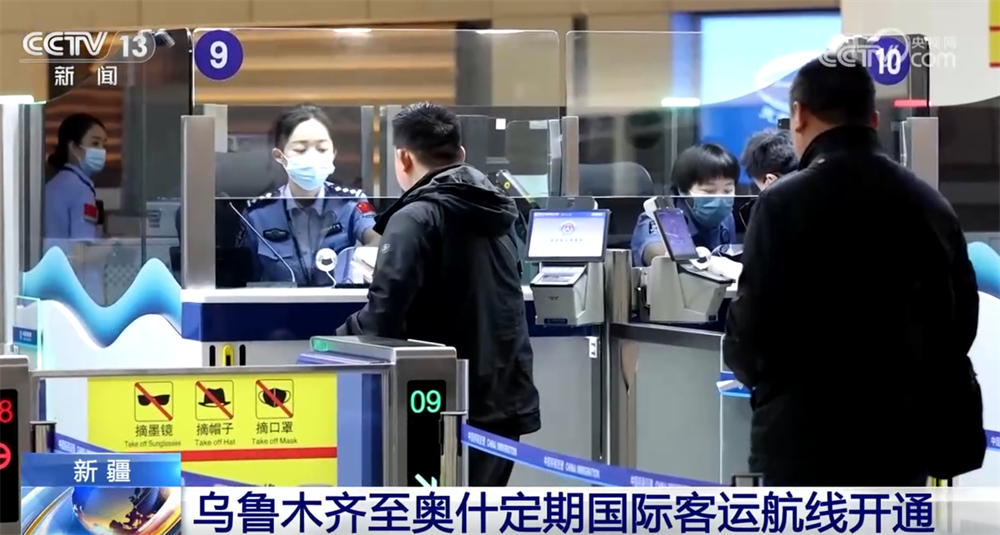
Group 1: International Air Travel - The direct international passenger route from Urumqi to Osh, Kyrgyzstan, officially commenced on November 22, with flight CZ8007 taking off from Urumqi Tianshan International Airport [1][3] - This route is the only direct air passage to Osh, Kyrgyzstan, and is the second international passenger route to Kyrgyzstan from Urumqi, following the Bishkek route [3] - As of November 22, over 60,000 passengers have traveled between China and Kyrgyzstan via Urumqi Tianshan International Airport this year, marking a year-on-year increase of 55.4% [5] Group 2: Railway Infrastructure - The Nanjing South Tunnel section of the Nanjing-Wuhu Railway expansion project successfully completed its shield tunneling on November 21 [6] - The Nanjing South Tunnel is approximately 2.4 kilometers long and passes under various complex geological areas, utilizing "micro-disturbance excavation and precise guidance" technology to ensure safe construction [8] - The expansion project aims to enhance freight capacity along the Yangtze Economic Belt and will optimize the regional railway network layout, supporting industrial structure upgrades in the surrounding areas [8] Group 3: Autonomous Delivery Vehicles - Dongying City in Shandong has issued the first batch of 98 licenses for low-speed autonomous delivery vehicles, marking the transition to compliant operations for autonomous delivery [9] - These vehicles can autonomously recognize traffic lights, pedestrians, and obstacles, with a maximum cargo volume of 5 cubic meters and a load capacity of approximately 800 kilograms, achieving a range of 180 kilometers on a full charge [9] - Dongying's autonomous delivery has established a stable operational model in key scenarios, with daily deliveries exceeding 100,000 packages, alleviating traditional delivery capacity issues during peak seasons [11]
四川西昌至云南香格里拉高速主线首条隧道贯通
Zhong Guo Xin Wen Wang· 2025-11-11 14:22
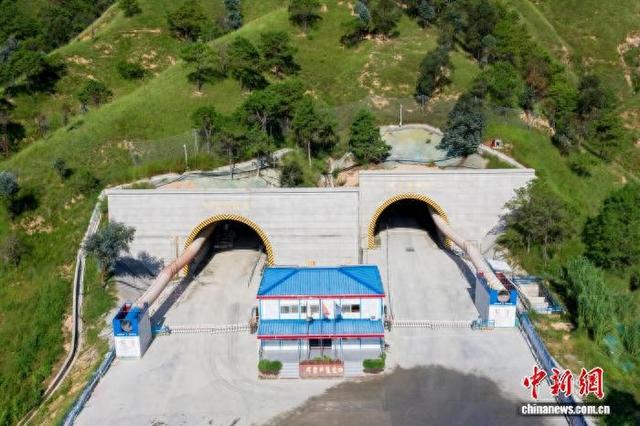
Core Points - The Sichuan Xichang to Yunnan Shangri-La Expressway (referred to as "Xichang Expressway") has achieved dual tunnel completion, marking the first tunnel to connect the main line of the expressway [1][3] - The Xichang Expressway is a key project under China's "14th Five-Year Plan" for transportation, serving as an important segment of the G7611 national expressway from Duyun to Shangri-La and connecting the provinces of Sichuan, Yunnan, and Guizhou [3] - The project, constructed by Shudao Group, spans a total length of 233.132 kilometers, with a main line of 155.49 kilometers, featuring three branches and designed for a speed of 80 km/h [3] - The expressway includes 32 tunnels and 131 bridges, with a bridge-tunnel ratio of 73.4%, and has an estimated total investment of 587.38 billion yuan [3] - The completion of the Xichang Expressway will end the historical lack of expressway access for Yanyuan and Muli counties in Liangshan Prefecture, significantly improving transportation conditions in ethnic minority areas and promoting high-quality economic and social development [4] Project Challenges - The construction of the Dunjia Ping Tunnel faced severe challenges due to its location in a strong seismic zone, steep terrain, and significant weathering at the tunnel entrance, leading to risks such as surface subsidence and instability [3] - The project team implemented real-time deformation monitoring and automated warning systems to ensure construction safety and quality, alongside strict safety and quality management protocols [3]
我省各部门传达学习党的二十届四中全会精神 把全会部署转化为实际行动工作成效
Si Chuan Ri Bao· 2025-11-04 00:26
Group 1: Core Insights - Various provincial departments are actively studying and implementing the spirit of the 20th Central Committee's Fourth Plenary Session, aiming to transform learning outcomes into strong driving forces for development [1][2][3][4][5][6] - The focus is on aligning actions with the decisions made during the plenary session to ensure a successful conclusion to the 14th Five-Year Plan and a strong start to the 15th Five-Year Plan [1][2][3][4][5][6] Group 2: Departmental Actions - The Science and Technology Department emphasizes the integration of the plenary session's spirit with Xi Jinping's directives, focusing on technological innovation to drive industrial innovation and optimize resource allocation [1] - The Ethnic and Religious Affairs Commission is planning to align the development of ethnic regions with the broader goals of national modernization and the 15th Five-Year Plan [2] - The Transportation Department aims to enhance the province's transportation infrastructure and services, ensuring alignment with national transportation goals [3] - The Water Resources Department is committed to implementing a comprehensive water management strategy that prioritizes high-quality development and disaster prevention [4] - The Market Supervision Administration is focused on integrating the plenary session's spirit into market regulation processes and planning for the modernization of market supervision [5] - The Women's Federation is working to promote the plenary session's spirit among women and families, ensuring that women's and children's issues are included in the 15th Five-Year Plan [6]
多项指标居前列、“人享其行、物畅其流”加快实现 交通强国建设蹄疾步稳
Yang Shi Wang· 2025-09-30 06:38
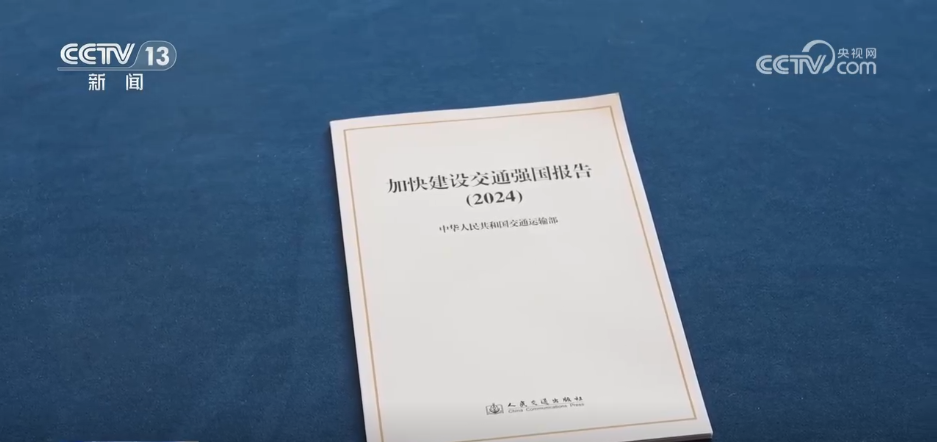
Core Insights - The Ministry of Transport has released the "Report on Accelerating the Construction of a Strong Transportation Nation (2024)", indicating significant progress in key tasks and indicators for building a strong transportation nation in China, with many metrics ranking among the world's best [1] Group 1: Infrastructure Development - The infrastructure network in China has become more comprehensive, with the main framework of the national comprehensive three-dimensional transportation network achieving over 90% completion [5] - 80% of newly built passenger transport hubs allow for convenient transfers within 200 meters [5] Group 2: Transportation Capacity - There has been a substantial increase in transportation service capacity, with metrics such as passenger and cargo transport volume, turnover, port cargo throughput, and express delivery volume remaining at the forefront globally [5] Group 3: Green and Low-Carbon Transition - The transition to green and low-carbon transportation is accelerating, with the electrification rate of railways reaching 76.2%, and the coverage rate of charging facilities in highway service areas reaching 98% [5] - The proportion of green transportation for bulk goods at major coastal ports is 88%, and the share of new energy buses has reached 82.7% [5] Group 4: Major Projects and Investments - All 102 major projects related to transportation outlined in the "14th Five-Year Plan" have commenced this year, with the initial construction of the Three Gorges Waterway New Channel project underway [8] - Investment in large-scale equipment updates for road and waterway transportation has reached 30.5 billion [8] Group 5: Future Plans - The Ministry of Transport will continue to enhance the main framework of the national comprehensive three-dimensional transportation network, prioritizing the connectivity of high-speed railways and national highways [10] - Key projects such as the Sichuan-Tibet Railway, Duku Highway, and the Three Gorges Waterway New Channel will be advanced, along with the planning of impactful major projects [10]
加快建设交通强国重点任务和主要指标取得新进展
Xin Hua She· 2025-09-28 12:59
Core Insights - The latest Transportation Power Index of China is 89.9 points, an increase of 1.0 points from the previous year, ranking 5th among major countries globally [1] - The 2025 Accelerating Construction of a Transportation Power Conference was held in Hangzhou, Zhejiang, emphasizing significant improvements in transportation strength, service quality, and operational efficiency over the past five years [1] Group 1: Transportation Power Index - China's Transportation Power Index has improved, with 7 out of 12 international comparison indicators ranking in the top 5 [1] - Key indicators such as liner shipping connectivity index, proportion of new energy vehicles, electrification rate of railways, and container throughput at ports are among the best in the world [1] Group 2: Future Development Plans - Future initiatives include accelerating the construction of a national comprehensive transportation network and improving urban transportation systems [1] - The focus will also be on fostering new productive forces in the transportation sector, enhancing logistics efficiency, and deepening reforms in transportation [1] - The government aims to ensure safety and stability in transportation while promoting collaborative efforts across various regions and departments [1] Group 3: Reports and Achievements - The conference also released the "Accelerating Construction of a Transportation Power Report (2024)" and other related achievements [2]