低利率政策

Search documents
dbg markets盾博:今年年底前,纳斯达克指数或将大涨
Sou Hu Cai Jing· 2025-10-16 02:25
Group 1 - Hedge fund manager Paul Tudor Jones predicts that the Nasdaq Composite Index is likely to rise by the end of the year amid widespread expectations of interest rate cuts [1][3] - The performance of large tech companies' upcoming earnings reports and the resolution of trade conflicts by the end of October are critical for a significant market rally in the last two months of the year [3] - Jones identifies the period from late October to early November as a "key turning point" for market trends, where the Nasdaq's performance will directly influence the year-end market outlook [3] Group 2 - Current market gains in the Nasdaq are heavily reliant on a few leading AI stocks, indicating a structural imbalance that could amplify market volatility [3] - The Federal Reserve's current interest rate range of 4%-4.25% is expected to drop to around 2.5% by this time next year, as governments strive to maintain low rates to manage debt and stimulate nominal economic growth [3] - The White House is actively seeking a more dovish Federal Reserve chair to ensure the continuation of low interest rate policies, reflecting a compromise to manage debt pressures [4] Group 3 - There is a potential risk of a "crisis of confidence" similar to the one experienced in the UK under Prime Minister Liz Truss, affecting both Japan and the US [5]


报道:特朗普顾问们推动临时填补美联储理事的职位空缺
Sou Hu Cai Jing· 2025-08-07 00:21
Group 1 - Trump's advisors are pushing for a temporary appointment to fill the upcoming vacancy on the Federal Reserve Board, which could provide Trump more time to select a suitable candidate to replace current Fed Chair Powell, whose term ends in May next year [1] - The current Fed Governor Kugler announced her resignation effective August 8, creating an immediate opportunity for Trump to appoint a new member who aligns with his preference for low interest rate policies [2] - Trump is considering whether to nominate a short-term candidate or someone with a clearer future to potentially succeed the Fed Chair, indicating the urgency of the decision due to Kugler's early departure [2] Group 2 - The recent July meeting saw two Fed governors, Waller and Bowman, voting against maintaining the current interest rates, marking the first time since 1993 that two governors opposed a rate decision, both of whom were appointed by Trump [3] - Trump is currently evaluating four candidates for the Fed Chair position, including former Fed Governor Kevin Warsh and NEC Director Kevin Hassett, while Treasury Secretary Scott Bessent has expressed disinterest in the role [3] - Despite the potential appointment of a dovish governor, analysts suggest that it is unlikely to immediately alter the policy direction of the Federal Open Market Committee (FOMC), which requires a majority vote for any interest rate adjustments [2]
低利率下的日本商业银行债券投资交易业务
Sou Hu Cai Jing· 2025-07-24 06:17
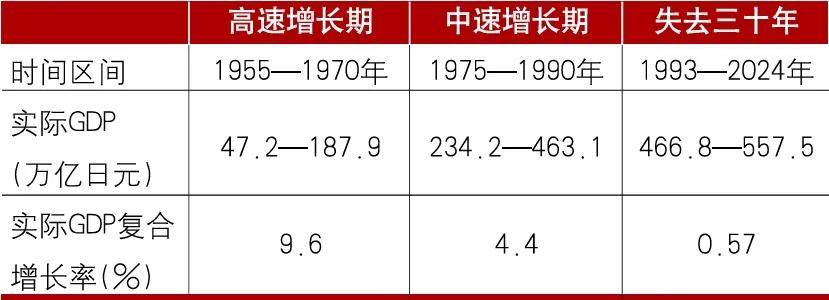
Core Viewpoint - Japan has been in a prolonged low-interest-rate environment since the early 1990s, significantly impacting its economic growth and financial policies [1][2][3]. Economic Growth Phases - Japan experienced rapid economic growth from 1955 to 1970, with a real GDP compound annual growth rate (CAGR) of 9.6%, followed by moderate growth from 1975 to 1990 with a CAGR of 4.4%. However, from 1993 to 2024, the CAGR dropped to 0.57%, indicating stagnation [2][3][4]. Monetary Policy and Market Response - The Bank of Japan has implemented various monetary easing policies, including quantitative easing and negative interest rates, to stimulate the economy since the bubble burst in the 1990s, but the overall effectiveness has been limited [3][4][5]. - The yield on Japan's 10-year government bonds has been on a downward trend, even dipping below 0% after the introduction of negative interest rates in 2016, making Japan the first G7 country to experience negative yields [4][5]. Stock Market Performance - The Nikkei 225 index saw a recovery post-2013 due to quantitative easing, with significant contributions from the depreciation of the yen, which boosted profits for export-oriented companies. However, it only surpassed pre-bubble levels in 2024 [5][6]. Economic Structure and Challenges - Consumption remains the largest contributor to Japan's GDP, accounting for about three-quarters, while net exports have increasingly contributed less due to structural issues and reliance on imported resources [8][10]. - Despite low interest rates reducing corporate financing costs, they have also led to lower capital returns, limiting wage growth and consumer spending, resulting in persistent low inflation [10][12]. Historical Context of Low Interest Rates - Japan's transition to a low-interest-rate environment began in response to the economic bubble burst in the early 1990s, with the Bank of Japan gradually lowering rates to combat economic stagnation and deflation [13][15][16]. - The introduction of negative interest rates in 2016 was an unprecedented move aimed at achieving a 2% inflation target, but it has faced challenges in delivering sustainable economic growth [16][18]. Banking Sector Adjustments - Japanese banks have shifted their asset structures in response to the prolonged low-interest-rate environment, increasing investments in cash and securities while traditional lending has seen slower growth [19][20][25]. - Regional banks have focused on local economies, while larger city banks have diversified into foreign bonds to enhance returns amid competitive pressures in the domestic lending market [30][31]. Investment Strategies and Innovations - Japanese banks are increasingly optimizing their bond investment portfolios to balance liquidity and profitability, with a notable shift towards foreign securities and corporate bonds [30][39]. - Innovations in structured products are being developed to meet the investment needs of smaller financial institutions and investors, allowing them to access higher-yield foreign bonds while managing currency risks [38][45]. Lessons for Other Markets - The experience of Japan's banking sector in navigating a low-interest-rate environment offers valuable insights for other markets, particularly in terms of risk management and investment diversification strategies [39][50].
KVB PRIME:美联储应与财政部合作以降低借贷成本
Sou Hu Cai Jing· 2025-07-18 01:18
Core Viewpoint - Kevin Warsh, a former Federal Reserve governor, calls for comprehensive reform of the Federal Reserve's operations and suggests forming a policy alliance with the Treasury Department, which has garnered significant attention in financial and political circles [1][3]. Group 1: Credibility Issues - Warsh emphasizes the need for "mechanism reform" in policy execution, indicating a deep-seated concern regarding the current Federal Reserve's credibility, which is essential for effective monetary policy and financial stability [3]. - He directly challenges the current Federal Reserve officials, suggesting that the credibility issue stems from their actions, which poses a public challenge to the leadership of the Federal Reserve [3][5]. Group 2: Potential Leadership Changes - Warsh is considered a strong candidate for the next Federal Reserve chair, aligning closely with President Trump's demand for lower interest rates to stimulate economic growth, which enhances his standing in Trump's eyes [4]. - If Warsh were to assume leadership, a fundamental shift in the Federal Reserve's operational style could occur, potentially leading to conflicts with existing members who uphold traditional decision-making processes [4][6]. Group 3: Political Implications - Trump's dissatisfaction with current chair Jerome Powell is evident, as he has repeatedly called for Powell's resignation, indicating a desire for a shift in the Federal Reserve's policy direction [5]. - Warsh's potential appointment could fulfill Trump's economic agenda, allowing him to demonstrate control over economic policy while possibly stimulating investment and consumption through lower interest rates [5]. Group 4: Risks of Policy Alliance - Establishing a policy alliance between the Federal Reserve and the Treasury could enhance short-term policy coordination but risks undermining the Federal Reserve's independence, which is crucial for maintaining price stability and preventing inflation [6]. - Internal conflicts between Warsh and existing Federal Reserve members could hinder decision-making efficiency and policy coherence, leading to delays in responding to complex economic conditions and increasing market uncertainty [6].
中国长期维持低利率的可能性分析
Sou Hu Cai Jing· 2025-05-11 18:40
Group 1 - The core viewpoint is that the trend of low interest rates in China is likely to continue due to various economic factors, including aging population and high debt levels [1][6] - International experiences show that many developed countries have maintained low interest rates during specific economic phases, indicating that low rates can be a common policy choice when facing economic growth bottlenecks and increased debt burdens [3][4] - The aging population in China is a significant factor driving down interest rates, as it leads to higher savings rates and lower investment demand, creating a supply-demand imbalance that favors lower rates [3][4] Group 2 - High leverage levels among households, enterprises, and local governments necessitate low interest rates to reduce debt servicing costs and alleviate financial pressures [4][6] - The monetary policy direction in China is clearly aimed at maintaining low interest rates, with recent actions by the People's Bank of China indicating a commitment to easing monetary conditions to support economic growth [4][6] - Despite potential risks such as inflation and external economic uncertainties, the likelihood of maintaining low interest rates in China remains high, as it supports economic transformation and stability [5][6]