全周期健康管理

Search documents
美年健康(002044):AI持续赋能 打造全周期健康管理生态
Xin Lang Cai Jing· 2025-12-23 06:29
Core Viewpoint - The company is collaborating with leading enterprises in precision diagnosis and embodied intelligence to create a comprehensive health management model through "health check centers + home services" and "AI proactive health centers" [1] Group 1: Strategic Partnerships - On December 19, 2025, the company signed a strategic cooperation agreement with Shengxiang Bio, a leader in precision diagnosis, to develop a dual-service system combining health check centers and home services, establishing a digital health management loop [2][3] - The company showcased the "AI Proactive Health Center" in collaboration with Hong Kong's first embodied intelligent robot company, which includes various products such as robot nurses and smart health monitoring tools [4] Group 2: Product Development and Revenue Growth - The company is promoting specialized products like cardiopulmonary screening and AI-MDT reports, achieving approximately 250 million yuan in revenue from AI-related products in the first three quarters of 2025, a year-on-year increase of 71.02% [5] - The launch of the "Hematological Clock," an AI aging assessment product, is expected to further enhance AI-related revenue by utilizing extensive health data [5] Group 3: Customer Acquisition and Service Optimization - The company is implementing a "dual-wheel drive" strategy of group and individual health checks, increasing the proportion of individual customers contributing to revenue from 24.1% in 2024 to 33% [6] - The company is expanding its health management services, including weight management clinics, to create a complete health management loop from screening to intervention [6] Group 4: Future Outlook - For Q4 and next year, the company anticipates stable increases in customer spending through specialized products and improved customer acquisition strategies, while also enhancing operational efficiency through management tools [7] - Revenue projections for 2025-2027 are estimated at 10.636 billion, 11.538 billion, and 12.818 billion yuan, with net profits expected to grow significantly [8]

抚矿总医院儿科:百年科室、省级重点、沈抚儿童健康防线
Ge Long Hui· 2025-12-16 12:49
Core Viewpoint - The article highlights the evolution and modernization of Fushun Mining General Hospital's pediatric department, emphasizing its role as a key healthcare provider in the region and its commitment to improving pediatric care through multi-disciplinary collaboration and standardized practices [1][2][6]. Group 1: Historical Accumulation - Established in 1907, Fushun Mining General Hospital has over a century of experience in healthcare, with its pediatric department recognized as a provincial key specialty and a critical neonatal rescue center [1][2]. - The hospital's integration into China Resources Health in 2019 has allowed it to focus its historical capabilities on meeting national healthcare needs [2]. Group 2: Multi-disciplinary Collaboration - The hospital conducts multi-disciplinary clinics, involving specialists from various fields to provide comprehensive health guidance, which aligns with the health management philosophy promoted by China Resources Health [3]. - This collaborative approach aims to enhance public awareness of reliable healthcare being rooted in a strong team and systematic medical foundation [3]. Group 3: Upgraded Consultation Environment - The pediatric outpatient and inpatient areas have been redesigned with child-friendly elements to alleviate children's fear during medical visits, including expanded waiting areas and improved privacy measures [3]. - The hospital's commitment to enhancing patient experience is supported by provincial policies that prioritize technical equipment and talent development [3]. Group 4: Specialized Services and Resource Allocation - The pediatric department has pioneered standardized treatments for conditions like childhood asthma and offers specialized clinics for complex health needs, thereby providing precise solutions for children's health [4]. - The hospital actively engages in community outreach, providing training and support to rural healthcare providers to bridge the urban-rural gap in pediatric care [5]. Group 5: Quality Control and System Governance - The hospital emphasizes the importance of standardized practices in building trust in healthcare, with its pediatric quality control center leading efforts to implement regional healthcare standards [6]. - Collaborative efforts with other hospitals and healthcare institutions aim to create a shared ecosystem for quality healthcare delivery [6]. Group 6: Organizational Leadership - The hospital's transition to a state-owned enterprise under China Resources Health has not altered its public hospital mission, focusing on enhancing healthcare delivery through systematic improvements [7]. - The leadership outlines a clear path for integrating national healthcare requirements into practical service enhancements, reinforcing the hospital's commitment to community health [7]. Group 7: Humanistic Values and Social Implications - The pediatric department's development reflects a broader commitment to equitable and accessible healthcare, addressing the challenges posed by demographic changes and resource constraints [7]. - The hospital's approach serves as a model for modern healthcare practices, emphasizing the intersection of humanistic care and systematic healthcare delivery [7].
生态协同成为大健康产业新趋势,金水方解读区域一体化发展机遇
Sou Hu Cai Jing· 2025-12-16 10:10
Core Insights - The health industry in China is transitioning from single technological breakthroughs to a new stage of ecological collaboration, as evidenced by various significant events held in December [3][10] Group 1: Regional Collaboration - Various regions are increasingly positioning themselves in the health industry based on their resource advantages, with Shanghai becoming a key node for global innovation and international cooperation in the life and health sector [3][4] - Xiong'an New Area is focusing on health communication, aiming to establish a health communication base that integrates health brands and creates industry clusters [3][4] - Ningde has explored paths for integrating the health industry with traditional industries, showcasing diverse development models that provide more options for entrepreneurs [4] Group 2: Technological Integration - Artificial intelligence (AI) and large model technologies are deeply integrated into various aspects of the health industry, enhancing diagnostic, treatment, and health management processes [5][8] - The emergence of city-level medical model clusters, such as Shenzhen's "Yizhi Fangzhou," aims to consolidate health data for public health services [5] - AI is evolving from a supportive tool to a core driver of innovation, facilitating faster clinical trials for new drugs [5][8] Group 3: Ecological Co-construction - The establishment of collaborative mechanisms within the health industry is evident, with initiatives like the "Health Communication Ecological Co-creation Alliance" bringing together diverse stakeholders [6][7] - The "Global Life and Health Innovation Service Platform" launched in Shanghai aims to create a high-level international cooperation network across key industry segments [6] Group 4: Shift to Comprehensive Health Management - Health services are shifting from a treatment-centric model to a full-cycle health management approach, driven by advancements in digital technology [8] - Personalized health management is becoming feasible, with AI enabling tailored medical solutions based on genetic analysis [8] - Consumers are increasingly seeking comprehensive health management solutions that cover prevention, treatment, and rehabilitation, creating new market demands [8] Group 5: Entrepreneurial Opportunities - New entrepreneurial directions are emerging in the health sector, with a focus on vertical specialization and innovative integration [9] - Companies like Natong Technology Group are developing specialized medical devices, while others are applying AI in mental health services [9] - Platform-based models are lowering barriers for entrepreneurs, allowing them to leverage existing resources and focus on core competencies [9][10]


直播预告:以“全周期健康管理”为引擎改善患者就医体验
Ren Min Wang· 2025-10-10 05:32
Group 1 - The core idea of the article is to promote the experiences and innovative measures of public hospitals in China, enhancing the quality of healthcare services and allowing the public to feel the benefits of medical reform [1] - A live program titled "院长谈" (Talks with Hospital Directors) will feature hospital directors sharing their insights, with the aim of supporting the high-quality development of public hospitals [1] - On October 11, 2023, from 10:00 to 11:00, Niu Xiaoyu, the Deputy Director of West China Second Hospital of Sichuan University, will discuss "Improving Patient Experience through Whole-Cycle Health Management" in a live session [1] Group 2 - Niu Xiaoyu is a distinguished medical professional, serving as a doctoral supervisor and chief physician, and holds several leadership roles in academic and health committees in Sichuan Province [2] - He is recognized as a key scientist in a national technology project and is a leading talent in the Sichuan Provincial Health Commission [2] Group 3 - The live broadcast will be available on the People's Good Doctor app, which can be downloaded from app stores, and viewers can interact by scanning a QR code or following the official WeChat account [3]
优质资源直达末梢 数字助力五方共赢
Xin Hua Ri Bao· 2025-09-14 21:33
Core Insights - The article highlights the innovative application of drone technology in healthcare delivery in Dongtai City, transforming the medical service model from "waiting for medicine" to "medicine waiting for people" [1] - The reform aims to address the challenges posed by an aging population and the inefficiencies in the healthcare system, establishing a collaborative mechanism among stakeholders [1][2] Group 1: Healthcare Reform and Challenges - Dongtai City faces significant challenges due to a rapidly aging population, with 39.83% of residents projected to be 60 years or older by the end of 2024, leading to long-term financial strain on the healthcare system [1] - The city has a high rate of patients seeking medical care outside the region, with 35% of patients receiving treatment in cities like Shanghai and Nanjing, exacerbating the pressure on local healthcare facilities [1] Group 2: Medical Community Structure - The medical community, or "medical consortium," consists of 2 leading hospitals, 24 town health centers, and 341 village clinics, creating a comprehensive healthcare network [2] - A digital health platform, established with an investment of 35 million yuan, supports the medical community by enhancing resource sharing and improving service efficiency [2] Group 3: Technological Integration - The integration of AI in prescription management allows for real-time analysis and medication guidance, ensuring that all prescriptions are reviewed and monitored [3] - The establishment of a digital health cockpit has expanded shared functionalities from 10 to 20, improving the overall quality and efficiency of healthcare services [2][4] Group 4: Financial and Operational Innovations - The reform includes a new payment model that consolidates various funding sources, allowing for a more efficient allocation of resources and incentivizing cost control [4] - Medical expenses have decreased significantly, with total medical costs for the consortium's 28 member units dropping by 5.87% year-on-year, and outpatient costs decreasing from 236.4 yuan to 217.9 yuan [5] Group 5: Health Management System - A comprehensive health management system has been implemented, covering chronic disease management and home healthcare services, effectively tracking 236,000 individuals [4][5] - The health management model emphasizes a full-cycle approach to healthcare, from prevention to treatment, enhancing the overall health outcomes of the population [4][6] Group 6: Future Directions - The article suggests that further breakthroughs in collaborative governance and granting more autonomy to county-level medical communities are essential for the sustainable development of the health system [6] - The successful implementation of these reforms has garnered national attention, with Dongtai hosting training sessions for medical community construction and receiving support from the World Health Organization [5][6]
中国母婴护理行业产业链全景图谱、领先企业分析及投资前景预测报告(2025版)
Sou Hu Cai Jing· 2025-07-21 02:45
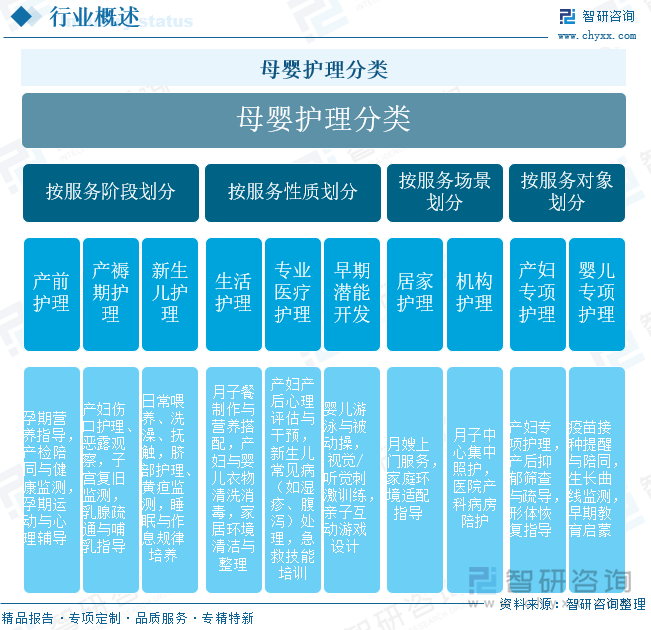
Core Insights - The maternal and infant care industry in China is experiencing rapid growth driven by consumption upgrades, despite a historical low in birth rates in 2023 [4][5] - The market size reached 600 billion yuan in 2023 and is expected to exceed 700 billion yuan by 2025, with a CAGR of 14.75% [5] - There is a significant demand for certified maternal and infant care professionals, with a projected shortage of 1 to 2 million by 2024 [5][6] Industry Development Status - The maternal and infant care industry is entering a golden development period characterized by consumption upgrades and structural changes [5] - The product segment accounts for 70% of the market, with baby care products leading at 55% market share, while the service segment, comprising 30%, is led by confinement centers [5] - The number of certified maternal and infant care professionals is expected to grow to 4 million by 2024, but a talent gap remains due to the "three-child policy" and increasing demand [5][6] Industry Development Trends - A full-cycle health management approach is becoming a core value growth point, integrating services from pre-pregnancy to early childhood [6] - Smart technologies like AIoT are reshaping the service ecosystem, enhancing decision-making efficiency by 60% and improving operational metrics for leading brands [7] - The industry is moving towards standardization, with new regulations set to be implemented by 2025, and significant growth potential in lower-tier cities [8]
趋势研判!2025年中国母婴护理行业政策、发展现状、市场缺口、竞争格局及未来趋势分析:专业母婴护理需求旺盛,持证人员缺口达百万级[图]
Chan Ye Xin Xi Wang· 2025-07-16 00:59
Core Insights - The maternal and infant care industry in China is experiencing rapid growth driven by consumption upgrades, despite a historical low in birth rates in 2023 [1][13][9] - The market size of the maternal and infant care industry reached 600 billion yuan in 2023, with expectations to exceed 700 billion yuan by 2025, reflecting a compound annual growth rate (CAGR) of approximately 14.75% from 2023 to 2025 [1][13][15] - The demand for certified maternal care professionals (such as confinement nannies) is high, with a projected shortage of 1 to 2 million professionals by 2024 [1][17] Industry Overview - Maternal and infant care focuses on comprehensive care during the postpartum period and early stages of newborns, combining medical care with parenting skills [2] - Services include daily care, health management, and early developmental interventions, requiring professionals with medical backgrounds [2] Industry Chain - The maternal and infant care industry has established a complete industrial chain, including upstream raw material supply, midstream product manufacturing and service provision, and downstream sales channels [3] Development Background - Maternal and infant care has become a key component of national strategies, supported by various policies aimed at enhancing service quality and safety [6][7] Current Market Analysis - The industry is characterized by a structural growth trend, with increasing demand for high-end and intelligent products, as well as professional services like postpartum recovery [1][13][15] Competitive Landscape - The industry features a multi-layered competitive structure, with international brands dominating the high-end market while local brands focus on differentiation [21][22] Development Trends - The industry is undergoing structural changes, with a shift towards comprehensive health management, accelerated smart technology adoption, and simultaneous standardization and market expansion [23][24][26]
贝康医疗(2170.HK):亮相国际生殖遗传学会,高端市场战略加速国际化
Ge Long Hui· 2025-06-07 01:47
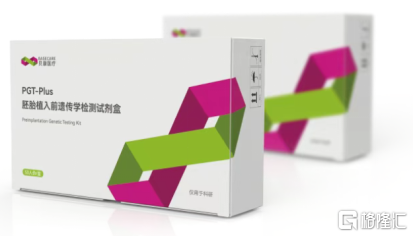
Core Insights - The article highlights a significant dialogue at the International Society for Reproductive Genetics (ISRG) regarding the revolution in life sciences, showcasing Beikang Medical as a leading enterprise in China's assisted reproduction sector, emphasizing a paradigm shift from single treatment to comprehensive health management [1] Group 1: Technological Advancements - Beikang Medical demonstrates innovation resilience in the "chip-level" technology field of assisted reproduction, particularly with the PGT-Plus test kit, which utilizes proprietary RET-Seq technology to address clinical challenges in detecting triploids, haploids, ROH, and CNV, achieving simultaneous detection of PGT-A, PGT-M, and PGT-SR projects [3] - The Geri incubator, recognized for its global wet culture technology with over 70% market share in Europe, showcases Beikang Medical's high-end manufacturing capabilities, having received multiple international certifications and awards, and is integrated with AI embryo assessment technology to lead smart laboratory trends [4] Group 2: Strategic Initiatives - At the ISRG conference, Beikang Medical launched a significant strategy with a six-month free trial plan for the Geri incubator, aimed at penetrating the mid-to-high-end market by leveraging top-tier equipment to disrupt the long-standing international brand monopoly [7] - The combination of the Geri incubator and the PGT-Plus test kit creates a comprehensive solution that enhances brand value differentiation, optimizing revenue structure and increasing the proportion of high-margin product income, thereby driving overall profitability [7]
行业革新浪潮涌动 中康晟兴深度洞察发展新机遇
Sou Hu Cai Jing· 2025-05-21 10:52
Group 1 - The health industry is undergoing profound structural changes driven by technological breakthroughs, shifts in consumer perceptions, and policy guidance since 2025 [1] - New technologies such as artificial intelligence and the Internet of Things are reshaping the health service ecosystem, enabling real-time health data collection and breaking geographical barriers through telemedicine [2] - There is a significant increase in consumer demand for personalized services in areas like weight management, sleep improvement, and emotional regulation, reflecting a shift from disease treatment to comprehensive health management [4] Group 2 - Zhongkang Shengxing focuses on core health needs such as weight management and integrates technology applications with consumer trends [5] - The company emphasizes a customer-centric approach and aims to build a more inclusive health service ecosystem by collaborating with various stakeholders in the industry [5] - Zhongkang Shengxing seeks to deepen insights in health management scenarios and explore sustainable development paths to enhance public health quality [5]

滨州欣悦康复医院"万医生"全周期健康管理平台正式发布
Qi Lu Wan Bao· 2025-04-28 09:32
Core Insights - The "Wan Doctor" platform has been officially launched by Binzhou Xinyue Rehabilitation Hospital, marking a new model in healthcare services with participation from representatives of Joy Group, Tencent Health, and over 200 staff members [2] - The platform focuses on "full-cycle health management," utilizing AI and big data to integrate various services such as physiological monitoring, lifestyle guidance, and mental health interventions, covering health management from conception to elder care [2] - The platform aims to address current health management pain points faced by the public, with a service system proposed by the hospital director that includes five precision services, four innovative services, and three core supports targeting different user groups [2] Service Packages - The platform offers three main service packages: - "Chronic Disease Full-Cycle Management Package" focusing on long-term tracking of "three highs and six diseases" - "Family Health Guardian Package" covering care needs from pregnancy to old age - "Elite Health Custom Package" designed for high-net-worth individuals with a comprehensive lifecycle solution [2] Future Plans - The "Wan Doctor" platform plans to implement demonstration projects aiming to reach 60,000 families within three years, achieving goals of "health management, early disease prevention, and continuous protection" [3] - The launch of the platform signifies a shift in health services from single treatment to comprehensive health services across life cycles and regions, integrating online and offline resources to provide systematic solutions for family health [3]