具身智能(Embodied AI)

Search documents
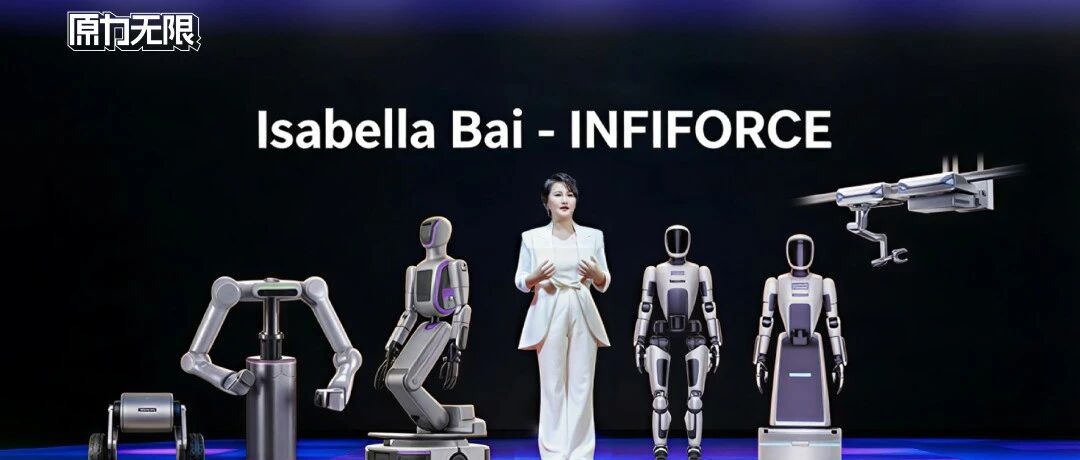
给机器人造一颗会思考的大脑,白惠源的“反共识”突围
财富FORTUNE· 2026-01-21 13:03
Core Viewpoint - The article emphasizes the need for robots to possess a "thinking" brain that understands the causal relationships of the world, rather than merely focusing on perfecting their physical forms. This perspective is articulated by Bai Huiyuan, the founder and CEO of Infiforce, who argues that the essence of embodied intelligence lies in the brain's ability to perceive and predict the physical world [1][2][3]. Group 1: Industry Context - In 2023, Bai Huiyuan left Alibaba to establish Infiforce amidst a competitive landscape where many companies were focused on hardware advancements, leading to a "body-making" arms race in the robotics industry [2]. - The robotics industry is currently characterized by a fascination with hardware, with companies competing on joint flexibility and human-like movements, while neglecting the cognitive capabilities of the robots [2][3]. - Infiforce aims to break this trend by focusing on developing a "thinking" brain that can adapt to various bodies and understand the physical world, rather than merely enhancing hardware specifications [3][12]. Group 2: Technological Approach - Infiforce's technological strategy involves a continuous learning model called Hyper-VLA combined with a causal world model, which contrasts with the mainstream AI approach that primarily relies on correlation [5][6]. - The existing AI models often depend on vast amounts of data for training, which is not feasible in the physical world, leading to issues of data scarcity and lack of robustness [6]. - Infiforce's approach integrates causal reasoning into its models, allowing robots to understand the implications of their actions, thus enhancing their decision-making capabilities in unfamiliar environments [6]. Group 3: Business Development - In 2025, Infiforce secured over 500 million yuan in commercial orders, signaling a significant milestone in the industry, although these orders are seen more as experimental partnerships rather than the launch of standardized products [8]. - The orders came from leading clients in various sectors, including cultural tourism, research, energy, and smart manufacturing, indicating a willingness to invest in the potential of robotics beyond mere demonstrations [8]. - Infiforce's AstroDroid AD series is transitioning from demonstration to pilot projects, where robots are actively engaging in real-world tasks, such as understanding visitor intentions in museums and performing household chores [8]. Group 4: Vision and Future Aspirations - Bai Huiyuan envisions Infiforce becoming an integral part of the robotics ecosystem, akin to "air" and "water," where the core intelligence of future robots will stem from Infiforce [13]. - The ultimate goal is to create robots that seamlessly integrate into human environments, making their intelligence so advanced that users forget they are interacting with machines [13].

AI4S电池创新价值兑现,三个痛点:真实、规律、效率
高工锂电· 2026-01-13 15:57
Core Viewpoint - The article emphasizes that while AI has made significant advancements, particularly in language models, it still lacks a true understanding of the physical world, which limits its potential applications in scientific fields [1][20]. Group 1: AI's Limitations and Future Directions - Current mainstream AI excels in language and statistical associations but struggles to grasp fundamental concepts like distance, scale, and causality [1]. - The concept of "AI for Science" (AI4S) is introduced as a critical pathway that aims to integrate AI into scientific research, focusing on understanding the physical world governed by chemistry and physics [2][20]. - AI4S is not merely an enhancement of computational power but a targeted approach to solving complex scientific problems [2]. Group 2: Industry Applications and Capital Market Interest - AI4S is transitioning from concept to practical applications, with SES AI's "Molecular Universe" platform demonstrating real economic value through the development of new electrolyte materials [3]. - The capital market is increasingly interested in AI4S, with several companies in this space achieving billion-dollar valuations, indicating a growing recognition of its commercial potential [3][4]. - SES AI has developed six breakthrough electrolyte materials, showcasing the practical applications of AI4S in industries like battery manufacturing [3][7]. Group 3: Case Studies and Success Stories - The success of companies like Jingtai Technology, which became the first "specialized technology stock" in Hong Kong, illustrates the potential of AI4S in the pharmaceutical sector [4]. - The growth of AI4S companies is often rooted in long-term, practical experience in specific scientific fields rather than merely competing in model capabilities [4][6]. Group 4: Technological Innovations and Breakthroughs - SES's MU platform has produced innovative solutions across various applications, including electric vehicles and drones, with significant performance improvements over industry benchmarks [7][8][10]. - The introduction of the "Flavor" system in MU-1.5 allows AI to leverage both known scientific knowledge and hidden data correlations, enhancing its predictive capabilities [14][15]. Group 5: Efficiency and Future Prospects - The MU platform aims to transform research efficiency by integrating a comprehensive workflow that reduces costs and accelerates development cycles [16][17]. - The "MU in a Box" initiative allows for localized deployment of the MU platform, enabling companies to utilize their proprietary data for tailored AI applications [17][18]. - The article concludes that the true value of AI4S lies in its ability to enhance scientific understanding and drive efficient research, positioning it as a critical component of future innovations in battery technology and beyond [20][22].

无需人工标注,轻量级模型运动理解媲美72B模型,英伟达、MIT等联合推出FoundationMotion
机器之心· 2026-01-11 02:17
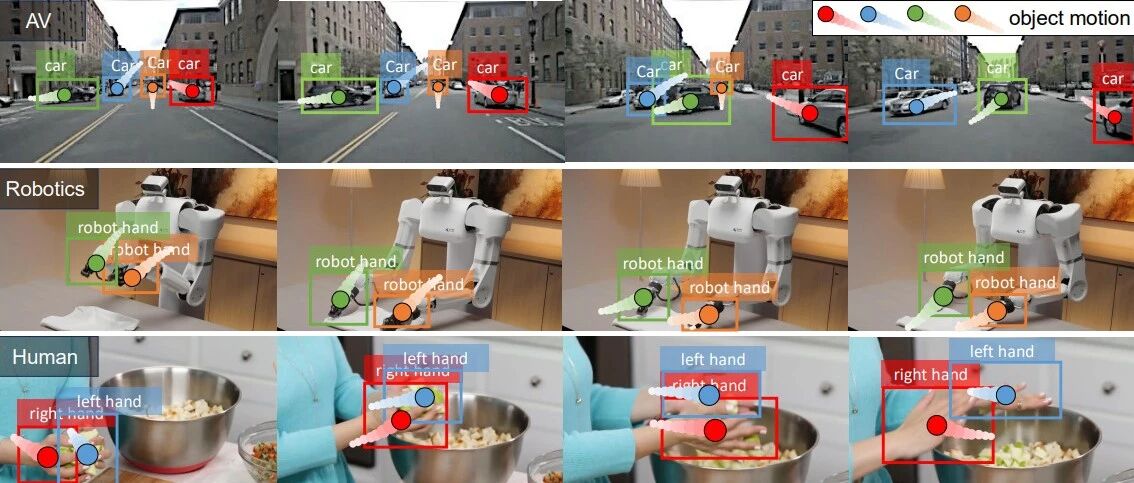
Core Insights - The rapid development of video models faces challenges in understanding complex physical movements and spatial dynamics, leading to inaccuracies in interpreting object motion [2][6] - A significant issue is the lack of high-quality motion data, as existing datasets are either too small or heavily reliant on expensive manual annotations [3][12] - FoundationMotion, developed by researchers from MIT, NVIDIA, and UC Berkeley, offers an automated data pipeline that does not require manual labeling, significantly improving motion understanding in video models [4][13] Data Generation Process - FoundationMotion operates through a four-step automated data generation process, starting with precise extraction of motion from videos using advanced detection and tracking models [16] - The system then translates these trajectories into a format understandable by language models, enhancing the model's ability to comprehend object movements [17] - Finally, it utilizes GPT-4o-mini to automatically generate high-quality annotations and questions, resulting in a dataset of approximately 500,000 entries for motion understanding [18] Model Performance - The data generated by FoundationMotion was used to fine-tune various open-source video models, including NVILA-Video-15B and Qwen2.5-7B, leading to significant performance improvements [21] - The fine-tuned models surpassed larger models like Gemini-2.5 Flash and Qwen2.5-VL-72B on multiple motion understanding benchmarks, demonstrating the impact of high-quality data [26] Broader Implications - FoundationMotion's contributions extend beyond performance metrics, as understanding object motion is crucial for safety and decision-making in autonomous driving and robotics [24] - The system provides a cost-effective and scalable solution for AI to develop an intuitive understanding of the physical world through extensive video analysis [25] - This advancement is seen as foundational for building true embodied intelligence, enhancing both physical perception and general video understanding capabilities [26][27]
全面梳理 VLA 20大挑战的深度综述,方向清晰可见,每周更新,助力时刻掌握最新突破!
AI科技大本营· 2025-12-25 01:18
Core Insights - The article discusses the emergence of Vision-Language-Action (VLA) systems, which are transitioning from demonstrations to real-world applications, highlighting the need for a structured learning path for newcomers and practitioners in the field [1][3][4]. Group 1: Overview of VLA - Embodied AI is identified as a rapidly evolving frontier in AI and robotics, with a focus on making machines capable of seeing, understanding, and acting [3][4]. - The article emphasizes the structural confusion within the field due to the rapid growth of models and datasets, making it challenging for newcomers to identify where to start and for existing practitioners to determine how to systematically enhance VLA capabilities [3][4]. Group 2: Contributions of the Review - The review paper titled "An Anatomy of Vision-Language-Action Models" aims to provide a clear and systematic reference framework for the increasingly complex VLA research area [4][6]. - It establishes a continuously evolving reference system for tracking the latest developments in VLA research, organized by modules, milestones, and challenges [5][9]. Group 3: Learning Pathways - For newcomers, the review suggests first establishing an overall understanding of the VLA field before delving deeper into specific areas [13][14]. - For practitioners, the review serves as an efficient roadmap for identifying areas for capability enhancement, helping to clarify research questions and innovation points [15][16]. Group 4: Structural Analysis - The review begins with a breakdown of basic modules in VLA systems, covering perception, representation, decision-making, and control, to create a common technical language [18][19]. - It then reviews key milestones along a timeline to illustrate the evolution of VLA from early concept validation to a general framework for real-world deployment [20][21]. Group 5: Key Challenges - The review identifies five core challenges that VLA systems face, including representation, execution, generalization, safety, and data evaluation, framing these challenges as the main focus of the analysis [25][26][30][33][39]. - Each challenge is linked to the overall capability of VLA systems, emphasizing the need for a clear understanding of problem structures to overcome existing bottlenecks [26][30][34][36]. Group 6: Future Directions - The review outlines potential future directions for VLA, such as developing native multimodal architectures and integrating physical and semantic causal world models [42][43]. - It envisions the next generation of embodied agents that not only perform tasks but do so reliably and controllably in real-world settings [44].

华人博士在英国做出颠覆性人机交互“皮肤”,已在汽车、医疗行业应用
创业邦· 2025-12-20 01:09
Core Viewpoint - TG0, a company founded by a pure Chinese team, is redefining human-machine interaction by integrating AI with flexible materials, enabling touchless interaction in various industries such as automotive and healthcare [5][7][10]. Group 1: Company Overview - TG0 was recognized as the only hard-tech company founded by a Chinese team in the "Future Fifty" list of the UK's most promising high-growth companies in 2025 [5]. - The company has won significant awards, including the "Best Technology Award" in the deep technology innovation category in October 2025 [5]. - TG0's core technology combines materials and chips, allowing for innovative human-machine interaction without traditional sensors [14][20]. Group 2: Technology and Innovation - TG0's technology mimics biological mechanisms of touch, using minimal electrodes and AI algorithms to interpret touch signals, thus enabling "passive perception" or "implicit interaction" [15][16][17]. - The company has developed a flexible sensing material that can be integrated into various products, reducing the need for multiple components and simplifying design [20]. - TG0's approach allows for significant cost reduction and environmental benefits, aligning with stringent European regulations [21]. Group 3: Market Applications - The automotive industry has become a key market for TG0, providing solutions for touchless controls in car interiors, enhancing safety and user experience [23][25]. - In healthcare, TG0 has collaborated with a U.S. medical company to develop a sensing prosthetic liner that monitors pressure distribution, improving user comfort and adaptation [28][29]. - The company has achieved over 50% annual revenue growth, reaching tens of millions in revenue, with expectations to exceed 100 million in the next one to two years [29]. Group 4: Future Vision - TG0 aims to be a foundational technology provider for future interactions, envisioning a world where objects possess human-like sensory capabilities [34][37]. - The company is expanding its presence in China, particularly in Shanghai, to leverage the local robotics industry and enhance its R&D efforts [35][36].

“木头姐”站队:不是泡沫!AI正在复制互联网的财富爆炸时刻
Jin Shi Shu Ju· 2025-11-26 04:13
Core Viewpoint - The current AI wave is not a bubble but a technological revolution similar to the early internet era, expected to drive global GDP growth to 7% to 8% over the next decade [1][8]. Group 1: AI Bubble Assessment - The market is not in a bubble as there is significant demand for AI products, with around 1 billion AI chatbot users, projected to grow to 4 to 5 billion by the end of the decade [2][3]. - The underlying tools for knowledge workers are expected to become ten times more powerful in the coming years, leading to a 50-fold increase in user capabilities [2]. - Current revenue for AI foundational model companies is approximately $30 billion, with a potential monetization scale of about $1.5 trillion [2]. Group 2: Historical Context and Comparisons - The current situation is compared to the 1995 internet moment, where significant growth potential existed before the market correction [3]. - Historical examples include the cost of sequencing a human genome, which was $2.7 billion and took 13 years, contrasting with today's technological readiness [3]. Group 3: Valuation and Growth Justification - Companies in exciting fields are expected to see their current premiums diminish significantly within five years due to overwhelming revenue growth and profit margin expansion [4]. - Palantir's U.S. commercial revenue growth reached 123%, exceeding aggressive expectations based on cost reduction and scaling [4]. - OpenAI is projected to reach an annualized revenue of approximately $20 billion by the end of this year, potentially growing to $40 to $50 billion next year, and $100 billion by 2027 [5]. Group 4: Major Opportunities in Technology - The largest opportunity lies in embodied AI, with projected revenues from Robotaxi services expected to grow from under $1 billion to $8 to $10 trillion in the next 5 to 10 years [6]. - The software stack's PaaS layer is expected to be as large as the foundational model layer, with companies like Palantir encroaching on SaaS players [6]. Group 5: Market Impact and Investment Strategy - Many non-AI companies are being penalized by the market for not accelerating revenue growth, indicating a shift in market dynamics [7]. - Companies with significant cash reserves are increasing capital expenditures, while those showing revenue growth are being rewarded [7]. - The transportation cost of autonomous trucks is expected to be lower than rail, potentially leading to stranded assets in traditional sectors [7]. Group 6: Future Growth Projections - The market is expected to grow at a compounded annual growth rate of over 10% until the end of the decade, with disruptive innovations growing at rates of 50% [8]. - If the current technological revolution is accurate, actual GDP growth could accelerate to around 5% over the next 5 to 10 years, contributing to global GDP growth of 7% to 8% [8].

DeepMind招募波士顿动力前CTO,哈萨比斯点赞宇树
机器之心· 2025-11-22 07:03
Core Insights - Google DeepMind has hired Aaron Saunders, former CTO of Boston Dynamics, indicating a strategic move into robotics and a notable talent return [2][3][6] - Saunders aims to address foundational hardware issues for achieving AGI's potential in the physical world [3][9] Historical Context - Boston Dynamics is currently owned by Hyundai, which acquired it from SoftBank, who purchased it from Alphabet in 2017 due to a lack of short-term commercialization prospects [6] - The return of a key figure from Boston Dynamics to Google highlights a cyclical relationship in the tech industry, emphasizing the importance of understanding both "brain" and "body" in embodied intelligence [6][9] Industry Shift - Saunders notes a paradigm shift in robotics from high mobility to general operational capabilities, emphasizing the need for robots to perform a wider range of tasks [9] - The focus is on responsibly solving embodied AI challenges through collaboration with partners to overcome hardware limitations [9] Strategic Vision - DeepMind's CEO, Demis Hassabis, envisions Gemini as an operating system for physical robots, akin to Android for smartphones [11][13] - The goal is to create a versatile AI system that can operate across various robotic forms, including humanoid and non-humanoid robots [13] Competitive Landscape - The components and expertise required for building bipedal robots have become more accessible, with companies like Agility Robotics and Figure AI emerging in the market [14] - Chinese company Unitree Technology has surpassed Boston Dynamics in supplying quadrupedal robots for industries like manufacturing and construction [14] Future Outlook - Hassabis expresses confidence in a breakthrough moment for AI-driven robotics in the coming years, with Saunders' return seen as a crucial addition to achieving this vision [15]


ICCV 2025 Highlight | 大规模具身仿真平台UnrealZoo
具身智能之心· 2025-11-13 02:05
Core Insights - The article introduces UnrealZoo, a high-fidelity virtual environment platform designed to enhance research in embodied AI by providing over 100 diverse and realistic 3D scenes [5][12][72] - UnrealZoo aims to address the limitations of existing simulators by offering a flexible and rich training environment that supports various tasks and enhances the adaptability of AI agents in complex, dynamic settings [7][8][72] Summary by Sections Introduction to UnrealZoo - UnrealZoo is developed using Unreal Engine and includes over 100 high-quality, realistic scenes, ranging from indoor settings to large-scale industrial environments [5][12] - The platform features 66 customizable embodied entities, including humans, animals, and vehicles, allowing for diverse interactions and training scenarios [5][12] Purpose and Necessity - The rapid development of embodied AI necessitates a platform that can simulate diverse and high-fidelity environments to improve the adaptability and generalization of AI agents [7][8] - Existing simulators often limit the scope of AI training to specific tasks, hindering the development of agents capable of functioning in unpredictable real-world scenarios [7][8] Features of UnrealZoo - UnrealZoo provides a comprehensive set of tools, including an optimized Python API and enhanced communication protocols, to facilitate data collection, environment customization, and multi-agent interactions [5][48] - The platform supports various tasks such as visual navigation and active target tracking, demonstrating the importance of diverse training environments for improving model generalization [5][72] Experimental Results - Experiments conducted using UnrealZoo highlight the significant impact of environment diversity on the performance and robustness of AI agents, particularly in complex navigation and social interaction tasks [72] - Results indicate that while reinforcement learning methods show promise, there remains a substantial gap between AI agents and human performance in navigating intricate environments [72] Future Directions - The ongoing development of UnrealZoo will focus on expanding the variety of scenes, entities, and interaction tasks to further enhance the capabilities of embodied AI in real-world applications [72]

ICCV 2025 Highlight | 大规模具身仿真平台UnrealZoo
机器之心· 2025-11-11 17:11
Core Insights - UnrealZoo is a high-fidelity virtual environment platform designed to enhance research in embodied AI by providing over 100 diverse and realistic 3D scenes, facilitating various research needs [2][5][9] - The platform has been recognized with a Highlight Award at ICCV 2025, indicating its significance in the field [2] Group 1: Platform Features - UnrealZoo includes more than 100 high-quality, realistic scenes ranging from indoor settings to urban landscapes and natural environments, supporting a wide range of research applications [5][13] - The platform features 66 customizable embodied entities, including humans, animals, vehicles, and drones, allowing for interaction with both the environment and other agents [5][24] - It provides an easy-to-use Python interface and tools for data collection, environment enhancement, and distributed training, optimizing rendering and communication efficiency [7][15][42] Group 2: Research Implications - The platform addresses the limitations of existing simulators by offering a diverse and high-fidelity environment that enhances the adaptability and generalization capabilities of embodied agents in complex, dynamic settings [8][9] - Experiments conducted using UnrealZoo demonstrate the importance of environmental diversity in improving the generalization and robustness of agents, particularly in navigation and social interaction tasks [64][55] - The research highlights the challenges faced by current reinforcement learning and visual-language model-based agents in open-world scenarios, emphasizing the need for further development in these areas [8][64] Group 3: Future Directions - Future work will focus on expanding the variety of scenes, entities, and interaction tasks within UnrealZoo to further support the application of embodied AI in real-world scenarios [64]