农村人居环境整治

Search documents
首府农村人居环境实现“美丽宜居”深度跨越
Xin Lang Cai Jing· 2026-01-12 20:05
Core Viewpoint - The city of Hohhot is advancing its rural environment improvement initiative with the theme "Building a Harmonious Countryside, Sharing a Clean Home," transitioning from a concentrated effort to a sustainable management phase by 2025 [1] Group 1: Rural Environment Improvement Actions - By 2025, Hohhot aims to mobilize 127,100 farmers to participate in village cleaning efforts, fostering a community-driven atmosphere where everyone contributes to cleanliness [1] - The city has successfully cleaned 262,200 tons of rural household waste, including 32,900 tons of plastic waste, and eliminated 42,900 illegal dumping sites, significantly enhancing the cleanliness of village environments [2] - The improvement of water systems includes cleaning 447 village ponds and 3,036.5 kilometers of ditches, addressing issues of silt, blockage, and pollution in rural water systems [2] Group 2: Financial and Structural Support - A total of 64.603 million yuan has been allocated by local governments for village environment enhancement, supplemented by 515,800 yuan from social contributions, creating a diversified funding structure [3] - A closed-loop management system for problem rectification has been established, with 500 cases addressed and a 100% problem resolution rate, facilitating the transition from concentrated efforts to ongoing management [3] - All 830 administrative villages have achieved integrated urban-rural sanitation, ensuring that waste collection and transportation facilities meet the needs of the village cleaning initiatives [3] Group 3: Future Directions - The rural cleaning initiative will focus on "mechanization, normalization, and precision," ensuring not only the aesthetic improvement of rural environments but also the establishment of a solid foundation for long-term management [3] - Hohhot plans to deepen the integration of rural cleaning actions with rural revitalization, aiming to create more livable environments and enhance the happiness of farmers [3]
青海实施1350个高原美丽乡村建设
Xin Lang Cai Jing· 2026-01-09 18:42
Group 1 - During the "14th Five-Year Plan" period, Qinghai is accelerating the construction of a collaborative work system for rural development, implementing 1,350 highland beautiful countryside projects, and achieving significant results in harmonious village construction [1] - Over the past five years, 27,300 households of farmers and herders have had their housing improved, with a 100% completion rate for safety hazard inspections and rectifications in rural and pastoral housing [1] - The province has implemented 186,700 projects to improve living conditions for farmers and herders, focusing on energy efficiency, facility improvement, and environmental sanitation [1] Group 2 - The province is enhancing rural infrastructure and public service facilities, with over 96.2% of administrative villages effectively managing household waste [2] - A long-term mechanism for rural waste management has been established, promoting systematic governance and comprehensive coverage [2] - Several counties in Qinghai have been recognized for their efforts in protecting traditional villages, showcasing cultural and historical significance [2]
21评论丨以投资于人带动投资于物
Xin Lang Cai Jing· 2025-12-19 22:31
Core Viewpoint - The central economic work conference emphasizes the necessity of combining investment in physical assets and human capital, which serves as a guiding principle for economic work in the coming year, ensuring a strong start for the 14th Five-Year Plan [2] Group 1: Investment in Human and Physical Capital - Investment in physical assets provides the necessary material conditions for human development, while investment in human capital directs and drives physical capital investment [2] - Under constraints such as population aging and diminishing returns on capital, leveraging human investment to stimulate physical investment is crucial for maintaining economic stability and promoting high-quality development [2] Group 2: Expanding Domestic Demand - Expanding domestic demand requires a dual focus on consumption and investment, with data showing that China's incremental capital-output ratio (ICOR) has increased from 2-3 to around 9 from 2008 to 2023, indicating a higher capital requirement for GDP growth [3] - Investment in human capital not only enhances consumption across different age groups but also fosters a virtuous cycle between consumption and physical capital investment, providing a solid foundation for expanding domestic demand [3] Group 3: Meeting People's Needs - Investment in human capital leads to better satisfaction of people's needs for a better life by enhancing education, healthcare, and social equity through improved material investments [4] - The focus on human capital investment aims to reduce urban-rural disparities and ensure that development benefits are more equitably distributed among the population [4] Group 4: Key Areas for Investment - Identifying the intersection of human and physical capital investment is essential, particularly in education, where enhancing human capital requires increased material investment in facilities and equipment [5] - The aging population presents challenges and opportunities for the elderly care sector, necessitating investment in community-based and smart elderly care solutions [5] Group 5: Structural Reforms and Investment Efficiency - Structural reforms are needed to optimize investment efficiency, including reforms in talent development systems and enhancing the allocation of resources for human capital [6] - The government should support community elderly care services and improve social security systems to alleviate residents' concerns about consumption [6] - Urban renewal and rural living environment improvements require coordinated investment from various sources, including public and private sectors, to enhance infrastructure and services [6]

改善人居环境 扮靓和美乡村
Liao Ning Ri Bao· 2025-12-08 01:37
Core Viewpoint - The transformation of Wangjiabao Village in Xiuyan Manchu Autonomous County is a successful example of rural revitalization, completed in just four months with a total investment of 50.26 million yuan, benefiting multiple villages in the region [2]. Group 1: Project Overview - The renovation project in Wangjiabao Village is part of a broader initiative to enhance five "town head villages" and twenty key villages, aligning with the goals set by the 20th National Congress of the Communist Party of China to promote livable and business-friendly rural areas [2]. - The project aims to solidify the foundation for comprehensive rural revitalization by improving living environments, thereby increasing the happiness of villagers through visible changes [2]. Group 2: Unique Features and Community Impact - The renovation follows a unified standard while also highlighting the unique characteristics of each village, with Chaoyang Town's Goumen Village serving as a model for "characteristic transformation" [2]. - The improvements include road hardening, drainage channel clearing, and the creation of a 1,200-meter-long riverside landscape belt, enhancing the natural beauty and recreational opportunities for both residents and visitors [2]. Group 3: Community Feedback and Future Plans - The renovation has received positive feedback from villagers, with residents expressing satisfaction over new infrastructure such as roads and bridges, which have significantly improved their daily lives [3]. - Future plans include the renovation of an additional ten "town head villages" and forty key villages, aiming to further modernize the region and enhance the quality of rural life [3].
整治环境 村容焕新(迈向“十五五”的民生图景)
Ren Min Ri Bao· 2025-10-27 22:41
Core Viewpoint - The article highlights the transformation of waste management practices in rural areas, particularly in Bagjiadian Village, Xinjiang, showcasing the implementation of a new waste processing model that emphasizes local handling and resource recovery [2][3]. Group 1: Waste Management Innovations - The village has shifted from a centralized waste management system to a localized approach, where waste is sorted at the household level and processed within the village, reducing transportation costs and minimizing pollution [2]. - A new micro waste processing station was established, utilizing low-temperature magnetic cracking technology to prevent dioxin production, with emissions meeting national standards [3]. Group 2: Economic and Environmental Benefits - The new waste management system has reduced the village's annual waste disposal costs from 200,000 yuan to 130,000 yuan, demonstrating significant cost savings [2]. - The implementation of waste sorting and processing has led to a decrease in littering and improved community cleanliness, with a rewards system in place for residents who maintain a clean environment [3]. Group 3: Future Developments - Plans are in place to further enhance the living environment over the next five years, including the potential establishment of a processing plant to convert waste into usable products like garden fertilizers and water-absorbing bricks [3].
茂南召开“百千万工程”乡村振兴“走、听、看、想、比”现场会
Nan Fang Nong Cun Bao· 2025-09-12 11:04
Core Viewpoint - The meeting held in Maonan District aims to promote rural revitalization through the "Hundred Thousand Project" by enhancing the living environment and agricultural development [2][3][12]. Group 1: Meeting Objectives and Structure - The meeting is designed to create a competitive atmosphere by encouraging advanced practices and promoting long-term, systematic improvements in rural living conditions [3][12]. - The event consists of two main parts: a field visit to observe local environmental improvements and a discussion session for sharing experiences and work reports [7][8]. Group 2: Key Focus Areas - Emphasis is placed on recognizing rural living environment improvement as a critical component of both a livelihood project and a development initiative, essential for creating a model of urban-rural integration [11][12]. - The year is highlighted as a pivotal moment for the "Hundred Thousand Project," coinciding with the conclusion of the national five-year action plan for rural living environment enhancement [22][23]. Group 3: Action Plans and Responsibilities - Local authorities are urged to adopt a problem-oriented approach, focusing on key issues such as rural sanitation, waste management, and overall village appearance [26][27]. - A clear accountability framework is proposed, including the establishment of a "three-list" system to ensure timely problem resolution and effective collaboration among departments [28][29]. Group 4: Resource Utilization and Economic Development - The meeting advocates for the development of rural industries by fostering partnerships between new agricultural entities and farmers, as well as leveraging local resources to enhance economic growth [35][36]. - Initiatives like "Thousand Enterprises Helping Thousand Towns" are encouraged to support the growth of distinctive local industries and promote high-quality rural economic development [36][37].

邢善萍在宝鸡市调研乡村全面振兴工作
Shan Xi Ri Bao· 2025-08-22 00:32
Group 1 - The core viewpoint emphasizes the importance of implementing Xi Jinping's important speeches and instructions during his visits to Shaanxi, focusing on rural revitalization and addressing issues effectively [1][2] - The research highlights the need for integrating red culture into educational curricula and promoting cultural tourism development while ensuring the protection of cultural relics [1] - The report discusses the significance of leveraging local resources and technology to enhance market opportunities and strengthen industries that benefit the rural population [1] Group 2 - The emphasis is placed on maintaining a bottom line to prevent large-scale poverty and improving rural industry development, construction, and governance [2] - The need for continuous implementation of the Central Eight Regulations and promoting strict governance within the party is highlighted to foster high-quality development [2] - The report stresses the importance of addressing urgent issues faced by the community with dedication and effort [2]
结合“过紧日子”现实要求,探索村庄自主保洁推进降本增效
Zhong Guo Huan Jing Bao· 2025-07-22 05:44
Core Viewpoint - The article emphasizes the importance of sustainable rural living environment improvement through cost reduction and efficiency enhancement, particularly in the context of the "14th Five-Year Plan" for rural living environment improvement [1] Group 1: Sustainable Improvement Strategies - The focus is on promoting village-led governance in rural living environment projects, which are characterized by low costs, high participation, efficiency, and benefits [1] - The case of Suzhou's Wujiang District illustrates a shift from government-led models to a village self-cleaning model, aligning with the need for cost reduction and efficiency under current financial constraints [1] Group 2: Tailored Self-Cleaning Models - It is essential to develop self-cleaning models that are tailored to local conditions to minimize costs, considering factors like terrain and waste types [2] - Villages should optimize their economic accounts by adopting appropriate cleaning models based on their economic conditions, such as using third-party services or tourism revenue to support self-cleaning efforts [2] Group 3: Institutional Support for Sustainability - Institutional design is crucial for ensuring the sustainability of village self-cleaning operations, with the government providing necessary equipment and technical support [2] - Village committees can establish supervisory groups and reward systems to promote self-cleaning efforts, ensuring regular checks and balances [2] Group 4: Economies of Scale and Scope - Utilizing economies of scale and scope can enhance the efficiency of self-cleaning operations, with county governments coordinating urban-rural cleaning systems [3] - Villages can form self-cleaning cooperatives to manage cleaning tasks collectively, thereby reducing costs and improving efficiency through a more organized approach [3]
人居环境提“气质” 美丽乡村展“新姿”
Zhen Jiang Ri Bao· 2025-07-17 05:11
Group 1 - The core idea of the articles revolves around the community's efforts to improve the living environment through various initiatives, emphasizing the integration of community governance, environmental management, and volunteer services [1][2][3][4] Group 2 - The community party branch has adopted a path of "rectification, strengthening the foundation, addressing shortcomings to benefit people's livelihoods, and promoting long-term effectiveness" to enhance rural living conditions [1] - A "tea meeting courtyard" platform has been established for community discussions, allowing residents to voice their needs and collaboratively address issues such as infrastructure maintenance and public space utilization [2] - The community has implemented a grid management system for environmental improvement, assigning specific responsibilities to individuals and ensuring regular inspections and maintenance of public areas [3] - Volunteer services have been integrated into environmental initiatives, encouraging residents to participate in activities like waste sorting and community clean-ups, fostering a culture of cleanliness and civility [4]
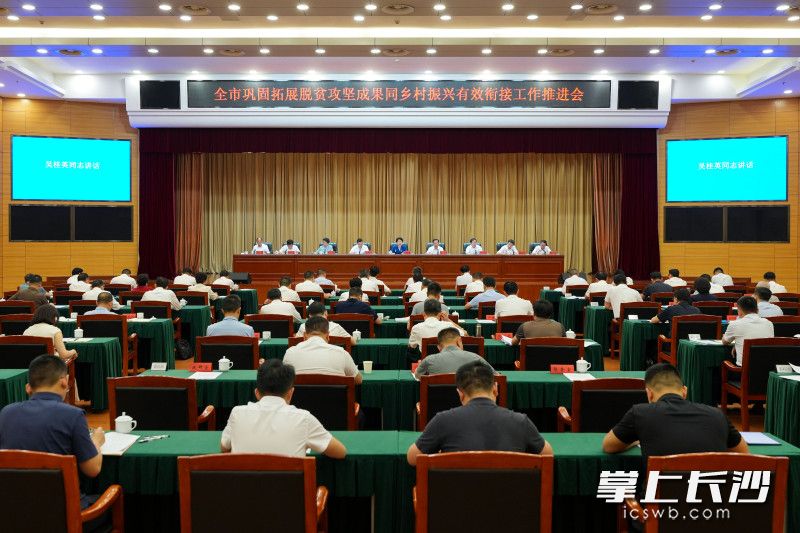
吴桂英:毫不松懈巩固拓展脱贫攻坚成果 不断提升有效衔接的质量和成色
Chang Sha Wan Bao· 2025-07-02 02:02
Core Points - The meeting held on July 1 focused on consolidating and expanding the achievements of poverty alleviation and effectively connecting them with rural revitalization [1][3] - The emphasis was placed on implementing Xi Jinping's important discourse on "agriculture, rural areas, and farmers," ensuring no large-scale return to poverty occurs, and providing solid support for high-quality development in Changsha [1][2] Summary by Sections Meeting Overview - The meeting aimed to promote the effective connection between poverty alleviation and rural revitalization, with a strong commitment to maintaining the achievements made [1][3] Leadership Insights - Wu Guiying highlighted the need for all levels of government to enhance their political stance and responsibility in ensuring effective connections between poverty alleviation and rural revitalization [2][4] - The importance of a correct view of performance and precise assistance strategies was emphasized, along with the need for continuous improvement based on actual work results [2] Action Plans - The implementation of the "Four No Drop" requirements and the "Five Ones" action plan was stressed to improve the quality of effective connections [4] - A systematic approach involving problem rectification, monitoring, and dynamic management was proposed to ensure that assistance policies reach every household and individual [4] Development Strategies - The focus on enhancing the internal driving force through the development of characteristic industries and employment support channels for the impoverished population was outlined [4] - Continuous reforms in healthcare and education were mentioned as essential for ensuring timely and accurate delivery of agricultural subsidies [4] Governance and Accountability - Strengthening party leadership and accountability in rural revitalization efforts was emphasized, along with the need to combat corruption and improper practices in this field [4]