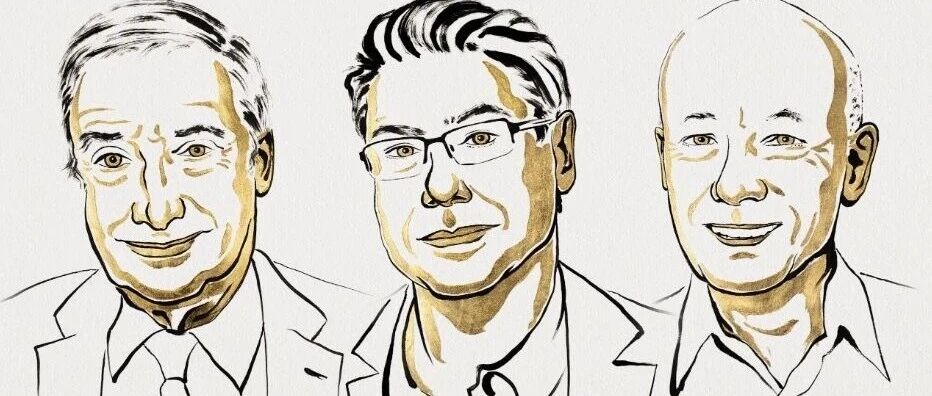
创新驱动的经济增长

Search documents
中方对美船舶收取特别港务费今起施行;黄金、白银再创新高|南财早新闻
2 1 Shi Ji Jing Ji Bao Dao· 2025-10-13 23:33
Group 1: Regulatory Developments - The Ministry of Transport of China released the "Implementation Measures for Special Port Charges on American Vessels," which includes ten articles detailing the scope, standards, and exemptions for charges on vessels built in China or entering Chinese shipyards for repairs [1] Group 2: Trade Statistics - In September, China's goods trade import and export reached 4.04 trillion yuan, a year-on-year increase of 8%, with exports at 2.34 trillion yuan (up 8.4%) and imports at 1.7 trillion yuan (up 7.5%), marking four consecutive months of double-digit growth [1] - In the third quarter, China's goods trade import and export grew by 6% year-on-year, achieving eight consecutive quarters of growth [1] - China's rare earth exports in September were 4,000.3 tons, marking a decline for the third consecutive month [1] Group 3: Oil Price Adjustments - A new round of refined oil price adjustments will take effect on October 13, with domestic gasoline and diesel prices decreasing by 75 yuan and 70 yuan per ton, respectively, translating to a reduction of 0.06 yuan per liter for 92-octane gasoline, 95-octane gasoline, and 0-octane diesel [1] Group 4: Shipbuilding Industry Performance - As of June 30, 2025, during the "14th Five-Year Plan" period, China's shipbuilding industry has secured 64.2% of global new ship orders, an increase of 15.1 percentage points compared to the "13th Five-Year Plan," maintaining the world's largest market share for 16 consecutive years [2] Group 5: Market Trends - In September, foreign capital inflow into the Chinese stock market rebounded to 4.6 billion USD, the highest monthly figure since November 2024 [3] - The first complete trading week after the National Day holiday saw a surge in new fund issuances, with 51 new funds launched, primarily equity funds [3] - A significant market fluctuation occurred post-holiday, with A-shares, Hong Kong stocks, and US stocks all declining, prompting a shift towards defensive strategies among public funds [3][4]

诺贝尔经济学奖解码增长引擎:新从旧来,“创造性破坏”重塑世界
2 1 Shi Ji Jing Ji Bao Dao· 2025-10-13 14:23
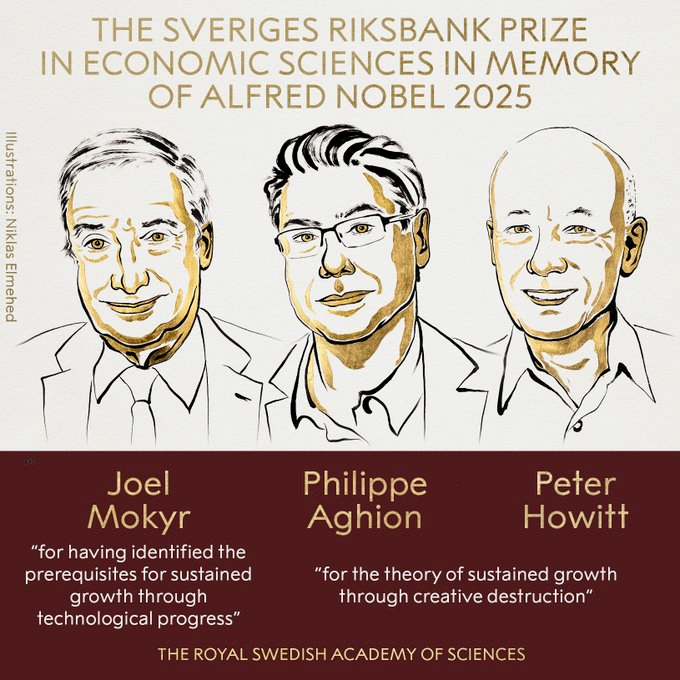
Core Insights - The 2025 Nobel Prize in Economic Sciences was awarded to Joel Mokyr, Philippe Aghion, and Peter Howitt for their work on "innovation-driven economic growth" [4][6] - Their research provides a theoretical framework for understanding how technological innovation drives long-term economic growth, which is significant for policymakers and investors assessing the economic impact of technology investments and innovation policies [4][6] Group 1: Award Details - The total prize money for the 2025 Nobel Prize in Economic Sciences is 11 million Swedish Krona, with half awarded to Joel Mokyr and the other half shared between Philippe Aghion and Peter Howitt [6] - Joel Mokyr's research emphasizes the importance of understanding not just the effectiveness of a technology but also the reasons behind its effectiveness, highlighting the need for an open society that embraces new ideas [6][8] Group 2: Theoretical Contributions - Aghion and Howitt developed a mathematical model of "creative destruction," illustrating how new products can lead to the failure of companies selling outdated products, thus emphasizing the dual nature of innovation as both creative and destructive [7][8] - Their endogenous growth model, based on the concept of creative destruction, suggests that quality-enhancing innovations can drive productivity growth by replacing old technologies with new ones [7][8] Group 3: Implications for Economic Growth - The concept of creative destruction must be managed constructively to prevent established companies and interest groups from hindering innovation [8] - The endogenous growth theory is particularly relevant in the context of China's economic transformation, emphasizing the need for an optimized business environment and mechanisms that encourage entrepreneurial spirit [8][9]
诺奖三剑客破解持续增长谜题,技术创新与开放是“王道”
Di Yi Cai Jing· 2025-10-13 13:25
Core Viewpoint - The Nobel Prize in Economic Sciences awarded to Joel Mokyr, Philippe Aghion, and Peter Howitt emphasizes the importance of maintaining the mechanisms behind creative destruction to ensure sustained economic growth, highlighting that economic growth is not a given and requires active support [1][4]. Group 1: Contributions of Nobel Laureates - Mokyr's research focuses on the internal logic of sustained growth, categorizing "useful knowledge" into propositional knowledge and procedural knowledge, emphasizing the need for a virtuous cycle of innovation [5][6]. - Aghion and Howitt transformed Schumpeter's theory of "creative destruction" into a rigorous mathematical model, illustrating the dual nature of innovation that both creates and destroys market dynamics [6][7]. Group 2: Challenges to Sustained Growth - Historical analysis shows that despite significant innovations, sustained economic growth was elusive until the last two centuries, with the current economic model being influenced by technological advancements [4][5]. - Aghion warns of the threats posed by protectionist measures and the need for open markets to facilitate economic growth, as these barriers can hinder the necessary exchange of ideas and technologies [7][8]. Group 3: Implications of AI and Technological Change - Aghion highlights that AI could significantly accelerate the process of creative destruction, making innovation more accessible and presenting vast growth potential [7][8]. - The need for well-designed competition policies is crucial to prevent dominant firms from stifling future innovations, as seen in the tech industry [7][8]. Group 4: Policy Recommendations - Aghion suggests that to maximize productivity gains from technological advancements, robust institutional frameworks, including education and labor market policies, are essential [8][9]. - The Nobel Prize serves as a reminder of the critical role of technological innovation in driving economic growth, especially in the context of current global economic challenges [9]. Group 5: Prize Distribution - The total prize amount of 11 million Swedish Krona will be split, with Mokyr receiving half for his contributions to understanding the conditions for sustained growth through technological progress, while Aghion and Howitt will share the other half for their theoretical work on creative destruction [11][12].
2025年诺贝尔经济学奖揭晓!3名经济学家获奖,表彰其“对创新驱动型经济增长的阐释”
Sou Hu Cai Jing· 2025-10-13 13:21
Group 1 - The 2025 Nobel Prize in Economic Sciences is awarded to Joel Mokyr, Philippe Aghion, and Peter Howitt for their contributions to "innovation-driven economic growth" [1] - Half of the prize is awarded to Mokyr for his discovery of the prerequisites for sustained growth through technological advancement [1] - The other half is jointly awarded to Aghion and Howitt for their theory of sustained growth through creative destruction [1] Group 2 - The Nobel Prize in Economic Sciences has been awarded 56 times from 1969 to 2024, with a total of 96 laureates, including 3 women [7] - Recent winners include Daron Acemoglu, Simon Johnson, and James A. Robinson in 2024 for their research on how institutions form and affect prosperity [6] - Claudia Goldin received the award in 2023 for her work on understanding women's labor market outcomes [6]
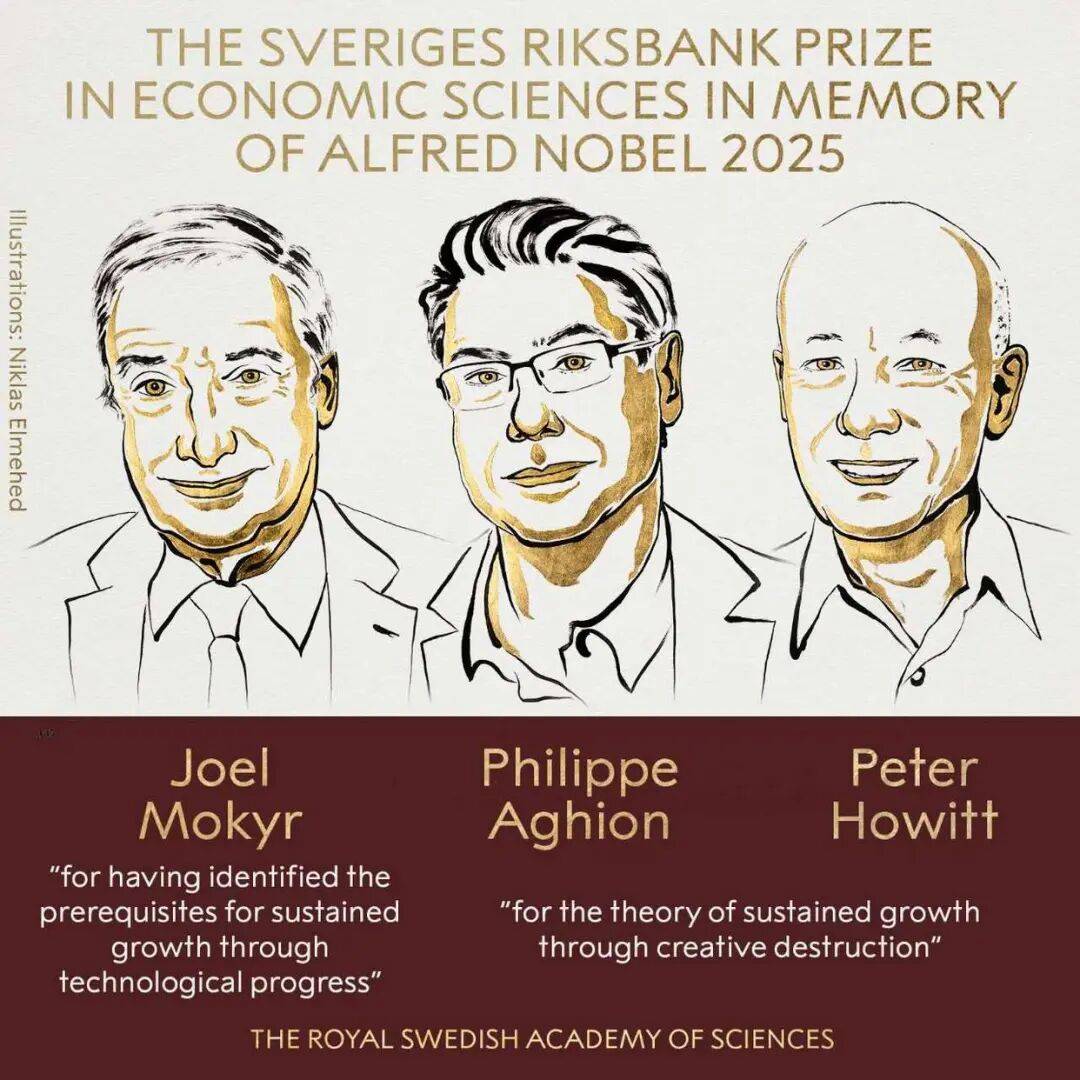
2025年诺贝尔经济学奖揭晓!3位经济学家获奖
Zhong Guo Xin Wen Wang· 2025-10-13 11:37
Core Points - The 2024 Nobel Prize in Economic Sciences was awarded to three American economists: Daron Acemoglu, Simon Johnson, and James Robinson for their significant contributions to understanding how institutions shape economic prosperity [3][8] - The Nobel Committee emphasized that narrowing the income gap between countries is one of the greatest challenges of our time, highlighting the importance of social institutions in achieving this goal [3][4] - The award reflects a trend in recent years where economists with practical policy influence and leadership are increasingly recognized, moving away from solely theoretical contributions [7][8] Group 1 - The 2024 Nobel Prize in Economic Sciences recognizes the work of Acemoglu, Johnson, and Robinson in the field of institutional formation and its impact on economic growth [3][8] - Their research combines theory and data, enhancing the understanding of persistent inequality between nations, with a focus on colonial history and modern democratic challenges [3][4] - The award is seen as a typical example of economics being applied to real-world issues, providing new perspectives on global inequality [4][7] Group 2 - Recent Nobel Prize winners have increasingly demonstrated a balance between academic research and policy impact, indicating a shift in the value orientation of the award [7][8] - The Nobel Committee aims to recognize research that significantly impacts the world, rather than merely popularity contests [7] - The trend suggests a growing emphasis on the practical application of economic theories to address contemporary challenges [7][8]
2025年诺贝尔经济学奖揭晓 三位学者以解释“创新驱动的经济增长”获奖
Jing Ji Guan Cha Wang· 2025-10-13 10:56
Core Points - The 2025 Nobel Prize in Economic Sciences is awarded to Joel Mokyr, Philippe Aghion, and Peter Howitt for their contributions to understanding "innovation-driven economic growth" with a total prize of 11 million Swedish Krona [1][2][3] - Joel Mokyr receives half of the prize for identifying the conditions necessary for sustained growth through technological advancement, while Aghion and Howitt share the remaining half for their theory on achieving sustained growth through "creative destruction" [1][2][3] Group 1: Contributions of the Laureates - Joel Mokyr's work reveals the reasons behind sustained economic growth becoming the new norm, emphasizing the need for scientific explanations of why certain technologies are effective [3][4] - Aghion and Howitt developed a mathematical model in 1992 to explain "creative destruction," where the introduction of better products leads to the failure of companies selling outdated products [4][5] - The laureates collectively highlight the importance of managing the conflicts arising from creative destruction to prevent innovation from being hindered by existing companies and interest groups [4][5] Group 2: Historical Context and Implications - The Nobel Prize continues the tradition of focusing on practical economic issues, with this year's award emphasizing the mechanisms behind economic growth [2][3] - The work of the laureates illustrates that economic growth is not guaranteed and must be actively maintained to avoid stagnation [5]
2025年诺贝尔经济学奖揭晓
21世纪经济报道· 2025-10-13 10:15
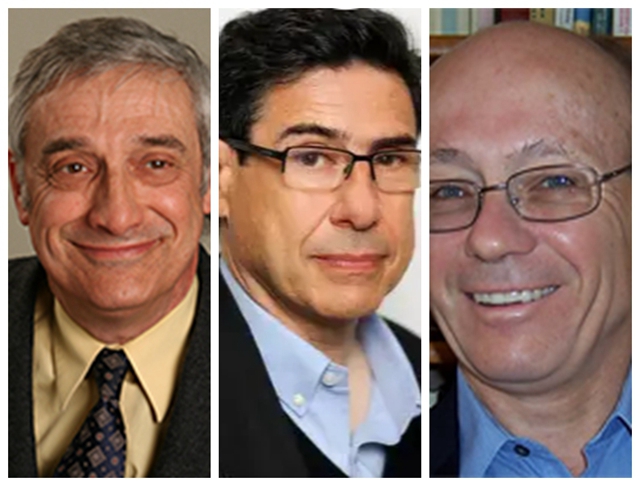
Group 1 - The 2025 Nobel Prize in Economic Sciences was awarded to Joel Mokyr, Philippe Aghion, and Peter Howitt for their contributions to understanding "innovation-driven economic growth" [1] - Joel Mokyr is a professor at Northwestern University, born in 1946 in Leiden, Netherlands, and obtained his PhD from Yale University in 1974 [3] - Philippe Aghion is a professor at multiple institutions including the Collège de France and the London School of Economics, born in 1956 in Paris, France, and received his PhD from Harvard University in 1987 [3] - Peter Howitt is a professor at Brown University, born in 1946 in Canada, and earned his PhD from Northwestern University in 1973 [4] Group 2 - The total prize money for this year's Nobel Prize in Economic Sciences is 11 million Swedish Krona, with half awarded to Joel Mokyr and the other half shared between Philippe Aghion and Peter Howitt [5] - The Nobel Prize in Economic Sciences was established by the Swedish National Bank in 1968 and is not part of the original Nobel Prizes set up by Alfred Nobel's will [5] - In the previous three years, the Nobel Prize in Economic Sciences recognized research related to financial crisis responses, women's labor market participation, and the formation and impact of institutions on prosperity [6]
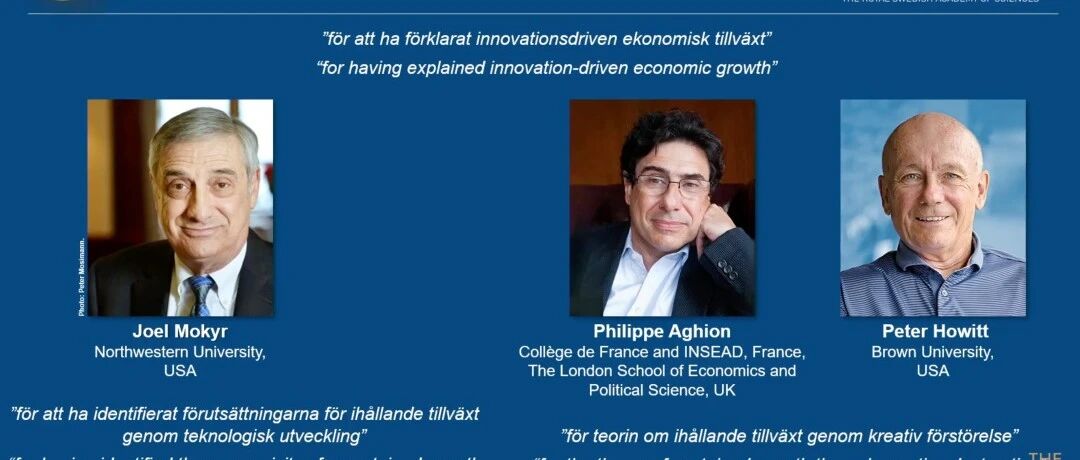
2025年诺贝尔经济学奖揭晓
第一财经· 2025-10-13 10:14
Core Viewpoint - The 2025 Nobel Prize in Economic Sciences has been awarded to Joel Mokyr, Philippe Aghion, and Peter Howitt for their contributions to understanding "innovation-driven economic growth" [1] Group 1 - The award recognizes the importance of innovation in driving economic growth [1] - The contributions of the laureates provide insights into how innovation can lead to sustainable economic development [1] - Their work emphasizes the relationship between technological advancements and economic performance [1]