制造业

Search documents
X @外汇交易员
外汇交易员· 2025-08-01 07:09
瑞霆狗(RatingDog)宣布与标普全球达成协议,获得“标普全球中国PMI”(原财新PMI)的独家冠名权,指数将正式更名为“RatingDog中国PMI”。更名后的指数将继续于每月首个工作日(制造业PMI)和第三个工作日(服务业PMI)发布。🗒️Ratingdog第一大股东为中证信用,由东吴证券、国泰君安、广发证券、安信证券等35家机构合资成立。外汇交易员 (@myfxtrader):中国7月标普全球制造业PMI录得49.5,预期50.4,前值50.4。(财新7月起终止对标普中国PMI的冠名)标普全球市场:中国制造业自2023年10月后第二次录得产量下降,调查企业反映新订单增速放缓,厂商相应减产。厂商反映外需疲软,新出口订单已连续4个月收缩,且较6月加剧。https://t.co/4eWCWIpcNz https://t.co/2px2vIDPvj ...
GDP增速5.3%!中国交出上半年“成绩单”,GDP逼近美国的62%
Sou Hu Cai Jing· 2025-07-24 00:03
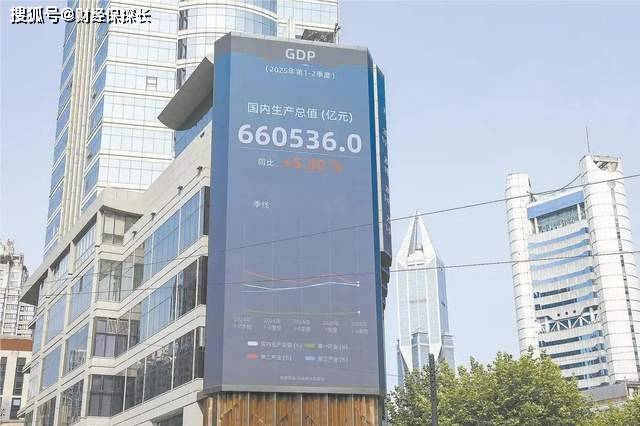
Economic Overview - China's GDP reached 66 trillion RMB, growing by 5.3% year-on-year, equivalent to approximately 9.19 trillion USD, accounting for 62% of the US GDP [1][14] - The first half of the year saw total imports and exports of 21.8 trillion RMB, with exports at 13 trillion RMB, reflecting a growth rate of 7.2% [3] Export Dynamics - Despite a significant drop in exports to the US, overall exports remained positive, driven by increased trade with ASEAN, which saw a 13% rise, making it the largest buyer [3] - Exports to the EU increased by 6.6%, while Latin America, the Middle East, and Africa experienced double-digit growth [3] Investment Trends - National fixed asset investment grew by 2.8% in the first half of the year, but excluding real estate, the growth rate surged to 6.6% [6] - Real estate development investment decreased by 11%, but the decline narrowed from 14% at the beginning of the year to 9% by June, indicating the effectiveness of policies aimed at stabilizing the housing market [8] Manufacturing Sector - The industrial growth rate for large-scale manufacturing was 6.4%, with equipment manufacturing exceeding 10% and high-tech manufacturing at 9.5%, indicating a shift of investment towards sectors capable of producing advanced technologies [8] Consumer Behavior - Retail sales totaled 24.5 trillion RMB, with a growth rate of 5%, but the Consumer Price Index (CPI) was at -0.1%, suggesting weak demand [10] - Consumer sentiment is affected by concerns over housing, education, and healthcare costs, leading to increased savings rather than spending [11][12] Future Outlook - The stability of infrastructure and manufacturing sectors is expected to continue, while the recovery of the real estate market hinges on consumer willingness to take on debt [7] - The economic landscape is characterized by a search for new markets in exports, structural adjustments in investments, and cautious consumer spending [16]

7月5日晚间央视新闻联播要闻集锦
Yang Shi Xin Wen Ke Hu Duan· 2025-07-05 12:48
Group 1 - The article discusses the "Xiamen Development Strategy" initiated by Xi Jinping in the 1980s, focusing on urban construction, environmental protection, and prioritizing people's well-being [6] - The series report emphasizes the importance of translating planning blueprints into practical actions to address development challenges and enhance people's livelihoods [6] Group 2 - In the first five months of this year, China's service trade import and export totaled 32,543.6 billion yuan, showing a year-on-year growth of 7.7%, with exports increasing by 15.1% and imports by 2.7% [8] - The latest data from the National Taxation Administration indicates that tax reductions and refunds supporting technological innovation and manufacturing exceeded 636.1 billion yuan in the first five months [9] Group 3 - Shenzhen has developed an innovative ecosystem for consumer-grade smart digital products, such as panoramic cameras, which are gaining global popularity [11]
7月5日《新闻联播》主要内容
Xin Lang Cai Jing· 2025-07-05 12:05
Group 1 - China's service trade grew by 7.7% year-on-year in the first five months of this year [3] - Tax reductions and refunds for technological innovation and manufacturing exceeded 600 billion yuan in the first five months [4] - The cumulative trading volume of China's futures market increased by 17.82% in the first half of the year [6] Group 2 - The Shandong aircraft carrier's open activities in Hong Kong attracted nearly 20,000 visitors [7] - The first batch of offshore wind power project units, located at the farthest distance, has connected to the grid for power generation [6] - The international logistics park of the Shanghai Cooperation Organization in Lianyungang has completed a cumulative logistics volume of 365 million tons over ten years [6]
今年1月至5月科技创新和制造业减税降费及退税达6361亿元
Yang Guang Wang· 2025-07-05 00:37
Group 1 - The National Taxation Administration reported that tax reductions and refunds supporting technological innovation and manufacturing reached 636.1 billion yuan in the first five months of this year, accelerating high-quality development in these sectors [1] - Tax policies have been effectively implemented to ensure that benefits reach businesses quickly, with high-tech enterprises receiving 140.7 billion yuan in tax reductions from a 15% corporate income tax rate, and advanced manufacturing receiving 415.8 billion yuan in VAT reductions and refunds [1] - The tax incentives are aligned with national strategic development, supporting the transformation and optimization of technological innovation and manufacturing, which is beneficial for long-term growth [1] Group 2 - High-tech industry sales revenue increased by 14.2% year-on-year, significantly outpacing the overall national growth rate, indicating rapid growth in innovative industries [2] - The core digital economy sector grew by 10% year-on-year, with national enterprise spending on digital technologies increasing by 9.7%, reflecting orderly progress in the integration of digital and real economies [2] - Manufacturing sales revenue grew by 4.2% year-on-year, with advanced manufacturing sectors like computer and smart equipment manufacturing seeing sales increases of 21.6% and 19.4% respectively, demonstrating the positive impact of tax reduction policies on business transformation and innovation [2]
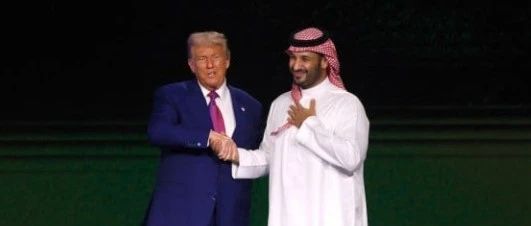
哄特朗普开心!动辄“万亿”,中东土豪真的拿得出吗?
华尔街见闻· 2025-05-15 02:48
Core Viewpoint - Trump's Middle East trip is characterized by extravagant investment promises from Saudi Arabia and Qatar, with figures reaching up to $1 trillion and $1.2 trillion respectively, raising questions about the feasibility of these commitments [1][2][3]. Group 1: Investment Commitments - Saudi Crown Prince Salman initially promised $600 billion in investments over four years, but Trump suggested this could reach $1 trillion, which is nearly equivalent to Saudi Arabia's GDP of just over $1 trillion [1][3]. - In Qatar, Trump secured agreements aimed at facilitating economic exchanges valued at at least $1.2 trillion, including a $200 billion deal for Qatar Airways to purchase 160 Boeing commercial aircraft [1][2]. Group 2: Economic Reality - The economic capabilities of Gulf countries do not align with the promised investment figures, as Saudi Arabia's GDP is slightly above $1 trillion and Qatar's GDP is only around $200 billion, making the $1.2 trillion figure appear unrealistic [2][6]. - The fluctuation of oil prices poses a significant risk to these commitments, with Saudi Arabia needing oil prices to remain around $96 per barrel to maintain fiscal balance, while current prices are approximately $60 [5][7]. Group 3: Strategic Goals of Gulf Countries - Saudi Arabia seeks security assurances from the U.S. and aims to collaborate on civilian nuclear programs, despite concerns over nuclear proliferation [8]. - The UAE views investment as a core strategy to deepen ties with the U.S., having announced a $1.4 trillion investment plan focused on AI, semiconductors, manufacturing, and energy [8]. - Qatar has established a formal security partnership with the U.S., hosting the largest U.S. military base in the Middle East, and aims to enhance its geopolitical value through mediation in regional conflicts [9].