发现式智能

Search documents
记忆外挂来了!赋能AI开源记忆系统EverMemOS发布
Nan Fang Du Shi Bao· 2025-11-18 10:46
Core Insights - EverMind has launched its flagship product EverMemOS, a world-class long-term memory operating system for AI agents, which has been released as an open-source version on GitHub for developers and AI teams to deploy and test [1] - The cloud service version is expected to be released within the year, providing enhanced technical support, data persistence, and scalability for enterprise users [1] - EverMemOS has surpassed previous works in mainstream long-term memory evaluation sets, becoming the new state-of-the-art (SOTA) [1][4] Group 1: Product Features and Innovations - EverMemOS is designed based on a brain-like architecture, allowing AI to possess continuity over time, addressing the limitations of large language models (LLMs) that often "forget" during long-term tasks [3][4] - The system features a four-layer architecture inspired by human memory mechanisms, including an agent layer for task understanding, a memory layer for long-term memory management, an indexing layer for efficient memory retrieval, and an interface layer for seamless integration with enterprise applications [6][7] - Key innovations include a modular memory framework that allows for dynamic organization and retrieval of memories, ensuring that AI interactions are coherent and personalized based on long-term user understanding [7] Group 2: Performance Metrics - EverMemOS achieved scores of 92.3% and 82% on the LoCoMo and LongMemEval-S long-term memory evaluation sets, respectively, significantly exceeding the previous SOTA levels [4][6] - The system is the first to support both one-on-one conversations and complex multi-party collaborations, marking a significant advancement in memory systems for AI applications [4]

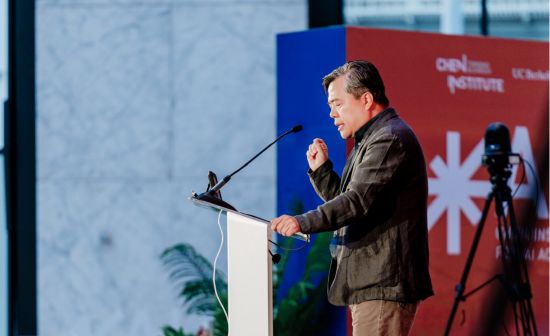
陈天桥详解“大脑之镜” 首发世界级开源长期记忆系统
第一财经· 2025-11-18 10:11
Core Viewpoint - The EverMind team, founded by Chen Tianqiao, has launched EverMemOS, a world-class open-source long-term memory system for AI agents, aiming to establish a data infrastructure for future intelligent systems [3][4]. Group 1: Long-term Memory in AI - Long-term memory is seen as a strategic feature for AI applications, with Chen Tianqiao asserting that memory will be a core competitive advantage for AI, transitioning from tools to intelligent agents [3][4]. - The design of EverMemOS is inspired by human memory mechanisms, allowing AI to think, remember, and grow like humans [3][5]. Group 2: Discovering Intelligence - Chen Tianqiao emphasizes the concept of "discovery intelligence," which includes five core capabilities, with long-term memory being a crucial aspect [4][5]. - He argues that true discovery involves asking questions and understanding principles rather than merely predicting outcomes [4][5]. Group 3: Paths to Discovery Intelligence - Two paths to achieving discovery intelligence are proposed: the "scale path," which focuses on large models and data, and the "structure path," which emphasizes dynamic and continuous understanding akin to cognitive anatomy [5][6]. - The limitations of the scale path are acknowledged, with a call for new theories and interdisciplinary approaches to advance AI understanding [5][6]. Group 4: Investment in Research - The Tianqiao Brain Science Research Institute plans to invest over $1 billion in dedicated computing clusters to support young scientists in exploring memory mechanisms and new causal architectures [6][7]. - An incubator has been established to provide independent research opportunities for young scientists, allowing them to lead their own projects without waiting for graduation [7].

陈天桥详解“大脑之镜” 首发世界级开源长期记忆系统
Di Yi Cai Jing· 2025-11-18 09:22
Core Insights - The concept of "memory" is viewed as a critical competitive advantage for future AI applications, marking a transition from tools to intelligent agents and from passive responses to proactive evolution [1][3] - EverMind, a team under Chen Tianqiao's Shanda Group, has launched EverMemOS, a world-class open-source long-term memory system aimed at becoming the data infrastructure for future intelligent agents [1][3] - Chen Tianqiao emphasizes the importance of "discovery-based intelligence," advocating for a research paradigm that endows AI with a persistent, coherent, and evolvable "soul" [1][3] AI Memory Systems - Current AI applications, including Claude and ChatGPT, have integrated long-term memory as a strategic feature, reflecting a broader trend in the industry [3] - EverMemOS is inspired by human memory mechanisms, mimicking the encoding, indexing, and long-term storage processes of the human brain [3][4] - The EverMind team aims to tackle one of the most profound challenges in AI: enabling machines to possess memory, which is seen as a gateway to higher levels of general intelligence [3][4] Discovery-Based Intelligence - Chen Tianqiao argues that true "discovery" in AI should involve posing questions and understanding principles rather than merely predicting outcomes [4] - He outlines two pathways to achieving "discovery-based intelligence": the "scale pathway," which focuses on the size of models and data, and the "structure pathway," which emphasizes dynamic and continuous cognitive processes [4][5] - The "scale pathway" has led to significant applications in AI, such as protein prediction and compound generation, but is viewed as limited in its ability to foster true understanding [5] Research and Development Initiatives - The Tianqiao Brain Science Research Institute plans to invest over $1 billion in dedicated computing clusters to support young scientists in exploring structural intelligence [6] - The institute has established a PI incubator, allowing young researchers to have independent budgets and lead their own experiments without waiting for graduation [6] - Chen Tianqiao stresses the need for interdisciplinary collaboration among neuroscience, information theory, physics, and cognitive psychology to drive innovation in AI [5][6]

科技周报|闻泰科技高层变动;苹果大中华区收入下降
Di Yi Cai Jing· 2025-11-02 04:03
Group 1: Company Changes and Developments - Wentech Technology appointed Shen Xinjia as the new president, who previously served as the Chief Affairs Officer at Anshi Semiconductor, amidst management turmoil following a global operational freeze by the Dutch government on Anshi Semiconductor [1] - Meituan announced a nationwide pension insurance subsidy for delivery riders, aiming to cover millions and enhance the welfare benefits for its workforce [7] - Xi'an Yiswei Materials Technology Co., Ltd. successfully listed on the Shanghai Stock Exchange's Sci-Tech Innovation Board, with its stock price surging 198.72% on the first day, reflecting strong market interest in the semiconductor sector [8] Group 2: Financial Performance and Market Trends - Apple reported a record revenue of $102.466 billion for Q4 FY2025, with a net profit of $27.466 billion, although revenue from Greater China declined by 3.6% to $14.493 billion [2] - Samsung Electronics achieved a record high in memory sales for Q3 2025, with total revenue of 86.1 trillion KRW (approximately 428.778 billion RMB), driven by increased demand from data centers [3] - BOE and TCL Technology both reported revenue growth in their Q3 financial results, with BOE's revenue reaching 154.5 billion RMB (up 7.52%) and TCL's revenue at 135.9 billion RMB (up 10.49%) [9] Group 3: Industry Developments and Innovations - TikTok announced that its user base in Southeast Asia has surpassed 460 million, with significant engagement in e-commerce, as the platform's GMV reached $38.2 billion [4] - The International Olympic Committee terminated its collaboration with Saudi Arabia on the esports Olympics, indicating a shift in strategy for both parties [5][6] - Dassault Systèmes launched the first PLM lifecycle management software platform for the infrastructure industry in collaboration with the South China Architectural Research Institute, aiming to integrate advanced technologies into construction [15]





深度|陈天桥:AI的终极使命不是取代人类,而是进化人类;推出PI孵化器支持全球青年科学家研究“发现式智能”
Z Potentials· 2025-11-01 06:07
Core Insights - The article discusses the AI Accelerated Science Symposium held in San Francisco, where the concept of "Discoverative Intelligence" was introduced as a new paradigm for general artificial intelligence [1][3][4] - The speaker, Chen Tianqiao, emphasizes that AI should not merely replace human jobs but should aid in human evolution by helping discover the unknown [5][10] Group 1: Human Evolution and AI - Human evolution has not stopped; instead, it has transformed through scientific discoveries and technological inventions, extending human capabilities beyond biological limits [3][4] - The concept of "Discoverative Intelligence" is presented as a true form of general artificial intelligence, which can actively construct testable theoretical models and propose falsifiable hypotheses [5][10] Group 2: Paths to Discoverative Intelligence - Two main paths to achieving "Discoverative Intelligence" are identified: the "Scale Path," which relies on large models and data, and the "Structure Path," which focuses on cognitive mechanisms akin to human brain functions [6][12] - The "Scale Path" has achieved significant results in AI applications, while the "Structure Path" is emerging as a necessary approach to overcome the limitations of current AI systems [13][14] Group 3: Time Structure and Core Capabilities - The article outlines five core capabilities essential for managing information over time, which are necessary for achieving "time structure" in AI: neural dynamics, long-term memory, causal reasoning, world modeling, and metacognition [8][9][12] - These capabilities form a continuous and active loop, enabling a system to evolve over time and engage in scientific discovery [12] Group 4: Opportunities for Young Researchers - The article highlights the need for new theories, algorithms, and interdisciplinary approaches, positioning young researchers as key players in redefining intelligence through the "Structure Path" [13][14] - The company is investing over $1 billion in dedicated computing clusters to support young scientists in exploring new structures and validating cognitive mechanisms [16]

从沙漠取水到基因疗法,诺奖得主、产业领袖热议AI驱动科研
Nan Fang Du Shi Bao· 2025-10-31 07:45
Core Insights - The first AI-driven scientific symposium organized by the Tianqiao Brain Science Institute and UC Berkeley gathered over 20 top scholars and industry leaders to discuss how AI can drive scientific discovery [1][2] Group 1: Investment and Support for AI Research - Tianqiao Brain Science Institute founder Chen Tianqiao announced a $1 billion investment in computational power to support innovative AI research globally [1] - Chen emphasized that the ultimate value of AI lies in discovery, proposing that AI should evolve human capabilities rather than replace them [1][2] Group 2: Development of Discovery-Oriented Intelligence - Chen outlined five essential capabilities for building discovery-oriented intelligence: neural dynamic structure, long-term memory, causal reasoning mechanisms, world models, and metacognition with intrinsic motivation [2] - He introduced various support initiatives for young scientists, including benchmark testing and structural computational resources [2] Group 3: AI Innovations in Scientific Research - Omar Yaki, a 2025 Nobel Prize winner, presented a portable water extraction device designed by AI, showcasing a new paradigm of "from molecules to society" driven by generative AI and self-learning agents [5][8] - David Baker, a 2024 Nobel Prize winner, discussed how AI can reverse-engineer protein design, achieving breakthroughs in neurodegenerative disease research and enzyme engineering [8] - Jennifer Doudna highlighted that 40% of basic gene functions remain mysteries, advocating for the synergy of CRISPR technology and machine learning to enhance data collection and analysis [9][10] Group 4: Ethical Considerations and Challenges in AI - John Hennessy emphasized the need for human oversight in AI decision-making, stressing the importance of transparency and verification of AI-generated content [10] - He raised concerns about data quality and energy efficiency in the context of rapidly advancing AI technologies [10]
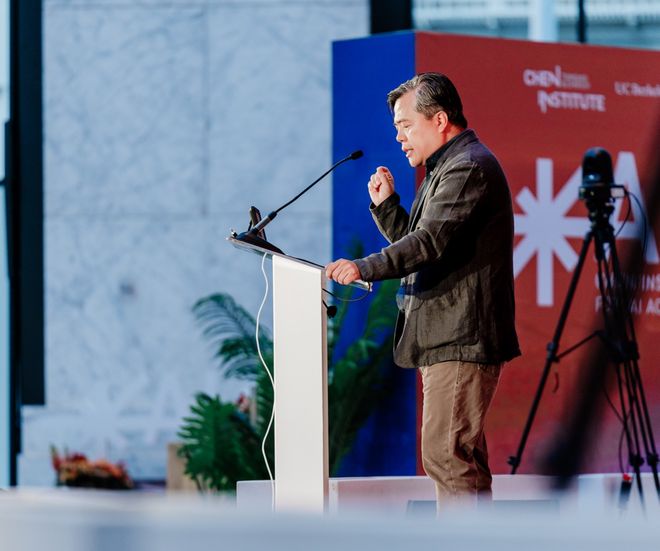
陈天桥罕见公开演讲:投入超10亿美金发展“发现式智能”——“这才是AGI”
Tai Mei Ti A P P· 2025-10-31 04:37
Core Insights - The AI-driven scientific symposium held in San Francisco gathered top scholars and industry leaders to discuss how AI can drive scientific discovery [1][3] - Chen Tianqiao, founder of the Tianqiao Brain Science Research Institute, introduced the concept of "Discoverative Intelligence," which he argues represents true general artificial intelligence [1][4] Group 1: Discoverative Intelligence - Discoverative Intelligence is defined as the ability to ask questions and understand principles, rather than merely predicting outcomes [6][7] - This form of intelligence is seen as essential for human evolution, emphasizing AI's role in helping humans discover the unknown [6][8] Group 2: Paths to Discoverative Intelligence - Two main paths to achieving Discoverative Intelligence are identified: the "scale path," which focuses on the size of models and data, and the "structure path," which emphasizes cognitive mechanisms akin to human brain functions [8][10] - The scale path has led to significant advancements in AI applications, while the structure path is emerging as a necessary complement to achieve deeper understanding and discovery [8][13] Group 3: Time Structure Analysis - The concept of "time structure" refers to the brain's ability to process information dynamically over time, contrasting with the static nature of current AI models [9][10] - Five core capabilities are essential for managing information over time: neural dynamics, long-term memory, causal reasoning, world modeling, and metacognition [10][11] Group 4: Opportunities for Young Researchers - The company plans to invest over $1 billion in dedicated computing clusters to support young scientists in exploring new theories and algorithms [13][14] - A new benchmark will be established to measure AI's ability to "discover," focusing on the five core capabilities necessary for true intelligence [13][14]

90后数学家王虹拿下超级大奖;陈天桥将投10亿美元算力支持发现式智能;泡泡玛特中东首店开业;OpenAI回应筹备IPO丨邦早报
创业邦· 2025-10-31 00:08
Group 1 - The 2025 Hurun Women Entrepreneurs List was released, with Zhong Huijuan from Hansoh Pharmaceutical becoming China's richest woman for the first time, with a wealth of 141 billion yuan [1] - Young mathematician Wang Hong from Guangxi won the 2025 Salem Prize, which is considered a precursor to the Fields Medal, and was also awarded at the World Chinese Mathematicians Conference [1] - OpenAI is reportedly preparing for an IPO, with a potential valuation of up to $1 trillion, which could be one of the largest IPOs in history [2] Group 2 - Li Cao from Leap Motor clarified that the company focuses on self-research of core technologies and respects Huawei as a benchmark for China's technological independence [2] - Xiaomi's "Giant Energy Saving" series was clarified by executives as a product line name rather than a performance metric, with energy efficiency exceeding national standards [4] - JD.com launched a promotional campaign offering free food delivery as part of its 11.11 shopping festival, with a total of 1 million free orders available [6] Group 3 - JD.com founder Liu Qiangdong treated 150,000 full-time delivery riders to KFC as a reward for their hard work during the 11.11 sales event [8] - Chen Tianqiao announced a $1 billion investment in computing power to support innovative AI research, emphasizing the importance of discovery in AI [8] - Giant Network responded to the departure of its former CEO, stating that the company is focused on reducing internal conflicts and improving decision-making efficiency [10] Group 4 - Didi announced a freight payment guarantee, committing to fully cover drivers' unpaid earnings if not received within seven days after order completion [10] - Pop Mart opened its first store in the Middle East, which operates 24 hours a day, marking a significant expansion for the brand [10] - Taobao is set to launch a "Taobao Convenience Store" project, offering a wide range of products online with a focus on quality and service standards [13] Group 5 - The skincare brand "LAN" responded to consumer concerns about compliance with regulatory standards, stating that their product registrations are valid [13] - Apple CEO Tim Cook avoided questions regarding iPhone Air production cuts during a recent earnings call, maintaining the company's policy of not disclosing specific model sales [13] - The NBA approved Mark Walter as the new owner of the Los Angeles Lakers, with a total valuation of $10 billion for the team [14] Group 6 - Ford announced an additional investment of $170 million in Argentina for the production of hybrid Ranger vehicles, set to begin in 2027 [14] - Wikipedia subtly criticized Elon Musk's AI-driven encyclopedia GrokiPedia, emphasizing its human-operated nature in a fundraising announcement [14] - Tesla is recalling 6,197 Cybertruck vehicles in the U.S. due to potential issues with the installation of off-road light bars [17] Group 7 - YouTube is undergoing a restructuring focused on AI applications, offering voluntary buyout options to employees considering leaving the company [17] - Volkswagen reported a net loss of €1.072 billion in Q3 2025, with a significant decline in profits attributed to increased electric vehicle production and additional costs [18] - Nvidia plans to invest up to $1 billion in AI startup Poolside, potentially increasing its valuation significantly [18] Group 8 - Intel is in preliminary talks to acquire AI chip startup SambaNova Systems, with potential valuation lower than its previous funding round [18] - Shunwei Capital led a multi-million yuan angel round investment in Zhefei Aviation Technology, indicating continued interest in the aviation sector [18] - Pyromind Dynamics completed a $10 million seed round financing to expand its team and product development in the reinforcement learning sector [18]

前中国首富盛大陈天桥:宣布投10亿美元算力支持发现式智能!共同形成一个有生命力、面向发现的智能闭环
Sou Hu Cai Jing· 2025-10-30 04:34
Core Insights - The core message of the news is that Chen Tianqiao, founder of the Tianqiao Brain Science Research Institute, announced a $1 billion investment in computational power to support global scientists in innovative artificial intelligence research [1][8]. Group 1: AI and Discovery - Chen Tianqiao believes that the ultimate value of AI lies in discovery, emphasizing that discovery-oriented intelligence can actively construct testable world models and propose falsifiable hypotheses, which is essential for true general artificial intelligence (AGI) [3]. - This form of intelligence is characterized by its ability to ask questions rather than just answer them, understand patterns instead of merely predicting outcomes, and possess the inherent capability for creativity and discovery [3]. Group 2: Components of Discovery-Oriented Intelligence - To build discovery-oriented intelligence, five capabilities are necessary: 1. Neural dynamic structure, which ensures continuous and self-organizing activity to keep the system active over time [4]. 2. Long-term memory, allowing flexible storage and selective forgetting to establish knowledge and form hypotheses [5]. 3. Causal reasoning mechanisms that enable inferences beyond training distributions [6]. 4. World models that serve as an internal, unified simulation for future predictions and psychological testing of ideas [6]. 5. Metacognition and intrinsic motivation systems that foster awareness of uncertainty, attention control, and curiosity-driven exploration [7]. Group 3: Support for Young Scientists - To assist global scientists in advancing discovery-oriented intelligence research, several initiatives specifically targeting young scientists were announced: 1. Benchmark testing, a comprehensive assessment suite across neural dynamics, memory, causality, world models, and metacognition, with discoverability as a core metric [8]. 2. Structural computational power, with a $1 billion investment prioritized for supporting structural experiments in memory systems, causal architectures, and neural dynamic hypotheses [8]. 3. A PI incubator that provides independent pathways for PhD students and postdocs to establish their own laboratories, lead teams, and pursue bold ideas without waiting for traditional timelines, alongside the establishment of global R&D centers [9].

陈天桥宣布投10亿美元算力支持发现式智能
Xin Lang Ke Ji· 2025-10-30 03:59
Core Insights - Chen Tianqiao announced a $1 billion investment in computational power to support global scientists in innovative AI research [1][5] Group 1: AI's Ultimate Value - Chen Tianqiao believes the ultimate value of AI lies in discovery, emphasizing that discovery-oriented intelligence can actively construct testable world models and propose falsifiable hypotheses [3] - This form of intelligence is characterized by its ability to ask questions rather than just answer them, and to understand patterns rather than merely predict outcomes, thus evolving humanity rather than replacing it [3] Group 2: Five Capabilities for Discovery-Oriented Intelligence - The development of discovery-oriented intelligence requires five key capabilities: 1. Neural dynamic structure for continuous, self-organizing activity [4] 2. Long-term memory for flexible storage and selective forgetting to build knowledge and form hypotheses [4] 3. Causal reasoning mechanisms to infer beyond training distributions [4] 4. World models for internal, unified simulations to predict the future and test ideas psychologically [4] 5. Metacognition and intrinsic motivation systems to drive exploration through awareness of uncertainty and attention control [5] Group 3: Support for Young Scientists - To assist global scientists in advancing discovery-oriented intelligence research, several initiatives targeting young scientists were announced: 1. Benchmark testing that evaluates across neural dynamics, memory, causality, world models, and metacognition with discoverability as a core metric [5] 2. Structural computational power investment of $1 billion to prioritize support for structural experiments [5] 3. A PI incubator providing independent pathways for PhD students and postdocs to establish their own labs and lead teams without traditional timelines, alongside the establishment of global R&D centers [6]