
可重复使用技术

Search documents
中国商火:全力突破可重复使用技术
财联社· 2026-01-28 09:19
会议强调,2026年是"十五五"开局之年,也是中国商火夯实基础、全面发力的关键之年。公司将以决战决胜的坚定信念、锐意改革的勇毅决心、务 实高效的工作作风、干事创业的奋斗激情, 坚决打赢主力箭首飞及回收攻坚战,全力突破可重复使用技术, 高效履行商业发射使命,为提升我国规 模化、高效化进入空间的能力作出更大贡献。 中国航天科技集团商业火箭有限公司召开2026年度工作会议。 ...


人气爆表!现场直击!北京商业航天展来了
Zhong Guo Ji Jin Bao· 2026-01-25 15:00
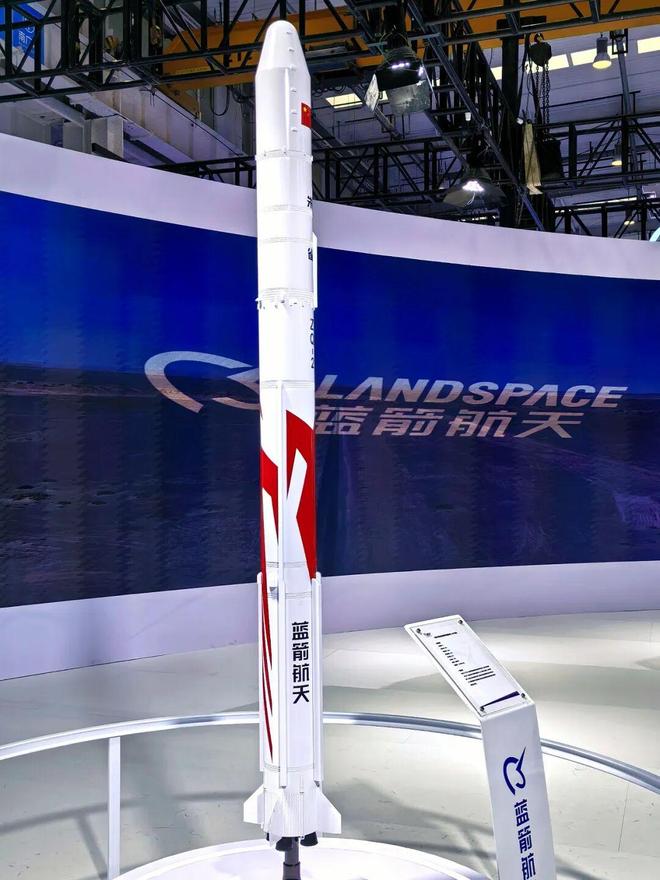
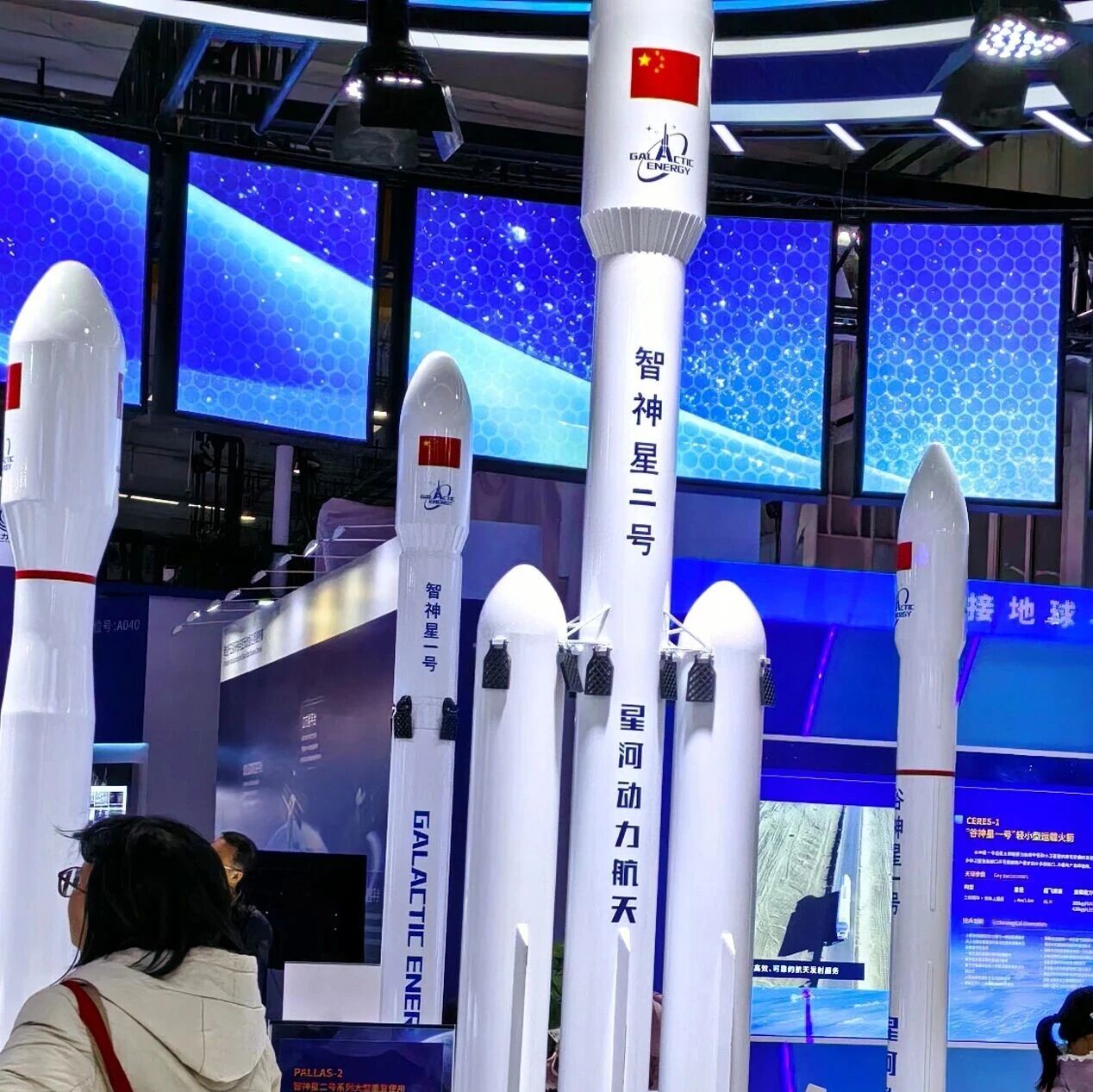
Group 1 - The 2026 Beijing International Commercial Aerospace Exhibition was held from January 23 to January 25, focusing on "gathering global resources to promote commercial aerospace" [1] - Major private commercial aerospace companies such as Blue Arrow Aerospace, Galaxy Aerospace, and others showcased their technologies at the exhibition, attracting significant public interest [1][2] - Blue Arrow Aerospace's IPO is in the "inquiry" stage, while other companies like Zhongke Aerospace and Galaxy Aerospace are in the IPO counseling phase [1][12] Group 2 - Blue Arrow Aerospace presented the world's first continuously successfully launched liquid oxygen-methane rocket, the Zhuque-2, and the Zhuque-3 model, which has completed China's first reusable rocket orbital launch verification [2] - From 2023 to 2025, Blue Arrow Aerospace plans to achieve four consecutive successful launches of the Zhuque-2 and its improved version, marking significant advancements in reusable rocket technology [2] - Galaxy Aerospace showcased its flexible solar wing technology and a mobile direct-connect broadband communication satellite, aiming to compete with Starlink in the mobile direct-connect satellite technology [4] Group 3 - Zhongke Aerospace's "Lihong-2" reusable spacecraft was displayed, which is designed for space tourism, indicating advancements in safe travel between Earth and space [6] - Star River Power presented its "Zhishenxing" series of medium-sized reusable liquid launch vehicles and "Gushenxing" series of small solid launch vehicle models [6] - Zhongke Xingtou is planning to launch related satellites this year as part of its commercial satellite constellation strategy [7] Group 4 - The global commercial aerospace IPO market is accelerating, with the U.S. leading in satellite manufacturing and rocket launch capabilities [9] - SpaceX, founded in 2002, is a leader in commercial aerospace, with plans for an IPO by July 2026, and a secondary market valuation reaching $800 billion by December 2025 [9] - Rocket Lab, listed in 2021, reported a revenue of $436 million in 2024, with a significant portion from its space systems business, and its stock has seen a price increase of over 25 times since its IPO [10][12]
人气爆表!现场直击!北京商业航天展来了
中国基金报· 2026-01-25 14:52
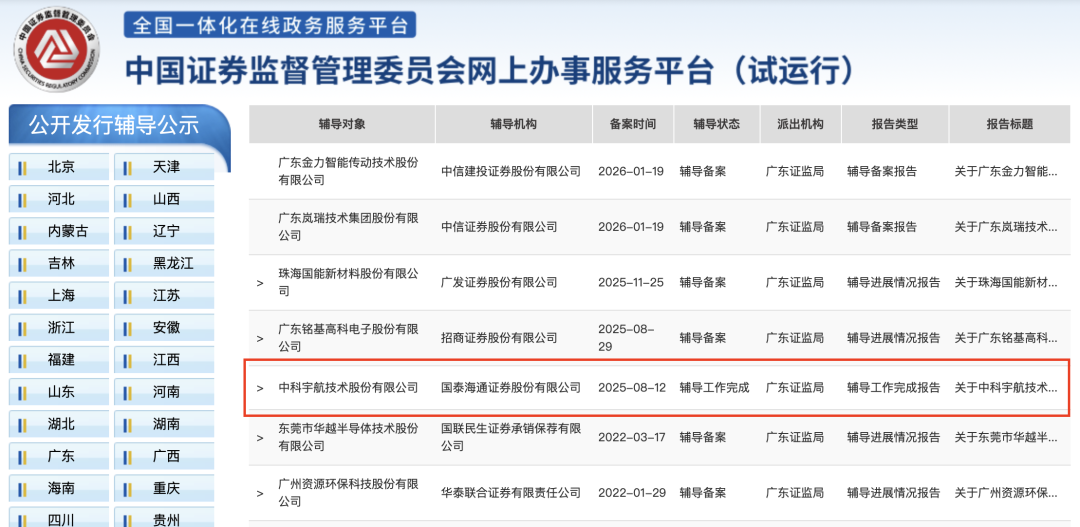
Core Viewpoint - The article highlights the significant advancements and developments in China's commercial space industry, particularly focusing on the participation of leading private companies at the Beijing International Commercial Space Exhibition, showcasing their innovative technologies and upcoming IPOs [2][13]. Group 1: Company Developments - Blue Arrow Aerospace showcased the world's first continuously successful liquid oxygen-methane rocket, the Zhuque-2, and the Zhuque-3 model, which has completed China's first reusable rocket orbital launch verification [4]. - Galaxy Aerospace presented its flexible solar wing technology and the Lingxi-03 satellite model, aiming to enhance mobile direct connection capabilities with low-orbit broadband satellites [6]. - Zhongke Aerospace displayed its reusable spacecraft, the Lihong-2, which is designed for space tourism, indicating advancements in safe travel between Earth and space [8]. - Star River Power exhibited its "Zhishenxing" series of medium-sized reusable liquid launch vehicles and "Gushenxing" series of small solid launch vehicle models [8]. Group 2: Market Trends and IPOs - The article notes that two U.S. commercial space companies are already listed, with Rocket Lab's market value at $47.4 billion (approximately 330 billion RMB) and SpaceX expected to go public in 2026 [2][12]. - In China, Blue Arrow Aerospace's IPO is in the "inquiry" stage, while Zhongke Aerospace has completed IPO counseling, and other companies like Tianbing Technology and Star River Power are also in the IPO counseling phase [13][15]. - The article emphasizes that the development of reusable technology and future market potential are critical factors influencing the growth of China's commercial space sector [15].
又一商业火箭企业 完成IPO辅导
Shang Hai Zheng Quan Bao· 2026-01-24 06:30
Core Viewpoint - The commercial rocket companies in China are accelerating their IPO processes, supported by new regulations that clarify the listing path for these enterprises [2][3]. Group 1: IPO Progress - Blue Arrow Aerospace's IPO application has been accepted by the Shanghai Stock Exchange, with a fundraising target of 7.5 billion yuan for reusable rocket capacity and technology enhancement projects [2]. - Other commercial rocket companies, including Tianbing Technology, Xinghe Power, and Interstellar Glory, have also updated their IPO counseling progress reports, indicating a collective movement towards public offerings [2][3]. Group 2: Regulatory Support - The Shanghai Stock Exchange issued guidelines for commercial rocket companies, outlining requirements such as technological milestones and commercial viability, which are essential for meeting the fifth set of listing standards [2][3]. - The inclusion of commercial aerospace in the "1+6" reform in June 2025 has lowered the profitability threshold for these companies, facilitating their entry into the capital market [2][3]. Group 3: Technological Developments - 2026 is expected to be a critical year for Chinese commercial rocket companies, with multiple medium to large rockets set for their maiden flights and recovery validations [3]. - The successful implementation of reusable technology is a key challenge for the domestic rocket industry, with specific milestones required for IPO applications [3][4]. - Blue Arrow Aerospace's Zhuque-3 rocket has already conducted a successful recovery test, while other companies are preparing for their own orbital and recovery validations in 2026 [3][4].
山东海上新年首“箭”升空,商业航天迎来“开门红”!
Feng Huang Wang Cai Jing· 2026-01-18 00:22
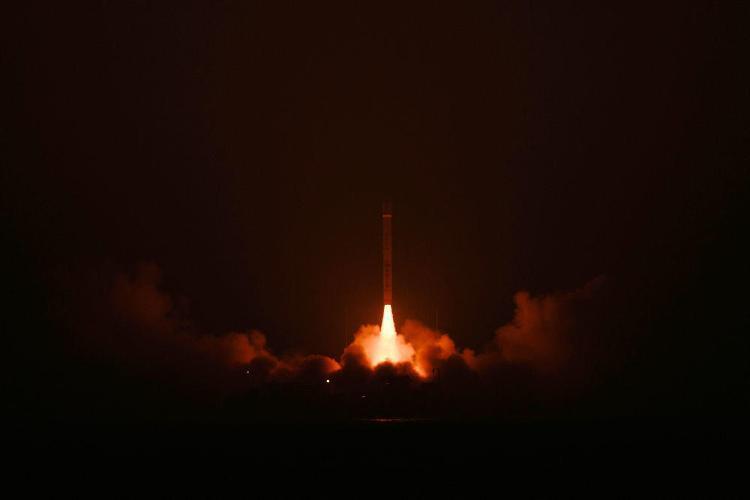
Core Viewpoint - The successful launch of the Vesta-1 maritime rocket marks a significant achievement for China's commercial space sector, indicating a strong start to 2026 with multiple successful launches already recorded [3][10]. Group 1: Launch Details - The Vesta-1 maritime rocket was launched from the Yantai Haiyang Dongfang Spaceport, successfully deploying four satellites of the Tianqi constellation into their designated orbits [1]. - This launch is the first maritime launch in Shandong for the year 2026, contributing to China's "four victories" in space launches at the beginning of the year [3][10]. Group 2: Rocket Specifications and Performance - The Vesta-1 maritime rocket is a four-stage solid commercial launch vehicle, approximately 20 meters long, with a launch mass of about 33 tons and a payload capacity of 300 kilograms [4]. - The rocket has demonstrated advantages such as technical maturity, low cost, high reliability, and quick response, making it suitable for launching various small satellites into low Earth orbit [4]. Group 3: Launch Support and Preparation - The launch was supported by the "DeFu 15001" vessel due to scheduling conflicts with the usual launch ship, ensuring a reliable launch environment [6]. - The preparation for the launch took approximately two weeks, showcasing the efficiency of the launch team and the maturity of the equipment and technology involved [6]. Group 4: Satellite Constellation and Services - The Tianqi constellation is China's first low-Earth orbit IoT communication constellation, designed to provide global coverage and enhanced signal stability for users [7]. - The successful deployment of the Tianqi-06 satellites will enhance the constellation's service capabilities, promoting the large-scale application of new satellite communication services in China [7]. Group 5: Industry Trends and Future Prospects - The year 2026 is expected to see a variety of new rocket models, including the upcoming Vesta-2 medium-lift rocket and the liquid rocket ZhiShen-1, which is anticipated to make its maiden flight this year [11]. - The industry is also focusing on breakthroughs in reusable rocket technology, with several companies planning to introduce new reusable rocket models throughout the year [11][12]. - As of January 16, 2026, a total of 11 rocket launches have been completed globally, with China contributing four successful launches, indicating a competitive landscape in the space industry [12].

商业航天产业发展
2026-01-08 16:02
商业航天产业发展 20260108 摘要 国内商业航天火箭公司主要分为液体火箭和固液并存两种发展路径,蓝 箭、天兵和深蓝专注于液体火箭,中科星河、星际荣耀和东方空间则固 液并存。蓝箭采用一氧甲烷路线,中科宇航和星河的液体火箭发展迅速。 商业火箭公司面临资质困境,自 2022 年底至 2025 年 5 月未发放新的 固体或液体总体技术科研生产许可资质。市场竞争激烈,火箭需满足运 力需求和价格优势,中科宇航与星河占据商业卫星搭载市场大部分份额。 中国版 09 构型的大型、中大型运载火箭包括长 12B、长 10B/C 以及朱 雀 3 等,采用单杆多级捆绑设计以提高运力并降低成本。长 12B 的造价 与发射成本将比长五小一半以上,天龙 3 具备更高的运载能力。 固体火箭在大规模组网业务中成本劣势明显,引力 1 号单次发展成本至 少 1.5 亿元,而朱雀二 E 价格约为 8,000 万元。资本市场更看重液态燃 料方案的性价比优势,一吨级别区间仍是黄金运力。 液体火箭发动机的自主生产研制能力至关重要,蓝箭的天鹊 12、天兵的 天火 12、深蓝的雷霆、星际荣耀的焦点以及星动力的苍穹等发动机已完 成长续航试车。天龙 3 的天 ...
蓝箭航天正式冲刺“商业火箭第一股” 行业商业化拐点何时到来?
Xin Hua Cai Jing· 2026-01-07 06:03
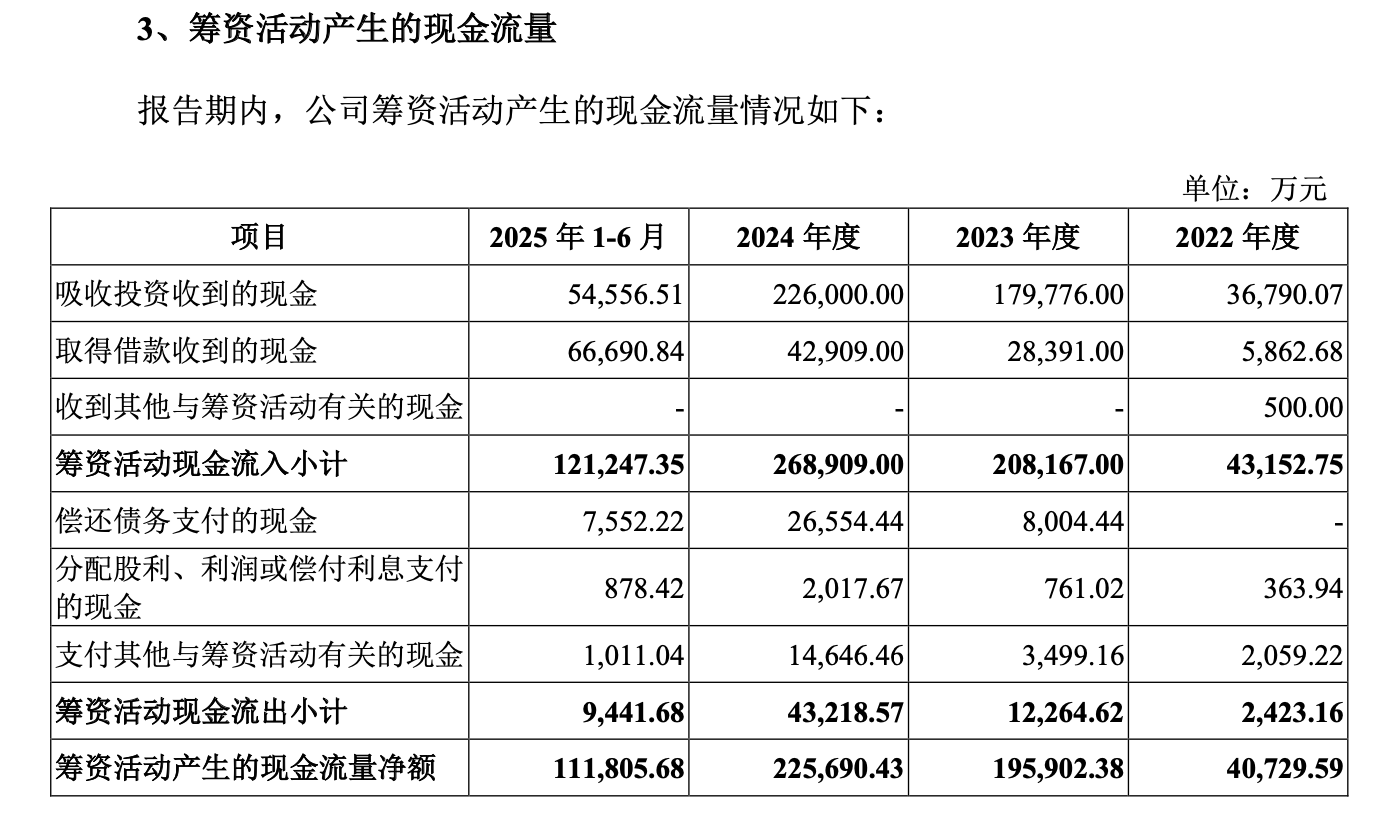
Core Viewpoint - Blue Arrow Aerospace is set to launch its IPO on the Sci-Tech Innovation Board, aiming to raise 7.5 billion yuan, marking a significant step towards becoming the "first commercial rocket stock" in China [1] Industry Overview - The commercial rocket industry is experiencing a development opportunity driven by policy benefits, increased capital confidence, technological breakthroughs, and surging market demand [1] - The market demand for commercial rockets is clear and urgent, with expectations for the industry to enter a period of large-scale realization as technology and policies mature [1] - The commercial space sector is characterized by high risk, high return, high investment, high technology, and long cycles, necessitating substantial long-term funding [2] Financial Highlights - In the first half of 2025, Blue Arrow Aerospace received cash inflows from investment totaling approximately 54.56 million yuan, with total cash inflows from financing activities reaching about 121.25 million yuan [3] - The company has seen significant increases in cash inflows from equity financing in 2023 and 2024, indicating strong investor interest [2][3] Market Dynamics - The Shanghai Stock Exchange has introduced new listing rules for commercial rocket companies, providing institutional support for firms that are not yet profitable but possess core technologies [4] - The commercial space sector is expected to be a hot investment theme in 2025, with significant stock price increases observed in related companies [4] Policy Support - The Chinese government has emphasized the acceleration of the commercial space industry in its work reports for 2024 and 2025, indicating strong policy backing [5] - The establishment of a dedicated regulatory body for commercial space by the National Space Administration marks a significant step in the industry's development [5] Technological Advancements - Reusable rocket technology is seen as a critical path for reducing launch costs, with expectations for significant advancements in 2026 [7] - Blue Arrow Aerospace's recent launches indicate progress in technology validation, although challenges remain in achieving successful recovery of rocket stages [7] Commercialization Challenges - Blue Arrow Aerospace has reported increasing revenues but also significant net losses, primarily due to high R&D expenditures and the early stage of its commercial launch services [8] - The company aims to achieve revenues of at least 500 million yuan in 2026 and 1 billion yuan in 2027, reflecting ambitious growth targets [8] Valuation Insights - Despite not yet being profitable, Blue Arrow Aerospace's valuation is estimated at 75 billion yuan, driven by its technological capabilities and market potential [9] - The valuation of commercial rocket companies is increasingly based on technological barriers and market opportunities rather than current profitability [9]
商业火箭,上天也上市
Jin Rong Shi Bao· 2025-12-29 15:01
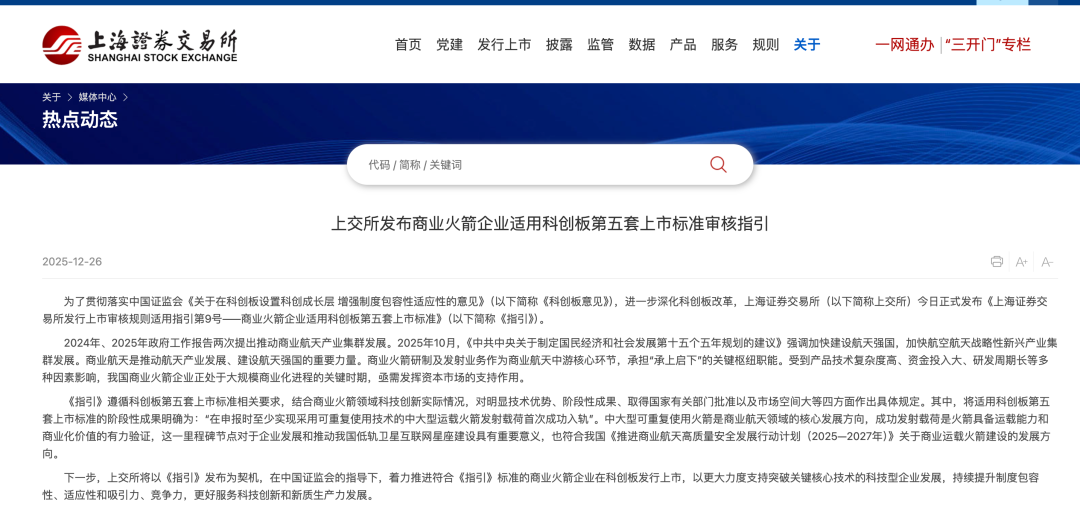
Core Viewpoint - The Shanghai Stock Exchange has released guidelines to support commercial rocket companies in listing on the Sci-Tech Innovation Board, marking a significant step for China's commercial space industry as it seeks to enhance its competitiveness and technological capabilities [1][2]. Group 1: Guidelines Overview - The guidelines consist of 14 provisions focusing on four main areas: technological advantages, phased achievements, necessary approvals from relevant authorities, and significant market potential [2]. - The guidelines emphasize the importance of "hard technology" attributes for companies, requiring them to have relevant qualifications in research and manufacturing, and to obtain launch permits before commercial rocket launches [3]. - Companies must demonstrate significant technological advantages and have achieved specific milestones, such as successfully launching a reusable medium to large rocket payload into orbit [3][4]. Group 2: Industry Context and Support - The guidelines aim to enhance the inclusivity and adaptability of the capital market, supporting the development of commercial rockets as a key component of China's space industry [2][6]. - The commercial space sector is seen as a vital force in advancing the aerospace industry and achieving national strategic goals, with a projected market potential reaching trillions [6][7]. - The guidelines are part of a broader trend of increasing support for commercial space enterprises, with several companies already preparing for IPOs under the new standards [7][8]. Group 3: Market Position and Commercialization - Companies seeking to list must hold a prominent position in the industry, have a clear target market, and demonstrate a competitive edge over rivals [5]. - The guidelines also require companies to have a clear commercialization plan from technology validation to large-scale operations [5]. - The capital market's support is crucial for overcoming challenges in technology complexity, funding, and long development cycles, which are currently hindering the large-scale commercialization of commercial rockets [7][8].


中信证券:商业火箭公司上市标准获精准优化 政策助力推动产业规模化发展
智通财经网· 2025-12-29 00:24
智通财经APP获悉,中信证券发布研报称,近期,上交所发布《商业火箭企业适用科创板第五套上市标 准指引》,标志着商业火箭企业登陆资本市场的通道正式打通、标准全面明确。在政策对"承担国家任 务、参与国家工程项目""可重复使用技术""行业地位"的强调之下,头部民营商业火箭企业IPO进程或将 提速。商业火箭作为商业航天的"运载底座",其产业化进程将直接带动卫星制造、地面设备、空间应用 等上下游环节的需求爆发。 中信证券主要观点如下: 事件: 2025年12月26日,上交所发布《商业火箭企业适用科创板第五套上市标准指引》(下称《指引》),标志 着商业火箭企业登陆资本市场的通道正式打通、标准全面明确。作为科创板"科创成长层"制度创新的关 键落地举措,《指引》精准匹配商业火箭产业高研发投入、长周期回报的特性,既为优质未盈利企业提 供了融资的支撑,也为资本市场划定了清晰的投资锚点。 以精确标准筛选优质硬科技企业,破解产业融资瓶颈。 该行认为,此次政策设计或将精准破解此前商业火箭企业融资困境,并与商业航天司的设立、《推进商 业航天高质量安全发展行动计划(2025—2027年)》的颁布形成商业航天发展政策合力。 产业层面,政策或 ...

商业火箭企业上市可适用科创板第五套标准
Zheng Quan Shi Bao· 2025-12-26 18:25
此外,《指引》还要求企业在商业火箭的研发、制造过程具备相关承研承制资质,在商业火箭发射前应 取得发射许可;明确市场空间具体要求,要求商业火箭企业排名靠前、在产业链中占据重要地位,且应 有清晰的目标市场,相较于竞争对手具有先发优势,在研发进度、关键指标等方面位于行业前列等。 具体来看,《指引》明确适用科创板第五套上市标准的商业火箭企业主营业务为"商业火箭自主研发、 制造和提供航天发射服务",更加看重发行人的"硬科技"属性。要求企业需在拥有关键核心技术基础上 具备明显技术优势或重大突破,关注核心技术产品以及关键部件的自主研发情况,以及运载能力及一箭 多星能力等关键指标。对于承担国家任务、参与国家工程项目的商业火箭企业予以优先支持。据悉,商 业火箭研制及发射业务处于商业航天产业链中游,承担"承上启下"的关键枢纽职能,已成为我国商业航 天产业发展的关键所在。 《指引》还明确了阶段性成果内容,要求商业火箭企业"在申报时至少实现采用可重复使用技术的中大 型运载火箭发射载荷首次成功入轨的阶段性成果",且后续在技术方面不存在影响承担发射任务的重大 不利事项。在明确可重复使用技术发展导向的同时,《指引》还最大限度提升制度的包容 ...