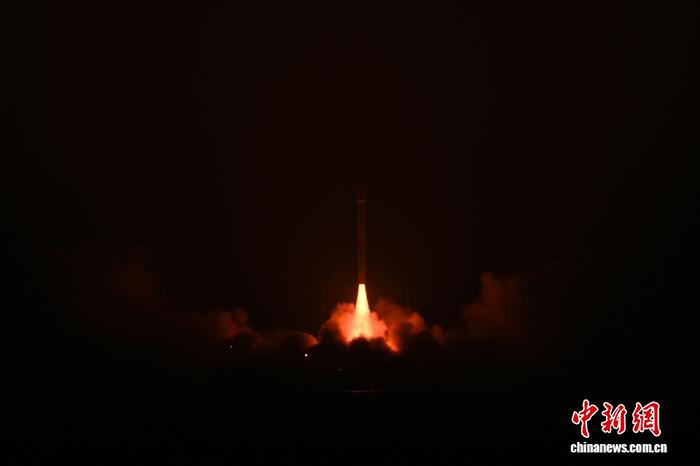
天启星座06组卫星

Search documents
新年首发,“北方第一省”踩中爆发期
3 6 Ke· 2026-01-19 02:13
Core Insights - The successful launch of the Ceres-1 sea-launched rocket marks a significant milestone for the Haiyang Oriental Spaceport, indicating a strong start for commercial space launches in 2026 [1] - The commercial space industry in China is being elevated to a pillar industry status alongside new energy vehicles and integrated circuits, reflecting its growing importance [2] Group 1: Launch Achievements - The Ceres-1 rocket successfully launched four satellites into orbit, contributing to a total of 46 satellites launched from the Rizhao area [1] - Since its establishment, the Haiyang Oriental Spaceport has completed 22 sea launch missions, successfully sending 137 satellites into space [1] Group 2: Industry Development - The Haiyang Oriental Spaceport has attracted 32 industrial projects and over 32.2 billion yuan in investments since 2019, highlighting its rapid growth [1] - Shandong province is focusing on building a comprehensive aerospace industry ecosystem, with the Haiyang Oriental Spaceport as a core development area [2][3] Group 3: Future Plans - By 2027, Shandong aims to establish a complete industrial chain capable of producing 100 launch vehicles and 150 commercial satellites annually, targeting a commercial space industry scale of 50 billion yuan [3]
山东海上新年首“箭”升空,商业航天迎来“开门红”!
Feng Huang Wang Cai Jing· 2026-01-18 00:22
Core Viewpoint - The successful launch of the Vesta-1 maritime rocket marks a significant achievement for China's commercial space sector, indicating a strong start to 2026 with multiple successful launches already recorded [3][10]. Group 1: Launch Details - The Vesta-1 maritime rocket was launched from the Yantai Haiyang Dongfang Spaceport, successfully deploying four satellites of the Tianqi constellation into their designated orbits [1]. - This launch is the first maritime launch in Shandong for the year 2026, contributing to China's "four victories" in space launches at the beginning of the year [3][10]. Group 2: Rocket Specifications and Performance - The Vesta-1 maritime rocket is a four-stage solid commercial launch vehicle, approximately 20 meters long, with a launch mass of about 33 tons and a payload capacity of 300 kilograms [4]. - The rocket has demonstrated advantages such as technical maturity, low cost, high reliability, and quick response, making it suitable for launching various small satellites into low Earth orbit [4]. Group 3: Launch Support and Preparation - The launch was supported by the "DeFu 15001" vessel due to scheduling conflicts with the usual launch ship, ensuring a reliable launch environment [6]. - The preparation for the launch took approximately two weeks, showcasing the efficiency of the launch team and the maturity of the equipment and technology involved [6]. Group 4: Satellite Constellation and Services - The Tianqi constellation is China's first low-Earth orbit IoT communication constellation, designed to provide global coverage and enhanced signal stability for users [7]. - The successful deployment of the Tianqi-06 satellites will enhance the constellation's service capabilities, promoting the large-scale application of new satellite communication services in China [7]. Group 5: Industry Trends and Future Prospects - The year 2026 is expected to see a variety of new rocket models, including the upcoming Vesta-2 medium-lift rocket and the liquid rocket ZhiShen-1, which is anticipated to make its maiden flight this year [11]. - The industry is also focusing on breakthroughs in reusable rocket technology, with several companies planning to introduce new reusable rocket models throughout the year [11][12]. - As of January 16, 2026, a total of 11 rocket launches have been completed globally, with China contributing four successful launches, indicating a competitive landscape in the space industry [12].


青年早新闻|美总统就格陵兰岛问题发关税威胁 丹麦国防大臣回应
Xin Lang Cai Jing· 2026-01-17 02:19
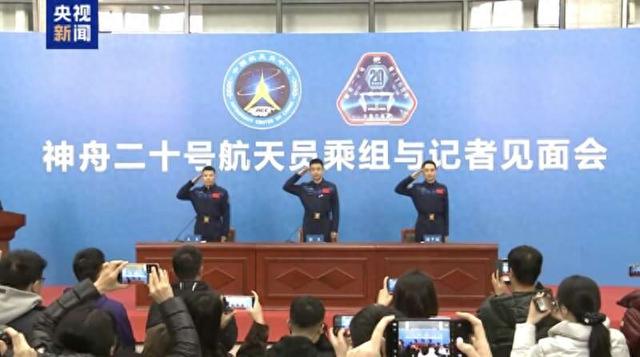
Group 1 - The Shenzhou 20 crew successfully returned to Earth after addressing an emergency situation involving a window crack caused by space debris, demonstrating effective teamwork and emergency response protocols [3][4]. - The crew emphasized their trust in the ground team and their own training, which allowed them to remain calm and execute the emergency procedures effectively [3][4]. - The entire process from identifying the hazard to the safe landing took just over 20 days, showcasing the efficiency of China's manned space program [3]. Group 2 - The new regulations for live-streaming e-commerce in China will take effect on March 20, 2026, aiming to enhance food safety and consumer protection [6]. - The regulations specify 13 categories of food that are prohibited from being sold in live-streaming sessions, including expired, contaminated, or unlabelled products [6]. - These measures are a response to the growing concerns over food safety in the rapidly expanding live-streaming e-commerce sector [6].
新年新气象 实干开新局!我国重大工程、“大国重器”取得阶段性进展
Yang Shi Wang· 2026-01-17 01:46
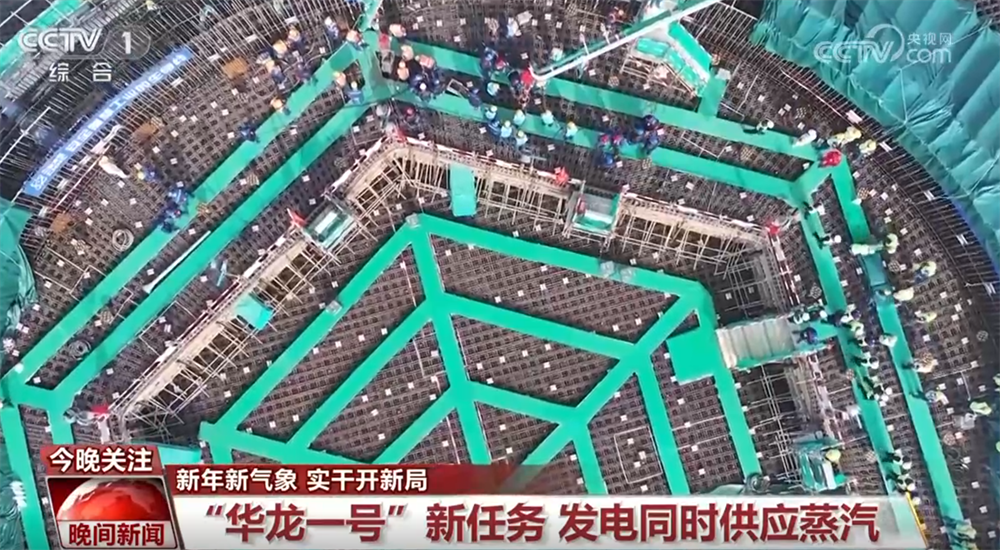
Group 1 - The "Hualong One" project in Jiangsu Lianyungang has entered the main construction phase, marking a significant step in nuclear energy development, combining pressurized water reactors with high-temperature gas-cooled reactors [3] - The first phase of the project is expected to supply 32.5 million tons of industrial steam and generate over 11.5 billion kilowatt-hours of electricity annually, reducing carbon dioxide emissions by 19.6 million tons [3] - This project aims to support the large-scale supply of high-quality low-carbon industrial steam to the trillion-level petrochemical industry base in Lianyungang, promoting a transition in China's nuclear energy from primarily electricity generation to diversified supply [3] Group 2 - The successful launch of the "Vesta-1" sea-launched remote rocket occurred on January 16, with the Tianqi constellation's 06 group of satellites successfully entering their designated orbit [5] - This mission marks the 23rd flight of the Vesta-1 launch vehicle, demonstrating advancements in China's satellite launch capabilities [5]
一箭四星!山东新年首次海上发射圆满成功
Da Zhong Ri Bao· 2026-01-17 00:52
Core Viewpoint - The successful launch of the Gushenxing-1 sea-launched rocket marks a significant milestone for China's commercial space industry, showcasing advancements in satellite communication and the increasing capabilities of domestic rocket models [2][3]. Group 1: Launch Details - On January 16, the Gushenxing-1 sea-launched rocket successfully lifted off from the Dongfang Spaceport in Yantai, delivering four satellites of the Tianqi constellation into their designated orbits [2]. - The Gushenxing-1 rocket is approximately 20 meters long, with a takeoff weight of about 33 tons and a payload capacity of 300 kilograms, offering advantages such as maturity, low cost, high reliability, and quick response [2]. - This launch is the first of the year for Shandong's maritime launches and represents the first rocket launch of the new year for China's private space sector [2]. Group 2: Satellite Communication Advancements - The Tianqi constellation is China's first low-orbit IoT communication satellite constellation, designed to provide global coverage with features such as miniaturization, low power consumption, and cost-effectiveness [3]. - The successful launch enhances the service capabilities of the Tianqi constellation, promoting the large-scale application of new satellite communication services in China [3]. Group 3: Future Developments in Commercial Space - The Gushenxing-1's success continues the flawless record of the Dongfang Spaceport, which has achieved 22 successful maritime launches [3]. - The Gushenxing-2 medium-lift rocket is expected to make its maiden flight soon, significantly increasing payload capacity [3]. - 2026 is anticipated to be a pivotal year for China's commercial space sector, focusing on reusable rocket technology, with several new models expected to debut [4].
城市24小时 | 新年首发,“北方第一省”踩中爆发期
Mei Ri Jing Ji Xin Wen· 2026-01-16 16:49
Group 1 - The successful launch of the Ceres-1 sea-launched rocket marks a significant achievement for the Haiyang Dongfang Spaceport, indicating a strong start for commercial space launches in 2026 [1] - Since 2019, the Haiyang aerospace industry has attracted 32 projects with investments exceeding 32.2 billion yuan, establishing itself as a strategic emerging industry cluster in Shandong Province [1][2] - The Haiyang Dongfang Spaceport is the only commercial sea launch mother port in China, having successfully completed 22 sea launch missions, sending a total of 137 satellites into orbit [1] Group 2 - In 2025, China completed 87 space launch missions, with private commercial rocket companies executing 23 of them, highlighting the growing importance of the commercial space sector alongside new energy vehicles and integrated circuits [2] - Shandong's geographical advantage, particularly its coastal location, allows for favorable weather conditions and flexibility in launch site selection, reducing transportation costs and time by nearly 30% [2] - The launch events in Rizhao have become a significant attraction for tourism, drawing thousands of visitors and boosting local consumption in sectors like dining and accommodation [2] Group 3 - Shandong plans to establish a comprehensive aerospace industry chain by 2027, aiming for an annual production capacity of 100 launch vehicles and 150 commercial satellites, with the industry scale reaching 50 billion yuan [5]

2026年民营商业航天火箭发射首战告捷
Zheng Quan Ri Bao Zhi Sheng· 2026-01-16 16:40
Core Insights - The successful launch of the "Vesta-1" sea-launched rocket by Beijing Xinghe Power Aerospace Technology Co., Ltd. marks the first commercial space mission of 2026 in China, successfully placing four satellites into orbit [1] - The advancement in reusable rocket technology is expected to lead to more frequent and cost-effective launches, accelerating satellite constellation deployment [1][4] Group 1: Launch Achievements - The "Wanghai Tide" mission is the 21st successful launch for Xinghe Power and the 7th launch of the Vesta series for the "Tiankong Constellation" [2] - A total of 89 commercial satellites have been accurately delivered to their designated orbits through these launches [2] Group 2: Upcoming Launches and Innovations - Xinghe Power plans to execute the first flight of the Vesta-2 rocket, which is designed to efficiently launch small satellites weighing between 300 kg and 500 kg [2] - The company’s reusable rocket, Zhishen-1, is expected to have its maiden flight in the first half of 2026 [2] Group 3: Infrastructure and Technological Developments - The Long March 12B rocket successfully completed a static ignition test, aimed at meeting commercial launch demands for low-orbit satellite constellations [3] - Beijing Arrow Yuan Technology Co., Ltd. is developing a comprehensive industrial base for large liquid rockets, covering production, assembly, testing, recovery, and reuse [3] Group 4: Market Dynamics and Strategic Moves - The commercial space launch market in China is expected to be robust in 2026, with significant breakthroughs in reusable rocket technology anticipated to lower launch costs and accelerate satellite deployment [4] - China has submitted an application for an additional 203,000 satellites, indicating a strategic shift in satellite resource competition [4][5] Group 5: Industry Participation - Major telecommunications companies, including China Mobile and China Telecom, are actively involved in satellite constellation projects, with plans to launch thousands of satellites [5] - The three major telecom operators have already obtained licenses for satellite mobile communication services, enhancing their capabilities in emergency communication and remote area connectivity [5]
记者手记:从一枚海射火箭,看传统工业大省“入局”商业航天
Xin Hua She· 2026-01-16 09:19
Core Viewpoint - The successful launch of the Gushenxing-1 sea-launched rocket marks a significant milestone in China's commercial space industry, indicating a shift towards regularized sea-based rocket launches and the establishment of a robust aerospace industry in Shandong province [1][3]. Group 1: Launch Success and Technological Advancements - On January 16, 2023, the Gushenxing-1 sea-launched rocket successfully deployed the Tianqi constellation 06 satellites into their designated orbits, achieving a successful flight test [1][3]. - The successful launch is part of a broader trend towards regular sea-based rocket launches, with Shandong province emerging as a key player in this domain [3]. Group 2: Development of Aerospace Industry in Shandong - Since the first sea launch in June 2019, Shandong has developed the Dongfang Spaceport, which has facilitated the establishment of 32 aerospace projects and a production capacity of 50 solid rockets annually [3][5]. - The Dongfang Spaceport provides comprehensive services for rocket assembly, testing, and launching, supporting the regularization of sea launches with 22 successful missions to date, deploying 137 satellites into space [3][5]. Group 3: Future Prospects and Industry Growth - Shandong aims to form a complete aerospace industry chain by 2027, targeting an annual production capacity of 100 rockets and 150 commercial satellites, with an industry scale reaching 50 billion yuan [6]. - The province's strong industrial foundation positions it well for continued growth in the commercial space sector, with various local companies focusing on different aspects of aerospace, such as rocket manufacturing and satellite development [5][6].
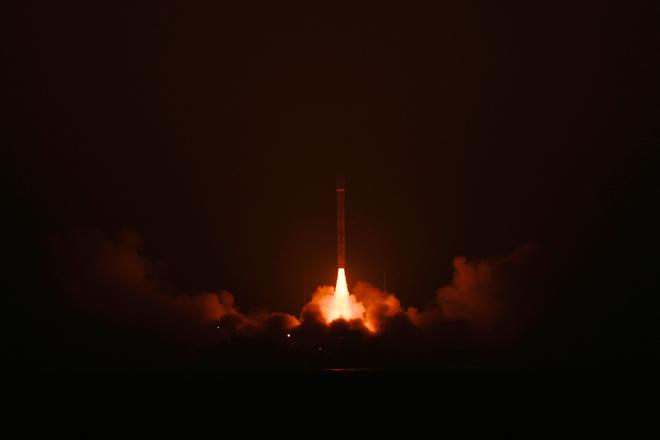
海阳2026年首“箭”升空,谷神星一号成功发射一箭四星
Qi Lu Wan Bao· 2026-01-16 08:57
Group 1 - The successful launch of the Gushenxing-1 maritime launch vehicle marks a significant achievement for the Haiyang Dongfang Spaceport, which has completed 22 maritime rocket launch missions since its establishment, sending a total of 137 satellites into space [2] - The Gushenxing-1 maritime launch vehicle is a four-stage solid commercial rocket, approximately 20 meters long, with a takeoff weight of about 33 tons and a maximum payload capacity of 300 kilograms for a 500-kilometer sun-synchronous orbit, offering advantages such as mature technology, low cost, high reliability, and quick response [1] - The Tianqi constellation, China's first low-orbit IoT communication satellite constellation, provides global coverage and is designed for various applications, enhancing the efficiency of satellite communication services and promoting the scale application of new satellite communication businesses in China [1] Group 2 - Since 2019, the Haiyang aerospace industry has attracted 32 industrial projects and over 32.2 billion yuan in investments, establishing itself as a strategic emerging industry cluster in Shandong Province [2] - The Haiyang commercial aerospace industry is characterized by a robust industrial foundation and strong technological support, creating a new development pattern that integrates satellite, rocket, maritime, and aerial resources [2] - The future goal for Haiyang is to become an internationally leading commercial maritime launch port, focusing on breakthroughs in liquid rocket maritime launch capabilities and developing a comprehensive ecosystem for the aerospace industry by 2030 [3]
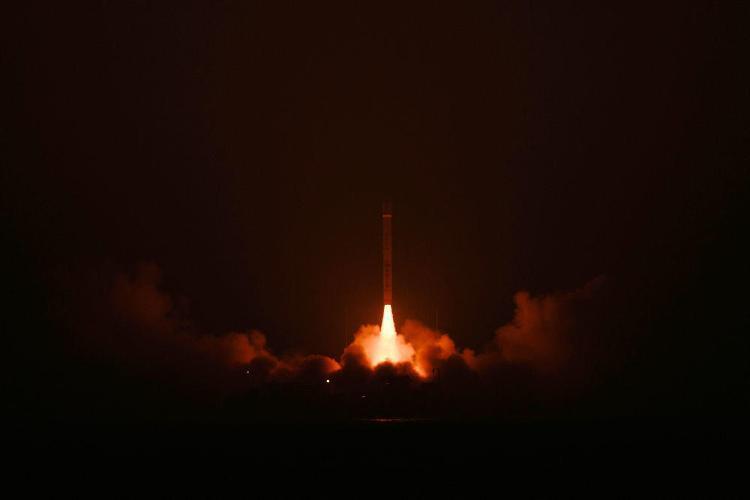
海上一箭四星 中国成功发射天启星座06组卫星
Zhong Guo Xin Wen Wang· 2026-01-16 01:28
Core Viewpoint - China successfully launched the Tianqi constellation's 06 group of satellites using the Ceres-1 sea-launched rocket, marking a significant achievement in satellite deployment for global IoT communication services [1][2]. Group 1: Launch Details - The Ceres-1 sea-launched rocket successfully lifted off at 4:10 AM Beijing time on January 16, delivering four satellites into their designated orbits [1][3]. - This mission represents the seventh launch of the Tianqi constellation by the Ceres series of rockets, contributing to the enhancement of the constellation's capabilities [2]. Group 2: Tianqi Constellation Overview - The Tianqi constellation is designed for low Earth orbit IoT communication, characterized by global coverage, miniaturization, low power consumption, and cost-effectiveness [2]. - It provides satellite IoT data services across various sectors, including forestry, agriculture, emergency response, tourism, water management, electricity, oil, marine, ecology, and smart cities, and is expanding into direct satellite markets for automotive, handheld devices, and wearables [2]. Group 3: Rocket and Company Achievements - The Ceres-1 rocket has completed its 23rd flight, with the manufacturing company, Galaxy Power, successfully conducting 21 commercial launches, delivering a total of 89 commercial satellites into their intended orbits [2].