长征十二号甲

Search documents
商业航天发展前景广阔,利好先进制造
Tai Ping Yang Zheng Quan· 2026-03-02 07:25
Investment Rating - The industry rating is optimistic, expecting an overall return exceeding 5% above the CSI 300 index within the next six months [9]. Core Insights - The commercial aerospace sector is poised for significant growth, driven by both policy and market factors, with a goal set for 2027 to achieve a highly collaborative and significantly scaled industry ecosystem [4]. - In 2025, China completed 92 space launches, with commercial launches accounting for 50, marking a pivotal moment where commercial satellites constituted 82% of the total satellites launched [4]. - The development of commercial aerospace is transitioning from technology validation to a critical phase of scaling and commercialization [5]. - The growth of the commercial aerospace industry is expected to benefit precision components and advanced manufacturing technologies, including high-end equipment and advanced manufacturing techniques [5]. - The demand for core components, such as engines and specialized bearings, is crucial for the performance and reliability of rockets and satellites [5]. - The advancement of 3D printing technology is enhancing the manufacturing of complex components, thereby reducing development cycles in the aerospace sector [5]. - The evolution of space computing and low-orbit satellite constellations is driving the demand for space photovoltaic systems, with significant opportunities for companies involved in high-efficiency solar cell production [6]. - The investment recommendation highlights the potential for high-value opportunities across the supply chain, particularly for companies with core technological advantages and strong ties to industry leaders [6].
国家统计局:2025年完成商业航天发射50次
Zhong Zheng Wang· 2026-02-28 03:12
Core Insights - The National Bureau of Statistics released the "2025 National Economic and Social Development Statistical Bulletin" highlighting significant advancements in China's aerospace and technology sectors [1] Aerospace Industry - A total of 92 space launches were completed in 2025, with 50 of these being commercial space launches [1] - The successful launch of the Tianwen-2 mission marks a significant milestone in asteroid sampling and return missions [1] - Breakthroughs in reusable rocket technology were noted, with the successful maiden flights of Zhuque-3 and Long March 12甲 achieving successful orbit insertion [1] Defense and Military Technology - The first domestically designed and built electromagnetic aircraft carrier, "Fujian," has been commissioned into service [1] Quantum Computing and Energy - The superconducting quantum computing prototype "Zuchongzhi-3" has been successfully constructed, indicating progress in quantum technology [1] - The "artificial sun" project achieved a world record of "one hundred million degrees for a thousand seconds," showcasing advancements in nuclear fusion technology [1] Scientific Research and Development - The Jiangmen neutrino experiment large scientific facility has officially commenced operations, contributing to fundamental physics research [1] - The domestically developed deep learning AI model, DeepSeek, has garnered global attention for its capabilities [1] - The first clinical trial of an invasive brain-computer interface has been successfully conducted, marking a significant step in neurotechnology [1] - The domestically produced low-temperature high-current ion implanter has demonstrated industrialization capabilities [1]
星舰即将进入规模化发射阶段,有望引领商业航天再上新高度
ZHONGTAI SECURITIES· 2026-02-08 07:25
Investment Rating - The report maintains an "Overweight" rating for the industry [5] Core Insights - The commercial aerospace sector is expected to enter a phase of rapid growth, driven by the upcoming large-scale launch of the Starship, which will significantly enhance the efficiency of satellite deployment and related services [9][17] - The domestic large aircraft industry is seeing an increase in delivery speed and localization rates, with optimistic prospects for overseas market expansion [18][19] Summary by Sections Policy Insights - The "14th Five-Year Plan" emphasizes the development of strategic emerging industries, including aerospace, with increased policy support expected [10][32] - The establishment of a dedicated regulatory body for commercial aerospace aims to enhance safety and promote industry growth [10][32] - Local governments are actively promoting commercial aerospace initiatives, with over 20 provinces outlining plans in their government reports [11][34] Technical Developments - Recent successful launches of new rocket models, such as the Zhuque-3 and Long March 12, demonstrate advancements in China's launch capabilities [12][37] - The successful testing of reusable spacecraft and multi-satellite deployment systems indicates significant progress in technology that supports commercial space missions [12][38] Financing Trends - The introduction of new listing standards for commercial rocket companies on the Sci-Tech Innovation Board is expected to facilitate financing and enhance industrial capabilities [14][39] - Blue Arrow Aerospace's IPO has been accepted, indicating a shift towards capitalizing the commercial aerospace sector [14][40] Demand Dynamics - The concept of "space computing" is transitioning into a commercial reality, driving growth in the commercial aerospace sector [15][41] - The upcoming Beijing International Commercial Aerospace Exhibition is anticipated to generate significant procurement demand, showcasing advancements across the industry [15][41] International Competition - The global competition for space resources is intensifying, with significant satellite deployment plans from both China and the U.S. [16][42] - The SpaceX Starship is expected to achieve a launch frequency of over once per hour within four years, supporting large-scale deep space missions [16][42]
我国将布局更多“太空+”未来产业,机构称中国商业航天有望迎来高速发展
Jin Rong Jie· 2026-02-02 01:48
Core Insights - China is set to expand its "Space+" future industry layout, focusing on commercial aerospace and application industry chains [1] - China Aerospace Science and Technology Corporation will lead the development of the commercial aerospace industry during the 14th Five-Year Plan, aiming to enhance strategic guidance and ecosystem building [1] - The initiative includes five major projects, such as developing space digital infrastructure, space resource development, space traffic management, and space tourism [1] Industry Outlook - Guotai Junan Securities predicts that by 2026, China's commercial aerospace sector is expected to experience rapid growth [1] - The mass application of large rockets like Zhuque-3 and Long March 12A during the 14th Five-Year Plan is anticipated to break existing technological bottlenecks in satellite constellation construction [1] - The pace of commercial aerospace launches in China is expected to accelerate, with the construction of large satellite constellations represented by GW and G60 also expected to speed up [1]
多枚可重复使用火箭今年有望首飞
Zheng Quan Ri Bao· 2026-01-29 17:29
Core Viewpoint - The Chinese commercial rocket industry is poised for significant advancements in reusable rocket technology, with multiple launches and recovery attempts expected in 2026, marking a critical year for the sector [1][4]. Group 1: Company Developments - China Aerospace Science and Technology Corporation (CASC) emphasizes the importance of 2026 as a foundational year for the commercial rocket sector, focusing on resource integration and successful launches and recoveries [1]. - The successful launch of the Zhuque-3 rocket by private company Landspace and the Long March 12 rocket by CASC highlights the collaborative efforts between state-owned and private enterprises in advancing reusable rocket technology [2][3]. - The Long March 12 rocket, measuring approximately 70.4 meters in length and weighing about 437 tons, aims for "first-stage reuse" as a core feature, although it did not achieve the recovery goal during its recent flight [2]. Group 2: Industry Trends - The collaboration between state-owned and private enterprises is fostering a strong synergy in the development of reusable rockets, combining the technical expertise of state firms with the agility of private companies [3]. - The anticipated launches of multiple domestic reusable rockets, including the Hyperbola-3 and Xingyun-1, are expected to occur in 2026, further pushing the boundaries of China's capabilities in this field [4]. - The breakthrough in reusable rocket technology is seen as a key factor in reducing launch costs, which could lead to new opportunities in satellite networking and space infrastructure [5]. Group 3: Future Opportunities - The successful recovery of reusable rockets is expected to open up new avenues in the commercial space sector, with companies actively preparing for developments such as space tourism [5][6]. - The Lihong-2 vehicle is set to conduct a 100-kilometer recovery technology verification in 2026, aiming to significantly lower launch costs and validate recovery technologies [6]. - Ongoing research and development in commercial space technology will require substantial investment and collaboration among government, local authorities, and private capital to achieve breakthroughs in core technologies [6].

“商业航天”成中国新年热词
Zhong Guo Xin Wen Wang· 2026-01-28 07:40
Core Insights - "Commercial space" has rapidly become a hot topic in China, highlighted by significant achievements in January 2023, including the successful suborbital recovery of the Lihong-1 remote sensing vehicle and the announcement of actor Huang Jingyu as one of China's first commercial space tourists [1] Group 1: Industry Developments - In 2023, China conducted 67 launches, placing 270 satellites into orbit, with 137 of these being commercial satellites, accounting for 65% of the total [1] - By 2025, it is projected that China will conduct 92 launches, with 50 being commercial, representing 54% of the total launches, and 311 commercial satellites will be placed into orbit, making up 84% of all satellites launched that year [1] Group 2: Technological Advancements - The deployment of low Earth orbit satellite constellations is gaining momentum, with China applying to the International Telecommunication Union for approximately 200,000 low Earth orbit satellite orbits and frequency resources [2] - The Hainan satellite super factory is designed to produce 1,000 satellites annually, while a flexible intelligent satellite production line in Jinan has reduced manufacturing costs to between 100,000 to 200,000 RMB per kilogram [2] Group 3: Challenges and Opportunities - The main challenge in the industry is the mismatch between demand and production capacity, despite the establishment of foundational infrastructure [2] - The commercialization of space services is seen as a long-term goal, with the potential for 200,000 satellites to create an integrated information network that supports digital transformation across various industries [3] Group 4: Policy and Strategic Initiatives - The "14th Five-Year Plan" emphasizes the construction of a modern industrial system and the acceleration of building a strong space nation, marking a significant focus on commercial space as a strategic pillar [3] - Multiple provinces in China are implementing industrial policies to accelerate the development of the entire space industry chain, with Beijing emerging as a global hub for commercial space, housing over 300 high-tech enterprises in the sector [3][4]
商业航天赛道新年大热 四川如何布局发力
Xin Lang Cai Jing· 2026-01-26 21:05
Core Insights - The commercial space industry is experiencing rapid growth, with significant developments in both technology and investment, particularly highlighted by SpaceX's potential IPO valued at $1.5 trillion [2][3] - China is projected to launch a record 92 rockets in 2025, indicating a booming demand for satellite launches and commercial applications [3][4] - Sichuan province is positioning itself as a key player in the commercial space sector, leveraging its comprehensive industrial capabilities and strategic location [4][6] Group 1: Industry Growth Factors - The commercial space sector in China is driven by favorable government policies, including the establishment of a dedicated Commercial Space Administration and supportive local government initiatives [3][4] - There is a surge in demand for satellite launches, with over 250,000 satellites registered, necessitating the launch of more than 25,000 satellites in the next nine years [3][4] - The industry is focusing on reducing launch costs through the development of reusable rocket technology, which is seen as a critical path for cost efficiency [3][6] Group 2: Sichuan's Strategic Position - Sichuan is recognized for its strong latecomer advantages in the commercial space industry, with a robust industrial chain and significant investments in rocket production and satellite technology [4][6] - The province is home to key projects, such as the construction of a reusable liquid rocket production base, which is expected to be completed by December this year [6] - Sichuan's government is actively promoting the establishment of a Western Commercial Spaceport to enhance launch capabilities and attract industry players [7][8] Group 3: Future Directions - The demand for satellite infrastructure, including payloads and ground stations, is expected to grow significantly, providing opportunities for Sichuan to expand its market presence [7] - The development of a Western Commercial Spaceport is a priority for Sichuan, aimed at addressing regional launch capacity shortages and fostering industry collaboration [7][8] - Experts suggest increasing support for local enterprises and encouraging investment in the commercial space sector to drive innovation and growth [8]

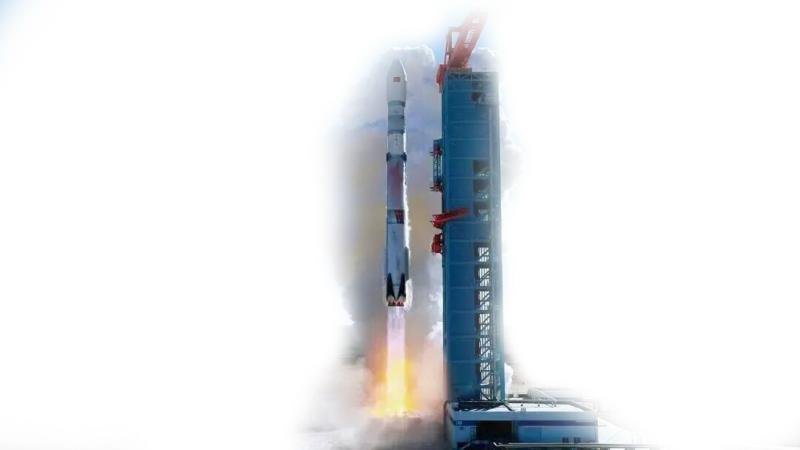
争夺太空,中国放大招了
首席商业评论· 2026-01-25 04:48
Core Viewpoint - The article emphasizes the urgency and significance of China's recent application for approximately 203,000 low and medium Earth orbit satellites, which is a strategic move in the global space race against competitors like SpaceX and other international players [5][7][8]. Group 1: China's Satellite Application - In late 2025, China submitted a record application for about 203,000 satellites, which is five times the number planned by SpaceX's Starlink and 15 times the current total number of satellites in orbit globally [7]. - The International Telecommunication Union (ITU) operates on a "first come, first served" basis for satellite frequency and orbital resource allocation, making this application a critical strategic maneuver for China [8][9]. - The urgency is underscored by the ITU's introduction of a milestone mechanism, requiring satellites to be launched within specific timeframes, emphasizing the need for rapid deployment to secure future technological advancements [9]. Group 2: Global Competition - Following China's application, the U.S. Federal Communications Commission (FCC) quickly approved SpaceX's request to deploy an additional 7,500 Starlink satellites, indicating a heightened competitive response [7]. - SpaceX's ambitious plans include launching over 1,000 missions annually by 2026, significantly increasing its satellite deployment capabilities [11][12]. - The competition for low Earth orbit is intensifying, with various countries and companies, including Amazon's Project Kuiper and the European Union's IRIS², also vying for orbital slots [13]. Group 3: China's Response and Infrastructure Development - China is rapidly developing its commercial space launch capabilities, with significant construction efforts at multiple launch sites, including Wenchang, aiming for a launch capacity of over 60 missions per year by 2026 [15][17]. - The establishment of a dedicated Commercial Space Administration in China marks a significant step towards the industrialization and marketization of its space sector, enhancing its competitive edge [17][18]. - China's satellite constellation plans include the deployment of over 38,000 satellites across three major constellations by 2035, necessitating an average of 10 satellite launches per day to meet these goals [19].
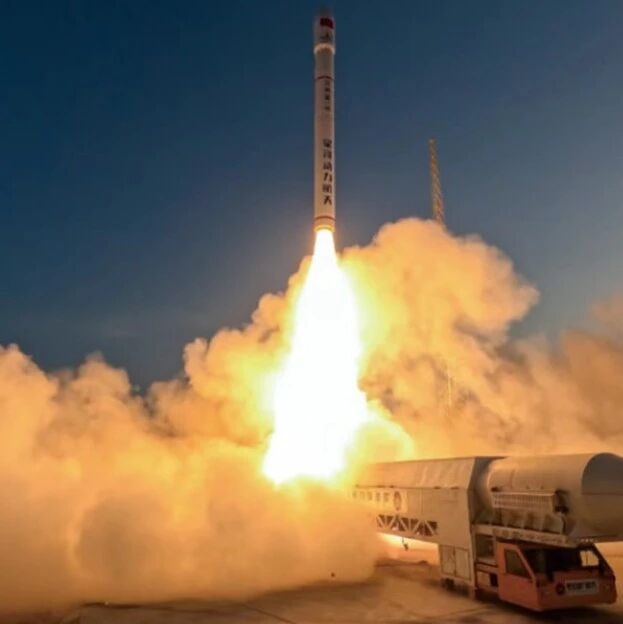
2026太空赛道杀疯了!可回收火箭突破临界点,商业航天千亿产业链全曝光
材料汇· 2026-01-23 15:18
Core Viewpoint - The article emphasizes that commercial aerospace is poised for explosive growth by 2026, driven by government support, technological breakthroughs, capital influx, and market demand [6][8]. Group 1: Policy Support - The establishment of a Commercial Aerospace Department by the National Space Administration and supportive policies from over ten provinces have created a favorable environment for the industry [7][22]. - The government has included commercial aerospace in its work reports for two consecutive years, indicating a strategic focus on this sector [22]. Group 2: Technological Breakthroughs - Key advancements include successful tests of reusable rockets and the transition of satellite production to a "mass production" model, significantly enhancing launch capabilities [23][25]. - The Hainan launch site is now operational, supporting up to 16 high-density launches annually [23]. Group 3: Capital Influx - In 2025, the commercial aerospace sector saw a total financing of 18.6 billion yuan, a year-on-year increase of 32%, with significant investments in satellite applications and rocket manufacturing [28]. - More than ten companies are accelerating their IPO processes, indicating a robust interest from investors [28][29]. Group 4: Market Demand - The demand for low-orbit satellite constellations is increasing, with applications in satellite communication, space computing, and space tourism becoming more viable [7][35]. - The article highlights that there are 286 million non-internet users in China, representing a significant market opportunity for satellite communication services [7]. Group 5: Reusable Rocket Technology - Reusable rocket technology is expected to reduce launch costs by up to 60%, marking a shift towards "flight-like launches" in commercial aerospace [41]. - The first successful tests of vertical landing and recovery for rockets have been completed, with multiple rocket types set to debut in 2026 [42]. Group 6: Industry Structure - The commercial aerospace industry is characterized by a collaborative model involving state-owned enterprises, private companies, and local governments, creating a diversified ecosystem [16][22]. - The article outlines the differences between traditional and commercial aerospace, emphasizing the market-driven approach of the latter [15][16].
一则大消息!掀起一个涨停潮
格隆汇APP· 2026-01-22 12:04
Core Viewpoint - The article discusses the resurgence of the commercial aerospace sector in China, highlighting significant developments and investment opportunities driven by government policies and technological advancements [12][42]. Group 1: Market Dynamics - The recent rebound in the A-share market reflects a broader recovery in the technology sector, particularly in the commercial aerospace segment, with over 20 stocks hitting the daily limit up [3][14]. - The Aerospace ETF (159227) has shown a remarkable performance, increasing by 53.64% since its launch in May last year, and has been included in the top ten core ETFs for global investment in China by 2026 [4][14]. Group 2: Industry Developments - Five key commercial aerospace companies, including Xinghe Power and Blue Arrow Aerospace, are progressing towards IPOs, aiming to raise funds for ambitious projects [9][11]. - China's commercial aerospace industry is projected to reach a scale of 2.5 to 2.8 trillion yuan by 2025, with an annual growth rate exceeding 20% and over 600 companies expected to operate in this sector [13][22]. Group 3: Technological Advancements - Significant advancements in technology are being made, such as the construction of the first offshore liquid rocket launch and recovery platform in Yantai, and successful tests of manned spacecraft landing systems [13][21]. - The development of reusable rocket technology is identified as a critical factor for reducing launch costs and enhancing capacity, with expectations for multiple successful test flights in 2026 [43][44]. Group 4: Investment Opportunities - The commercial aerospace sector is viewed as a major investment opportunity, with the potential for substantial returns as the industry matures and expands [36][42]. - The Aerospace ETF (159227) is highlighted as a strategic investment tool, focusing on high-purity military applications and leading commercial aerospace content, with a market size of 2.975 billion yuan and an average daily trading volume of 843 million yuan [41][39].