
品牌化转型

Search documents
西南证券-梦百合-603313-品牌势能向上,逐步迈入全球化布局收获期-250908
Xin Lang Cai Jing· 2025-09-12 10:06
Core Viewpoint - The company demonstrates significant performance recovery potential and long-term growth logic, with revenue and net profit showing substantial year-on-year increases in 2025H1 [1] Group 1: Performance and Growth - Revenue in 2025H1 increased by 9.4% year-on-year, while net profit surged by 117.8% [1] - The company has a global production layout that creates core barriers, with production bases in China, the USA, Thailand, Serbia, and Spain, enabling flexible production and effective cost pressure mitigation [1] - The company is expanding its product matrix, focusing on zero-pressure foam technology, and has established itself as a leader in the smart bed market in China, ranking first in sales in 2024 [2] Group 2: Market Strategy and Channels - The company has developed a multi-channel model that includes OEM/ODM, retail, online sales, and hotel partnerships, achieving significant revenue from both domestic and international markets [3] - In 2024, the company generated 67.5 billion yuan from overseas and 14.8 billion yuan from domestic markets, with overseas revenue accounting for 79.9% of total income [3] - The cross-border e-commerce business has shown remarkable growth, with revenue increasing by 48.7% in 2024 and 68.3% in 2025H1 [3] Group 3: Competitive Landscape - The anti-dumping measures in the US have reshaped the competitive landscape, leading to the exit of many small manufacturers and creating supply gaps that the company has capitalized on through its global production strategy [4] - The company has established factories in the US to avoid high tariffs, with a designed production capacity of 16-20 billion yuan [4] - North American revenue reached 21.8 billion yuan in 2025H1, reflecting a year-on-year increase of 7.6% and a gross margin of 40.1% [4] Group 4: Financial Projections - The company is positioned for a dual recovery in valuation and profitability, with expected EPS of 0.44 yuan, 0.59 yuan, and 0.73 yuan for 2025-2027, corresponding to PE ratios of 20x, 15x, and 12x respectively [4] - A target price of 11.8 yuan has been set for 2026, with an initial "buy" rating recommended [4]


卷疯了!在中国,已经没人敢跟河北人拼价格了,义乌也打不过
Sou Hu Cai Jing· 2025-08-29 07:11
Core Insights - Hebei's e-commerce sector has initiated a nationwide price revolution, significantly impacting traditional manufacturing hubs like Yiwu [1][3] - The region has adopted a cost-compression strategy, earning the title of "price butcher" as it dominates various markets with low-priced products [3][5] Group 1: Market Dynamics - Hebei produces 80 million bags daily, accounting for one in three bags sold nationwide, and has captured 60% of the online fishing gear market [3][17] - The e-commerce model in Hebei relies on a "front store, back factory" approach, minimizing costs through local production and direct logistics [9][11] - By 2025, Hebei's express delivery volume is projected to reach 1.73 billion packages, ranking fourth nationally, with a total e-commerce transaction volume of 1.58 trillion yuan [13] Group 2: Industry Structure - The region's manufacturing relies heavily on small workshops, with many workers being family members, leading to low operational costs [7][9] - Despite high production volumes, profit margins are extremely low, with gross profits around 8%, driven by a volume-based sales strategy [19][29] - The lack of brand recognition and reliance on low prices has led to consumer complaints about product quality and low repeat purchase rates [21][29] Group 3: Regulatory and Competitive Landscape - Recent regulatory changes, including proposed amendments to the Anti-Unfair Competition Law, aim to curb below-cost sales practices, prompting a need for transformation in Hebei's e-commerce [23][25] - Yiwu has begun transitioning away from price competition towards brand and design focus, while Hebei struggles with the same shift due to a lack of resources [27][31] - The future of e-commerce is shifting from "who is cheaper" to "who is more valuable," indicating a need for Hebei to evolve beyond its current pricing strategy [29][31]

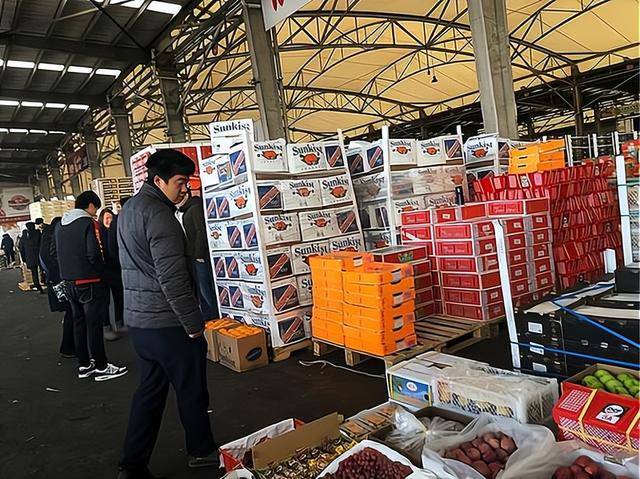
中国北方时尚中心崛起 永定城以创新路径重塑产业生态
Zheng Quan Ri Bao Wang· 2025-08-19 10:50
Core Insights - The event "Yongding City 818·China Northern Autumn Footwear and Apparel Procurement Festival" aims to enhance the regional apparel industry by connecting over 4,000 source manufacturers and addressing market demands [1][3] - The apparel industry is currently facing challenges such as weak demand, excess capacity, and intense competition, necessitating innovation in products and operational systems [3][4] - Yongding City is positioning itself as a key hub for the northern footwear and apparel industry, focusing on efficient trading scenarios and resource integration to drive regional economic growth [3][4] Industry Challenges - The apparel sector is experiencing a slowdown in overall consumption growth, leading to structural opportunities for innovation despite the prevailing issues of price wars and insufficient innovation among many companies [3] - Major brands are shifting from traditional wholesale models to direct retail, indicating a trend towards operational innovation in the industry [3] Strategic Initiatives - Yongding PRO Brand New Area is focused on developing original brands to meet northern market demands, facilitating the transformation of traditional wholesalers into brand operators [4] - The integration of digital technology with the physical economy is seen as a method to reconstruct value across the supply chain, breaking the limitations of traditional wholesale models [4]

Labubu背后:玩具出海如何撕掉“代工”标签
Hu Xiu· 2025-06-12 04:21
Core Insights - The Chinese toy industry is undergoing significant transformation, moving from a reliance on OEM production to developing proprietary brands and IPs, as exemplified by the rise of original IPs like Labubu and the emergence of "copycat" products [1][2][3] - The export landscape is shifting, with self-branded toys accounting for 65.51% of total exports in 2024, indicating a successful brand transformation [2] - Despite the growth in self-branded exports, many toy factories still depend on low-margin OEM production, facing challenges such as order fluctuations and rising costs [2][7] Industry Challenges - The Chinese toy industry experienced a decline in exports after 26 months of growth, attributed to economic downturns and global supply chain adjustments [3] - High tariffs imposed in 2025 further exacerbated the challenges faced by toy manufacturers, leading to production halts in some cases [3][7] - Many companies are struggling with declining profit margins due to increased costs and heightened competition, prompting a search for new markets [7][8] Market Dynamics - The U.S. remains the largest market for Chinese toy exports, with a total export value of $10.55 billion in 2024, representing a 4.24% year-on-year increase [5] - Approximately 75% of toys purchased in the U.S. are sourced from China, highlighting the dependency of U.S. toy companies on Chinese manufacturing [6] - Companies are increasingly diversifying their market presence to mitigate risks associated with U.S. market fluctuations, with a focus on emerging markets and domestic sales [9][10] Strategic Shifts - Toy manufacturers are actively exploring new markets, including the Middle East and Southeast Asia, to reduce reliance on the U.S. market [10][11][13] - The domestic market is also gaining attention, with significant growth potential in the潮玩 (trendy toys) and二次元 (anime) sectors, projected to reach a market size of 77.42 billion yuan and 72.7 billion yuan respectively in 2024 [14] - Companies are leveraging their supply chain advantages to attract overseas clients, with notable interest from Middle Eastern countries [11][12] Innovation and Value Creation - The潮玩 and IP derivative products are emerging as key growth areas, with companies focusing on unique designs and branding to capture consumer interest [15] - High-end creative products, such as handcrafted models, are gaining traction in international markets, allowing companies to command higher profit margins [21] - The shift towards creating products with artistic and collectible value is seen as a strategic move to enhance competitiveness and resilience against market fluctuations [21]