
垂直整合模式

Search documents
“技术差距仅剩1-3年,中国挑战日本功率半导体主导权”
Guan Cha Zhe Wang· 2025-08-20 01:15
Core Viewpoint - Japan's power semiconductor industry faces significant challenges from Chinese competitors, who are rapidly advancing in technology and pricing, threatening Japan's long-standing advantages in this sector [1][7][10]. Industry Overview - Japanese companies like Toshiba, Rohm, and Mitsubishi Electric have struggled to unify their efforts against the competitive pressures from China, despite the growing demand for power devices essential for electric vehicles and carbon neutrality [1][9]. - The power semiconductor market is critical for various electronic devices and is expected to see sustained growth in demand [1]. Competitive Landscape - Chinese firms have established comprehensive production capabilities in silicon and silicon carbide substrates, leveraging low energy costs and a large domestic market to grow rapidly [1][8]. - The technology gap between Japanese and Chinese companies in silicon chips is estimated to be only one to two years, and three years for silicon carbide [1][11]. Company Developments - Rohm and Toshiba reached an agreement to collaborate on manufacturing power devices, focusing on enhancing supply capabilities through complementary investments [1][12]. - Despite initial cooperation, substantial progress has been limited, with reports indicating that discussions for deeper collaboration have stalled [2][3]. Financial Performance - Rohm reported a net loss of 50 billion yen for the fiscal year ending March 2025, marking its first annual loss in 12 years, primarily due to challenges in the silicon carbide market and increased competition from Chinese firms [5][6]. - In the quarter ending June, Rohm recorded a net profit of 2.9 billion yen, a 14% year-over-year decline, prompting the company to cut back on underperforming manufacturing facilities and initiate voluntary layoffs [5]. Market Dynamics - The Japanese power semiconductor industry is characterized by fragmented market shares, with no single company holding more than 5% globally, complicating efforts for large-scale consolidation [3][9]. - Analysts emphasize that without collaboration, Japanese firms will struggle to compete against Chinese manufacturers, who are increasingly dominating the silicon carbide substrate market [10][11]. Government Initiatives - The Japanese government has attempted to foster industry cooperation by providing financial support to companies like Fuji Electric and Denso for capacity expansion, although the funding is significantly less than that allocated for other semiconductor projects [11][12].

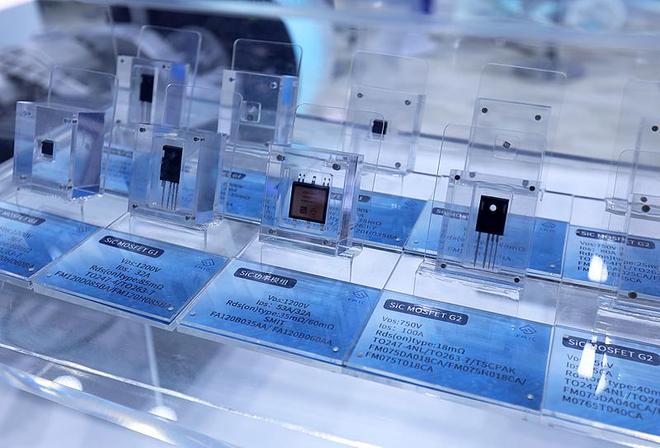
日本电源芯片,难以抗衡中国
半导体行业观察· 2025-08-20 01:08
Core Viewpoint - Japan's power semiconductor industry is facing significant challenges from emerging Chinese companies, despite Japan's historical dominance in traditional power semiconductors. The lack of unified efforts among domestic manufacturers is hindering progress in the industry [2][12]. Group 1: Industry Dynamics - Japan is investing billions in AI chip manufacturing, but its power semiconductor sector, which includes major players like Mitsubishi Electric, Fuji Electric, Toshiba, Rohm, and Denso, struggles with market shares below 5% each [2][10]. - Power chips are crucial for various applications, including electric vehicles and energy management, and advanced power chips can significantly enhance energy efficiency, which is vital for Japan, an island nation that relies on 90% of its energy imports [2][3]. Group 2: Company Collaborations - Toshiba and Rohm have engaged in two rounds of cooperation talks, with the first focusing on manufacturing collaboration and the second on broader business activities, including R&D and sales. However, substantial progress has been elusive, and negotiations have reportedly stalled [3][4]. - Rohm invested 300 billion yen (approximately 2 billion USD) in Toshiba as part of a larger privatization deal, aiming to strengthen their relationship due to complementary strengths in electric vehicle and industrial product segments [3][4]. Group 3: Financial Performance - Rohm reported a net loss of 50 billion yen for the fiscal year ending March 2025, marking its first annual loss in 12 years, attributed to a slowdown in the electric vehicle market and intense competition from Chinese firms [4][5]. - For the quarter ending June 30, Rohm's net profit was 2.9 billion yen, a 14% decline year-over-year, prompting the company to cut back on underperforming production facilities and offer voluntary retirements [5][8]. Group 4: Competitive Landscape - Chinese companies are increasingly capable of producing complex power chip products, including entering the silicon carbide (SiC) substrate market, which is essential for electric vehicles. Their competitive pricing is supported by lower energy costs [9][11]. - The vertical integration model traditionally favored by Japanese firms is being challenged by Chinese manufacturers, who focus on process specialization, leading to greater efficiency and cost competitiveness [11][12]. Group 5: Future Outlook - The Japanese semiconductor industry is urged to unite to enhance competitiveness against Chinese firms, as individual companies struggle to achieve the necessary cost efficiencies [12][13]. - The Japanese government is promoting collaboration within the industry, with financial commitments to support alliances aimed at increasing production capacity and competitiveness [13][14].
富瑞:升中国宏桥目标价至26.9港元 维持“买入”评级
Zhi Tong Cai Jing· 2025-08-19 07:18
Group 1 - The core viewpoint of the report is that China Hongqiao's (01378) profit forecast for 2025 has been raised, and projections for 2026 and 2027 now include profits from the Simandou iron ore joint venture project, which is expected to ship by the end of 2025 with a full production cycle of approximately two years [1] - The target price for China Hongqiao has been increased from HKD 17.7 to HKD 26.9, while maintaining a "Buy" rating [1] - In the first half of the year, China Hongqiao's net profit increased by 35% year-on-year to RMB 12.4 billion, attributed to its vertically integrated model that stabilizes production costs [1] Group 2 - The average selling price of aluminum and alumina has risen, leading to an increase in unit gross profit to RMB 225 and RMB 185 per ton, respectively [1] - A significant highlight of the performance is the announcement of a new share buyback plan of at least HKD 3 billion, along with a commitment to a dividend payout ratio of no less than 60% for the year, reflecting management's confidence in the company's performance [1]
Here's Why Joby Aviation Stock Flew Higher in July
The Motley Fool· 2025-08-09 17:51
Core Insights - Joby Aviation's shares increased by 57.9% in July following the announcement of expanded manufacturing capacity, which doubled its aircraft production capabilities [2] - The expansion includes a facility in California and an additional site in Ohio for component manufacturing and testing [2][3] - Joby's progress in the FAA certification process is highlighted by the preparation for final assembly of its first conforming aircraft for Type Inspection Authorization (TIA) flight tests, expected to be completed this year [3] Manufacturing Capacity Expansion - The expansion of manufacturing capacity is a sign of growing confidence in Joby's certification process and aims to mitigate risks associated with its vertically integrated model [3][5] - Joby's vertical integration strategy involves designing and manufacturing eVTOL components in-house, differentiating it from competitors like Archer Aviation and Vertical Aerospace [4] Strategic Partnerships - Joby has significant investments from Toyota ($894 million) and Uber ($125 million), which support its manufacturing optimization and overall business model [7] - Delta Air Lines is also set to invest $200 million in Joby, aiming to provide transportation services for Delta customers [8] - These partnerships are crucial for Joby's ambitious plans to operate its own fleet of air taxis rather than selling aircraft to other operators [8]


“垂直整合模式”摇摇欲坠,联合健康医疗帝国神话将终结?
Hua Er Jie Jian Wen· 2025-05-20 12:43
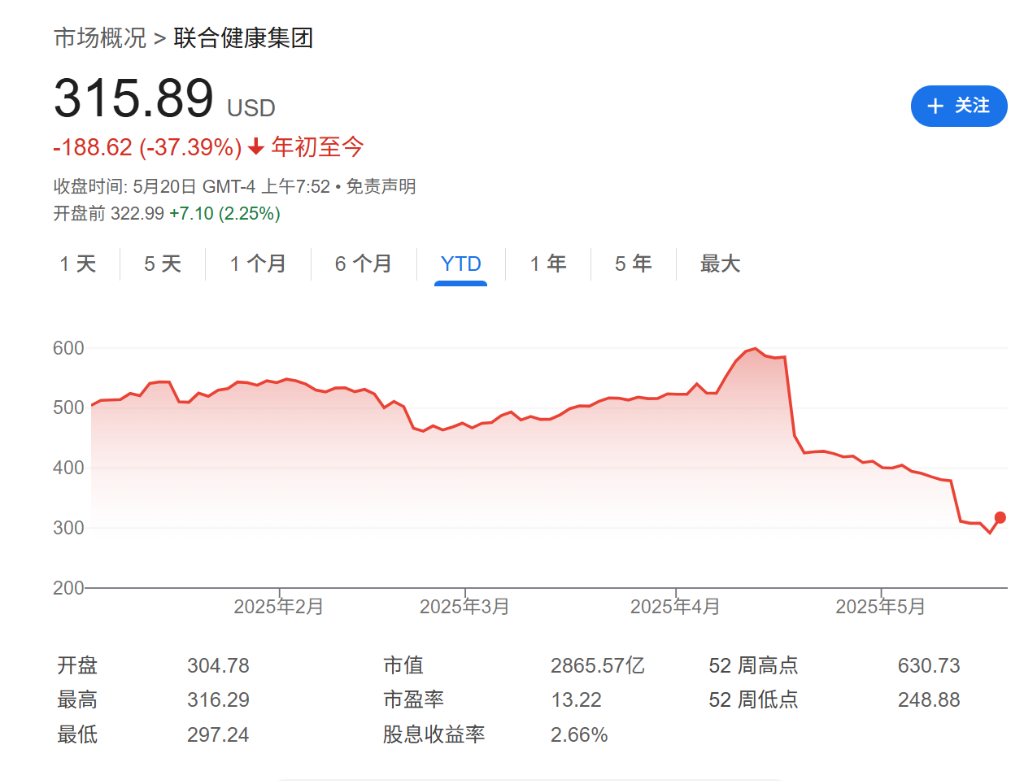
Core Insights - UnitedHealth Group's vertical integration model, once a strength, is now becoming a liability due to rising healthcare costs, regulatory tightening, and increased political scrutiny, leading to a nearly 40% drop in stock price this year [1] - The company faces significant challenges, including the assassination of former CEO Brian Thompson and the forced departure of current CEO Andrew Witty, undermining investor confidence and erasing valuation premiums [1] Group 1: Historical Success and Business Model - UnitedHealth Group has maintained a dominant position in the healthcare industry through its vertical integration model, which includes insurance, physicians, pharmacies, and software connections, resulting in exceptional growth [3] - The company's operations encompass UnitedHealthcare (insurance) and Optum (health services), with a focus on risk assessment and premium setting to cover costs and generate profits [3] - From 2013 to 2023, UnitedHealth's net income grew from $5.6 billion to $22 billion, with a stock return of 715%, significantly outperforming the S&P 500's 158% [3] Group 2: Medicare Advantage Plans and Controversies - UnitedHealth faces controversies surrounding its Medicare Advantage plans, particularly regarding medical costs that exceeded expectations, leading to a downward revision of annual profit forecasts [4] - The profitability of these plans relies on controlling medical expenditures, but high utilization rates have increased medical loss ratios, squeezing profit margins [4] - Investigations into potential Medicare fraud have emerged, with reports suggesting that UnitedHealth may have exaggerated diagnoses to secure additional government payments [5] Group 3: Regulatory and Cost Pressures - The Biden administration's policy changes have reduced insurance company fees, coinciding with rising healthcare costs, creating a dual pressure on revenues and profits [6] - UnitedHealth's dual role as an insurer and provider means it faces compounded challenges when costs exceed expectations, impacting both claims and service costs [6] - Analysts indicate that UnitedHealth's historical competitive advantages may be fundamentally damaged due to new restrictions on coding practices [6] Group 4: External Challenges and Internal Crisis - In 2024, UnitedHealth experienced a cyberattack that disrupted its healthcare system, leading to congressional scrutiny over its size and systemic risk [7] - Political pressures have prompted the company to relax some prior authorization protocols, raising concerns among analysts about potential cost implications [8] - Despite its size and service to millions, increasing financial and political pressures may transform the company's scale from a strategic advantage to a burden [8]
LM Funding America(LMFA) - 2024 Q4 - Earnings Call Transcript
2025-03-31 12:00
Financial Data and Key Metrics Changes - In 2024, the company mined 170.6% Bitcoin, generating approximately $11 million in revenue and $3.9 million in core EBITDA, indicating strong growth compared to previous periods [11][10] - Total revenue for Q4 2024 was approximately $2 million, a decrease from $4.1 million in Q4 2023, primarily due to the April 2024 Bitcoin halving event [20][21] - Net income attributable to LM shareholders for Q4 2024 was $2 million, an improvement from a net loss of $1.6 million a year ago [22] - Core EBITDA for Q4 2024 increased to $3.3 million, nearly 10 times what was generated a year ago [23] Business Line Data and Key Metrics Changes - The company transitioned to a vertically integrated model, managing its own mining infrastructure, which has improved margins and reduced energy costs [7][9] - The acquisition of a 15 megawatt mining facility in Oklahoma marked a significant operational achievement [16] - The company placed orders for 256 new Bitmain S21 Plus mining machines to enhance fleet efficiency [16] Market Data and Key Metrics Changes - The average Bitcoin price during Q4 2024 was approximately $83,000, while the average price for the full year was approximately $61,000 [20] - As of February 25, 2025, the company expanded its total energized hash rate to 560 petahash per second and held 165.8% Bitcoin on its balance sheet [11] Company Strategy and Development Direction - The company plans to invest in next-generation mining hardware, energy efficiency initiatives, and strategic site acquisitions to support growth [14][26] - The focus remains on acquiring smaller power assets in the 5 to 20 megawatt range, which are often overlooked by larger operators [26][53] - The company aims to leverage Bitcoin-backed debt to capitalize on favorable market conditions [24][26] Management's Comments on Operating Environment and Future Outlook - Management expressed confidence in navigating industry volatility and emphasized the importance of vertical integration and disciplined cost management [25][13] - The company believes its current market cap relative to Bitcoin holdings presents a compelling investment opportunity [12][13] Other Important Information - The company retained a portion of its mined Bitcoin to capture potential upside for shareholders and deepen alignment with the Bitcoin industry [10] - Cash and Bitcoin holdings increased by 200% in fiscal year 2024, with cash growing 40% to $3.4 million and Bitcoin holdings surging over 300% to $14 million [23] Q&A Session Summary Question: Current operating stats and new machines - The 256 new machines have not yet arrived and will be added once installed [31] Question: Deployment of new machines - There is space to add about two more megawatts, and the new machines will replace less efficient ones [33][35] Question: Timeline for new machines - Groundwork for new containers will take about three weeks, with installation expected within 90 days [38] Question: Opportunities in Texas - The company has looked at several sites in Texas but currently has no outstanding letters of intent [40] Question: Luxor OS2 deployment - Luxor OS2 has been deployed on all machines at the Calumet mining site but not on those at core [42] Question: Secured loan details - The $5 million secured loan is primarily for the new mining site in Oklahoma, with a 12% interest rate for two years [45]
