外资撤离

Search documents
外资加剧抛售印度股票,净撤出金额逼近2022年的最高纪录
Huan Qiu Wang· 2025-10-02 00:38
Group 1 - The Indian stock market sentiment has been negatively impacted by multiple factors, including U.S. punitive tariffs, weak corporate earnings, and India's rise to one of the highest valuation markets globally. As of September 26, overseas funds have withdrawn a net $17 billion from the Indian stock market this year, approaching the historical record set in 2022 [1] - The trend of foreign capital withdrawal from the Indian stock market continued into the beginning of the week, with preliminary data from Indian exchanges indicating an outflow of $319 million on September 29 alone [3] - Analysts on Wall Street noted that the sell-off in the Indian stock market has intensified this quarter, particularly after U.S. President Trump significantly raised H-1B visa fees, impacting tech companies reliant on this program. Given the unlikely short-term trade agreement between India and the U.S. and the lack of corporate earnings growth, analysts believe foreign capital is not expected to return quickly [3] Group 2 - To mitigate the impact of U.S. policy changes on the Indian economy, the Reserve Bank of India has announced measures to provide flexibility and reduce compliance burdens for exporters, importers, and re-export traders, extending the foreign exchange expenditure deadline for triangular trade transactions from four months to six months [3] - The Indian Ministry of Energy has stated that despite facing challenges, it remains committed to promoting economic growth [3]

外企逃离,投资暴跌99%,印度彻底变成“外资坟场”了?
Sou Hu Cai Jing· 2025-08-18 04:13
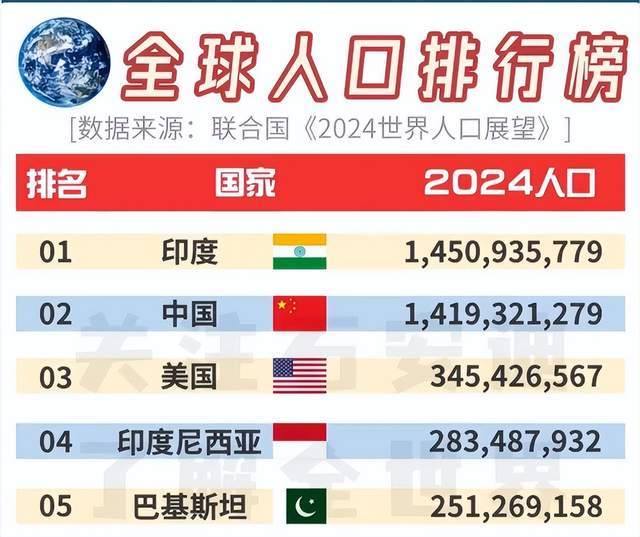
Group 1 - India is the world's most populous country with a population of 1.45 billion, presenting significant potential for growth, especially in manufacturing, attracting foreign investment through incentives [1] - Major smartphone manufacturers like Xiaomi, OPPO, VIVO, and Samsung have established factories in India, capturing 90% of the market share [3] - Despite initial success, foreign companies face punitive actions from the Indian government, including fines and asset freezes, leading to a hostile business environment [5] Group 2 - In May, India's net foreign direct investment (FDI) plummeted to $3.5 million, a 99% month-on-month decline and a 98% year-on-year decline, indicating a significant withdrawal of foreign capital [7] - For the fiscal year 2024-2025, India's net FDI dropped to $35.3 million, a 96.5% decrease from nearly $10 billion in the previous fiscal year, marking a historical low [7] - The adverse business climate has led to a widespread perception that foreign companies cannot profit in India, with a saying circulating that "India makes money, India spends it, and nothing can be taken home" [9][10]
印度创下一个历史新低 这块短板藏不住了
Zhong Guo Xin Wen Wang· 2025-08-05 06:41
Group 1 - The core issue in India's foreign direct investment (FDI) landscape is not a lack of investment but rather a rapid withdrawal of capital, with net FDI dropping to $3.53 billion in the 2024-2025 fiscal year, a 96.5% decrease from nearly $10 billion in the previous year [1] - Despite a 13.7% year-on-year increase in gross FDI to $81 billion, the outflow of foreign capital and profit repatriation has surged, leading to a near-zero net value [1][2] - The acceleration of capital withdrawal is attributed to a significant cash-out trend following popular IPOs, with total private equity and venture capital exits reaching $26.7 billion in the 2025 fiscal year [2] Group 2 - Indian companies are increasingly investing abroad, with outbound direct investment rising from $17 billion to $29 billion, reflecting a shift towards global market diversification [2] - The Indian central bank's stance is that the growth in gross FDI indicates market attractiveness, while high withdrawal rates suggest increased liquidity, although this perspective is contested [2][3] - Concerns about regulatory uncertainty and institutional risks are driving foreign investors to exit quickly, contrasting with the more stable foreign investment environments in countries like Vietnam and Indonesia [3] Group 3 - The Indian government is reportedly planning to tighten regulations on foreign investments, which could significantly impact sectors such as e-commerce and pharmaceuticals [4] - Despite India's large population, rapid GDP growth, and active consumer potential, the sustainability of attracting foreign capital hinges on the ability to retain investors long-term [4] - A stable institutional framework is essential for transforming India from a temporary investment stopover to a long-term investment destination [4]
创四年新低!特朗普关税大棒干废印尼股市?
Feng Huang Wang Cai Jing· 2025-03-24 08:16
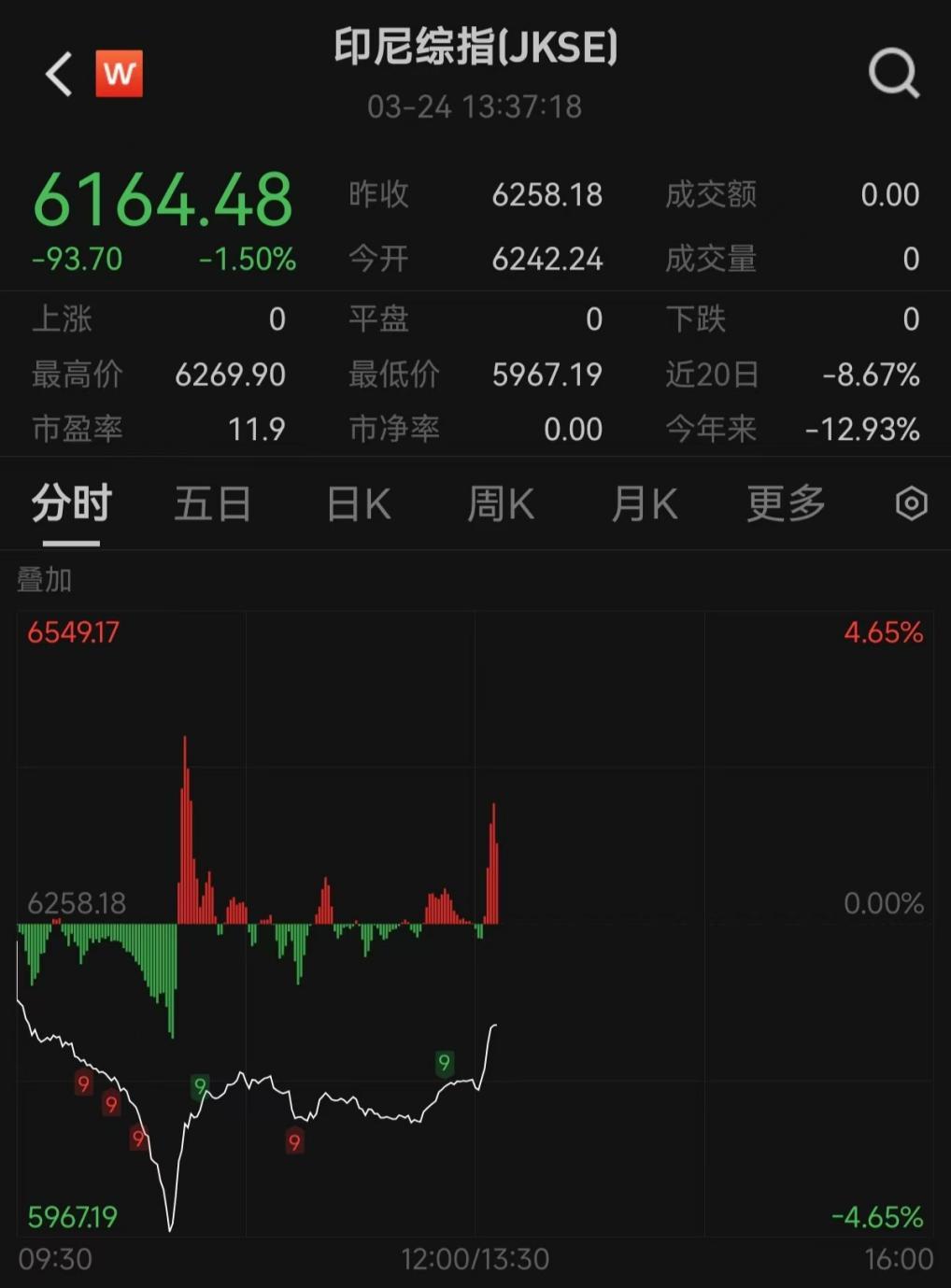
Core Viewpoint - The Indonesian stock market has experienced significant declines, reaching a four-year low, primarily due to foreign capital withdrawal and concerns over economic stability amid rising geopolitical tensions and domestic fiscal challenges [1][4][6]. Group 1: Market Performance - The Indonesian Composite Index fell sharply, dropping 4.65% on March 24, 2023, and briefly falling below 6000 points for the first time since 2021, before closing down 1.5% at 6164 points [1]. - Since reaching a historical high of 7910 points on September 20, 2022, the Indonesian stock market has declined by 22% over the past six months, making it one of the worst-performing markets globally [4]. Group 2: Foreign Investment Withdrawal - There has been a collective withdrawal of foreign capital from Southeast Asia, with the MSCI ASEAN Index dropping 10% from its peak last year. Indonesia has seen nearly $1.8 billion in capital outflows this year alone [6]. - The withdrawal is attributed to specific issues within each Southeast Asian country, which have become more apparent as investors reassess their expectations [6]. Group 3: Economic Concerns - The threat of increased tariffs from the U.S. under Trump's administration has heightened risk perceptions for emerging markets like Indonesia, which is part of the "Fragile Five" countries sensitive to foreign capital flows [7]. - Recent deflationary trends have raised concerns about consumer spending, with Indonesia experiencing its first deflation in 25 years as the consumer price index fell year-on-year [8]. - The government's ambitious free meal program, costing an estimated $28 billion annually, has led to significant fiscal strain, resulting in a 20% year-on-year decline in national revenue in the first two months of the year [8]. Group 4: Analyst Ratings - Morgan Stanley has downgraded Indonesia's MSCI rating to "underweight," while Goldman Sachs has lowered its rating from "overweight" to "hold," further undermining investor confidence [9].