
大数据模型

Search documents
迈克生物:目前公司已将人工智能、大数据模型应用于尿液、血球、病理等项目上
Mei Ri Jing Ji Xin Wen· 2025-08-25 14:21
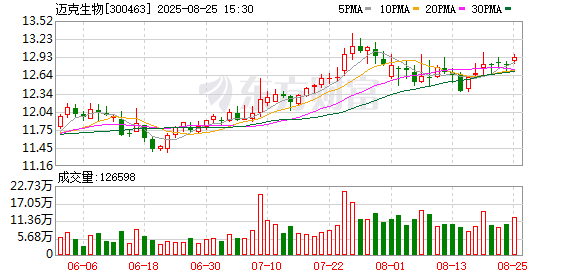
Group 1 - The core viewpoint of the article highlights that Maike Bio (300463.SZ) is leveraging AI technology to innovate in the medical field, particularly through its "Smart Laboratory" platform [2] - The company has achieved full-process automation in blood collection management, sample processing, and result interpretation, creating a closed-loop system of "smart testing - smart management - smart operation" [2] - Maike Bio is currently applying AI and big data models to various projects, including urine, blood cell, and pathology tests, and is exploring broader applications of AI in the medical sector [2]


美团海外CEO接受巴西权威媒体采访,说了些啥
Sou Hu Cai Jing· 2025-07-29 09:55
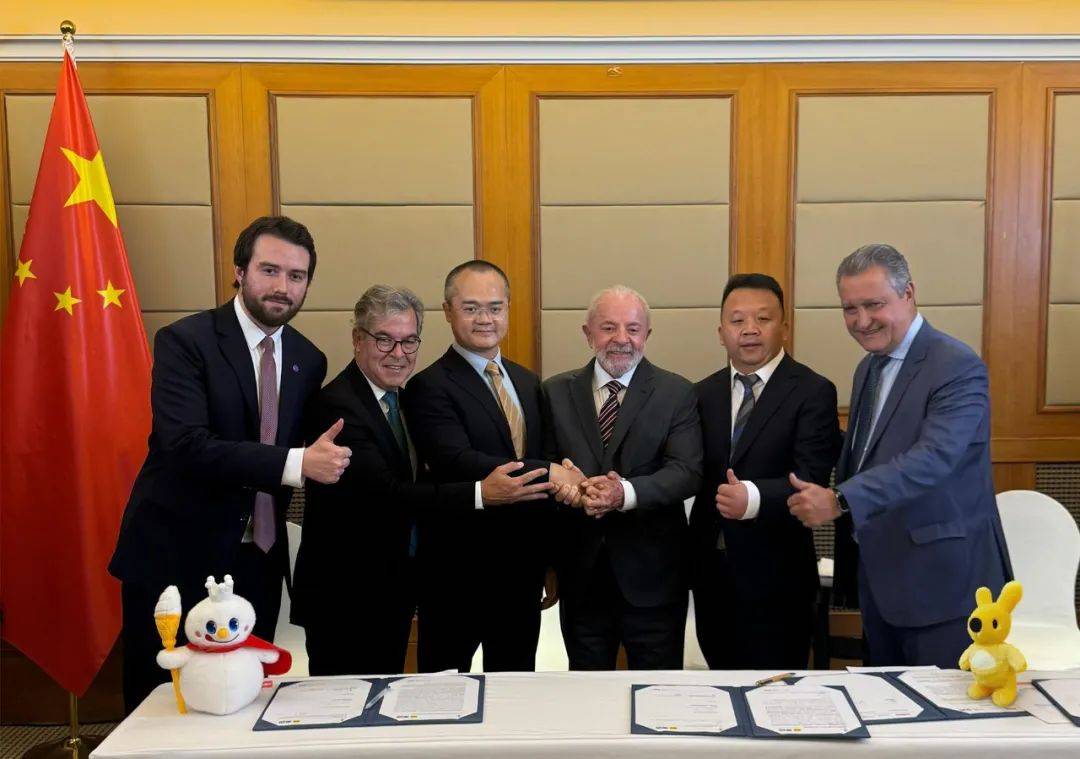
Group 1 - Meituan plans to invest $1 billion in Brazil over the next five years to support the local development of its delivery service, Keeta [1] - The Brazilian food delivery market is dominated by iFood, which holds 90% market share, presenting significant challenges for Meituan [3] - The Brazilian food delivery market is valued at $12 billion and is growing at a rate of 20% annually, making it an attractive opportunity for Meituan [6] Group 2 - Keeta aims to differentiate itself from iFood by avoiding exclusive contracts with restaurants and instead focusing on reasonable commissions and quality service [6] - Meituan has over 1,000 algorithm experts and a data model that optimizes order distribution and rider management, which can be applied in Brazil [7] - The $1 billion investment will be used to develop digital tools, marketing resources, and establish a logistics network with over 100,000 riders, aiming to cover 1,000 major cities in five years [7] Group 3 - Keeta is exploring the use of drones for delivery, having experience with over 1 million drone or autonomous delivery instances, although local regulations currently restrict this [7] - The active number of delivery riders in Brazil is estimated to be less than 1 million, with iFood having fewer than 500,000 active riders [7] - Keeta plans to enter 15 metropolitan areas by June 2026, focusing solely on food delivery, with potential future expansions into fresh produce and pharmaceuticals [7]

国泰航空在深圳启用内地最大规模办公室
Xin Lang Cai Jing· 2025-07-09 01:49
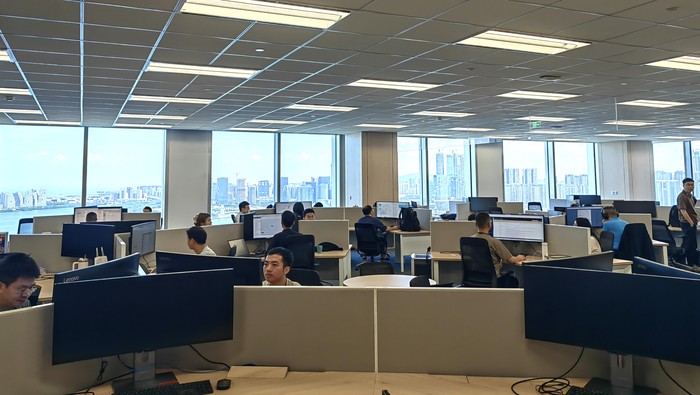
Core Viewpoint - Cathay Pacific is expanding its business footprint in mainland China, focusing on digital transformation and IT capabilities to enhance operational efficiency and customer service [1][2][5]. Group 1: Expansion of IT Capabilities - Cathay Pacific has opened its largest IT office in Shenzhen, which can accommodate over 200 employees and will focus on system development, quality assurance, and technical support [1]. - The IT team has over 1,000 personnel, with 150 based in mainland cities, expected to grow to 200 by the end of the year, doubling by the end of 2024 [1][2]. - The establishment of the Shenzhen office is part of a broader strategy to enhance digital solutions tailored for the Chinese market [1][6]. Group 2: Recruitment and Digital Transformation - The airline has increased recruitment for frontline staff, hiring over 500 cabin crew members and expecting to reach 1,000 by year-end, alongside training 60+ mainland trainee pilots [2]. - Cathay Pacific's investment plan for 2024 includes a significant focus on digital and information technology, with annual investments exceeding HKD 3 billion in areas like AI and big data [2]. - The company has developed nearly 100 data models across various business areas, including customer service and flight operations [2]. Group 3: Operational Efficiency and AI Integration - The airline's flight operations have returned to pre-pandemic levels, but the increased capacity at Hong Kong airport presents new challenges [5]. - AI models are being utilized to simulate operations and optimize resource allocation in response to the expanded airport capacity [5]. - The integration of AIGC technology into chatbots has improved customer interaction, with over 80% of inquiries now handled by automated systems [5]. Group 4: Strategic Location and Collaboration - The Shenzhen IT office is strategically located in Qianhai, a key area for cross-border cooperation and technological innovation [7]. - The office is designed to facilitate collaboration among teams from Shenzhen, Guangzhou, and Hong Kong, focusing on proof of concept for cutting-edge technologies [8][9]. - Partnerships with local tech firms like Alibaba Cloud and Huawei are enhancing the airline's technological capabilities, including adapting its app for the HarmonyOS [9].

美联储变天,A股也在酝酿大招!
Sou Hu Cai Jing· 2025-05-17 12:44
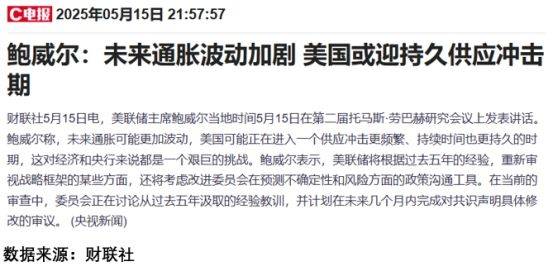
Group 1 - The Federal Reserve is undergoing a significant shift in its monetary policy framework, particularly regarding its inflation targets and employment gap response strategies, indicating potential upward pressure on long-term interest rates [1][3] - The adjustment to the "average inflation target" framework suggests that the Federal Reserve is willing to take on more risks to boost employment growth, even if it means tolerating higher inflation [3] - The mention of "tariff-driven price increases" as a new inflationary factor indicates that the Federal Reserve is preparing for potential escalations in trade tensions, reflecting a need for policy flexibility [3] Group 2 - The A-share market has experienced rapid rotation of hot stocks, with the index showing an approximate 10% increase since a significant drop on April 7, yet investor returns have not improved correspondingly [3] - The primary reason for this discrepancy is frequent "wrong stock selection and misoperations," where investors mistakenly believe they are buying at a low point, only to see prices continue to decline [3][5] - Institutional participation is crucial for stock price increases, as evidenced by contrasting performances of two stocks that appeared similar in price movement but had different institutional involvement [4][10]
外贸企业出口需求强劲 船公司加紧调配运力
Shang Hai Zheng Quan Bao· 2025-05-15 18:25
Group 1 - The current demand from foreign trade enterprises is strong, leading to a surge in inquiries and bookings for shipping to the US, with container prices increasing significantly [1][2] - As of May 15, the latest quotes for 40-foot containers are between $3,000 and $3,200 for the West Coast and $4,000 to $4,200 for the East Coast, reflecting a nearly 300% increase in booking volume for shipments from China to the US [2][3] - Shipping companies are adjusting their capacity distribution due to a mismatch between supply and demand, with expectations that the situation will not ease until mid-June [2][3] Group 2 - There is a concern among foreign trade enterprises about uncertainties in the market, prompting them to expedite shipments that were originally scheduled for later [3][5] - The traditional peak season for shipping is in July, but some industry experts believe that the peak may not arrive early and will remain stable [3] - The shipping rates are expected to rise significantly from May to July, with a notable increase in exports from China to the US anticipated [3][4] Group 3 - Companies are advised to focus on internal capabilities and balance short-term gains with risks, as the "rush for shipping" may not guarantee the highest profits [5] - The logistics and shipping industry is encouraged to invest in technology and innovation to enhance efficiency and reduce costs [5] - There is a recognition that China is becoming a manufacturing powerhouse across various sectors, with potential for growth in both high-tech and low-end industries [5]