
存算一体技术

Search documents
恒烁股份: 2025年半年度报告
Zheng Quan Zhi Xing· 2025-08-22 16:24
Core Viewpoint - The company reported a revenue of 174.28 million yuan for the first half of 2025, a decrease of 1.79% year-on-year, and a net loss attributable to shareholders of 70.78 million yuan, indicating challenges in maintaining profitability amid intense market competition and declining product prices [1][4][10]. Financial Performance - Revenue for the reporting period was 174,275,106.79 yuan, down from 177,454,444.50 yuan in the same period last year [4]. - The total profit was -70,824,859.92 yuan, compared to -74,512,542.56 yuan in the previous year [4]. - The net profit attributable to shareholders was -70,782,426.57 yuan, a slight improvement from -74,350,170.06 yuan year-on-year [4]. - The net profit after deducting non-recurring gains and losses was -77,259,386.16 yuan, compared to -84,471,455.41 yuan in the previous year [4]. - The net cash flow from operating activities was 40,376,147.32 yuan, an increase from -89,030,502.93 yuan in the previous year [4]. Business Overview - The company operates in the semiconductor industry, focusing on the research, design, and sales of storage chips and microcontroller (MCU) chips [10]. - Main products include NOR Flash storage chips, general-purpose 32-bit MCU chips based on Arm Cortex-M0+ architecture, AI chips, and large-capacity storage products [10][12]. - The company employs a Fabless model, outsourcing wafer fabrication, testing, and packaging, allowing it to focus on design and development [10][11]. Product Development - The NOR Flash products utilize industry-recognized Floating Gate technology, with a focus on reliability and stability, and are expected to launch new architecture FLASH products in the second half of 2025 [10][12]. - The MCU product line has seen significant growth, with a 59.98% increase in sales and a 102.99% increase in shipment volume year-on-year [13]. - AI business products include general-purpose AI SoC chips and various AI algorithm models, with successful deployments in consumer electronics and industrial applications [14]. Market Position - The company aims to enhance its market share by expanding its product offerings in high-end applications such as industrial control and automotive electronics [14]. - The introduction of new NAND Flash and eMMC products is expected to meet the growing demand for high-performance storage solutions in smart devices [14].

AI算力集群迈进“万卡”时代,超节点为什么火了?
Di Yi Cai Jing· 2025-07-30 07:59
Core Insights - The recent WAIC highlighted the growing interest in supernodes, with companies like Huawei, ZTE, and H3C showcasing their advancements in this technology [3][4][5] - Supernodes are essential for managing large-scale AI models, enabling efficient resource utilization and high-performance computing [3][4][5] - The shift from traditional AI servers to supernode architectures is driven by the increasing complexity and size of AI models, which now reach trillions of parameters [4][5][9] Group 1: Supernode Technology - Supernodes integrate computing resources to create low-latency, high-bandwidth computing entities, enhancing the efficiency of AI model training and inference [3][4] - The technology allows for performance improvements even when individual chip manufacturing processes are limited, making it a crucial development in the industry [4][9] - Companies are exploring both horizontal (scale out) and vertical (scale up) expansion strategies to optimize supernode performance [5][9] Group 2: Market Dynamics - Domestic AI chip manufacturers are increasing their market share in AI servers, with the proportion of externally sourced chips expected to drop from 63% to 49% this year [10] - Companies like墨芯人工智能 are adopting strategies that focus on specific AI applications, such as inference optimization, to compete with established players like NVIDIA [10][11] - The competitive landscape is shifting, with firms like云天励飞 and后摩智能 targeting niche markets in edge computing and AI inference, avoiding direct competition with larger chip manufacturers [11][12][13] Group 3: Technological Innovations - The introduction of optical interconnects in supernode technology is a significant advancement, providing high bandwidth and low latency for AI workloads [6][9] - Companies are developing solutions that leverage optical communication to enhance the performance of AI chip clusters, addressing the limitations of traditional electrical interconnects [6][9] - The focus on sparse computing techniques allows for lower manufacturing process requirements, enabling more efficient AI model computations [11][12]

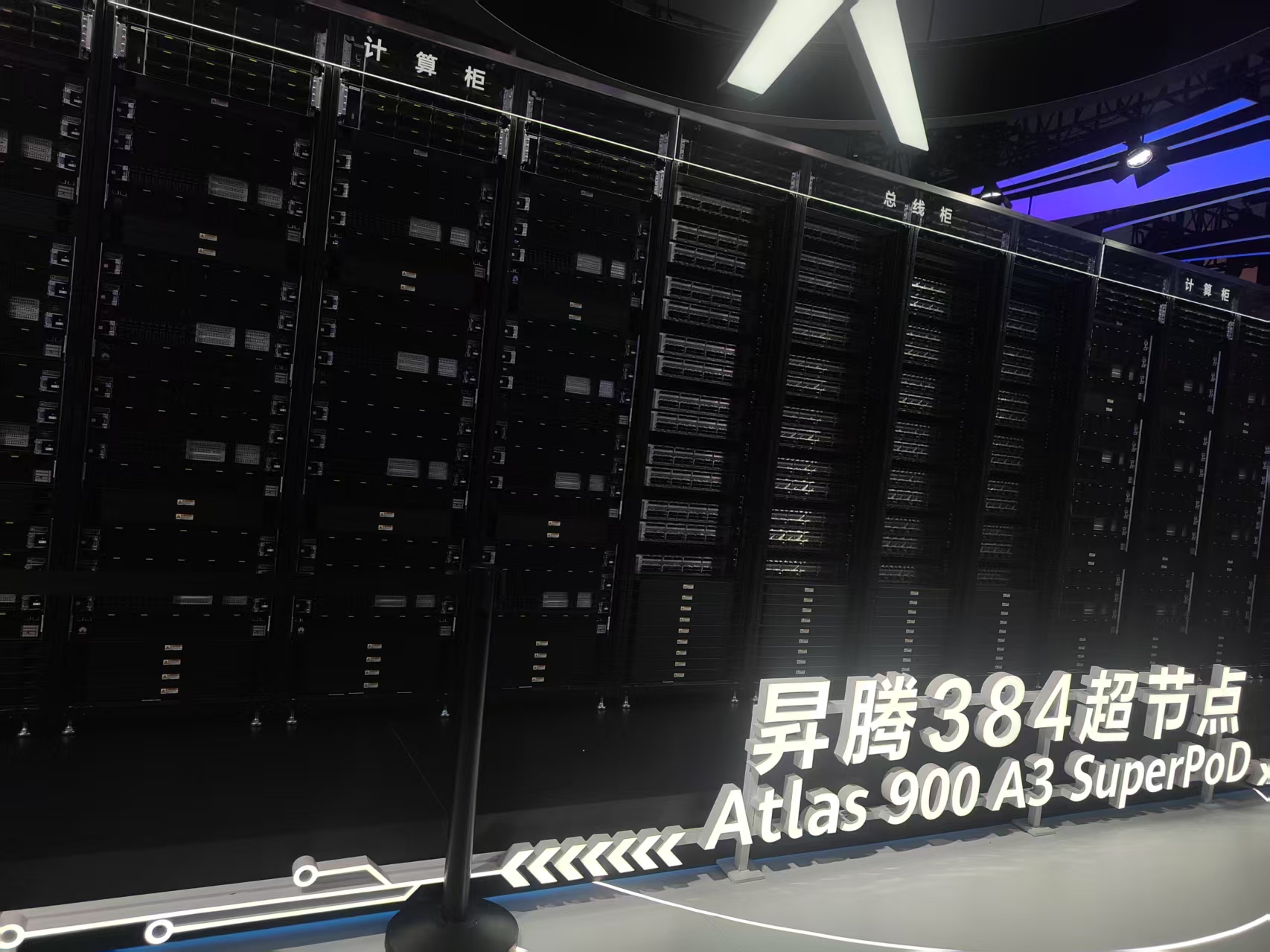
对话后摩智能CEO吴强:未来90%的数据处理可能会在端边
Guan Cha Zhe Wang· 2025-07-30 06:41
Core Insights - The World Artificial Intelligence Conference (WAIC 2025) highlighted the development of domestic computing power chips, particularly the M50 chip from Houmo Intelligence, designed for large model inference in AI PCs and smart terminals [1][4] - Houmo Intelligence's CEO, Wu Qiang, emphasized a shift in the focus of large models from training to inference, and from cloud intelligence to edge and endpoint intelligence [1][4] Company Overview - Houmo Intelligence was founded in 2020, focusing on high-performance AI chip development based on integrated storage and computing technology [3] - The M50 chip is seen as a significant achievement for Houmo Intelligence, showcasing their advancements over the past two years [3] Product Specifications - The M50 chip delivers 160 TOPS INT8 and 100 TFLOPS bFP16 physical computing power, with a maximum memory of 48GB and a bandwidth of 153.6 GB/s, while maintaining a typical power consumption of only 10W [4] - The product matrix from Houmo Intelligence covers a range of computing solutions from edge to endpoint, including the LQ50 Duo M.2 card for AI PCs and companion robots [4] Market Positioning - Wu Qiang stated that domestic companies should adopt differentiated technological paths rather than directly copying international giants like NVIDIA and AMD [4] - Houmo Intelligence aims to integrate storage and computing technology with large models to enable offline usability and data privacy [4] Future Developments - The release of the M50 chip is viewed as a starting point, with plans for more chips to address computing power, power consumption, and bandwidth issues in edge and endpoint AI computing [5] - Houmo Intelligence has initiated research on next-generation DRAM-PIM technology, which aims to achieve 1TB/s on-chip bandwidth and triple the energy efficiency of current levels [9] Target Markets - The M50 chip is applicable in various fields, including consumer terminals, smart offices, and smart industries, with a focus on offline processing to mitigate data transmission risks [8] - Potential clients include Lenovo's next-generation AI PC, iFlytek's smart voice devices, and China Mobile's new 5G+AI edge computing equipment [8]
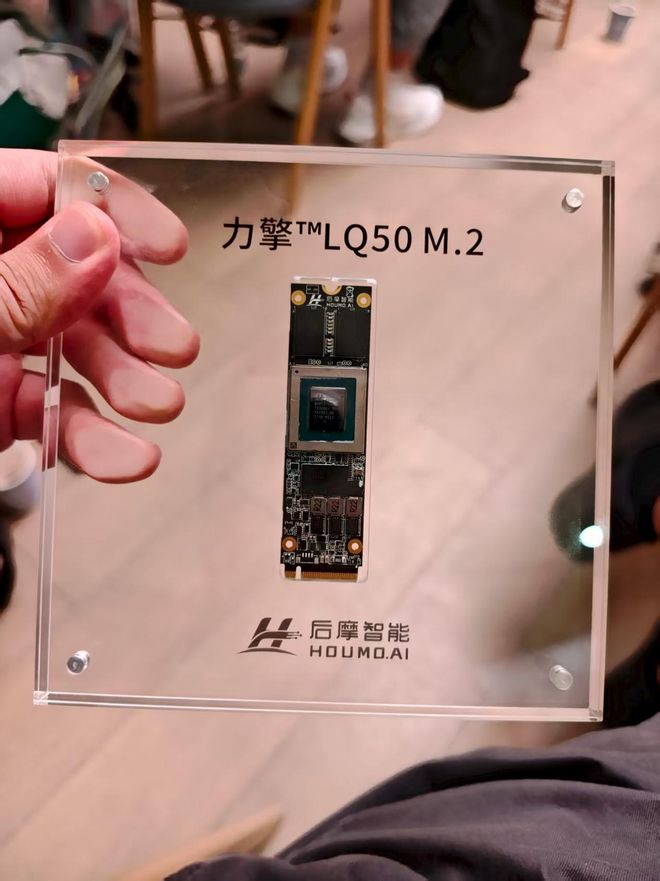
死磕存算一体,后摩智能发布重磅新品
半导体芯闻· 2025-07-29 10:29
Core Viewpoint - The article discusses the limitations of the traditional von Neumann architecture in processing power, especially in the context of artificial intelligence and large models, and highlights the potential of in-memory computing technology as a solution to achieve high computing power, high bandwidth, and low power consumption simultaneously [1][5]. Group 1: In-Memory Computing Technology - In-memory computing technology is not new, but its commercial application has only recently begun to gain traction [5]. - The challenges in adopting this technology include the gap between theoretical research and practical implementation, as well as the need for software that provides a user experience similar to traditional chips [6][5]. - The company has focused on in-memory computing due to its research background in high energy efficiency computing and the need to compete with major players like NVIDIA [6][5]. Group 2: Development and Research Focus - The arrival of large AI models has prompted the company to deepen its exploration of the integration of in-memory computing technology with AI applications [7]. - The company has committed significant resources to research architecture, design, and quantization, aiming to create a synergy between in-memory computing and large models [7]. Group 3: New Product Launch - M50 Chip - The M50 chip is described as the most energy-efficient edge AI chip currently available, built on the second-generation SRAM-CIM dual-port architecture [8][10]. - It achieves 160 TOPS at INT8 and 100 TFLOPS at bFP16 with a typical power consumption of only 10W, making it suitable for various smart mobile terminals [10]. - Compared to traditional architectures, the M50 chip offers a 5 to 10 times improvement in energy efficiency [10]. Group 4: Compiler and Software Tools - The new compiler toolchain, "后摩大道," is designed to optimize the performance of the M50 chip, featuring flexible operator support and automated optimization capabilities [11][12]. - This tool aims to lower the entry barrier for developers and enhance the usability of the in-memory computing technology [11]. Group 5: Product Matrix and Applications - The company has introduced a diverse product matrix, including the "力擎" series and various M.2 cards, to support edge applications [13][14]. - These products are designed for a wide range of applications, including consumer electronics, smart offices, and industrial automation, enabling local processing without data transmission risks [16]. Group 6: Future Goals and Innovations - The company aims to become a leader in edge AI chip technology and is developing next-generation DRAM-PIM technology to further enhance computing and storage efficiency [18]. - The goal is to achieve over 1 TB/s on-chip bandwidth and triple the energy efficiency of current technologies, facilitating the deployment of large AI models in everyday devices [18].
全球及中国存算一体技术行业规划研究及投资前景调研2025~2031年
Sou Hu Cai Jing· 2025-07-29 03:17
Group 1: Market Overview - The report provides a comprehensive overview of the integrated storage and computing technology market, defining product categories and statistical scope [3][4]. - The market is segmented into different product types, including near-storage computing, in-storage computing, and in-storage processing, with growth trends projected from 2020 to 2031 [4][5]. - The global market for integrated storage and computing technology is expected to show significant growth, with specific trends highlighted for various applications, including low and high computing power scenarios [4][5]. Group 2: Industry Development and Trends - The report analyzes the overall development of the integrated storage and computing technology industry during the 14th Five-Year Plan period, identifying key characteristics and barriers to entry [4][5]. - It outlines the development trends and recommendations for the industry, emphasizing the need for innovation and adaptation to market demands [4][5]. - The report forecasts the global and Chinese market sizes for integrated storage and computing technology from 2020 to 2031, highlighting China's growing share of the global market [4][5][6]. Group 3: Competitive Landscape - The competitive landscape of the integrated storage and computing technology market is examined, detailing revenue analysis and market share of major global players from 2020 to 2025 [4][5]. - The report identifies the top five companies in the market by revenue share for 2024, categorizing them into first, second, and third tiers based on market concentration [4][5][6]. - A SWOT analysis of Chinese companies in the integrated storage and computing technology sector is included, providing insights into their strengths, weaknesses, opportunities, and threats [4][5][6]. Group 4: Product and Application Analysis - The report presents a detailed analysis of different product types within the integrated storage and computing technology market, including projected market sizes and shares from 2020 to 2031 [5][6]. - It also examines various applications of integrated storage and computing technology, providing growth trends and market share data for both global and Chinese markets [5][6]. - The analysis includes a breakdown of market sizes for different applications, highlighting the expected growth trajectory from 2020 to 2031 [5][6]. Group 5: Supply Chain and Industry Insights - The report outlines the supply chain for the integrated storage and computing technology industry, detailing the industry chain, procurement models, and production modes [6][7]. - It discusses the major raw materials and suppliers in the industry, as well as the primary downstream customers [6][7]. - The report emphasizes the importance of understanding the supply chain dynamics to identify potential investment opportunities and risks [6][7].

南京经开区元素闪耀世界人工智能大会
Jiang Nan Shi Bao· 2025-07-28 13:55
Group 1: Event Overview - The 2025 World Artificial Intelligence Conference and High-Level Meeting on Global AI Governance opened in Shanghai on July 26, focusing on the theme "Intelligent Era, Global Cooperation" [1] - The exhibition area exceeded 70,000 square meters for the first time, attracting over 800 companies and showcasing more than 3,000 cutting-edge exhibits, including over 100 "global debuts" and "China premieres," marking the largest scale in history [1] Group 2: Company Highlights - Out of the Door - Out of the Door showcased its latest Agentic AI hardware product matrix, including the TicNote AI recording pen, and launched the "Voices of the Hutong" AI art exhibition, highlighting the integration of AI and humanities [2] - The exhibition utilized multi-dimensional presentations, allowing visitors to "hear" and "see" the stories behind community life, emphasizing the importance of human memory in the AI era [3] - TicNote is designed to serve as a "thinking partner" for users, applicable in various scenarios such as meetings, interviews, and academic lectures, showcasing the company's full-stack soft and hard integration capabilities [3][4] Group 3: Company Highlights - Aftermo Intelligent - Aftermo Intelligent unveiled its self-developed edge AI chip "Aftermo M50," which enables local large model inference capabilities without relying on cloud services, addressing the growing demand for intelligent interaction in offline scenarios [5][6] - The M50 chip achieves 160 TOPS@INT8 and 100 TFLOPS@bFP16 physical computing power, with a typical power consumption of only 10W, significantly improving energy efficiency by 5 to 10 times compared to traditional architectures [6][7] - The company aims to create a new ecosystem for edge intelligence that is low-power, secure, and user-friendly, enabling local processing of data to mitigate risks associated with cloud transmission [7]
后摩智能发布全新端边大模型AI芯片,CEO吴强:要让AI算力像电一样方便好用
IPO早知道· 2025-07-26 12:58
Core Viewpoint - The article discusses the launch of the new AI chip, 后摩漫界®M50, by 后摩智能, which aims to empower the widespread adoption of large models at the edge and endpoint devices, emphasizing high performance, low power consumption, and ease of use [2][5]. Group 1: Product Features - The M50 chip achieves 160 TOPS@INT8 and 100 TFLOPS@bFP16 physical computing power, with a maximum of 48GB memory and a bandwidth of 153.6 GB/s, while maintaining a typical power consumption of only 10W [2][3]. - The M50 chip utilizes a second-generation SRAM-CIM dual-port architecture, allowing simultaneous weight loading and matrix computation, supporting mixed-precision operations [3][4]. - Compared to traditional architectures, the M50 chip offers a 5 to 10 times improvement in energy efficiency, making it suitable for edge devices that require fast computation with low power consumption [4]. Group 2: Product Matrix - The product matrix includes the 力擎™ LQ50 M.2 card, which provides AI capabilities for mobile terminals, supporting inference for 7B/8B models at over 25 tokens/s [4]. - The 力谋®LM5050 and 力谋®LM5070 acceleration cards integrate 2 and 4 M50 chips respectively, providing high-density computing power for single and large model inference, reaching up to 640 TOPS [4]. - The BX50 computing box is designed for edge scenarios, supporting 32-channel video analysis and local large model operations [4]. Group 3: Applications and Benefits - The products can be applied in consumer electronics, smart offices, and smart industrial sectors, enabling local processing without the need for internet connectivity, thus enhancing data security [5]. - In consumer devices, the M50 chip enables local large model inference for smart interactions and content generation, ensuring user privacy [5]. - In smart industrial applications, local computing power allows for real-time analysis and decision-making, keeping production data secure and avoiding cloud transmission risks [5]. Group 4: Future Developments - 后摩智能 is developing the next-generation DRAM-PIM technology, which aims to embed computing units directly into DRAM arrays, potentially achieving over 1TB/s on-chip bandwidth and tripling current energy efficiency levels [5]. - The goal is to make powerful AI computing capabilities widely accessible in everyday devices like PCs and tablets [5][8]. Group 5: Investment and Support - In the past two years, 后摩智能 has received investments from various funds, including the China Mobile Industry Chain Development Fund and the Beijing Artificial Intelligence Fund, supporting ongoing innovation in edge model chip technology [6].
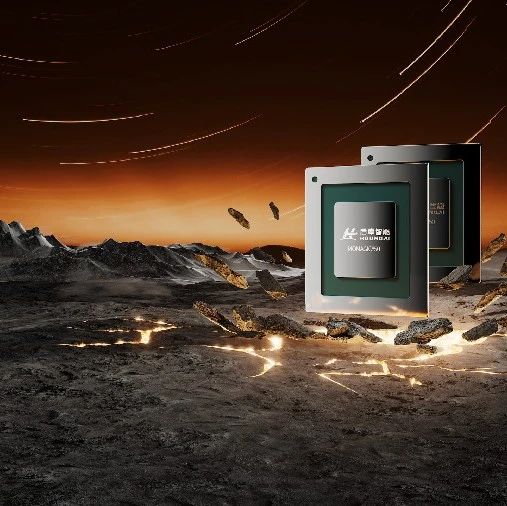
“算得快又吃得少” 端边AI芯片助力大模型装进PC、手机
Xin Hua Cai Jing· 2025-07-26 02:30
Core Insights - The article discusses the launch of the M50 AI chip by Houmo Intelligent, which aims to enhance the deployment of large models across various interactive terminals such as PCs, smartphones, and smart glasses [1][2] - The global edge AI market is projected to grow significantly, from 321.9 billion yuan in 2025 to 1.2 trillion yuan by 2029, with a compound annual growth rate (CAGR) of 39.6% [1] Group 1: Product Launch and Features - The M50 chip has a typical power consumption of only 10W, enabling efficient operation of local large models with parameters ranging from 1.5 billion to 70 billion [1] - The product matrix includes the M50 chip, the LQ series M.2 cards, the LM series acceleration cards, and computing boxes, providing a comprehensive solution for mobile and edge scenarios [1][2] Group 2: Market Demand and Applications - There is an increasing demand for edge computing capabilities that can meet the requirements of high computing power, high bandwidth, and low power consumption [2] - The AI chip and hardware products can be applied in various fields, including consumer electronics, smart offices, and smart industrial applications, facilitating industry upgrades and the widespread adoption of AI technology [2][3] Group 3: Data Privacy and Offline Processing - The edge computing solution allows for full local processing without the need for internet connectivity, thereby eliminating data transmission risks [3] - In consumer electronics, devices can perform intelligent interactions and content generation locally, ensuring user privacy [3]