
寡头垄断

Search documents
正品控股冲击港股!万宁独家供应商毛利率连降,1.6%市占率挑战寡头垄断
Jin Rong Jie· 2025-07-31 04:39
Core Viewpoint - Zhengpin Holdings submitted an application for listing on the Hong Kong Stock Exchange, focusing on the development and sales of health and beauty supplements, with a market share of 1.6% in Hong Kong [1] Company Summary - The company reported revenues of approximately HKD 43 million, HKD 110 million, and HKD 130 million over the reporting periods, indicating revenue fluctuations [1] - The gross profit margin has been declining year by year, while the net profit margin initially increased and then decreased [1] - Rising sales and administrative expenses, along with high financial costs, are identified as "invisible killers" eroding profits [1] Industry Summary - The health and beauty product market in Hong Kong is characterized by "oligopolistic" competition, with Zhengpin Holdings positioned as a "long-tail player" [1] - The company's business model is deeply tied to Mannings for distribution [1] - Despite having low-risk growth advantages, the company lacks bargaining power due to its reliance on a single distribution channel, necessitating the use of IPO proceeds for transformation [1]
五矿证券:中长期全球需求保持稳定增长 年内钾肥价格易涨难跌
Zhi Tong Cai Jing· 2025-07-10 03:00
Industry Overview - The global potash market is characterized by an oligopolistic structure, with stable long-term demand growth expected. The annual compound growth rate (CAGR) for global potash demand from 2024 to 2030 is projected to be 2.67%, reaching 85.2 million tons by 2030 [1][2] - Potash is one of the three essential nutrients for crop growth, often referred to as "the grain of grains." The global potash market size is estimated to be $28.12 billion in 2024, with solid potash mines dominating the market due to simpler extraction processes [1] Demand Dynamics - Global population growth is expected to reach 8.5 billion by 2030, driving an increase in food demand while arable land expansion is limited, leading to inelastic potash demand. Key regions with rapid potash demand growth include China, Southeast Asia, and Brazil [2] - In China, adjustments in planting structure and increased potash application rates are contributing to steady demand growth. Southeast Asia's demand is boosted by the promotion of biodiesel, particularly in Indonesia and Malaysia, while Brazil's soybean production continues to drive strong potash demand [2] Supply Factors - Greenfield potash projects require significant capital expenditure and have long development cycles, typically taking 7-10 years for large-scale projects. The global potash market has over 20 million tons of planned new capacity, primarily from greenfield projects, although progress is slow [3] - The BHP Canada Jansen project is expected to be a major contributor to new capacity, with a planned output of 8.5 million tons in phases one and two, and a long-term target of 16-17 million tons, potentially positioning BHP among the top five potash producers globally [3] Price Outlook - The global potash market is currently characterized by a supply-demand imbalance, with short-term price trends expected to be strong due to tight supply conditions influenced by major producers like Belaruskali and Uralkali reducing output. The price is projected to rise in 2025-2026, with a strong upward trend [4] - From 2027 onwards, as new projects come online, the potash supply-demand balance is expected to ease, leading to potential price pressure, although prices will be supported by marginal costs [4]
中国血制品必将出现一个巨头
3 6 Ke· 2025-06-30 06:28
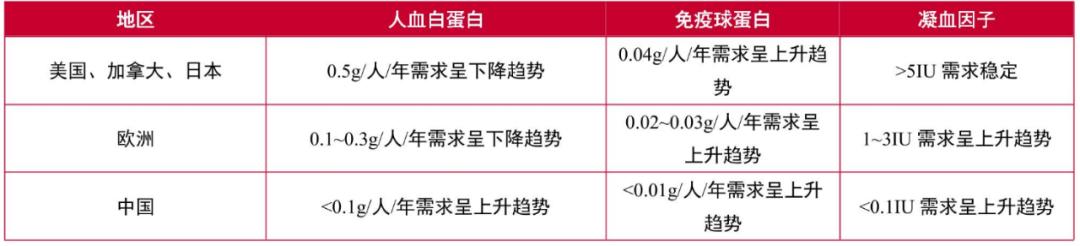
Core Viewpoint - The Chinese blood products industry is undergoing significant consolidation, with major players engaging in aggressive mergers and acquisitions to capture plasma resources, leading to the emergence of potential super giants in the sector [1][5]. Industry Landscape - The blood products industry in China is characterized by a "four-way" competitive landscape, dominated by four major groups: China National Pharmaceutical Group (Sinopharm), Haier Group, China Resources, and Hualan Biological Engineering [2][4]. - The industry has transitioned into a stock competition era since 2001, with new entrants needing to acquire existing licensed companies due to a moratorium on new licenses [2][3]. Mergers and Acquisitions - Significant acquisitions include China Resources' acquisition of Boya Biological for 4.8 billion yuan, Haier's 12.5 billion yuan acquisition of Shanghai Laishi, and Sinopharm's 4.5 billion yuan acquisition of Pilin Biological [1][2]. - The consolidation trend has led to a sharp increase in market concentration, with the top five companies' market share rising from under 50% in 2019 to over 70% by 2024 [4]. Plasma Collection and Utilization - Sinopharm's network includes 154 plasma collection stations, accounting for nearly 40% of the national total, with a collection volume of over 4,000 tons by mid-2025 [3]. - The cost structure of blood products heavily relies on raw plasma, which constitutes over 60% of total costs, making scale efficiency crucial for profitability [5][6]. Market Demand and Supply Gap - The domestic blood products market surpassed 60 billion yuan in 2023, with a demand gap of 4,000 tons, highlighting the need for leading companies to enhance their supply capabilities through technological upgrades [5][6]. - China's per capita consumption of blood products is significantly lower than that of developed countries, indicating a structural supply-demand imbalance [7][8]. Technological Advancements - Companies are shifting from a resource-driven model to a dual strategy of resource acquisition and research and development to overcome technological barriers and meet high-value product demands [9][10]. - Sinopharm and Hualan Biological are focusing on developing high-purity albumin and advanced coagulation factors, with significant investments in R&D to support these initiatives [10][11]. Future Outlook - The ongoing consolidation and technological advancements suggest that the Chinese blood products industry is on the verge of producing a super giant capable of competing globally [5][11]. - The combination of policy support, resource acquisition, and technological innovation is expected to drive the industry towards a more competitive and innovative future [10][11].





价值投资之如何利用市盈率买股票
雪球· 2025-04-23 06:14
市盈率的第三种情况是寡头垄断型 、 低增长 、 成熟工业制造业的市盈率 , 这种市盈率都是比较 低的 , 因为它未来利润增长缓慢 , 已经到了成熟期 , 所以可以把它当做一种债券或者分红股来 投资 。 最典型的就是格力电器 , 格力电器早年的时候 , 它的行业市占率很低 , 比如说格力电 器从 2000 年到 2005 年 , 它的市值一直不涨 , 一直是 50 亿的市值 , 当时格力电器有将近 200 亿的营收 , 它的净利率很低 , 只有 2% 、 3% , 那 200 亿的营收呢 , 只有 5 个亿的利润 , 5 亿利润 , 50 亿市值是当年估值最低点 。 格力电器从 2005 年开始之后 , 一系列的改革措 施 , 降本增效 , 提高净利率 , 盈利能力 、 毛利率都极大增加 , 导致格力电器的利润从 4 个 亿涨到今天的 400 多亿 , 涨了 100 倍 , 市值也涨了 100 倍 , 由 50 亿涨到 4000 多亿 。 格 力电器最好的投资机会应该是 2005 年前后 , 当时行业市占率比较低的时候 , 投资到现在 , 格 力电器的空调占到中国的一半左右 , 已经进入了寡头垄断的一个格局 , ...