
广义相对论

Search documents
宇宙中有黑洞,还有白洞吗?(唠“科”)
Ren Min Wang· 2025-10-10 22:11
Group 1 - The article discusses the theoretical concept of white holes, which are considered the opposite of black holes, expelling matter and energy instead of absorbing them [2][3]. - Black holes were once doubted in their existence until observational evidence, such as the detection of a black hole in the Cygnus X-1 system in 1971, confirmed their presence [2][3]. - The mathematical relationship between black holes and white holes suggests that they share the same properties, with the only difference being the direction of time [2][3]. Group 2 - There is currently no observational evidence supporting the existence of white holes, and some scientists argue that there is no reasonable mechanism for their formation [4]. - Some theories propose that white holes could explain certain cosmic phenomena, such as the energy output of quasars or even the origin of the universe, but these ideas lack observational support [4]. - A new hypothesis suggests that black holes could transform into white holes through a process of quantum rebound when matter is compressed to its limits, potentially allowing every black hole in the universe to become a white hole in the future [5].
向祖国报告丨中国空间站全面建成超1000天 “太空母港”引航未来
Yang Guang Wang· 2025-10-01 11:59
Core Insights - The article highlights the significant achievements of China's space program, particularly the operation of the Chinese space station, which has been in stable orbit for over 1,000 days, marking a new era in space exploration for China [1][3][11] Group 1: Achievements of the Chinese Space Station - The Chinese space station, referred to as a "space mother port," has successfully completed its construction and is now operational, showcasing China's advancements in space technology [5][6] - The station's construction involved 11 key launches over 19 months, demonstrating China's capability in executing complex space missions [6][10] - The space station's operational system integrates "heaven, earth, and digital" components, enhancing its stability and operational efficiency [7][8] Group 2: Scientific Research and Experiments - Researchers are conducting experiments using cold atom interferometry in microgravity to test the equivalence principle, which is fundamental to understanding gravity and could lead to breakthroughs in physics [10] - The space station has also successfully cultivated crops in space, showcasing its potential for long-term human habitation and agricultural research in microgravity [10][11] Group 3: International Collaboration - The Chinese space station is open to international cooperation, having invited 17 countries, including Japan and India, to participate in its first batch of experiments, thus expanding China's "space friendship" [10][11] - The inclusion of astronauts from other countries, such as Pakistan, exemplifies China's commitment to fostering global partnerships in space exploration [10]
最清晰的引力波信号,证实了霍金的著名定理 | 红杉爱科学
红杉汇· 2025-09-29 00:03
Core Viewpoint - The article discusses the significant advancements in gravitational wave astronomy, particularly focusing on the recent detection of gravitational wave event GW250114, which confirms key theories about black holes and their properties [4][7][21]. Summary by Sections Gravitational Wave Detection - The event GW250114, detected on January 14, 2025, is similar to the first gravitational wave event GW150914 detected in 2015, both originating from the merger of black holes approximately 1.3 billion light-years away [4][7]. - The detection technology has improved significantly, allowing for clearer signals; GW250114's signal is over three times clearer than that of GW150914, with a signal-to-noise ratio of 80 [7]. Characteristics of Black Holes - The merging black holes in GW250114 have masses between 30 to 40 times that of the Sun, and the event provides insights into the nature of Kerr black holes, which are defined by mass and spin [9][12]. - The study identified at least two distinct frequencies of gravitational waves emitted during the merger, aligning with theoretical predictions for Kerr black holes [12][14]. Hawking's Area Theorem - The detection of gravitational waves from black hole mergers allows for testing Hawking's area theorem, which states that the total surface area of black holes cannot decrease over time [16][18]. - The analysis of the merger's gravitational wave signals indicated that the final black hole's surface area increased from approximately 240,000 square kilometers to about 400,000 square kilometers, confirming Hawking's prediction of an area increase of about 65% [18][20]. - This finding marks the second verification of the area theorem, with the latest results achieving a confidence level of 99.999%, significantly higher than the previous verification in 2021 [20]. Future of Gravitational Wave Astronomy - The advancements in detection technology and the clarity of signals suggest that the era of gravitational wave astronomy is just beginning, with many exciting discoveries anticipated in the future [21].

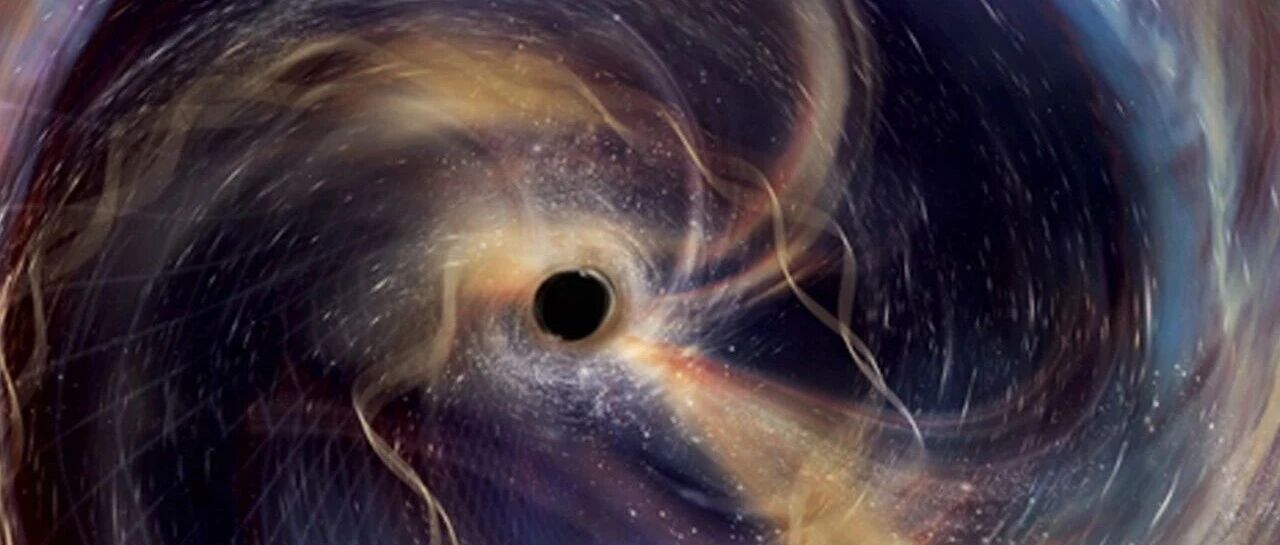
在解构中重建,在错误中涅槃
Hua Xia Shi Bao· 2025-09-19 07:56
Core Insights - The article emphasizes that mistakes are an integral part of scientific progress, challenging the notion that errors should be avoided at all costs [2][3] - It highlights that scientific advancement occurs not through the accumulation of correct observations but through the refutation of existing theories and the proposal of new ones [3][4] Group 1: Importance of Mistakes in Science - The book "Why Greatness Needs Mistakes" illustrates that errors are common in scientific endeavors and are essential for innovation [2][4] - Examples from genetics and physics demonstrate how mistakes have led to significant advancements, such as Einstein's cosmological constant, which later contributed to the understanding of dark energy [3][4] - The article discusses the case of Hoyle's steady state universe model, which, despite being challenged, led to important insights regarding the creation of heavy elements in stars [3][4] Group 2: Distinction Between Science and Management - The article notes that many real-world problems are engineering issues rather than scientific ones, requiring a different approach to decision-making [4][5] - It points out that the cultural belief in China that scholars should take on management roles can lead to mismatches in leadership, as scientific thinking differs from management thinking [4][5] - The experience of a respected researcher who struggled in a management role illustrates the challenges faced when scientists transition to administrative positions [5] Group 3: The Nature of Scientific Inquiry - The article asserts that science is a methodology rather than an absolute truth, emphasizing the need for openness and adaptability in scientific inquiry [5][6] - It argues that the belief in the sanctity of science is a misunderstanding of its spirit, which should embrace questioning and the acceptance of new evidence [5][6]

引力波探测器迎来技术升级战
Ke Ji Ri Bao· 2025-09-18 23:55
Core Insights - The detection of gravitational waves by LIGO has opened a new era in gravitational wave astronomy, confirming over a hundred events and validating Stephen Hawking's black hole theory [1][2] - Next-generation detectors like CE, ET, and LISA are in development, promising unprecedented scientific breakthroughs [2][3] Next-Generation Detectors - CE, with a 40 km arm length, aims to detect 100,000 black hole merger events annually, covering the entire history of gravitational wave sources [2] - ET, a European initiative, will extend its frequency range to 1 Hz, allowing earlier detection of black hole collisions and larger mass mergers [2] - LISA, a space-based project, will consist of three satellites forming a triangle of 2.5 million km, targeting low-frequency gravitational waves [2] Technological Innovations - Next-generation detectors incorporate advanced technologies to enhance detection capabilities, such as longer arm lengths for improved sensitivity [3] - Techniques like advanced mirror coatings and low-temperature cooling significantly reduce thermal noise, enhancing detection in the mid-frequency range [3] - Quantum squeezing technology and AI systems are being utilized to suppress noise and improve measurement precision [3] Scientific Potential and Challenges - These detectors hold the potential to explore early universe phenomena, test fundamental physics theories, and advance multi-messenger astronomy [4][5] - They will provide insights into black hole formation, neutron star mergers, and cosmic expansion measurements [4] - However, challenges include noise suppression, precision engineering, and significant funding requirements for projects like ET and LISA [6]
三位科学家获得2025世界顶尖科学家协会奖
Xin Hua She· 2025-09-11 02:32
Core Points - The 2025 World Top Scientists Association Award winners were announced in Shanghai, recognizing significant contributions in life sciences, medicine, and intelligent science or mathematics [1] Group 1: Life Sciences or Medicine Award - The "Life Sciences or Medicine Award" was awarded to Scott D. Emr from Cornell University and Wesley I. Sundquist from the University of Utah for their groundbreaking research on receptor membrane protein transport and degradation mechanisms, which are closely related to viral budding, infection processes, and AIDS drug interventions [1] Group 2: Intelligent Science or Mathematics Award - The "Intelligent Science or Mathematics Award" was awarded to Richard Schoen from Stanford University for his pioneering work in geometric analysis and differential geometry, including foundational achievements in conformal partial differential equations, minimal surfaces, general relativity, harmonic mappings, and the mountain pass problem [1] Group 3: Award Details - The World Top Scientists Association Award was established in 2021 in Shanghai, with permanent funding support from Sequoia China, and includes two individual awards: "Intelligent Science or Mathematics Award" and "Life Sciences or Medicine Award" [1] - Each individual award has a prize amount of 10 million RMB, and up to four individuals can share the award [1]
26岁陶中恺教授,加盟法国数学象牙塔
3 6 Ke· 2025-08-13 09:13
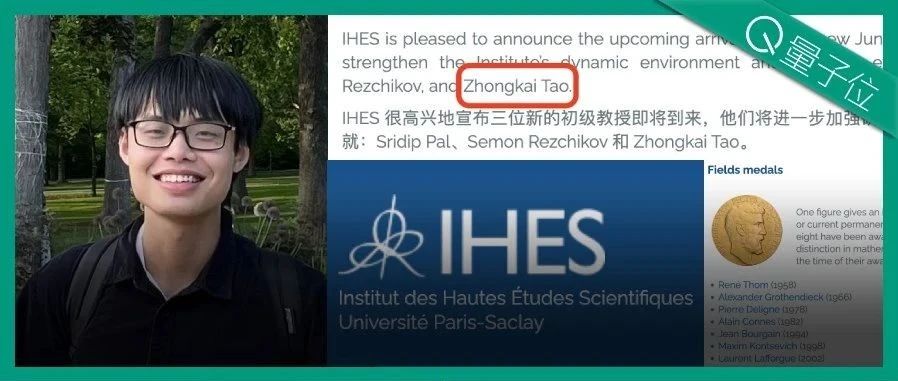
Core Points - The article highlights the achievements of Tao Zhongkai, a 26-year-old Chinese scholar who has recently been appointed as a junior professor at the Institut des Hautes Études Scientifiques (IHES) in France, a prestigious institution in the field of mathematics [2][5][23] - Tao has an impressive academic background, having entered Xi'an Jiaotong University at the age of 15 and achieving outstanding grades, including 16 courses with a perfect score and maintaining a GPA of 96.94 during his undergraduate studies [4][7][10] - His research interests include spectral theory, microlocal analysis, general relativity, condensed matter physics, and dynamical systems, showcasing a strong interdisciplinary approach [4][7][15][18] Academic Achievements - Tao has received numerous awards in national and international mathematics competitions, including a fourth-place finish in the National College Student Mathematics Competition and a bronze award in the Qiu Chengdong Mathematics Competition [8][10] - During his time at UC Berkeley, he excelled in graduate courses, receiving A+ grades, including a rare A+ in algebraic geometry, which was the first of its kind from the professor [10][11] - He has published several papers on topics such as partial differential equations and spectral theory, contributing to significant advancements in the understanding of complex mathematical concepts [14][15][18] IHES Overview - The IHES is known for its high-caliber faculty, with 8 out of 13 permanent professors being recipients of the Fields Medal, the highest award in mathematics [3][23][26] - The institution focuses on cutting-edge research in mathematics and theoretical physics, similar to the Princeton Institute for Advanced Study [23] - Tao's appointment adds to the growing roster of talented mathematicians at IHES, which includes other notable scholars like Wang Hong and Wang Yilin [28][31][34]

26岁陶中恺教授,加盟法国数学象牙塔
量子位· 2025-08-13 04:17
Core Viewpoint - The article highlights the remarkable achievements of Tao Zhongkai, a 26-year-old Chinese scholar who has recently been appointed as a junior professor at the Institut des Hautes Études Scientifiques (IHES) in France, emphasizing his academic excellence and contributions to mathematics and theoretical physics [5][7][32]. Group 1: Academic Achievements - Tao Zhongkai entered the Xi'an Jiaotong University (XJTU) youth class at the age of 15, achieving outstanding academic results, including 16 courses with a perfect score of 100 and maintaining an average score of 96.94 during his first three years [2][15]. - During his exchange program at UC Berkeley, he excelled in three graduate courses, receiving two A+ grades, including a rare A+ in algebraic geometry, awarded by the professor for the first time [3][20]. - He has won multiple national and international mathematics competition awards, including a fourth place in the National College Student Mathematics Competition and a bronze award in the Qiu Chengdong University Mathematics Competition [18][19]. Group 2: Research Focus - Tao's research interests include spectral theory, micro-local analysis, general relativity, condensed matter physics, and problems arising from hyperbolic dynamical systems [10][11][28]. - His recent work involves significant contributions to the spectral analysis of periodic/quasiperiodic Hamiltonian systems and the mathematical understanding of new electronic states in two-dimensional materials [29][31]. Group 3: IHES and Its Significance - The IHES is renowned for its high-caliber faculty, with 8 out of 13 permanent professors being recipients of the Fields Medal, the highest award in mathematics [8][42]. - The institute focuses on cutting-edge research in mathematics and theoretical physics, attracting world-class mathematicians and physicists [38][39]. - Tao's appointment at IHES is seen as a significant addition to the institute's already prestigious lineup, which includes other notable scholars [57].
回溯物理学统一之路,张朝阳对话物理学家徐一鸿
Jing Ji Wang· 2025-07-21 07:01
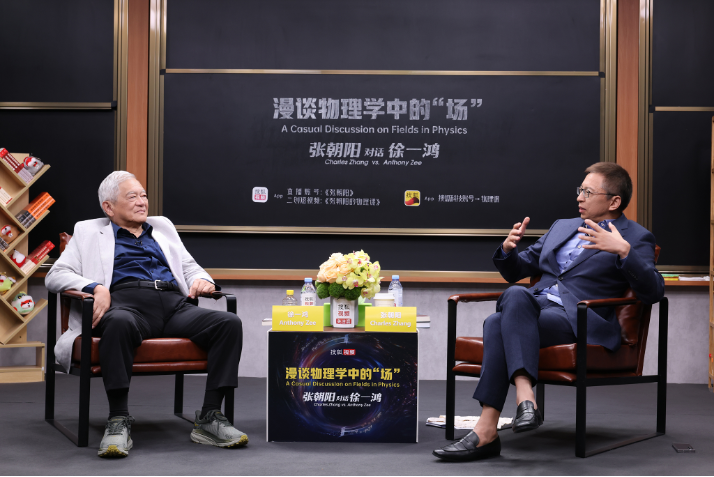
Core Viewpoint - The discussion between Zhang Chaoyang and Xu Yihong highlights the historical development and unification of physics theories, emphasizing the importance of curiosity and creativity in advancing the field [1][3]. Group 1: Historical Milestones in Physics - 2025 marks significant anniversaries for key physics theories, including the 120th anniversary of special relativity and the 110th anniversary of general relativity, indicating major advancements in human understanding of nature [3]. - Newton unified the laws of mechanics for celestial and terrestrial bodies, while Maxwell completed the classical unification of electricity and magnetism [3]. - Einstein's contributions through special and general relativity revealed profound connections between spacetime and gravity, leading to a deeper understanding of the universe [3]. Group 2: Quantum Mechanics and Field Theory - Quantum mechanics, through Schrödinger's wave equation and Heisenberg's matrix mechanics, established a foundational framework for modern physics, culminating in the development of quantum field theory [4]. - Quantum field theory is recognized as one of the most powerful and successful theories in human history, accurately calculating atomic spectra and the electron magnetic moment [4]. Group 3: The Role of Serendipity in Theoretical Development - Important theoretical advancements often stem from existing theories that may not receive immediate attention, as illustrated by Maxwell's equations hinting at Lorentz symmetry [6][8]. - The development of new theories requires both intellectual insight and a degree of luck, as demonstrated by Einstein's timely corrections to his predictions regarding light bending [8]. Group 4: The Future of Physics and AI - Current AI capabilities are limited to processing vast amounts of data and cannot replicate human intuition in exploring physics, which remains reliant on human creativity and thought [9].
宇宙史上最大“黑洞撞黑洞”,合并诞生超太阳265倍质量新黑洞
news flash· 2025-07-20 03:49
Core Insights - The LIGO observatory has detected a significant event involving the merger of supermassive black holes, designated GW231123, occurring 10 billion light-years away, resulting in a black hole with a mass 265 times that of the Sun [1] - This event sets a new record in gravitational wave observations, with the merger's gravitational wave signal lasting only 0.1 seconds but containing substantial information [1] - The two original black holes had masses of 103 and 137 times that of the Sun, and the newly formed black hole spins at a rate 400,000 times that of Earth's rotation, approaching the theoretical limits of general relativity [1] - This discovery may represent the first clear observation of "second-generation black holes," potentially transforming the understanding of black hole formation and evolution [1] - Notably, both original black holes fell within the "mass gap" of 60-130 solar masses, a theoretical region previously considered forbidden [1]