开放式创新

Search documents
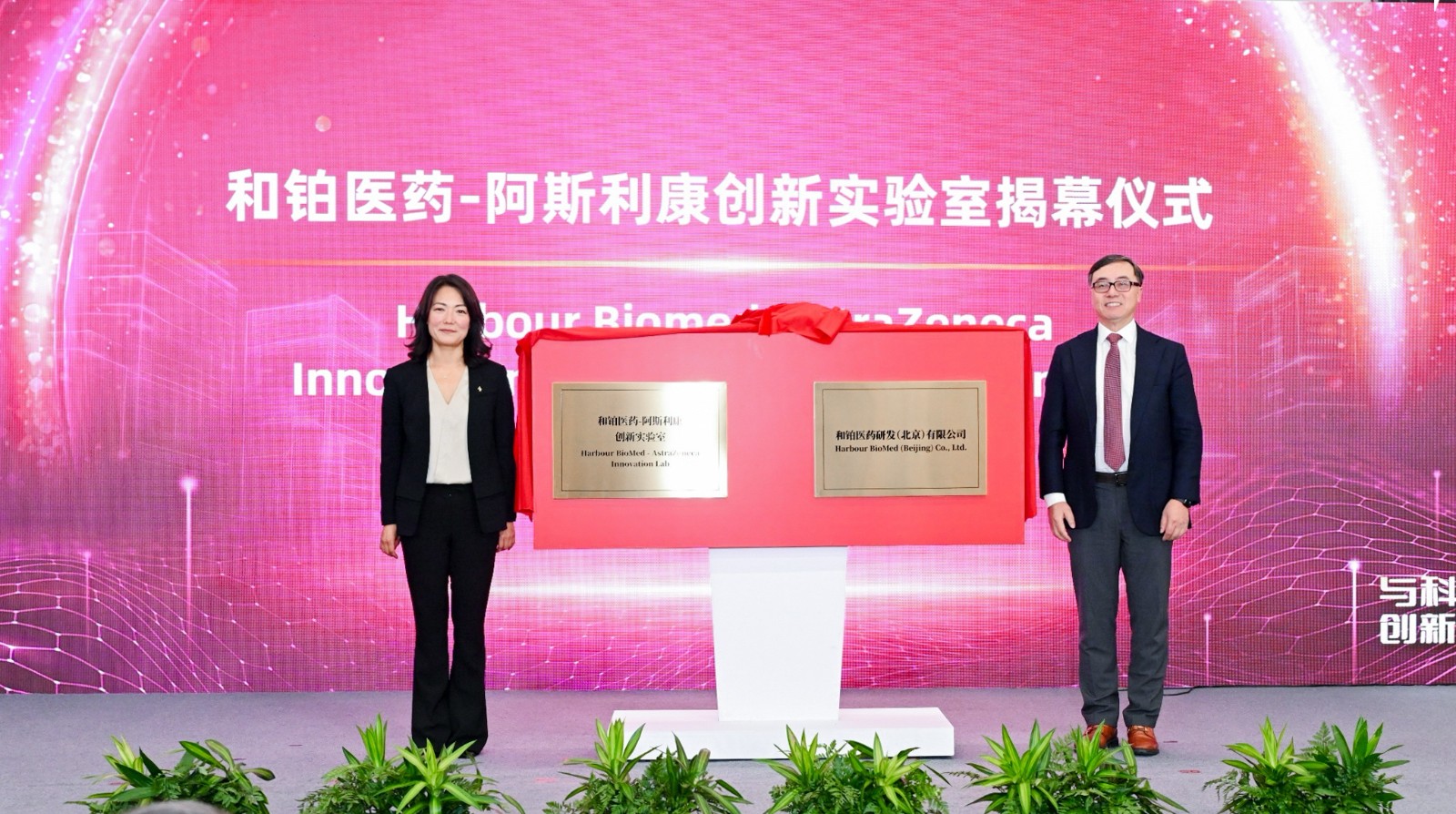
和铂医药-阿斯利康北京创新实验室揭牌 新一代抗体药物研发步入“加速通道”
Zheng Quan Shi Bao Wang· 2025-10-25 13:33
Core Insights - The establishment of the Harbour Mice-AstraZeneca Innovation Laboratory in Beijing marks a significant milestone in the collaboration between Harbour Mice and AstraZeneca, creating a diversified cooperation model that includes R&D collaboration, equity investment, and the establishment of an innovation center [1][3][5] Group 1: Collaboration and Innovation - The partnership aims to develop next-generation multi-specific antibody therapies targeting immune diseases, tumors, and other conditions, leveraging advanced technologies and resources [3][5] - The newly unveiled innovation laboratory integrates Harbour Mice's fully human antibody technology with AstraZeneca's expertise in disease biology, clinical development, and AI drug design, serving as a strategic hub for innovation [5][6] - The collaboration has evolved from a single licensing agreement to a comprehensive ecosystem-building approach, enhancing trust and cooperation between the two companies [7] Group 2: Technological Advancements - Harbour Mice's antibody technology platform, including the Harbour Mice and HCAb PLUS™ systems, addresses traditional challenges in antibody development, enabling the creation of fully human antibodies and expanding applications to bispecific antibodies, ADCs, CAR-T, RNA therapies, and AI [6][7] - The integration of AI and big data into the antibody development process is expected to significantly accelerate the research and development of new therapeutic antibodies [7][8] Group 3: Future Outlook - Harbour Mice plans to expand its pipeline from 5 to over 20 products, covering various therapeutic areas such as oncology, inflammation, metabolic diseases, and central nervous system disorders [8] - The company aims to strengthen its innovation capabilities and deepen platform empowerment, positioning itself as a key player in the global pharmaceutical innovation chain [8]


孙志洋会见新加坡国立大学校长陈永财
Guang Zhou Ri Bao· 2025-10-18 01:46
Core Viewpoint - Guangzhou is positioning itself as a significant international innovation center, leveraging its strong collaboration with the National University of Singapore to enhance technological innovation and talent development [1] Group 1: Government and Institutional Collaboration - The Mayor of Guangzhou, Sun Zhiyang, expressed gratitude to the National University of Singapore for its support in the city's economic and social development [1] - The collaboration is seen as a foundation for accelerating the construction of a modern industrial system referred to as "12218" [1] - The establishment of the Guangzhou Innovation Research Institute by the National University of Singapore has shown rapid development and significant results since its inception [1] Group 2: Innovation and Talent Development - Guangzhou aims to strengthen the transformation of scientific and technological achievements and enhance the cultivation of high-level talent [1] - The partnership is expected to deepen innovation cooperation between enterprises and universities in both regions, injecting new momentum into Guangzhou's modern industrial system [1] - The Mayor highlighted the importance of leveraging platforms like the Guangzhou National Laboratory and the Sino-Singapore Guangzhou Knowledge City for innovation [1]
数据中心赛道火了,材料巨头恩骅力欲试水
2 1 Shi Ji Jing Ji Bao Dao· 2025-09-29 10:19
Group 1 - The core strategy of the company is to implement "In China for China, In China for Asia" by establishing a local experience co-creation center in Shanghai [1] - The company has established technological barriers in key areas such as thermal management for electric vehicles and energy storage connectors, capitalizing on the growth of the new energy industry in China [1] - The company views the Chinese market as a strategic hub and plans to replicate its success in lightweight materials and green composite materials in emerging markets like Vietnam and India [1] Group 2 - The company has shifted its approach to customer collaboration from "specified demand" to "open innovation," reflecting the changing dynamics of the Chinese market [2] - Key research and development directions for the company include integration, miniaturization, lightweighting, and automation, emphasizing collaboration with customers [2] - The company is also focusing on the data center sector, recognizing the growing demand for materials in this area, particularly in relation to the energy storage supply chain [2]
共商产业升级新趋势新路径
Sou Hu Cai Jing· 2025-08-30 00:02
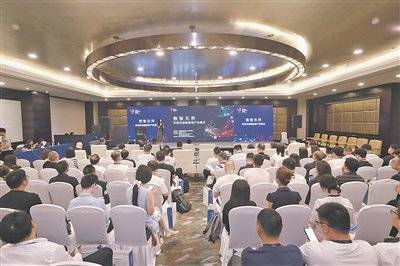
Group 1 - The event "Open Innovation Driving Industrial Leap" was held on August 29, 2025, attracting over 150 representatives from industry, academia, and capital institutions to discuss new trends and paths for industrial upgrading [2][3] - Keynote speeches highlighted the importance of open innovation in building urban innovation ecosystems, the role of multimodal technology in the future of artificial intelligence, and the impact of intelligent technology on public resource trading [2][3] - The event featured a roundtable discussion on topics such as the spiral evolution of the digital economy and innovation ecology, capital linkage, and international collaboration, aimed at promoting high-quality regional economic development [3] Group 2 - The event included a technology company roadshow where representatives from seven tech firms showcased innovations in artificial intelligence, new energy, and intelligent manufacturing, providing a platform for connecting innovation projects with capital, market, and industry chain resources [3]
从独立研发到开放合作,跨国医疗器械企业转变在华研发模式
Di Yi Cai Jing· 2025-08-23 07:15
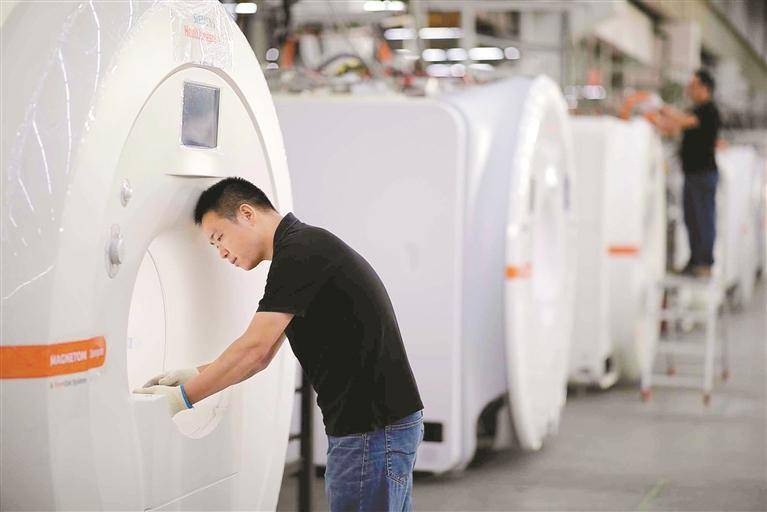
Core Viewpoint - The development of multinational medical device companies' R&D models in China has evolved through different stages, with a current focus on open innovation to better meet local market demands [1][4]. Group 1: Company Developments - Siemens Medical Shenzhen Base announced the launch of its open innovation platform, marking a significant milestone with the delivery of its 10,000th medical device [1]. - The Shenzhen base has become Siemens Medical's only global facility with a complete MRI value chain, localizing production from superconducting magnets to integrated systems [1]. - Siemens Medical has invested over 1 billion yuan in a new high-end medical equipment R&D and manufacturing base in Shenzhen, expected to be completed by 2027 [3]. Group 2: R&D Strategy - Siemens Medical has developed several pioneering MRI products in China, including the first 1.5T, 3T, and 7T superconducting MRIs, adapting to local market needs [3]. - The company emphasizes the importance of open innovation, integrating clinical needs into the development of MRI technology to enhance diagnostic capabilities [3]. - The establishment of over 300 core local suppliers over 23 years has contributed to Siemens Medical's R&D innovation in China [3]. Group 3: Industry Trends - The trend of open innovation in the medical device industry is emerging as a response to the increasing competition from local Chinese medical device companies [4]. - The shift from independent R&D to collaborative open innovation reflects the growing opportunities created by local innovations in China [4]. - The competitive landscape in the medical device sector is pushing multinational companies to enhance their R&D efficiency in China [4].

西门子医疗重金深耕鹏城
Sou Hu Cai Jing· 2025-08-22 23:29
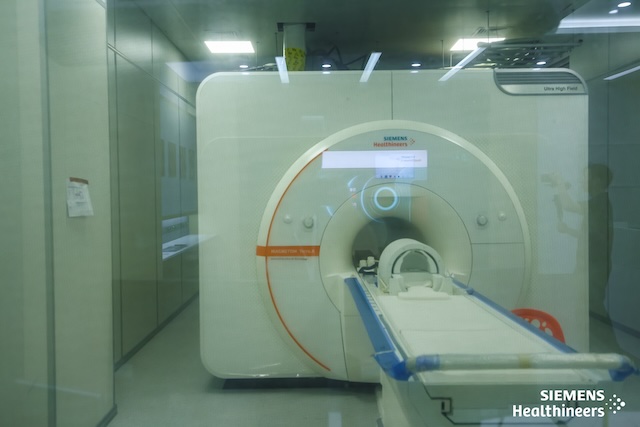
Group 1 - Siemens Medical (Shenzhen) has delivered its 10,000th medical device and launched an open innovation platform [2] - The Shenzhen base, established in 2002, is the only Siemens Medical facility globally with a complete MRI value chain, achieving 80% localization in equipment production [2][3] - The base has produced over 20 high-end medical devices, including 17 MRI machines and 3 angiography systems, and has a 65% export ratio since its inception [3] Group 2 - A new high-end medical equipment R&D and manufacturing base with an investment of over 1 billion RMB is set to begin construction in January 2025, expected to be operational by 2027 [3] - The Shenzhen base is projected to account for over 90% of Guangdong's MRI export value and 70% of the national total in 2024, exporting to countries like Japan and Australia [3] - The base has nurtured over 300 local suppliers, with more than 40% becoming specialized small giants or national high-tech enterprises [3] Group 3 - The newly launched open innovation platform will focus on MRI and cutting-edge clinical treatment technologies, integrating global innovation resources to accelerate technological advancements in high-end medical devices [4] - The platform features advanced systems such as the 7T MRI MAGNETOM Terra.X and the Artis pheno Master, supporting seamless integration with third-party AI algorithms for intelligent medical imaging [4] - The initiative aims to foster a collaborative innovation ecosystem involving industry, academia, and healthcare to enhance the quality of China's high-end medical equipment industry [4]
4年赋能中小科技企业超6600家,浦东这个首创计划再升级
Di Yi Cai Jing· 2025-08-21 02:02
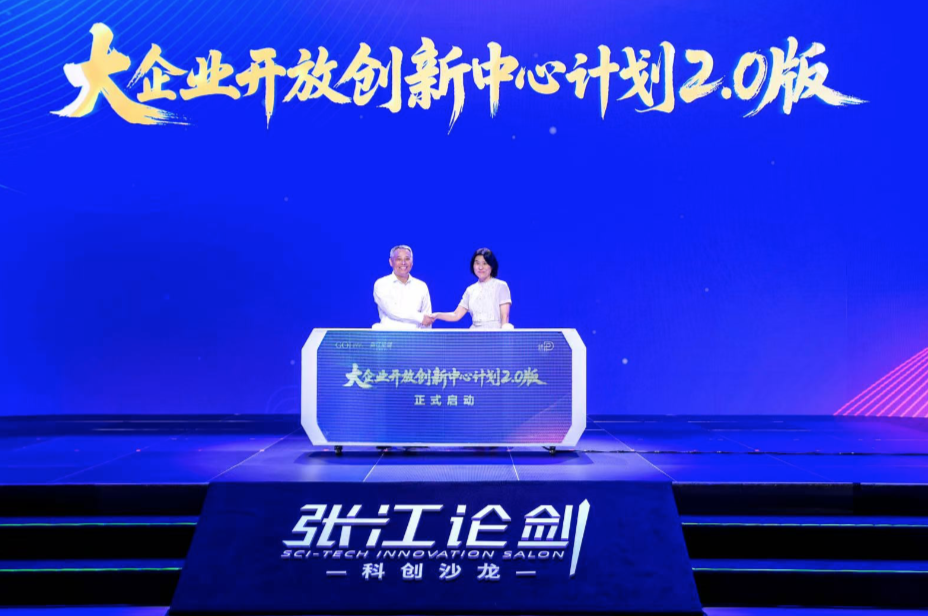
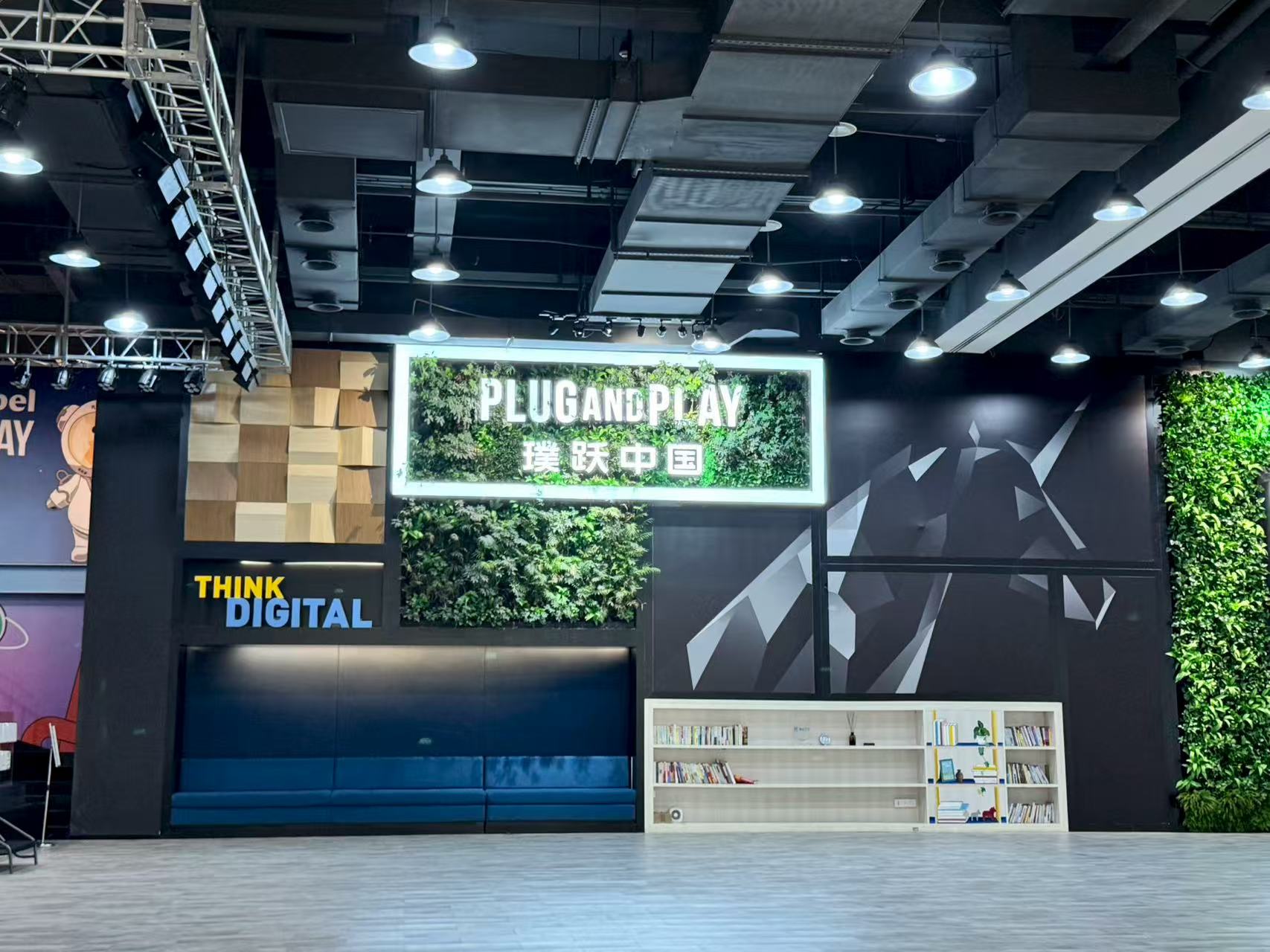
Core Insights - The GOI Plan 2.0, launched in Pudong, aims to enhance collaboration between large enterprises and SMEs, marking a new phase in open innovation [1][3] - The initiative has been recognized as a "best practice case" by the Ministry of Commerce, with over 107 GOI centers established across 12 countries and 750+ tech companies supported since its inception in 2021 [1][3] Group 1: GOI Plan 2.0 Highlights - The new version of the GOI Plan emphasizes three interconnected systems: element circulation, ecological evolution, and institutional innovation [3] - It introduces "four major empowerments" in element circulation, focusing on technology, incubation, business, and investment [3] - The plan encourages large enterprises to participate in the Pudong Natural Science Fund and supports the establishment of high-level platforms for technology transfer and application [3][4] Group 2: Policy Framework - The policy framework of GOI Plan 2.0 targets five areas: incubation, technology, industry, finance, and talent, to foster collaboration between large and small enterprises [4] - Pudong aims to strengthen open cooperation in basic research, encouraging large companies to propose challenges while universities and research institutions provide solutions [4] - Special funds are allocated to support the development of key industries such as integrated circuits, biomedicine, artificial intelligence, and high-end equipment [4] Group 3: Talent Development - The GOI enterprises are included in a priority support list to attract strategic scientists and leading technology talents [5] - The "Youth Innovation Fifteen Measures" policy offers support for young talents in housing and entrepreneurship, with up to 1 million yuan in annual subsidies for high-growth projects [5] Group 4: Open Innovation Ecosystem - The GOI initiative has created an open innovation ecosystem through collaboration with large enterprises, industry chain synergy, and global resource integration [6] - Companies like Plug and Play China have successfully connected large enterprises with startups, resulting in investments in over 100 startups, including three unicorns valued over 1 billion dollars [6] Group 5: Case Studies - The collaboration between Siemens and local company Heihu Technology exemplifies successful open innovation, where both parties leverage each other's strengths for market expansion [6] - Various GOI representatives have announced key demands and quality platform functions to accelerate the growth of SMEs [6]
帮科创企业走出去、引进来 上海打造开放式创新枢纽有何优势|上海高质量孵化器调研
Di Yi Cai Jing· 2025-08-18 13:46
Group 1 - The selection of startups is a rigorous process, with only 10 to 15 out of over 1700 companies being invested in after thorough evaluation [1] - A complete innovation ecosystem requires active entrepreneurs and a strong industrial market to drive growth [1] - In the first five months of this year, 12 high-quality incubators in Shanghai conducted over 100 activities, attracting nearly 1500 large enterprises and startups, with around 10,000 participants [1] Group 2 - Open innovation has become a global consensus, with a significant increase in participation from state-owned enterprises and large private companies since 2004 [2] - The collaboration between large companies and startups is challenging due to differing focuses, but mutual understanding can lead to a win-win situation [2] - Successful innovation ecosystems require large enterprises to recognize the flexibility of startups and startups to understand the efficiency needs of large companies [2] Group 3 - Incubators serve as a bridge between large companies and startups, addressing the high failure rate of startups, which exceeds 90% in early funding rounds [5] - Siemens' collaboration with local company Heihu Technology exemplifies successful partnerships, where both parties benefit from shared resources and market access [5] Group 4 - Shanghai's innovation and entrepreneurship atmosphere has strengthened since the implementation of the high-quality incubator cultivation plan [6] - The "Innovation in Shanghai" competition has attracted over 70,000 tech companies since its inception, with 1,700 receiving approximately 2 billion yuan in funding [7] - The competition has evolved to focus on early-stage, small, and hard technology innovation teams, enhancing resource concentration and internationalization [7][8] Group 5 - The WeStart Global Venture Capital Conference aims to connect international projects with capital, attracting nearly 30 multinational tech companies to China [8][9] - China offers significant advantages for startups, including a 40% to 50% reduction in production and operational costs in sectors like medical AI [9] - The country remains a resilient market with a complete supply chain, making it an attractive location for global startups to establish operations [9]
帮科创企业走出去、引进来,上海打造开放式创新枢纽有何优势|上海高质量孵化器调研
Di Yi Cai Jing· 2025-08-18 12:51
Group 1 - Shanghai is enhancing its innovation ecosystem through a series of initiatives termed "Shanghai Opportunities," facilitating a dual-channel innovation approach of "going out" and "bringing in" [1] - In the first five months of this year, 12 high-quality incubators in Shanghai conducted over 100 activities, attracting nearly 1,500 large enterprises and startups, with around 10,000 participants and services provided to over 3,200 companies [1] - The collaboration between large enterprises and startups is essential for fostering innovation, with a focus on mutual understanding and leveraging each other's strengths [3][6] Group 2 - Open innovation has become a global trend since the early 2000s, with participation expanding from multinational corporations to state-owned and large private enterprises [2] - The failure rate for startups is over 90% during early financing rounds, highlighting the importance of effective incubation and resource allocation [6] - The "Chuang·Zai Shanghai" international innovation and entrepreneurship competition has attracted over 70,000 tech companies since its inception, with 1,700 high-quality firms receiving approximately 2 billion yuan in funding [8][9] Group 3 - The WeStart Global Venture Capital Conference aims to connect international innovation resources, with nearly 30 multinational tech companies entering China, focusing on China's advantages such as skilled engineers and cost efficiency [9][10] - The upcoming 2025 competition will introduce a high-level expert committee and a green channel for projects that have received significant investment, streamlining the process for startups to access government funding [9]
全球前十大药企研发青睐上海,大手笔扫货→
第一财经· 2025-07-22 03:07
Core Viewpoint - The article highlights the significant transformation in the perception of China's biotech innovation capabilities by multinational pharmaceutical companies, particularly Roche, which has increased its investment and collaboration in the Chinese market [1][2]. Group 1: Investment and R&D Expansion - Roche has established a strong presence in China through its innovation center and accelerator, investing nearly 300 million RMB and facilitating numerous early-stage research collaborations [5][12]. - Shanghai has become a hub for multinational pharmaceutical companies, with six of the top ten global firms setting up R&D centers or incubators in the city, reflecting a shift towards open innovation and collaboration with local firms [3][6]. Group 2: Strategic Collaborations and Acquisitions - Recent high-profile licensing deals, such as the one between Shanghai-based Innovent Biologics and Pfizer, highlight the growing trend of multinational companies acquiring innovative drug pipelines from local firms, with upfront payments reaching record amounts [12][13]. - The article notes that the number of licensing transactions in China has surged, with the country accounting for 42% of global licensing deals with upfront payments exceeding $50 million in early 2025 [14][15]. Group 3: Innovation Ecosystem in Shanghai - Shanghai's biopharmaceutical industry has evolved significantly, with industrial output exceeding 200 billion RMB, supported by a robust ecosystem of research institutions, hospitals, and government policies promoting innovation [17][18]. - The city has established a comprehensive innovation ecosystem, enhancing the entire industry chain from R&D to clinical applications, which has attracted significant foreign investment and collaboration [19][20].