强权政治

Search documents
民进党正亲手写下“卖台墓志铭”
Xin Lang Cai Jing· 2026-01-21 15:24
Group 1 - The article highlights the stark reality of Taiwan's economic situation, emphasizing that the Taiwanese government is sacrificing its semiconductor industry for hollow promises of support from the United States [2][3] - Taiwan has committed to a $500 billion investment in the U.S., with $250 billion backed by government guarantees and $250 billion from private capital, which is seen as merely an initial payment for future concessions [2] - The article criticizes the Taiwanese government's claim that TSMC will maintain 80% of its global production capacity by 2036, arguing that this is misleading given the planned relocation of significant production capabilities to the U.S. [2] Group 2 - The narrative suggests that Taiwan's fate is predetermined, with the U.S. willing to disregard the sovereignty of allies, raising concerns about Taiwan's reliance on military purchases and investments for protection [3] - The article warns that as Taiwan's semiconductor industry is depleted and young engineers leave, the social and economic foundations of Taiwan will deteriorate under political theatrics and false narratives [3] - It concludes that the current Taiwanese administration is writing a "tombstone" for Taiwan's future, portraying the loss of its semiconductor industry as a strategic victory, which is seen as a tragic reality [3]

突发特讯!直接摊牌,特朗普通告全球:谁不支持美国拿下格陵兰岛,我就给谁加税,引发全球关注
Sou Hu Cai Jing· 2026-01-17 07:50
Core Viewpoint - The article discusses the geopolitical implications of Trump's statement regarding Greenland, indicating a shift from traditional trade disputes to using tariffs as a tool for territorial expansion and geopolitical leverage [1][10]. Group 1: Geopolitical Context - Greenland is strategically important due to its resources and location, with the U.S. showing increasing interest in acquiring it, particularly under Trump's administration [3][10]. - Denmark and Greenland have firmly rejected the notion of selling the island, emphasizing the right of its people to determine their future [5][10]. Group 2: International Reactions - European countries have shown support for Denmark by increasing military presence near Greenland while also seeking dialogue with the U.S. to avoid a complete fallout [6][10]. - U.S. Congress members have taken steps to mitigate tensions with Denmark, indicating internal dissent regarding Trump's approach to foreign relations [7][10]. Group 3: Implications for International Relations - Trump's strategy of linking tariffs to territorial claims challenges the principles of national sovereignty and international order, raising concerns about the future of global alliances [10][13]. - The situation reflects a broader trend of unilateralism and power politics, which could undermine trust and cooperation among nations [10][11].


美国这是连演都不演了,宣布无限期控制委内瑞拉石油销售!
Sou Hu Cai Jing· 2026-01-16 08:12
Group 1 - The core viewpoint of the article highlights the strategic significance of the U.S. takeover of Venezuela, portraying it as a calculated move to reshape global energy and geopolitical dynamics [1] - The U.S. aims to reconstruct global energy pricing and trade rules by exerting military control over Venezuela's oil production and sales, seeking to create a U.S.-dominated oil supply enclave outside of OPEC [3] - This action represents a blatant disregard for international law and financial systems, as the U.S. bypasses the UN Security Council and uses domestic law to seize foreign assets and control sovereign funds [5] Group 2 - The U.S. actions signify an escalation of the Monroe Doctrine and a severe test of global order, sending a clear warning to resource-rich nations that any infringement on U.S. interests could lead to similar actions [7] - The potential consequences include smaller nations seeking to balance relations with major powers and deepening cooperation with non-Western countries, as well as the risk of regional arms races and conflicts [8] - The international community's response will be crucial in determining the future world order, with questions surrounding the ability of organizations like the EU, ASEAN, and the African Union to oppose unilateralism [10] Group 3 - The U.S. actions reflect its strategic anxiety in the face of a multipolar world, attempting to address 21st-century challenges with 19th-century methods, which may ultimately undermine its own hegemony [12]
美“军事夺岛”威胁持续,丹麦外交大臣访美:将与万斯和鲁比奥会谈
Huan Qiu Shi Bao· 2026-01-13 23:07
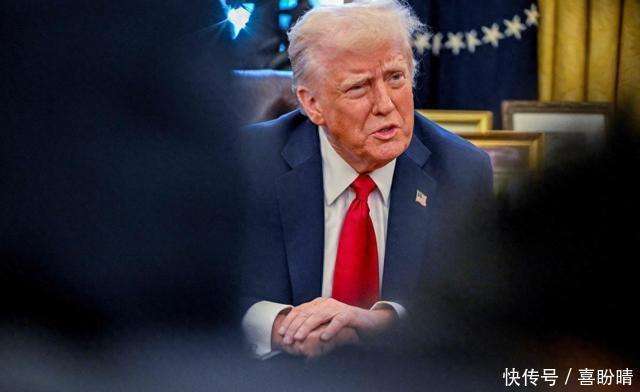
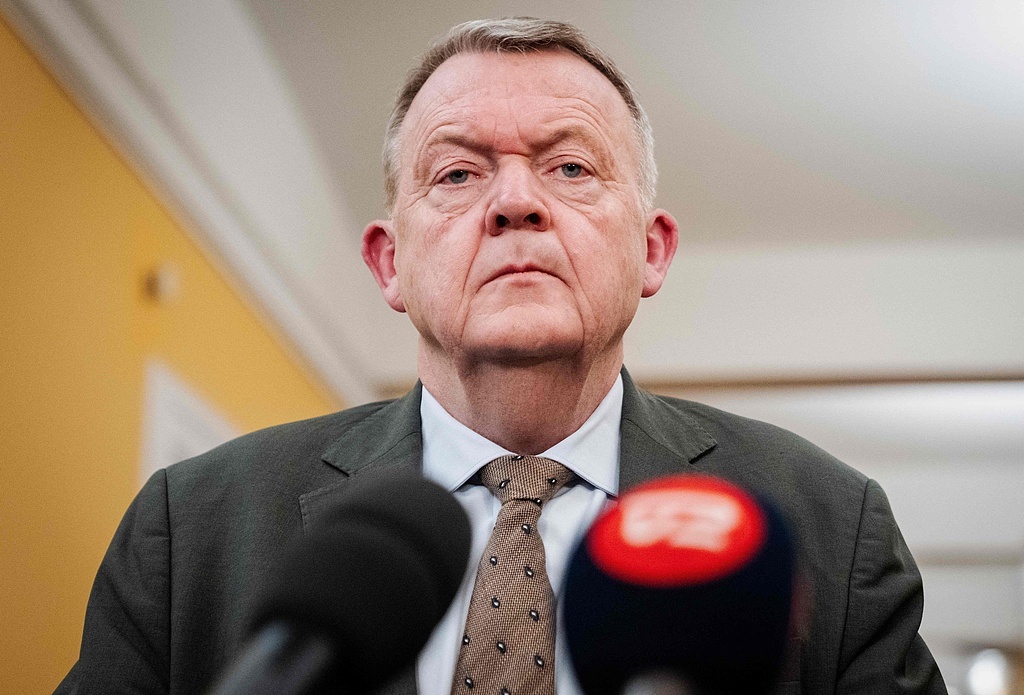
Core Viewpoint - The article highlights the escalating tensions between the United States and Denmark regarding Greenland, with EU officials warning that any military action by the U.S. could lead to severe consequences for NATO and European society [1][3]. Group 1: EU and NATO Response - EU defense officials, including senior official Kubilius, have publicly supported Danish Prime Minister Frederiksen's stance against U.S. military action in Greenland, indicating that such actions could lead to the end of NATO [1]. - EU diplomats believe that while the likelihood of U.S. military action is low, Trump's pressure could force Europe to enhance its military presence in the region [3]. - NATO Secretary General Stoltenberg stated that NATO is developing "next steps" to enhance Arctic security, with discussions among member states about potential new missions in the area still in early stages [3]. Group 2: Greenland's Position - The Greenland autonomous government has firmly stated that it will not accept any U.S. takeover of the island, emphasizing its commitment to NATO and collective defense interests [3]. - Greenland's government plans to collaborate with Denmark to strengthen defense capabilities within the NATO framework to counter any U.S. annexation attempts [3]. Group 3: Diplomatic Engagements - Denmark is actively engaging diplomatically, with Foreign Minister Rasmussen set to meet U.S. officials, including Vice President Pence and Secretary of State Rubio, to discuss the situation [4]. - A bipartisan U.S. congressional delegation is scheduled to visit Copenhagen later in the week, indicating ongoing diplomatic efforts regarding Greenland [4].
短评丨美国在破坏国际秩序歧途上“狂奔”
Xin Hua She· 2026-01-09 00:45
Group 1 - The core viewpoint of the articles highlights the systematic destruction of global governance by the United States through its withdrawal from 66 international organizations, including 31 UN entities, as a means to evade international obligations [1][2] - The U.S. withdrawal is characterized as an extreme form of self-interest, where the country seeks to dictate rules while avoiding the costs of compliance, reflecting a unilateral approach to international relations [1][2] - The actions taken by the U.S. are seen as a dangerous precedent in international relations, marking a shift towards a "jungle law" mentality, which contradicts the current trend towards multilateralism [2] Group 2 - The article argues that the U.S. attempts to prioritize its own interests through physical isolation or decoupling are unrealistic in the context of deepening economic globalization [2] - The aggressive "exit" strategy employed by the Trump administration is portrayed as a failed gamble that undermines the foundations of global governance [2] - The narrative suggests that the U.S. is experiencing deep-seated anxiety regarding its declining hegemony, as its actions are increasingly viewed as a farce that disregards international agreements and norms [2]
各国合作自主权不容侵犯
Jing Ji Ri Bao· 2026-01-08 21:43
Group 1 - The U.S. government has demanded that Venezuela sever economic ties with countries like China, Russia, Iran, and Cuba, insisting that Venezuela only cooperate with the U.S. in oil production [1] - This demand is seen as a blatant politicization of economic cooperation and weaponization of energy issues, violating international law and infringing on Venezuela's sovereignty [1] - The U.S. has a history of imposing unilateral sanctions and economic blockades on Venezuela, disrupting its international trade and limiting energy exports, which directly impacts local livelihoods and social stability [1] Group 2 - China's economic cooperation with Venezuela is based on principles of equality, mutual benefit, and legality, aimed at supporting local economic development without political conditions [2] - The U.S. attempts to cut off Venezuela's economic relations with China are viewed as efforts to maintain its hegemony and disrupt normal international trade order, harming the legitimate rights of other countries [2] - Historical evidence shows that external powers using sanctions and coercion to reshape other countries' economies lead to instability and poverty, emphasizing that international relations should not revert to a "survival of the fittest" mentality [2]
新华社评美国再退66个“群”:已成为现有国际秩序“失控的超级破坏者”,只想要制定规则的特权和收割世界的红利
Xin Lang Cai Jing· 2026-01-08 15:54
Core Viewpoint - The United States' decision to withdraw from 66 international organizations, including 31 UN entities, represents a systematic undermining of global governance structures, reflecting a unilateral approach to international relations [1][2] Group 1: Impact on Global Governance - The withdrawal is not merely a financial decision but a strategic move to evade international responsibilities while seeking to maintain the privilege of rule-making [1] - This action is characterized as extreme self-interest, treating international organizations as tools to be used when convenient and discarded otherwise [1] - The U.S. stance is described as "either follow my lead or be sidelined," indicating a blatant form of unilateralism in multilateral affairs [1] Group 2: Consequences of U.S. Actions - The U.S. is portrayed as a "super destructive force" in the current international order, attempting to revert to a "jungle law" scenario where might makes right [2] - The actions taken at the beginning of 2026 cast a shadow over the international landscape and set a dangerous precedent in the history of international relations [2] - The strongman politics exhibited by the U.S. contradicts the prevailing trend towards multilateralism and reveals deep-seated anxieties regarding its waning hegemony [2]
无名无理,无法无天,装都不装 | 新漫评
Zhong Guo Xin Wen Wang· 2026-01-08 05:52
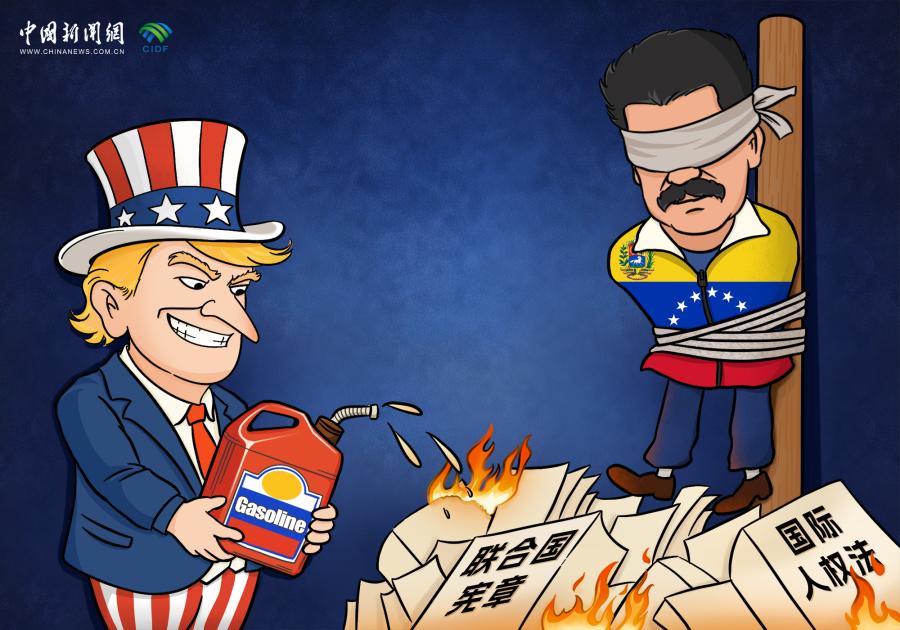
Core Viewpoint - The article criticizes the unilateral military action taken by the United States to forcibly control Venezuelan President Maduro and his wife, labeling it as a violation of international law and the principles of the United Nations Charter [3]. Group 1 - The U.S. military action against Venezuela is described as an act of arrogance and barbarism, undermining the post-war international order [3]. - The article emphasizes that such unilateral actions, without authorization from the United Nations Security Council, pose a threat to global peace and stability [3]. - It argues that the principles of international law and sovereignty should not be disregarded, and that history will condemn such hegemonic behavior [3].
新华时评:一场非法荒唐的“审判”
Xin Hua She· 2026-01-08 03:51
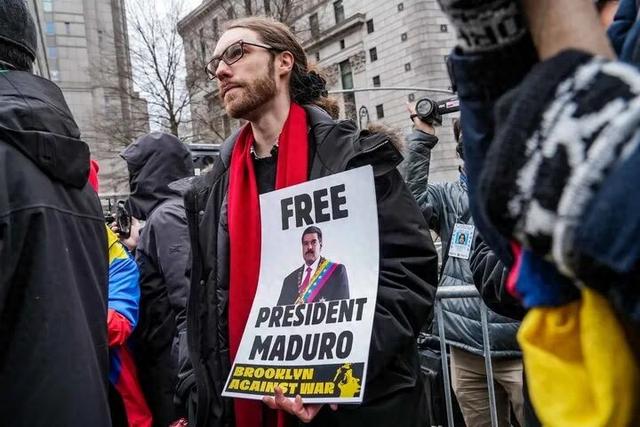
Core Viewpoint - The article criticizes the recent trial of Venezuelan President Maduro in a U.S. court as an act of "judicial hegemony" and a violation of international law, asserting that it represents a blatant display of power politics by the U.S. [1][2][3] Group 1: Legal and International Relations - The trial is deemed illegal under international law, which grants heads of state absolute immunity in foreign courts, regardless of U.S. recognition of Maduro as president [1] - The U.S. actions are characterized as a violation of the principles of sovereignty, non-interference, and peaceful resolution of international disputes as outlined in the UN Charter [2] - The U.S. is accused of prioritizing its domestic laws over international law, positioning itself as an "international judge" and undermining multilateralism [3] Group 2: U.S. Foreign Policy and Military Actions - The article highlights a history of U.S. military interventions, such as in Panama and Venezuela, as examples of its long-standing hegemonic behavior [3] - The U.S. is portrayed as relying on coercion, sanctions, and military actions to maintain its so-called leadership, which ultimately undermines its global respect [3] - The narrative suggests that the U.S. is acting recklessly and unlawfully, with its recent actions being the latest in a series of imperialistic endeavors [2][3]
国社评:美国以“家法帮规”践踏国际规则
Xin Lang Cai Jing· 2026-01-07 15:07
Core Viewpoint - The article discusses the absurdity of the trial of Venezuelan President Maduro in a U.S. court, highlighting it as an act of power politics rather than a legitimate judicial process [1][3]. Group 1: Legal and International Relations - The trial is deemed illegal under international law, which establishes the principle of sovereign equality, meaning one country's court has no jurisdiction over another sovereign state's government actions [3]. - International law grants Maduro absolute immunity in foreign courts, regardless of U.S. recognition of him as a head of state, making the trial a case of judicial hegemony [3]. - The U.S. actions are characterized as a violation of the United Nations Charter principles, including respect for sovereignty and non-interference in domestic affairs [3][4]. Group 2: U.S. Foreign Policy and Military Actions - The article criticizes the U.S. for using military force to intervene in other countries' affairs, labeling it as imperialistic and reckless behavior [4]. - Historical context is provided, noting that the U.S. has a long-standing pattern of infringing on other nations' sovereignty under the guise of law enforcement, exemplified by past military actions in Panama and Venezuela [4]. - The narrative suggests that a country relying on coercion and military might to maintain its so-called leadership cannot earn global respect [4].