数据隐私保护

Search documents
00后CEO率清华团队获得“DEMO GOD”大奖!新型密态计算为AI隐私护航、解锁数据“睡后收入”
创业邦· 2025-10-13 03:53
Core Viewpoint - The article discusses the emergence of Jinghua Misan, a company focused on privacy-preserving computing solutions, particularly in the context of AI and data security, highlighting its recent recognition and the potential market for its technology [3][5][22]. Group 1: Company Overview - Jinghua Misan, incubated at Tsinghua University, aims to address privacy concerns associated with cloud-based AI models by utilizing a secure computing engine that operates at acceptable costs [3][5]. - The company won the "DEMO GOD" award at the 2025 DEMO CHINA event, standing out among 126 tech companies [3][5]. Group 2: Technology and Solutions - Homomorphic encryption allows computations on encrypted data without decryption, maintaining data privacy throughout its lifecycle [7][9]. - Jinghua Misan's technology aims to reduce the performance loss typically associated with homomorphic encryption, making it viable for AI applications [9][12]. - The company is developing two main products: a homomorphic inference engine for AI models and a homomorphic training engine to protect data ownership during transactions [15][17]. Group 3: Market Demand and Challenges - There is a strong market demand for high-performance, practical homomorphic computing solutions, particularly in privacy-sensitive applications [8][11]. - Current solutions face challenges such as high computational costs and hardware dependencies, which limit their widespread adoption [9][12]. Group 4: Future Vision and Strategy - Jinghua Misan aims to focus on AI-related privacy solutions, believing that its technology can become a new consensus for secure data transactions and AI model usage [22]. - The company plans to launch its homomorphic inference and training engines by the end of this year and early next year, respectively [18].


SCRM管理系统客户互动渠道管理方法及流程深度解析
Sou Hu Cai Jing· 2025-10-10 05:21
Core Insights - The article emphasizes the importance of multi-channel interaction between businesses and customers in the digital marketing era, highlighting SCRM (Social Customer Relationship Management) systems as a key tool for automating and intelligentizing customer interactions [1] Group 1: Technical Architecture of SCRM Systems - The data collection layer of SCRM systems integrates all customer touchpoints, such as WeChat, Weibo, Douyin, and offline stores, enabling real-time capture of customer behavior data [3] - The data processing layer involves cleaning, analyzing, and tagging raw data, utilizing NLP technology to assess customer sentiment and RFM models to create comprehensive customer profiles [4] - The business application layer allows for automated marketing, intelligent customer service, and sales forecasting based on customer profiles [5][6][7] Group 2: Customer Interaction Process Design - The customer interaction process consists of four steps: channel integration and data cleaning, automated rule setting, personalized content pushing, and performance evaluation [9][10] - A hybrid service model is recommended to balance automation and human interaction, ensuring customer experience is not compromised [11] Group 3: Common Issues and Solutions in SCRM Implementation - Data silos can be addressed by selecting SCRM systems that support API integration and establishing a unified customer ID system [13] - Private traffic operations should avoid low engagement by segmenting customers based on RFM models and designing a comprehensive engagement strategy [13] - Compliance risks related to data privacy can be mitigated by implementing explicit consent features and regular compliance checks [13] Group 4: Optimization Strategies for SCRM Systems - Upgrading the technical architecture to support high-volume data queries is essential for efficiency [17] - Establishing cross-departmental collaboration mechanisms can enhance SCRM system adoption and effectiveness [17] - Continuous iteration based on feedback is crucial for optimizing system performance and user experience [17] Group 5: Industry Practices of SCRM Systems - In the retail sector, personalized recommendations through SCRM have led to a 20% increase in sales [20] - In the banking industry, customer segmentation using SCRM has improved customer satisfaction by 30% and increased sales of financial products by 18% [21] - B2B companies have accelerated deal closures by utilizing SCRM for customer feedback and support, resulting in a 25% increase in customer retention [21] Group 6: Future Trends of SCRM Systems - The future of SCRM systems is expected to be driven by advancements in AI and big data, focusing on smarter and more personalized customer interactions [23] - Companies that effectively utilize SCRM can achieve a 47% higher customer retention rate compared to their peers, emphasizing the need to break down data silos and foster cross-departmental collaboration [23]

欧盟法院刚刚维持欧美数据协议效力,特朗普阴影笼罩DPF合法性
3 6 Ke· 2025-09-04 09:27
Core Points - The EU General Court upheld the data transfer agreement between the EU and the US, rejecting a lawsuit by French MEP Philippe Latombe, who argued that the agreement did not fully respect EU data protection rules [1] - The court's ruling indicates that the US has ensured adequate protection for personal data transferred from the EU, which has been welcomed by US digital lobbying groups [1] - Privacy advocates expressed surprise at the court's decision, as they expected a procedural dismissal rather than a substantive validation of the agreement [1] Group 1: Legal Framework and Challenges - Since 1995, EU law prohibits the transfer of personal data outside the EU unless there is absolute necessity, requiring non-EU countries to provide "essentially equivalent" protection [2] - The EU Court has previously ruled that US laws do not provide "essentially equivalent" protection, yet the EU Commission approved the "Transatlantic Data Privacy Framework" (DPF) in July 2023, allowing EU companies to transfer data to US vendors despite existing surveillance laws [2][3] - The Privacy and Civil Liberties Oversight Board (PCLOB) is the only general oversight body in the US to ensure compliance with laws and commitments, but its effectiveness is questioned due to a lack of members [3] Group 2: Impact of the Trump Administration - The Trump administration has historically disregarded European concerns regarding data privacy, failing to support the PCLOB or the DPF's adequacy determination [4] - The administration's actions, including the dismissal of all three Democratic members of the PCLOB, have raised concerns about the board's ability to function effectively [5] - Trump's executive order aimed at ensuring accountability across federal agencies may undermine the Federal Trade Commission's ability to independently enforce DPF privacy principles [6] Group 3: Future Implications and Monitoring - The EU General Court's ruling does not preclude further challenges to the agreement, and MEP Latombe may appeal to the EU Court of Justice, which could have a different perspective [7] - If key elements relied upon by the EU are deemed ineffective, the EU may have to repeal the agreement, potentially leading to a situation similar to previous frameworks [7] - The US government's dual approach to cross-border data transfer is evident, as it takes extreme legal measures against TikTok while simultaneously protecting US companies from EU regulations [8]
一汽解放申请车辆运行工况联邦设计方法等相关专利,实现运行工况设计过程中对数据拥有者的数据隐私保护
Jin Rong Jie· 2025-08-23 02:24
Group 1 - The core point of the news is that FAW Jiefang Automotive Co., Ltd. has applied for a patent for a method and device related to vehicle operation condition design, which emphasizes data privacy protection during the design process [1] - The patent application was published under the number CN120524514A, with an application date of May 2025 [1] - The method involves obtaining vehicle operation parameters and merging data to determine a time series of operational parameters, which will be used as the design result for vehicle operation conditions [1] Group 2 - FAW Jiefang Automotive Co., Ltd. was established in 2002 and is located in Changchun City, primarily engaged in the automotive manufacturing industry [2] - The company has a registered capital of 1,080,301.25 million RMB and has invested in 23 enterprises [2] - FAW Jiefang has participated in 5,000 bidding projects and holds 5000 patent records along with 272 trademark records [2]

微算法科技(NASDAQ:MLGO)应用区块链联邦学习(BlockFL)架构,实现数据的安全传输
Zhong Guo Chan Ye Jing Ji Xin Xi Wang· 2025-07-31 02:53
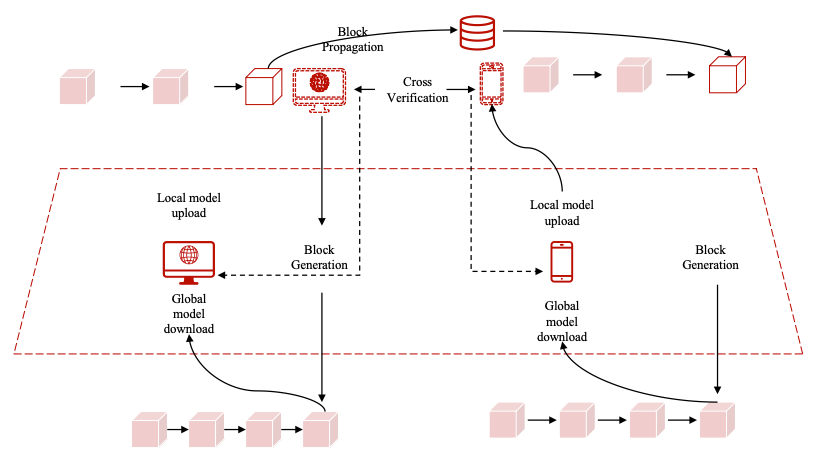
Core Viewpoint - The rapid development of big data and artificial intelligence has highlighted data security and privacy issues, with traditional data transmission methods posing significant risks. The introduction of blockchain technology offers new solutions, exemplified by MicroAlgorithm Technology's innovative BlockFL architecture, which ensures secure, efficient, and privacy-protecting data transmission [1][6]. Group 1: BlockFL Architecture - BlockFL architecture utilizes blockchain networks to achieve efficient data exchange and synchronization in federated learning, allowing devices to upload local model updates and download global model updates quickly and effectively [2]. - The decentralized nature and high concurrency of blockchain ensure that all devices receive the same global model updates, maintaining consistency and accuracy in model training [2]. Group 2: Process Overview - Initialization involves the system administrator creating an initial model and broadcasting it to all participating nodes while the blockchain records metadata of the federated learning activity [4]. - Each node trains the model on its local dataset without exposing original data, thus protecting data privacy [4]. - Nodes upload encrypted model parameters to the blockchain, where smart contracts validate their effectiveness and integrity, preventing malicious actions [4]. - Once verified, a central server or designated aggregation node extracts parameters from the blockchain, averages them, and generates a new version of the global model [4]. - The updated global model is then broadcasted to all nodes for the next training round, with the blockchain ensuring traceability of all operations [4]. - An incentive and penalty mechanism is integrated into BlockFL to encourage participation and quality data contribution, with smart contracts automatically executing rewards and penalties [4]. Group 3: Applications and Future Prospects - BlockFL architecture can be applied across various sectors, including healthcare, financial risk control, smart manufacturing, and smart cities, facilitating data collaboration while maintaining security and privacy [5]. - In healthcare, BlockFL enables hospitals to collaboratively train diagnostic models while protecting patient privacy; in finance, it allows institutions to identify fraud without sharing sensitive information; in smart manufacturing, it promotes collaboration between factories; and in smart cities, it supports inter-departmental cooperation without compromising sensitive data [5]. - The combination of blockchain and federated learning in BlockFL addresses traditional data transmission challenges, enhancing efficiency and accuracy in model training, positioning it as a significant technological support in data transmission and machine learning in the future [6].

OPPO携多项AI终端技术与应用成果亮相2025世界人工智能大会
Jing Ji Wang· 2025-07-29 07:44
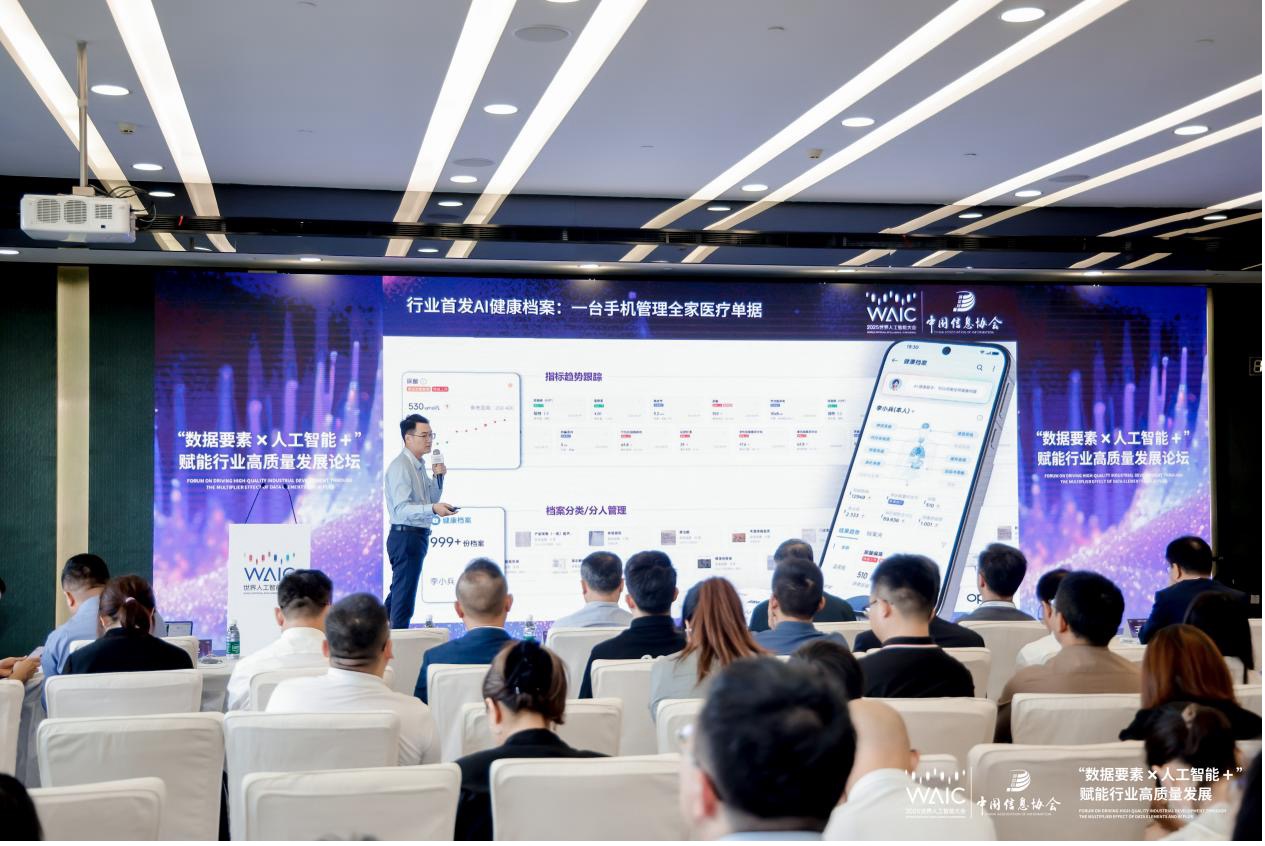
Group 1 - OPPO showcased multiple cutting-edge AI terminal technologies and applications at the 2025 World Artificial Intelligence Conference (WAIC 2025) aimed at enhancing user work, life, and health management [1] - OPPO's Vice President and head of the Health Lab, Zeng Zijing, announced the industry's first AI health record and the OPPO AI Health Manager, which creates a comprehensive service system for health management, shifting from "passive treatment" to "active prevention" [3] - The AI health management system is designed to provide personalized and intelligent health management experiences for users, emphasizing the importance of understanding health concerns through AI interpretation of health reports [3] Group 2 - At WAIC, OPPO's General Manager of the Smart Assistant Department, Wan Yulong, revealed a collaborative development of edge AI parallel decoding acceleration technology, achieving over 8 times decoding acceleration on the latest chip platform, with peak output speed exceeding 200 tokens per second for 3B models [5] - This breakthrough in edge AI computing power lays a solid foundation for the continuous evolution of OPPO's system-level AI capabilities, transitioning mobile phones from "efficiency tools" to "efficient and dedicated smart assistants" [5] - OPPO emphasizes a "high-efficiency & dedicated" AI value proposition, focusing on a "1+3" core scenario strategy to enhance user experiences in various aspects of life, learning, and work [5] Group 3 - With the rise of AI, user demand for personal data privacy protection has significantly increased, making security and trust key factors in choosing AI products [7] - OPPO's Technical Strategy Planning Director, Chen Xiaochun, highlighted the importance of privacy protection, integrating it into the entire product design process, ensuring that personal information is processed only with user consent [7] - Looking ahead, OPPO aims to continue exploring innovative applications of AI technology while strictly protecting user privacy, focusing on multi-modal perception, intelligent agent development, and personalized experiences for users [7]
Kroger(KR) - 2025 FY - Earnings Call Transcript
2025-06-26 16:00
Financial Data and Key Metrics Changes - The company reported a strong first quarter with significant identical sales growth driven by pharmacy, ecommerce, and fresh categories [34] - A dividend increase from $1.28 to $1.40 per year was approved, marking the 19th consecutive year of dividend increases [38] Business Line Data and Key Metrics Changes - The ecommerce segment experienced double-digit growth, indicating a successful strategy in online sales [54] - The company plans to complete 30 store projects in 2025, maintaining the same level as the previous year, with intentions to increase this number in 2026 and beyond [54] Market Data and Key Metrics Changes - The company lowered prices on over 2,000 additional products in the first quarter, aiming to make savings more visible to customers [52] - The competitive pricing environment remains rational, with a focus on keeping prices affordable to attract more customers [51] Company Strategy and Development Direction - The company is focusing on core retail business investments, including lower prices and extended store hours, funded by reducing corporate expenses [34] - A strategic reevaluation of non-core assets is underway to enhance focus on the primary business [33] Management's Comments on Operating Environment and Future Outlook - Management emphasized the need to adapt quickly to competition, particularly in ecommerce, to improve profitability and customer base [35] - The company is committed to investing in associates, having increased average store hourly pay by 38% over the past seven years [36] Other Important Information - The company has donated over 3.4 billion meals through its Zero Hunger, Zero Waste plan, showcasing its commitment to community support [38] - The board of directors expressed confidence in the company's strategy through the approved dividend increase [39] Q&A Session Summary Question: Update on the CEO search - The board has a search committee in place working with a recognized search firm, while the current CEO remains committed to leading during the transition [48] Question: Raising employee wages in line with cost of living - The company has invested $2.4 billion in wages since 2018, resulting in a 38% increase in average hourly store wages [49] Question: Pricing strategies in a competitive environment - The company is focused on lowering prices to attract customers, having reduced prices on over 2,000 products in the first quarter [52] Question: Store plans and future growth - The company is on track to complete 30 store projects in 2025 and plans to close approximately 60 underperforming stores, reallocating resources to new store growth [55] Question: Approach to customer health data requests - The company prioritizes customer trust and has a team ensuring compliance with data protection laws [56] Question: Justification of executive pay ratios - Compensation is based on various factors, and the company continues to invest in associates' wages and benefits [58] Question: Board's stance on supporting farm workers - The company believes its existing standards for suppliers make the shareholder proposal unnecessary [60] Question: Impact of proposed changes to SNAP on sales - The company is prepared to navigate changes to the SNAP program without expecting a significant impact on sales [61] Question: Alignment of waste reduction vision with cigarette waste proposal - The company views the cigarette waste proposal as redundant given its existing waste reduction commitments [63] Question: Thoughts on changing tariff situations - The company is monitoring tariff changes and is prepared to manage any potential cost impacts [65]

字节跳动Seed事件后,如何进一步完善内部监督机制?
Sou Hu Cai Jing· 2025-06-25 08:01
Core Viewpoint - ByteDance, as a leading global technology company, recognizes the need to enhance its internal supervision mechanisms following the Seed incident, which exposed management and compliance issues, emphasizing the importance of compliance for sustainable development [1][5]. Group 1: Governance Structure - Strengthening the corporate governance structure is the primary step for ByteDance to improve its internal supervision mechanisms, ensuring transparency in decision-making and reducing risks associated with power concentration [3]. - The company has clarified the responsibilities of management and established specialized committees, such as the audit committee and compliance committee, to oversee critical areas like financial auditing and risk assessment [3]. Group 2: Data Privacy and Security - ByteDance is enhancing data privacy protection and information security as part of its internal supervision improvements, addressing vulnerabilities in user data management revealed by the Seed incident [3]. - The company plans to establish a dedicated data security department and implement advanced encryption technologies and data auditing mechanisms to ensure user data safety and privacy [3]. Group 3: Corporate Culture - Building a strong corporate culture is crucial for ByteDance to enhance its internal supervision mechanisms, focusing on compliance culture and raising employees' legal awareness [5]. - The company is increasing compliance training, particularly for departments handling data security and information processing, to ensure employees remain sensitive to compliance issues [5]. Group 4: Technological Innovation - ByteDance is leveraging artificial intelligence (AI) and blockchain technology to improve internal supervision, with AI algorithms monitoring operational data in real-time to detect potential compliance issues [7]. - Blockchain technology is being introduced in key business processes to ensure transparency and traceability in data management, particularly in financial transactions and supply chain management [7]. Group 5: External Collaboration - The company is enhancing collaboration with external audit firms to conduct regular third-party audits, ensuring the effectiveness of its internal supervision mechanisms [9]. - ByteDance is also focusing on communication and cooperation with external regulatory bodies to ensure compliance with global regulations, which is crucial for its market expansion [9]. Group 6: Future Outlook - The Seed incident has prompted ByteDance to view the enhancement of its internal supervision mechanisms as an opportunity, laying a solid foundation for future development through governance improvements, data security, technological innovation, and compliance culture [9].

吉宏股份(02603) - 全球发售
2025-05-18 22:25
XIAMEN JIHONG CO., LTD 廈門吉宏科技股份有限公司 股份代號: 2603 (於中華人民共和國註冊成立的股份有限公司) 全球發售 聯席保薦人、保薦人兼整體協調人、 聯席全球協調人、聯席賬簿管理人及聯席牽頭經辦人 (按英文字母順序排列) 聯席全球協調人、聯席賬簿管理人及聯席牽頭經辦人 (按英文字母順序排列) 廈門吉宏科技股份有限公司 重要提示 重要提示: 閣下如對本招股章程的任何內容有任何疑問,應徵詢獨立專業意見。 Xiamen Jihong Co., Ltd 廈門吉宏科技股份有限公司 (於中華人民共和國註冊成立的股份有限公司) 全球發售 | 全球發售的發售股份數目 : 67,910,000股H股 | | | --- | --- | | : 香港發售股份數目 6,791,000股H股(可予重新分配) | | | 國際發售股份數目 : 61,119,000股H股(可予重新分配) | | | 最高發售價 : | 每股H股10.68港元(另加1%經紀佣金、 | | | 0.0027%證監會交易徵費、0.00015%會財局 | | | 交易徵費及0.00565%聯交所交易費,須於 | | | 申請時以 ...

高退款人群或遭商家屏蔽,迪奥中国客户信息被泄露 | 财经日日评
吴晓波频道· 2025-05-13 16:01
Group 1 - The "Nansha Financial 30 Measures" aims to enhance financial support for Nansha, positioning it as a key financial hub in the Guangdong-Hong Kong-Macao Greater Bay Area [1][2] - The measures focus on financial market connectivity, cross-border financial innovation, and regulatory improvements, emphasizing innovation, characteristics, openness, and regulation [1] - Nansha's financial sector has evolved into a pillar industry, with the new measures expected to broaden and deepen its financial landscape [1] Group 2 - The China Import Consumer Price Index, the first of its kind, was released, reflecting price fluctuations in imported consumer goods across various categories [3] - In March, the index showed a month-on-month increase of 7.2% and a year-on-year increase of 5.2%, indicating a dual growth trend [3][4] - The index will aid in assessing input inflation and understanding domestic demand dynamics [3][4] Group 3 - In April, U.S. customs tariff revenue reached a record high of $16.3 billion, marking a 130% increase year-on-year [5][6] - Despite the increase in tariff revenue, it remains a small portion of the overall federal budget, with ongoing trade negotiations potentially limiting future revenue growth [6][7] Group 4 - Chongqing Jinke's judicial restructuring plan was approved, marking the largest restructuring case in the real estate sector with a debt scale of 147 billion yuan [8][9] - The restructuring involved strategic investors and highlighted the challenges faced by real estate companies amid market demand decline [8][9] Group 5 - Taobao introduced a feature allowing merchants to screen out high refund rate customers, aimed at optimizing the e-commerce environment [10][11] - This move reflects ongoing efforts to balance merchant and consumer interests, particularly in the high-return apparel sector [10][11] Group 6 - Dior experienced a data breach affecting customer information, raising concerns about data privacy and security in the retail sector [12][13] - The incident underscores the vulnerability of even high-profile brands in protecting sensitive customer data [12][13] Group 7 - The wholesale price of crayfish has significantly dropped as the consumption season begins, with prices falling from around 42-43 yuan per kilogram to approximately 38 yuan [14] - This price adjustment reflects increased supply and changing consumer preferences in the seafood market [14][15]