文旅产业发展

Search documents
苏州市人代会收到代表联名提出议案54件 苏州市政协会议共收到提案495件
Su Zhou Ri Bao· 2026-01-23 23:50
1月23日下午2时是市十七届人大五次会议代表提出议案的截止时间。大会秘书处议案法案组共收到 代表10人以上联名提出的议案54件,参加提议案代表人数达563人次。议案主题涉及规划体制、综合经 济、科技创新、人才队伍建设、商旅服务、城乡发展、城市建管、交通运输、生态环保、教文卫体、社 会保障、社会治理等方面。 495件提案紧扣苏州锚定在江苏推进中国式现代化走在前、做示范中勇挑大梁的中心大局,内容涉 及苏州经济社会高质量发展的方方面面。经审查,495件提案按类别划分,经济建设类占29.92%,城建 管理类占20.50%,科教文卫类占31.38%,综合类占18.20%。 本次人代会上,提振消费是代表关注的焦点。堵洁等代表提出了"聚焦优质供给大力提振消费,激 活苏州内生增长新引擎"的议案。杨丽娟等代表提出了"稳定提升传统消费,培育发展新型消费"的议 案。高莉雯等代表提出了"提升服务消费品质、释放内需活力,助推经济高质量发展"的议案。姚文蕾等 代表提出了"推进预付式消费管理地方立法,规范市场、激发消费活力"的议案。 文旅产业是一个综合性产业,其关联度强、带动作用大,已成为涉及餐饮、娱乐、住宿、购物、交 通、商贸等领域的综 ...
京哈高铁全线开通运营五周年 累计运送旅客超3900万人次
Yang Shi Xin Wen Ke Hu Duan· 2026-01-22 07:12
Core Insights - The Beijing-Harbin High-Speed Railway (京哈高铁) has been operational for five years, significantly enhancing passenger transport capacity and connectivity in Northeast China [1][2] Group 1: Operational Achievements - The railway has transported a total of 39.36 million passengers over five years, with annual passenger volume increasing from 4.86 million in 2021 to 11.63 million in 2025 [1] - The full line, spanning 1,198 kilometers and designed for speeds of 350 km/h, was completed on January 22, 2021, connecting key regions including Heilongjiang, Jilin, Liaoning, Hebei, and Beijing [1] - Starting July 1, 2025, the railway will operate at a high standard speed of 350 km/h on the Beijing-Shenyang section, creating a "2-3 hour" transportation circle [1] Group 2: Technological Advancements - The CR400BF-GS model of the "Fuxing" intelligent train has been deployed, specifically designed to withstand the harsh cold climate of Northeast China, ensuring safe operation at temperatures as low as -40°C [2] - The train features a sealed design, anti-freezing coatings on key components, and an intelligent temperature control braking system to effectively handle ice and snow challenges [2] Group 3: Economic and Cultural Impact - The railway has contributed to the growth of tourism in Heilongjiang, with Harbin becoming a popular destination, and the G902 train being themed as "Moe Tiger" to enhance cultural integration [2] - The initiative "Traveling Northeast by High-Speed Train" has emerged as a unique tourism brand, significantly boosting the cultural and tourism industries along the railway [2]
金融创新赋能文旅发展!招商青岛分行推出旅游服务质量保函
Qi Lu Wan Bao· 2026-01-13 02:16
Core Viewpoint - The successful issuance of the tourism service quality guarantee by China Merchants Bank Qingdao Branch marks a significant step in innovative financial products within the cultural and tourism sector, responding to national policies aimed at revitalizing the industry and supporting the development of Qingdao as an international coastal tourism city [1][2]. Product Innovation: Opening New Paths in Cultural and Tourism Finance - The tourism service quality guarantee serves as a substitute for the traditional quality assurance deposit required from travel agencies, aimed at protecting tourist rights and alleviating financial pressure on travel agencies [2]. - China Merchants Bank Qingdao Branch has actively engaged with local tourism enterprises and regulatory bodies to align financial services with industry needs, demonstrating a commitment to the "finance for the people" philosophy [2]. Value Realization: Constructing a New Pattern for Tourism Development - The guarantee effectively unifies the interests of tourism enterprises, regulatory authorities, and tourists, replacing the traditional deposit model and enhancing cash flow for travel agencies [3]. - Regulatory bodies benefit from improved transparency and efficiency in tourism service oversight, while tourists gain a reliable channel for rights protection, enhancing their sense of security and trust in travel services [3]. Long-term Empowerment: Financial Support for Coastal Tourism Ecosystem - The first successful issuance of the tourism service quality guarantee represents a milestone in deepening financial services for the cultural and tourism industry [4]. - As Qingdao advances its goal of becoming an international coastal tourism city, the bank plans to continue developing its financial product offerings and services to support the high-quality growth of the regional economy [4].

探寻小城烟火 乐享齐鲁冬韵
Xin Lang Cai Jing· 2026-01-12 23:09
Core Insights - The "2025 Shandong Treasure Town Winter Exploration Activity" highlights the unique winter tourism resources of small towns in Shandong, showcasing a blend of natural and cultural experiences [1][2][3] Group 1: Unique Tourism Resources - The exploration team visited four small towns: Dongping, Linqing, Penglai, and Rongcheng, each offering distinct winter tourism experiences, from ecological landscapes to historical sites [2][3] - Dongping features a serene ecological environment with local delicacies like fish feasts and traditional rice cakes, enhancing the winter travel experience [2] - Linqing is developing a "drama + food" cultural tourism IP, integrating traditional culture with modern tourism demands, showcasing its rich heritage and culinary offerings [3] Group 2: Cultural Heritage and Experiences - Shandong's small towns are rich in cultural heritage, with Qufu providing immersive Confucian cultural experiences, including ancient texts and traditional accommodations [4][5] - The ancient city of Zhangqiao offers a unique cultural resonance with its historical architecture and local cuisine, creating a deep connection to the region's past [5] - The Bozhou Liuli Art Exhibition in June 2025 will further promote the region's cultural heritage, attracting attention to its traditional craftsmanship [5] Group 3: Development Strategies - Experts emphasize the need for small towns to balance tradition and innovation to enhance their cultural tourism appeal, focusing on creating unique, marketable cultural IPs [6][7] - The integration of ecological and cultural resources into sustainable tourism development is crucial for these towns, aiming to improve local economies and employment opportunities [6][7] - Recommendations include leveraging local resources for educational tourism and deep experiential activities to enhance visitor engagement and understanding of local culture [7]
甘肃文旅招商推介活动亮相济南
Xin Lang Cai Jing· 2026-01-12 01:28
Core Insights - Gansu Province's cultural and tourism promotion event aims to enhance cooperation between Gansu and Shandong provinces, focusing on high-quality development in the cultural tourism industry [1][2] - The event highlights Gansu's rich cultural heritage, resources, and investment potential in key tourism sectors such as cultural integration, self-driving tours, and low-altitude tourism [1] - Local business associations express commitment to exploring investment opportunities in Gansu's cultural tourism sector to foster its development as a pillar industry [1] Summary by Sections - **Event Overview** - Gansu Province's cultural and tourism department organized a promotional event in Jinan to celebrate the fifth anniversary of the Gansu Chamber of Commerce [1] - The event emphasizes the multiplier effect of "business-driven investment" and aims to create a supportive environment for business [1] - **Cultural Promotion** - Gansu officials presented the province's human history, resource endowments, and ethnic customs, showcasing the potential for investment in the cultural tourism sector [1] - Performances featuring local culture, such as "Flying Apsaras" and "Lanzhou Beef Noodles," were conducted to highlight Gansu's unique cultural charm [2] - **Investment Opportunities** - The focus was on promoting high-potential projects in cultural tourism, including self-driving tours and low-altitude tourism, which are expected to have strong core competitiveness [1] - The Gansu Chamber of Commerce in Jinan expressed a commitment to further investigate and facilitate more cultural tourism projects in Gansu [1]
安顺古城文旅市场人气火爆
Xin Lang Cai Jing· 2026-01-02 22:40
Group 1 - The core viewpoint highlights the significant increase in tourist traffic at Anshun Ancient City, with over 100,000 visitors recorded on the first day of the New Year, indicating a strong start for the cultural tourism sector in 2026 [1] - The bustling atmosphere in the ancient city is characterized by crowded streets, vibrant holiday decorations, and a high level of engagement from both tourists and local businesses, showcasing the area's appeal [1] - The ongoing series of holiday activities is expected to maintain high visitor numbers, with an average daily flow projected to exceed 100,000 during the New Year holiday [1] Group 2 - Anshun Ancient City has been actively enhancing its historical and cultural districts through protective updates and innovative business models, creating various unique experience segments [2] - The city has become a must-visit destination for tourists from both within and outside the province, with over 18 million visitors expected in 2025, highlighting its growing popularity and the positive impact on the local tourism industry [2] - The integration of diverse business formats such as dining, cultural creativity, and performances has contributed to the development of a multifaceted cultural tourism district, enhancing its attractiveness [2]
1.7亿文旅项目落户淄川太河,山乡文旅如何破题?
Qi Lu Wan Bao· 2025-12-30 12:06
Core Viewpoint - The announcement of the Zichuan Taihe Rural Tourism Resort Project (Phase I) marks a significant investment in the development of rural tourism in Taihe Town, aiming to enhance local cultural and ecological resources while addressing infrastructure challenges [1][4]. Project Overview - The project will cover approximately 150 acres and is set to begin construction by the end of 2025, with completion expected by the end of 2027 [1]. - Key components of the project include a comprehensive tourism service center, a rural specialty agricultural product distribution center, dining and accommodation facilities, and the renovation of traditional villages [3]. Advantages and Challenges - Taihe Town benefits from rich ecological and cultural resources, including five tourist attractions rated 3A or above and numerous traditional villages, which have led to recognition as a national scenic town [4]. - However, the town faces significant challenges, particularly in infrastructure development, with urgent needs for improvements in water, electricity, heating, and sewage systems [4][6]. Strategic Considerations - The investment of 170 million yuan is part of a broader strategy to establish a provincial-level tourism resort, with the project serving as a key initiative in this development plan [7]. - The local government aims to address land and resource integration issues by promoting policies for collective operational construction land and revitalizing idle residential land for homestay development [7]. Infrastructure and Development Plans - The project will enhance infrastructure by constructing a comprehensive tourism service center and ecological parking facilities, while ongoing road improvements will facilitate better access to the region [8]. - The development aligns with Zichuan District's strategy to integrate historical culture, ecological resources, and industrial innovation, with Taihe Town focusing on ecological aspects [8]. Future Challenges and Opportunities - The successful implementation of the 170 million yuan project is just the beginning, with the real challenge being the conversion of investment into sustainable development [9]. - Local authorities plan to collaborate with educational institutions to cultivate talent in hospitality and tourism management, while also organizing seasonal events to boost tourism [9][10]. - The Zichuan tourism market shows strong demand, with 450,000 visitors and 13 million yuan in revenue during the 2024 Golden Week, highlighting the need to convert visitor traffic into lasting engagement [10].


广西三项水利科技项目守护民生发展
Guang Xi Ri Bao· 2025-12-27 03:26
Group 1 - The three water conservancy technology promotion projects in Guangxi have successfully passed the acceptance organized by the Autonomous Region Water Resources Department, focusing on hydrological research and flood prevention in mountainous areas [1][3] - The project "Research on 'Rainfall-Runoff-Confluence' in Small Watersheds of Southern Mountainous Areas—Taking Peixiu River as an Example" aims to simulate runoff responses to different rainfall durations and return periods, providing practical flood warning schemes [1][3] - The project "Research on Ecological Flow Monitoring and Evaluation of Longjiang Mainstream Based on the Impact of Water Conservancy Projects—Taking Longjiang Sancha Hydrological Station as an Example" introduces a real-time ecological flow monitoring system, supporting sustainable water resource management [2][3] Group 2 - The project "Research and Application of Water Condition Early Warning Technology for Water Islands in Yunjing Ancient Town" develops a refined water condition early warning system, significantly reducing the economic impact of floods and supporting high-quality development of the cultural tourism industry [2][3] - These projects provide essential technical support for flood defense, ecological flow regulation, and water-related services in Guangxi, aligning with regional hydrological characteristics and flood prevention needs [3]
加快打造演艺赛事“第三城”
Xin Lang Cai Jing· 2025-12-23 19:08
Core Viewpoint - Suining aims to enhance its attractiveness to retain visitors and convert them into consumers, focusing on cultural and tourism events as a key strategy for economic growth [1][2]. Group 1: Economic Development Strategy - Suining hosted 73 market-oriented cultural and sports events in 2025, attracting over 10 million tourists and generating 1.42 billion yuan in consumption [1]. - The city is determined to become the "third city" for cultural events after Chengdu and Chongqing, emphasizing the importance of attracting visitors [1]. Group 2: Challenges and Goals - Despite the beauty of Suining, the city previously faced a net outflow of population due to insufficient attractiveness [1]. - The current goal is to significantly improve the city's appeal and ensure that visitors not only come but also stay and contribute to local consumption [2]. Group 3: Unique Selling Points - Suining promotes its unique assets, including "one bottle of Shede liquor, one lake of Guanyin, and one piece of Song Dynasty porcelain," along with historical sites and popular attractions to draw visitors [1].
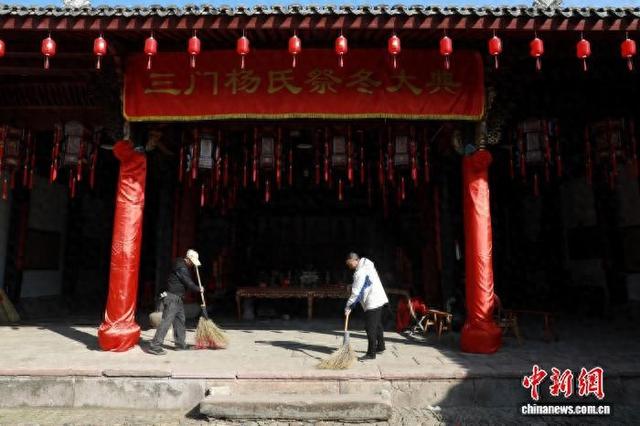
(寻味中华|节令)冬至大如年 三门祭冬传
Xin Lang Cai Jing· 2025-12-21 03:17
Core Viewpoint - The article highlights the significance of the Winter Solstice festival in China, particularly focusing on the traditional "Sanmen Winter Sacrifice" ceremony in Sanmen County, Zhejiang Province, which emphasizes family reunion, gratitude, and cultural heritage [1][3]. Group 1: Cultural Significance - The Winter Solstice is recognized as a major festival in China, historically celebrated with rituals similar to those of the New Year, reflecting the importance of family and ancestral worship [3]. - The "Sanmen Winter Sacrifice" has a history of over 700 years and was included in the national intangible cultural heritage list in 2014, showcasing its cultural importance [3][6]. Group 2: Community Participation - Approximately 200,000 people participate in the Winter Sacrifice activities each year in Sanmen County, despite the local population being only around 440,000 [6]. - The involvement of younger generations in the rituals has increased, indicating a successful transmission of cultural practices to future generations [6]. Group 3: Modern Adaptations - Traditional offerings have evolved, with creative representations of zodiac animals being used in place of more conventional offerings, reflecting a blend of tradition and modernity [6]. - The integration of cultural practices with tourism has become a new growth point for local economies, as seen in various regions hosting Winter Solstice events and activities [8].