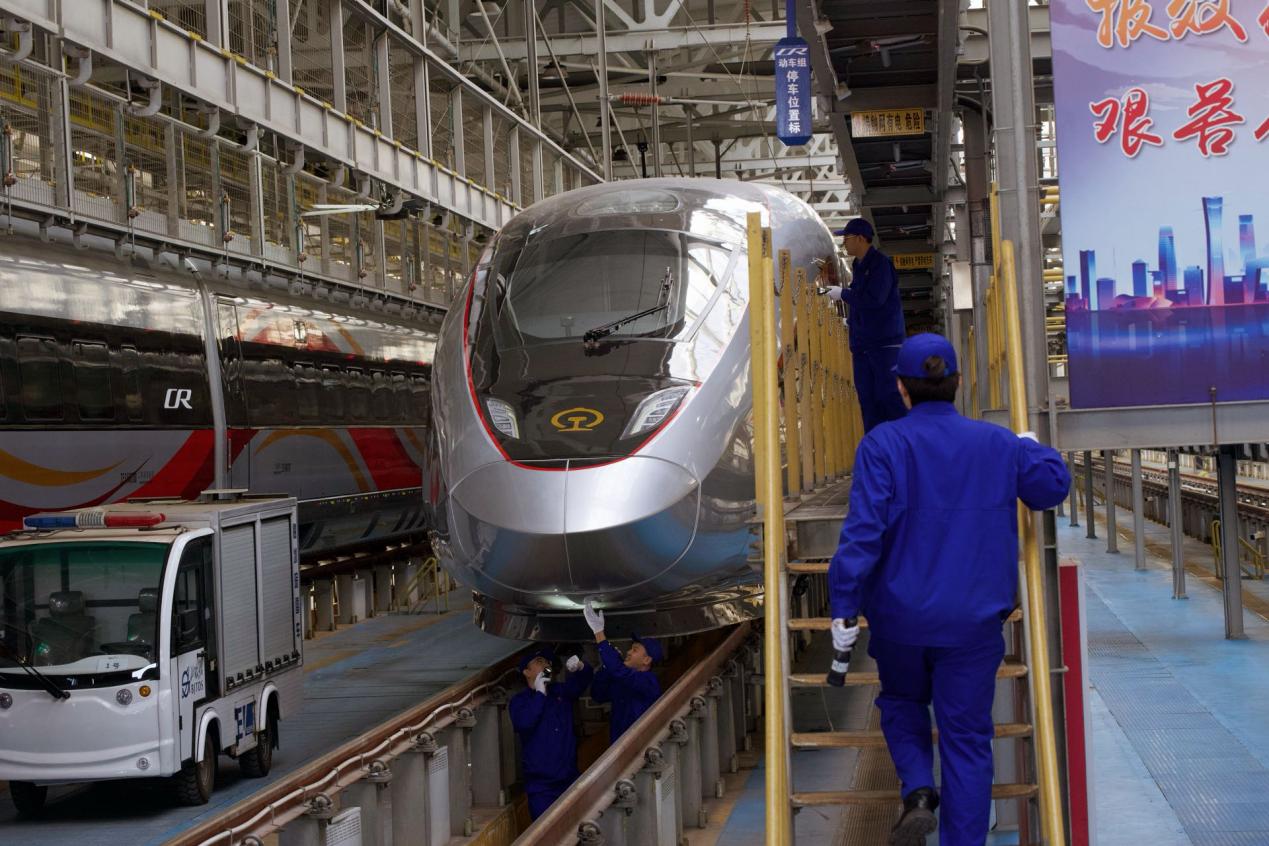
京哈高铁

Search documents
协同发展十二载:京津冀交通跑出加速度
Bei Jing Shang Bao· 2026-02-26 15:29
Core Viewpoint - The transportation integration in the Beijing-Tianjin-Hebei region has significantly advanced, with major improvements in rail and road infrastructure, enhancing connectivity and reducing commuting times for residents [1][2][3]. Transportation Infrastructure Development - By the end of 2025, the operational railway mileage in the Beijing-Tianjin-Hebei region is expected to exceed 11,000 kilometers, marking a nearly 40% increase since 2014, while the total length of highways will reach 11,000 kilometers, a growth of 41.7% [1]. - Major railway projects such as the Beijing-Tangshan Intercity and Tianjin-Xing Intercity have been completed, allowing for travel times between major cities to be reduced to 1.5 to 2 hours [1][2]. Commuting Enhancements - The opening of the Beijing-Tongzhou Station and the completion of the Beijing-Tangshan Intercity Railway have enabled direct travel from Tongzhou to Tangshan in as little as 55 minutes, improving the commuting experience for many [2]. - The average commuting time has been reduced by 30 to 40 minutes due to the introduction of 41 cross-province bus routes and customized commuting services [4]. High-Speed Rail Expansion - The total high-speed rail mileage in the region has increased from 1,284 kilometers at the end of 2013 to 2,675 kilometers by the end of 2025, achieving full coverage of all cities at the prefecture level and above [3]. - The introduction of the G8859 circular high-speed train has connected key nodes in the region, enhancing the vitality of the rail network [2][3]. Future Plans and Innovations - In 2026, the Beijing transportation department aims to have the Pinggu Line operational and will accelerate the construction of several highway projects, including the second phase of the Jingxiong Expressway [6]. - The integration of smart technologies in transportation, such as 5G coverage on highways and automated driving trials, is being prioritized to enhance efficiency and safety [5][6].
【人民日报】京哈高铁 连接双城,带动发展
Ren Min Ri Bao· 2026-01-23 00:45
Core Insights - The Beijing-Harbin High-Speed Railway (京哈高铁) has been operational for five years, serving 210 million passengers, significantly enhancing connectivity between major cities in Northeast China and Beijing [1] - The railway is a crucial part of China's high-speed rail network, facilitating economic integration and development in the Northeast region [1][7] Group 1: Operational Achievements - Over the past five years, the railway has transported over 210 million passengers, with more than 63 million traveling from Beijing to Northeast China and approximately 39.36 million from Harbin to Beijing [1] - The railway spans 1,198 kilometers and connects Beijing, Hebei, Liaoning, Jilin, and Heilongjiang, forming an essential segment of the "Eight Vertical and Eight Horizontal" high-speed rail network [1] Group 2: Economic Impact - The high-speed railway has stimulated local economies, particularly in cities like Chengde, which has seen a surge in tourism due to its proximity to Beijing [6] - In Northeast China, the railway has become a key player in the "ice and snow economy," with significant tourist traffic during peak seasons, such as 140,500 visitors on New Year's Day 2026 [6] Group 3: Future Developments - Starting July 1, 2025, the railway will operate at a maximum speed of 350 km/h, reducing travel times between Beijing and Harbin to approximately 4 hours and 33 minutes [5] - The railway's expansion is expected to further enhance connectivity, allowing for same-day round trips between major cities along the route [5] Group 4: Technological Innovations - The high-speed trains are equipped with advanced cold-resistant technology, ensuring safe operation in extreme winter conditions [12] - Innovations such as the "ice melting and snow removal" system have improved operational efficiency, addressing challenges posed by winter weather [13][14]
京哈高铁 连接双城,带动发展
Ren Min Ri Bao· 2026-01-22 23:55
Core Viewpoint - The Beijing-Harbin High-Speed Railway (京哈高铁) has been operational for five years, serving 210 million passengers and significantly enhancing connectivity in Northeast China, contributing to regional economic development and tourism [1][5]. Group 1: Operational Achievements - The Beijing-Harbin High-Speed Railway has transported a total of 210 million passengers over five years, with over 63 million passengers traveling from Beijing to Northeast China and approximately 39.36 million from Harbin to Beijing [1]. - The railway spans 1,198 kilometers and is a crucial part of China's high-speed rail network, connecting major cities in Beijing, Hebei, Liaoning, Jilin, and Heilongjiang [1][4]. - The railway's full operation began on January 22, 2021, with the opening of the Beijing to Chengde section [1]. Group 2: Economic and Social Impact - The high-speed railway has stimulated the development of cities along its route, such as Chengde, which has seen a surge in tourism due to its proximity to Beijing [7]. - In Northeast China, the railway has become a key transportation method for the "ice and snow economy," with significant tourist traffic to Harbin during peak seasons [7]. - Cities like Qiqihar have experienced a dramatic increase in passenger flow, with daily traffic rising from 10,000 in 2020 to 17,000 by 2025, contributing to local economic growth [7]. Group 3: Future Developments - Starting July 1, 2025, the Beijing-Harbin High-Speed Railway will operate at a maximum speed of 350 km/h, further reducing travel times between major cities [4]. - The fastest travel times will be reduced to 2 hours and 29 minutes to Shenyang and 4 hours and 33 minutes to Harbin, enabling same-day round trips between key cities [4]. Group 4: Technological Innovations - The high-speed railway employs advanced technologies to ensure safe operation in extreme winter conditions, including special materials for train construction and innovative snow removal systems [12][13][15]. - The railway's infrastructure has been enhanced to withstand cold weather, with features like heated switches and real-time monitoring systems to maintain operational safety [15].

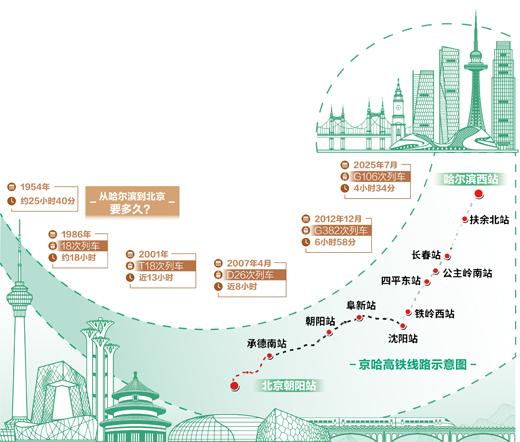
从北京到哈尔滨,最快只要4小时33分钟 京哈高铁 连接双城,带动发展
Ren Min Ri Bao· 2026-01-22 22:01
Core Viewpoint - The Beijing-Harbin High-Speed Railway (京哈高铁) has been operational for five years, serving 210 million passengers and significantly enhancing connectivity in Northeast China and the Beijing-Tianjin-Hebei region [1][6]. Group 1: Operational Achievements - The Beijing-Harbin High-Speed Railway has transported a total of 210 million passengers over five years, with over 63 million passengers traveling from Beijing to Northeast China and 39.36 million from Harbin to Beijing [1]. - The railway spans 1,198 kilometers and is a crucial part of China's "eight vertical and eight horizontal" high-speed rail network, connecting Beijing, Hebei, Liaoning, Jilin, and Heilongjiang [1][5]. Group 2: Future Developments - Starting July 1, 2025, the Beijing-Shenyang section of the high-speed railway will operate at a speed of 350 km/h, reducing travel times to 2 hours and 29 minutes to Shenyang and 4 hours and 33 minutes to Harbin [5]. - The high-speed railway is expected to create a "2-3 hour" transportation circle, facilitating same-day round trips between major cities along the route [5]. Group 3: Economic Impact - The high-speed railway is driving development in cities along its route, with cities like Chengde experiencing a surge in tourism due to the "half-hour tourism circle" [6][7]. - The railway has become a key player in the "ice and snow economy" of Northeast China, with significant passenger traffic during peak tourist seasons, such as 140,500 visitors on New Year's Day 2026 [6][7]. Group 4: Technological Innovations - The high-speed railway is equipped with advanced technologies to withstand harsh winter conditions, including special materials for train bodies and systems for snow and ice removal [11][12][13]. - Innovations such as real-time monitoring systems and snow-melting devices at stations enhance operational safety and efficiency during winter [13].
数说京哈高铁五周年
Xin Lang Cai Jing· 2026-01-22 15:07
Core Insights - The Beijing-Harbin High-Speed Railway (京哈高铁) has celebrated its fifth anniversary since full operation, with a total of 210 million passengers expected to be transported from January 22, 2021, to January 22, 2026 [1][3] Group 1: Operational Growth - The railway's capacity has expanded from an initial 12 pairs of trains to 88.5 pairs by the end of 2025 [3] - Passenger numbers have consistently increased, surpassing 5 million in its first operational year within the Beijing-Tianjin-Hebei region [3] - Daily average passenger numbers grew from 12,400 to 30,700 over five years, with a peak of over 100,000 passengers on October 1, 2025 [5] Group 2: Network Expansion - The railway has continuously expanded its service, adding cities such as Qiqihar, Hunchun, and Dalian to its network [7] - The introduction of direct high-speed train services has improved connectivity between major cities, including the first direct service from Shijiazhuang to Chengde [7] - The network now covers the entire Northeast region and connects with the Beijing-Tianjin-Hebei area, enhancing regional transportation [7] Group 3: Service Enhancements - The railway has upgraded both its hardware and service quality, focusing on passenger needs, including specialized services for mothers, the elderly, and other key travelers [7] - The CR400BF-GS model trains used can withstand temperatures as low as -40°C, ensuring safe winter operations [7] - The service philosophy emphasizes a balance of speed and warmth, enhancing the overall travel experience [7]
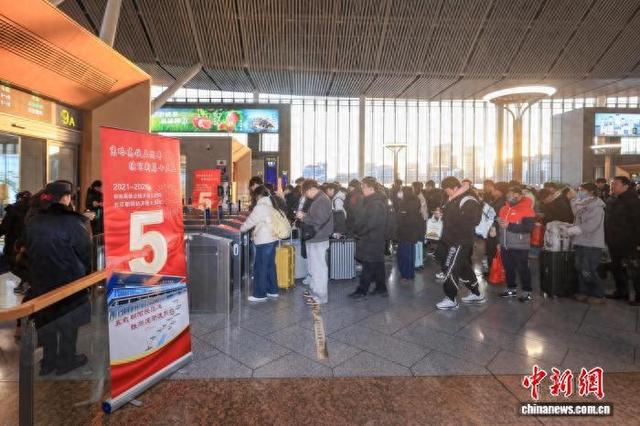
京哈高铁全线开通运营五周年 累计运送旅客超3900万人次
Yang Shi Xin Wen Ke Hu Duan· 2026-01-22 07:12
Core Insights - The Beijing-Harbin High-Speed Railway (京哈高铁) has been operational for five years, significantly enhancing passenger transport capacity and connectivity in Northeast China [1][2] Group 1: Operational Achievements - The railway has transported a total of 39.36 million passengers over five years, with annual passenger volume increasing from 4.86 million in 2021 to 11.63 million in 2025 [1] - The full line, spanning 1,198 kilometers and designed for speeds of 350 km/h, was completed on January 22, 2021, connecting key regions including Heilongjiang, Jilin, Liaoning, Hebei, and Beijing [1] - Starting July 1, 2025, the railway will operate at a high standard speed of 350 km/h on the Beijing-Shenyang section, creating a "2-3 hour" transportation circle [1] Group 2: Technological Advancements - The CR400BF-GS model of the "Fuxing" intelligent train has been deployed, specifically designed to withstand the harsh cold climate of Northeast China, ensuring safe operation at temperatures as low as -40°C [2] - The train features a sealed design, anti-freezing coatings on key components, and an intelligent temperature control braking system to effectively handle ice and snow challenges [2] Group 3: Economic and Cultural Impact - The railway has contributed to the growth of tourism in Heilongjiang, with Harbin becoming a popular destination, and the G902 train being themed as "Moe Tiger" to enhance cultural integration [2] - The initiative "Traveling Northeast by High-Speed Train" has emerged as a unique tourism brand, significantly boosting the cultural and tourism industries along the railway [2]
从时速300到达速350 来看京哈高铁的科技“硬实力”
Zhong Guo Jing Ji Wang· 2026-01-22 05:38
Core Insights - The Beijing-Harbin High-Speed Railway (京哈高铁) has achieved full operational status over its 1198 km length, significantly enhancing transportation capacity and connectivity in the Beijing-Tianjin-Hebei region since its opening five years ago [1] Group 1: Operational Expansion - The number of train pairs on the Beijing-Harbin High-Speed Railway has increased from 12 to 88.5 by the end of 2025, representing a growth of 638% [1] - Passenger volume has surged, exceeding 5 million in the first year and reaching 6,380.6 million by December 31, 2025, reflecting improved travel experiences for the public [1] Group 2: Technological Advancements - The railway has upgraded its operational speed to 350 km/h with the introduction of new intelligent train sets, enhancing travel efficiency [2] - The implementation of advanced technologies such as driver training systems and automated maintenance has improved operational quality and efficiency [2] Group 3: Safety and Reliability - The power supply and communication systems have been modernized, achieving a defect recognition accuracy of over 98% and reducing fault response times significantly [3][4] - A comprehensive monitoring system has been established to ensure real-time safety and operational integrity, capable of identifying risks and providing immediate alerts [6] Group 4: Maintenance and Management - The maintenance strategy has evolved from reactive to proactive, utilizing digital tools for better tracking and management of train operations [5][6] - The integration of new technologies in maintenance practices has established a dual safety assurance system, enhancing overall operational reliability [6]
京哈高铁5年京津冀旅客发送量6380万人次 高铁运能扩容6倍
Zhong Guo Jing Ying Bao· 2026-01-22 03:34
Core Viewpoint - The Beijing-Harbin High-Speed Railway (京哈高铁) has seen significant growth in passenger traffic and operational capacity since its opening, with projections indicating continued expansion through 2025 and beyond [1][4]. Group 1: Passenger Traffic Growth - By the end of 2025, the passenger volume for the Beijing-Harbin High-Speed Railway is expected to reach 63.81 million, with a 638% increase in train pairs from the initial 12 to 88.5 pairs [1] - Daily passenger volume has increased from 15,000 to 56,000, marking a 273% growth [1] - The peak daily passenger count reached 139,400 on October 1, 2025, with a total of 20.43 million passengers sent that year [1] Group 2: Station and Train Operations - Beijing Chaoyang Station, the starting point of the Beijing-Harbin High-Speed Railway, has seen daily train operations grow from an average of 34 to 80 trains by 2025, a 137.4% increase [2] - Daily passenger numbers at Beijing Chaoyang Station increased from 12,400 to 30,700, with a cumulative total of 43.97 million passengers over five years [2] - The number of train sets at the Chaoyang Train Depot increased from 15 to 43, with 60% being the latest high-cold train models [3] Group 3: Infrastructure and Network Expansion - The Beijing-Harbin High-Speed Railway is a crucial part of China's "Eight Vertical and Eight Horizontal" high-speed rail network, covering 708 kilometers and connecting major cities [4] - The railway network in the Beijing-Tianjin-Hebei region is set to expand by 710 kilometers during the 14th Five-Year Plan, with a total operational mileage of 10,394.9 kilometers [4] - By the end of 2025, the planned number of scheduled passenger trains operated by the Beijing Railway Bureau will reach 1,035 pairs, a 22.7% increase from 2020 [4] Group 4: Freight Operations - The freight volume for the Beijing Railway Bureau is projected to reach 367 million tons by 2025, a 3.3% increase from 2020 [6] - Container shipments are expected to reach 65 million tons, reflecting a 100.5% increase since 2020 [6] - The number of China-Europe (Asia) freight trains dispatched from the Beijing-Tianjin-Hebei region is anticipated to grow by 45.6% to 2,167 trains in 2025 [6]