
机制创新

Search documents
丹徒公安深度融合机制创新与科技应用 “全域快反”显成效 敢打善战护民安
Zhen Jiang Ri Bao· 2026-01-09 23:33
Core Insights - The Danju Public Security Bureau's special police team has evolved its operations from traditional patrols to a comprehensive, technology-driven policing model that emphasizes proactive governance and prevention since 2025 [1] Group 1: Integrated Rapid Response Model - The special police team has established a rapid response mechanism that allows for "second-level response and efficient handling," with a 24-hour armed patrol team ensuring immediate detection of risks and prompt assistance to the public [2] - In 2025, the team responded to over 460 emergency incidents, reducing the average response time to 2-3 minutes, and assisted more than 80 missing elderly and children, resolving over 350 urgent public issues [2] Group 2: Crime Prevention and Patrol Efficiency - The team has adopted a "visible policing and dynamic standby" approach, resulting in over 2,600 emergency calls and deploying patrol forces over 11,000 times, covering a patrol distance of 86,000 kilometers since 2025 [3] - A "1+4" work mechanism has been established to enhance collaboration and efficiency, leading to a 29.9% decrease in crime incidents in rapid response areas, with specific reductions in "two electric" cases by 29% and "five types of cases" by 33.8% [3] Group 3: Technological Innovation in Policing - The team has embraced modern policing trends by creating a drone squad for automated surveillance and real-time data transmission, enhancing patrol and monitoring capabilities [4] - A notable incident involved a drone detecting smoke from a warehouse, allowing for quick identification and response to a fire, showcasing the effectiveness of the integrated aerial and ground response model [4] - The team continues to explore innovative applications of drone technology to improve emergency response efficiency and overall operational effectiveness [4]
把群众诉求放心上解决好
Xin Lang Cai Jing· 2025-12-30 22:18
Core Insights - The "12345" hotline platform in Jinzhou, Liaoning Province, won the second place in the provincial government service skills competition, reflecting its effectiveness in handling over 2.63 million public requests with a completion rate of 99.7% over six years [1] Group 1: Service Efficiency and Mechanisms - The establishment of a "high-level promotion" mechanism allows leaders to directly listen to public concerns, leading to immediate action on issues such as waste disposal in rural areas [2] - An "instant external call network" connects over 200 units to address urgent public requests, exemplified by a gas leak emergency that was resolved within 10 minutes [2] - The "on-site direct handling" mechanism ensures zero response time during critical periods, such as heating seasons and exam periods, with rapid fund disbursement for urgent issues [3] Group 2: Continuous Improvement and Future Goals - The "12345" platform aims to evolve from merely receiving requests to effectively resolving them, with a focus on enhancing satisfaction for both citizens and businesses [4] - Plans to establish a "5187" enterprise hotline will transform "12345" into a comprehensive support system for business development, ensuring faster responses and more accurate service delivery [4]
吉林新能源:风光无限 其势已成
Xin Lang Cai Jing· 2025-12-28 13:32
Core Viewpoint - Jilin Province is experiencing a significant transformation in its energy sector, with wind and solar power becoming dominant sources of energy, contributing to a shift from coal dependency to green electricity by 2025 [1][14]. Group 1: Resource Development and Capacity - As of the end of October, wind and solar power generation accounted for 32% of Jilin's total energy output, ranking fourth in the country [1][15]. - The installed capacity of renewable energy in Jilin has surpassed 25 million kilowatts, making it the largest power source in the province, with nearly 10 billion kilowatt-hours of renewable energy exported in the first three quarters of the year [2][17]. - Jilin's green ammonia and green alcohol production capacity has reached 430,000 tons, representing a significant portion of the national supply [1][15]. Group 2: Innovative Projects and Models - Jilin is exploring diverse integration models such as "fishing and solar" projects, which combine fish farming with solar power generation, producing 466 megawatts of solar energy to power 200,000 households [5][20]. - The province is also developing pumped storage power stations to complement wind and solar energy generation [5][20]. - Distributed solar projects are proliferating, allowing households to benefit from solar energy, enhancing local income [5][20]. Group 3: Industrial Cluster Development - Jilin has established a complete wind and solar energy industrial chain, from raw materials to downstream applications, with local production of wind turbine components [6][23]. - The province is promoting the construction of 10 provincial-level and 9 municipal-level green energy industrial parks to enhance collaboration and efficiency within the industry [8][23]. - The successful launch of projects like the integrated green methanol production facility in Tiaonan demonstrates the effectiveness of industrial clustering, significantly increasing local supply chain efficiency [10][25]. Group 4: Policy Support and Mechanism Innovation - Continuous policy support has streamlined project approvals and enhanced the economic viability of renewable energy projects, with a focus on breaking down barriers to resource monetization [11][26]. - The introduction of a "green electricity + consumption" model provides tailored solutions for energy utilization, ensuring that renewable energy is effectively integrated into the market [12][27]. - Jilin is advancing the establishment of a unified electricity market, fostering a competitive environment that maximizes the potential for renewable energy consumption [13][28]. Group 5: Socioeconomic Impact - The growth of wind and solar industries is not only transforming Jilin's energy structure but also revitalizing the local economy and enhancing the quality of life for residents [14][29]. - The province aims to leverage its green energy resources to support industrial upgrades and improve public welfare, contributing to the broader goal of sustainable development [14][29].

解码“二十二连丰”之良制篇丨制度深耕 丰景如峰
Xin Hua Wang· 2025-12-21 04:14
Core Viewpoint - The North China Agricultural Group aims to achieve a total grain production of 46.314 billion jin by 2025, driven by a modern agricultural management revolution centered on "good systems" [1] Group 1: Agricultural Management Innovations - The "six unifications" management model focuses on large-scale operations to ensure balanced high yields across all planting areas and processes [2] - The integration of fragmented land into large-scale planting units allows for efficient use of modern agricultural equipment and standardized production [2][3] - A three-tiered supervision system has been established to ensure precise implementation of agricultural practices, achieving both cost reduction and yield enhancement [3] Group 2: Mechanism Innovations - The North China Agricultural Group has implemented a competitive mechanism to motivate farmers, including monthly evaluations based on key performance indicators [6] - Directly linking service payments to final grain yields encourages accurate execution of agricultural measures [6] - Professional technical service teams provide comprehensive guidance, while demonstration teams facilitate peer-to-peer learning of new technologies [6] Group 3: Standardization and Technical Integration - The "good systems" approach has transformed traditional agricultural practices into standardized, replicable processes, laying a solid foundation for balanced yield increases [4][7] - The establishment of a comprehensive responsibility system ensures that agricultural standards are effectively implemented throughout the production cycle [7][8] - The North China Agricultural Group has created numerous high-yield demonstration fields and tailored local production strategies to enhance overall productivity [8]

江苏丰县“空天地一体化”织密自然资源智能监管网
Zhong Guo Zi Ran Zi Yuan Bao· 2025-12-11 02:53
Core Viewpoint - Jiangsu Province's Fengxian County has successfully upgraded its natural resource intelligent supervision system, marking a transition to proactive prevention and intelligent early warning in resource management [1] Group 1: System Development and Features - The intelligent supervision system covers an area of 1450.34 square kilometers, utilizing "drone+" technology to create an integrated aerial and terrestrial monitoring network [1] - The system's development has progressed through three stages: initial exploration, system upgrade, and technological breakthrough, with significant milestones achieved from 2016 to 2022 [1] - The core achievement of the upgrade is the establishment of a "1+5+N" technical architecture, integrating a comprehensive supervision platform with five major technical modules and multiple business applications [2] Group 2: Technical Innovations - The system features automated drone patrols, with drones flying over key areas every 1 to 3 days and ordinary areas every 7 to 10 days without human intervention [3] - It employs advanced technologies for automatic data collection, processing, and analysis, including high-precision imaging and AI recognition of illegal activities [3] - The "ten automations" mechanism enhances efficiency across the entire process from detection to resolution, significantly improving operational effectiveness [3] Group 3: Data Integration and Institutional Innovation - The system integrates multi-source data from land, planning, and forestry, establishing a three-tier data linkage mechanism for comprehensive monitoring [4] - Institutional innovations include the implementation of a joint responsibility mechanism for law enforcement and a linkage scheme for illegal land use rectification and land approval [4] - Since the system's operation, it has conducted 1,098 drone missions and issued 1,844 warnings, demonstrating significant improvements in monitoring capabilities [4] Group 4: Future Developments - Future plans include the introduction of 3D modeling technology to enhance AI recognition accuracy and extend drone applications across the entire natural resource management chain [4]
水务为民 让生活更舒心生态更宜居
Xin Jing Bao· 2025-12-05 13:05
Core Insights - Beijing's water management department has effectively improved urban water environments and public services through innovative mechanisms, addressing citizens' urgent needs and enhancing ecological diversity since the start of the 14th Five-Year Plan [1][3] Group 1: Addressing Public Concerns - The construction of new pedestrian steps along the South Changhe River significantly improved safety and accessibility for students, responding promptly to community concerns [2] - The water management department has implemented monthly targeted governance to address high-frequency issues such as road flooding and rural sewage treatment, achieving a 25% annual reduction in public complaints since the 14th Five-Year Plan [3] Group 2: Ecological Enhancements - The protection of the cliff swallow habitat along the Yongding River demonstrates the commitment to balancing construction and ecological preservation, with immediate actions taken to halt construction near nesting areas [4] - The establishment of ecological parks and habitats, such as the Wenyu River Park, has led to an increase in biodiversity, with 880 species of flora and fauna monitored, including a significant rise in aquatic species [6] Group 3: Optimizing Business Environment - The introduction of the "Three Zero" service model has streamlined the water supply connection process from five steps to two, enhancing efficiency by 60% and significantly improving the experience for small businesses [7] - The implementation of a smart water application system allows for instant processing of water supply requests, reducing processing time to one hour and facilitating a more efficient service experience for residents and businesses [8]
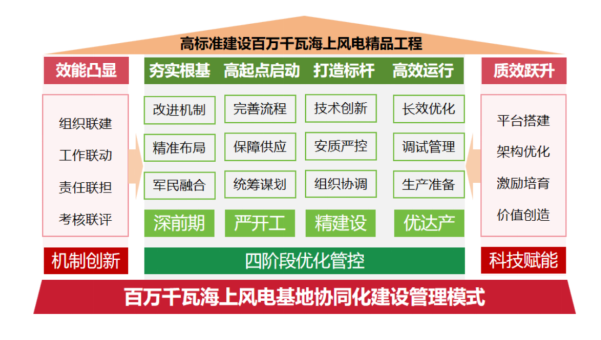
国家电投山东公司:“双核驱动,四阶管控”海上风电建设管理模式获评创新成果
Zhong Guo Fa Zhan Wang· 2025-12-05 06:32
Core Insights - The China Electric Power Construction Enterprise Association has released a list of 150 outstanding achievements in power construction technology innovation management for the year 2025, highlighting the strategic management and technological innovation of the State Power Investment Corporation's Shandong company [1][3] Group 1: Innovation Achievements - The State Power Investment Corporation's Shandong company successfully submitted the project titled "Dual-Core Drive, Four-Stage Control" for the collaborative construction management of the Shandong million-kilowatt offshore wind power base, which was recognized in categories such as strategic management, technological innovation, green low-carbon, and production operation [1][3] - The submission process involved efficient collaboration across departments, including the organization of a kickoff meeting, the formulation of application materials, and multiple rounds of expert reviews, culminating in a high-quality innovation achievement material [1][3] Group 2: Management Model - The "Dual-Core Drive, Four-Stage Control" collaborative construction management model is driven by "mechanism innovation" and "technology empowerment," addressing cross-departmental coordination challenges and enhancing project efficiency through resource integration and incentive measures [3] - A comprehensive four-stage process control system has been established, focusing on deep integration of military and civilian resources, strict standard management during construction, precision in construction quality, and optimal long-term operational mechanisms [3] Group 3: Industry Recognition - The recognition of this management model signifies the State Power Investment Corporation's Shandong company’s achievement in establishing the first million-kilowatt offshore wind power base in Shandong, providing a replicable and scalable construction management system for offshore wind power development [3] - This model serves as a reference for high-quality offshore wind power development across the country, contributing to the "Shandong Plan" and the "State Power Investment Model" for offshore wind power [3]

如何推动环境基础设施建设提质增效?
Jing Ji Ri Bao· 2025-11-28 06:50
Core Viewpoint - The article emphasizes the importance of establishing a robust environmental infrastructure network to support pollution prevention and improve ecological quality, aligning with the concept that "green mountains and clear waters are invaluable assets" [1]. Group 1: Environmental Infrastructure Development - During the "14th Five-Year Plan" period, China has gradually formed an environmental infrastructure network extending from urban areas to towns and rural areas, significantly enhancing waste treatment capacity [1]. - The improvement of market-oriented investment and technological innovation mechanisms has led to advancements in environmental technology and equipment, effectively promoting the synergy of pollution reduction and carbon reduction [1]. - The application of digital technologies such as smart systems and blockchain has innovated operational and regulatory models for environmental infrastructure, enhancing real-time monitoring and environmental risk prevention capabilities [1]. Group 2: Challenges and Solutions - Despite innovative practices, structural issues remain, such as low operational efficiency of facilities and excessive reliance on local finances [2]. - High-quality promotion of environmental infrastructure improvement is crucial for overcoming precise pollution control challenges and fulfilling the "Two Mountains" concept [2]. - The integration of big data, IoT, and cloud computing is essential for transitioning environmental infrastructure from passive treatment to intelligent management, enabling a comprehensive data-driven approach to waste management [2]. Group 3: Industrial Synergy - Upgrading environmental infrastructure requires a shift from isolated facility improvements to integrated industrial chain development [3]. - By creating a management framework that connects data, business, and systems, the industry can enhance operational efficiency and service quality while achieving full visibility and traceability of waste management [3]. - An example from Jiangsu Province illustrates the successful integration of hazardous waste management through a comprehensive approach that addresses both collection and disposal challenges [3]. Group 4: Mechanism Innovation - Mechanism innovation is crucial for transforming environmental infrastructure from a fiscal burden to a value-creating sustainable development model [4]. - Reducing reliance on local finances necessitates breaking free from administrative efficiency constraints and enhancing the value creation capacity of environmental infrastructure through specialized operations [4]. - The TOT model in Qinhuangdao City demonstrates how integrated operational innovation and performance-based payment systems can shift environmental infrastructure from a "fiscal burden" to a "revenue-generating asset" [4].
推动环境基础设施建设提质增效
Jing Ji Ri Bao· 2025-11-27 21:42
Core Insights - The article emphasizes the importance of integrating ecological safety and economic growth through the concept of "green mountains and clear waters are as valuable as mountains of gold and silver," focusing on carbon peak and carbon neutrality as key drivers for environmental infrastructure development [1] Group 1: Environmental Infrastructure Development - The establishment of an environmental infrastructure network extending from urban areas to towns and rural regions has significantly enhanced waste treatment capabilities during the 14th Five-Year Plan period [1] - The improvement of market-oriented investment and technological innovation mechanisms has led to advancements in environmental technology and equipment, promoting synergistic effects in pollution reduction and carbon emission cuts [1] - The application of digital technologies such as smart monitoring and blockchain has innovated operational and regulatory models for environmental infrastructure, enhancing real-time monitoring and environmental risk prevention [1] Group 2: Structural Challenges and Solutions - Despite innovative practices, structural issues remain, including low operational efficiency of facilities, difficulties in collaborative management, and over-reliance on local finances [2] - High-quality enhancement of environmental infrastructure is crucial for overcoming precise pollution control challenges and fulfilling the "Two Mountains" concept [2] - The integration of big data, IoT, and cloud computing is essential for transitioning from passive waste treatment to intelligent management systems, enabling a comprehensive approach to waste processing and monitoring [2] Group 3: Industrial Collaboration and Integration - Upgrading environmental infrastructure requires a shift from isolated facility improvements to integrated industrial chain development [3] - By creating a unified network and data-sharing platform, operational efficiency and service quality can be improved while fostering deep integration across the industrial chain [3] - An example from Jiangsu Province illustrates the successful implementation of a closed-loop management system for hazardous waste, enhancing regional industrial development [3] Group 4: Mechanism Innovation for Sustainable Development - Mechanism innovation is vital for transitioning environmental infrastructure from a fiscal burden to a value-creating sustainable model [4] - Reducing dependence on local finances and enhancing value creation through specialized operations is necessary for effective environmental infrastructure management [4] - The TOT model in Qinhuangdao, Hebei Province, exemplifies how integrated operational innovation and performance-based payment systems can transform environmental infrastructure into revenue-generating assets [4]
会长话封关:“将海南建设成为国际商事争议解决的‘优选地’”
Zhong Guo Xin Wen Wang· 2025-10-21 08:53
Core Viewpoint - Hainan aims to become a preferred location for international commercial dispute resolution by integrating global mediation resources and creating a market-oriented, rule-of-law, and international business environment [1][4]. Group 1: Event Overview - The 2025 Hainan Free Trade Port Legal Week was held from October 15 to 19, gathering over 700 legal experts and business representatives from 14 countries and regions to discuss new paths for building a rule-of-law free trade port [1][2]. - The event featured a format of "thematic speeches + roundtable discussions," allowing for diverse perspectives and showcasing the global application and impact of international commercial mediation [2]. Group 2: Achievements - Three main achievements were highlighted: 1. Broad participation with various international elements, including experts from Singapore, Hong Kong, and Malaysia [2]. 2. Multiple innovative outcomes, including signing memorandums of cooperation with influential organizations like AIADR and eBRAM to enhance international mediation collaboration [2][3]. 3. Consensus on three key areas: leveraging technology for mediation efficiency, innovating mechanisms for standardized and international processes, and promoting professional development within the mediation industry [3]. Group 3: Future Directions - The Hainan Mediation Association plans to leverage the legal week to enhance service systems and transform achievements into practical applications, including talent development and establishing international recognition standards for mediators [4]. - Emphasis will be placed on building cooperative platforms between Hainan's mediation institutions and international counterparts to share knowledge and contribute to national legislative efforts in commercial mediation [4].