
深海科技

Search documents
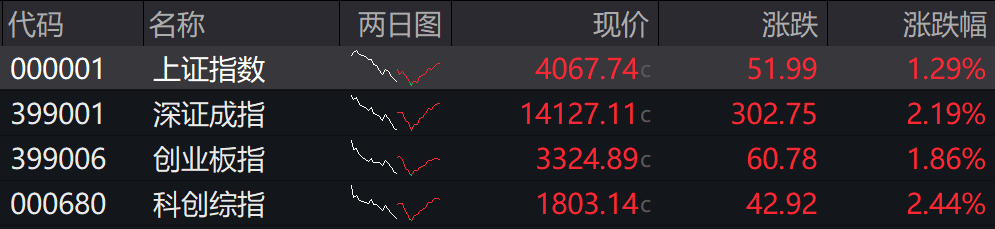
收盘丨沪指探底回升涨1.29%,市场逾4800股上涨
Di Yi Cai Jing· 2026-02-03 07:14
| 代码 | 名称 | 两日图 | 现价 | 涨跌 | 涨跌幅 | | --- | --- | --- | --- | --- | --- | | 000001 | 上证指数 | no | 4067.74c | 51.99 | 1.29% | | 399001 | 深证成指 | m | 14127.11c | 302.75 | 2.19% | | 399006 | 创业板指 | mile | 3324.89c | 60.78 | 1.86% | | 000680 | 科创综指 | mil | 1803.14c | 42.92 | 2.44% | 盘面上,光伏产业链爆发,太空光伏方向领涨;算力硬件概念股活跃,CPO方向涨幅靠前;商业航天、深海科技、特高压、AI应用题材表现 强势。 具体来看,光伏设备概念集体爆发,帝科股份、海优新材等多股涨停。 | 代码 | 名称 | 涨幅量 | 现价 | | --- | --- | --- | --- | | 301636 | 泽润新能 | +20.01% | 74.56 | | 300842 | 帝科股份 | +20.00% | 123.97 | | 688616 | 奥特维 ...

超4400只个股上涨
第一财经· 2026-02-03 03:47
2026.02. 03 本文字数:1235,阅读时长大约2分钟 沪深两市半日成交额1.6万亿,较上个交易日缩量385亿。全市场超4400只个股上涨。 10:45 恒生科技指数跌超3%,百度集团跌超6%,腾讯控股跌近6%,阿里巴巴跌逾4%。 10:31 国投白银LOF复牌触及跌停,目前溢价率为88.94%。 10:28 港股科网股短线跳水,快手-W跌超5%,腾讯控股跌超4%,阿里巴巴-W跌超2%。 10:18 科创50指数短线跳水转跌,此前涨近2%,寒武纪跌超8%,生益电子跌超3%,海光信息、中芯国际跟跌。 | 000688[科创50] 1449.40 -0.10% 1478 | 1.87% | 现价 | 1449.40 | | --- | --- | --- | --- | | | | 涨幅 | -0.10% (-1.50) | | 1469 W VIN | 1.25% | 金额 | 375.23亿 | | | | 成交量 | 4.88亿 | | 1460 | 0.62% | 开盘 | 1475.57 | | 1451 | 0.00% | 最高 | 1478.05 | | | | 最低 | 1448.35 | ...

下一个国家级战略主线:深海科技(附42页PPT)
材料汇· 2026-02-02 14:42
Core Viewpoint - The article emphasizes the strategic importance of deep-sea technology as a national priority, highlighting its potential in resource security, defense, and the development of a blue economy [14][23][57]. Group 1: Deep-Sea Technology as a National Strategy - Deep-sea technology is positioned as a key national strategic focus, alongside commercial aerospace and low-altitude economy [14]. - The government has initiated large-scale application demonstrations for new technologies in deep-sea industries, marking a significant policy shift [14][23]. - Recent government reports have highlighted deep-sea technology for the first time, indicating its importance in future industrial development [14][23]. Group 2: Resource Security and Global Competition - The U.S. and Japan are actively pursuing deep-sea resource exploration, indicating a competitive landscape for global marine resources [25][31]. - The article notes that the U.S. has significant deep-sea mineral resources, with estimates suggesting over 1 billion tons of polymetallic nodules in its offshore areas [30]. - Japan plans to initiate experimental drilling for rare earth elements in its exclusive economic zone, aiming to reduce reliance on imports from China [31]. Group 3: Defense and National Security - The article discusses the need for enhanced underwater defense capabilities, as current security measures are deemed insufficient [50]. - The concept of a "water under the national gate" highlights vulnerabilities in underwater security, necessitating a robust defense strategy [50]. - The U.S. and Japan have established comprehensive military strategies focused on deep-sea operations, enhancing their maritime control [48][50]. Group 4: Blue Economy and Industrial Development - The blue economy is projected to be a trillion-dollar industry, with significant growth potential in sectors like deep-sea mining, aquaculture, and marine tourism [18][24]. - The deep-sea industry chain encompasses everything from basic materials to high-end equipment manufacturing, indicating a complex and interdisciplinary approach [73][74]. - The article outlines various emerging sectors within the blue economy, including deep-sea wind power and marine biotechnology [68][72]. Group 5: Policy and Regulatory Framework - Multiple regions in China are developing policies to promote deep-sea technology, with plans focusing on marine economic development and innovation [11][12]. - The article lists specific policy documents from provinces like Hainan and Shandong that aim to enhance deep-sea technology capabilities [13]. - The government's strategic plans emphasize the integration of deep-sea technology into broader economic and environmental goals [61].

中上游企业25年业绩恢复性高增长
HTSC· 2026-02-02 07:09
Investment Rating - The report maintains an "Overweight" rating for the aerospace and defense sector [8] Core Insights - The aerospace and defense industry is expected to experience significant recovery and growth in 2025, with 30 out of 75 listed companies forecasting positive earnings growth compared to the previous year [11][12] - The report highlights structural opportunities in military equipment demand during the "14th Five-Year Plan" period, focusing on new domains, unmanned systems, advanced weaponry, and low-cost equipment [14][16] Summary by Sections Industry Performance - As of January 31, 2025, 75 out of 120 listed companies in the defense sector have disclosed earnings forecasts, with 30 companies expecting positive growth, 7 expecting positive but declining growth, 17 expecting losses but reduced compared to the previous year, and 21 expecting increased losses [11][12] Key Companies to Watch - Recommended companies include: - AVIC Shenyang Aircraft Corporation (600760 CH) - Guorui Technology (600562 CH) - Steel Research (300797 CH) - Guotai Group (603977 CH) - West Superconductor (688122 CH) - Ruichuang Micro-Nano (688002 CH) - Beifang Navigation (600435 CH) - Gaode Infrared (002414 CH) - Aerospace Intelligence (300446 CH) - Aerospace Rainbow (002389 CH) [3][8][9] Earnings Forecasts - Notable companies with significant earnings growth forecasts include: - Beimo High-Tech: 1169% growth due to product delivery and cost reduction [12] - Hailanxin: 509% growth from increased self-produced products [12] - *ST Chengchang: 452% growth driven by industry recovery [12] - Zhimin Da: 414% growth from increased demand in previously established product lines [12] - Aileda: 351% growth from increased military and civilian product demand [12] Long-term Outlook - The report emphasizes the importance of new equipment construction cycles and suggests focusing on new products and markets during the "14th Five-Year Plan" [14][16] - The military trade market is expected to grow, with China aiming to increase its market share in global military trade [17] Market Trends - The report notes a decline in the defense sector index by 7.69% over the past week, underperforming the broader market [28] - The current PE (TTM) for the defense sector is 95.23, indicating a high valuation compared to historical levels [36] Investment Opportunities - The report suggests that companies involved in unmanned systems, low-cost munitions, and military AI are likely to see significant growth opportunities [16][18] - The commercial aerospace sector is also highlighted as a growing area, with advancements in satellite internet and low-altitude economy [18][25]



每经品牌100指数上周涨0.51% 成分股中国海油股价创历史新高
Mei Ri Jing Ji Xin Wen· 2026-02-01 13:06
有券商机构指出,1月制造业PMI(采购经理指数)再度回落到荣枯线以下,反映出有效需求仍不足。A 股流动性支撑延续,临近2026年春节长假,市场交投活跃度依然处于较高水平,短期市场或仍以结构性 震荡为主。 每经记者:刘明涛每经编辑:彭水萍 上周,随着热门板块出现高位震荡,A股主要股指迎来调整,均出现小幅回落,每经品牌100指数在蓝 筹股带动下,周涨幅为0.51%。 有市场人士认为,短期来看,A股市场在交投活跃支撑下,或将延续盘整过程。 "中字头"个股表现出色 上周,A股市场主要指数波动加剧,从周K线来看,截至1月30日收盘,上证指数下跌0.44%,以4117.95 点报收;深证成指下跌1.62%,以14205.89点报收;创业板指和科创50指数周跌幅分别达到0.09%和 2.85%,每经品牌100指数实现小幅反弹,周涨0.51%,以1154.56点报收。 市场热点方面,A股市场板块轮动速度加快,周内半导体、白酒、地产等板块阶段性走高,但行情持续 性仍显不足。经历近期持续上涨后,受国际贵金属价格高位回落影响,上周五有色金属板块大幅回调。 成分股方面,"中字头"个股上周表现出色,中国海油、中国石油以及中国重汽周涨幅 ...

日本6000米vs中国10909米!中国凭啥有下五洋捉鳖的自信与野心?深海新材料才是大国底气
材料汇· 2026-01-30 15:28
Core Viewpoint - Japan's deep-sea rare earth mining initiative claims to have concentrations 20-30 times higher than China's land resources, with over 16 million tons of total rare earths, while China has already established advanced deep-sea mining capabilities and technologies [6][8]. Group 1: National Strategy Perspective - The deep sea is a strategic area for resource security, technological competition, and geopolitical maneuvering, marking China's transition from a maritime power to a maritime strong power [11]. - The demand for critical minerals like rare earths, cobalt, and nickel is expected to grow exponentially, with the International Energy Agency predicting a 3.5-fold increase by 2050 under net-zero scenarios [12]. - The deep sea is a global mineral reserve, with the International Seabed Authority reporting approximately 50 trillion tons of polymetallic nodules, making it essential for future high-end industries [14]. Group 2: Technological Competition - Deep-sea exploration is a complex system engineering challenge, comparable to space exploration, requiring advanced interdisciplinary capabilities [15]. - The synergy between deep-sea and space technologies enhances national technological strength, with deep-sea mining supporting high-end manufacturing sectors like aerospace and semiconductors [16]. Group 3: Geopolitical Competition - Countries like the US, Germany, and India are increasingly investing in deep-sea exploration, with the market expected to reach $500 billion by 2030 [17]. - Japan's mining activities in the disputed South Bird Island area raise legal questions regarding its exclusive economic zone, while China is building its discourse power through legitimate international cooperation [17]. Group 4: Challenges in Deep Sea - The extreme environment at 10,000 meters poses significant challenges, including high pressure, temperature variations, corrosive conditions, and complex terrain [18][20]. - China is addressing these challenges through a comprehensive technology system focused on material innovation and equipment development [23]. Group 5: Rise of Hidden Champions - China has transitioned from reliance on imports for deep-sea materials and equipment to achieving self-sufficiency and even surpassing some foreign technologies [25]. - Key materials include pressure-resistant materials, corrosion-resistant alloys, buoyancy materials, sealing materials, and functional protective materials, all of which are crucial for deep-sea operations [54]. Group 6: Key Materials and Innovations - Pressure-resistant materials like titanium alloys have seen significant advancements, with domestic production achieving high performance and reliability [28][33]. - Corrosion-resistant alloys developed in China have demonstrated superior performance in extreme environments, significantly extending the lifespan of deep-sea mining equipment [38]. - Innovations in buoyancy materials have led to lightweight, high-strength composites that maintain performance under deep-sea conditions, reducing costs compared to imported alternatives [45]. - Sealing materials have evolved to include shape memory alloys and high-performance plastics, enhancing the reliability of deep-sea equipment [48].

深耕水下机器人,山东未来机器人数亿元B轮融资落袋,剑指全球深海装备市场
机器人圈· 2026-01-30 10:33
Core Viewpoint - Shandong Future Robotics has successfully completed a multi-billion RMB Series B financing round, indicating strong market recognition of its technological capabilities and growth potential in the deep-sea technology sector [3]. Group 1: Financing and Investment - The Series B financing attracted notable institutions such as Jianyuan Fund, Zhongxin Juyuan, and Wangsu Investment, showcasing confidence in the company's future [3]. - The funds raised will be primarily allocated to the development of next-generation core technologies, expansion of global market channels, and enhancement of large-scale production capabilities [3]. Group 2: Company Background and Market Position - Founded in 2005 and officially registered in 2015, Shandong Future Robotics is the first high-tech enterprise in China to achieve 100% domestic production of core components for deep-sea robots, holding a 60% market share in the domestic deep-sea robot sector [5]. - The company is recognized as a national high-tech enterprise and has received various accolades, including being a "specialized and innovative" small giant enterprise in Shandong Province [5]. - Shandong Future Robotics has mastered key technologies in deep-sea transportation, detection, and strategic resource development, positioning itself as a leader in the deep-sea working ROV and deep-sea excavation equipment industries [5]. Group 3: Business Structure and Operations - The company operates through three business divisions and has four subsidiaries, with projects spanning across 30 provinces in China and several countries including Russia, the UK, France, and Singapore [5].
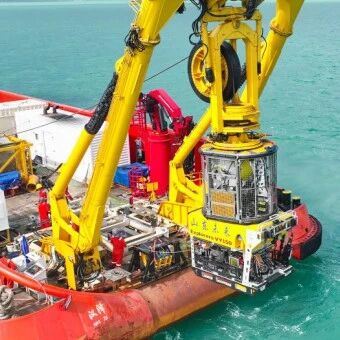
深海新材料的隐形冠军:中国凭啥有下五洋捉鳖的自信与野心?
材料汇· 2026-01-29 16:39
点击 最 下方 关注《材料汇》 , 点击"在看"和" "并分享 添加 小编微信 ,遇见 志同道合 的你 特别福利 (欢迎加入 材料汇深海材料交流群,并记住加小编微信 ) 正文 深海沉积物稀土矿点在国际海底的分布 近日, 日本海洋研究开发机构(JAMSTEC)派遣"地球号"钻探船 ,前往南鸟岛海域启动6000米深海稀土试采计划,宣称 该区域稀土浓度达中国陆地20-30倍,稀土总量超1600万吨,其中镝、钇储量可分别满足全球需求730年、780年,自诩"抢 占深海战略高地"。 但在我国看来,日本这场"全球首次"的深海作业,不过是中国早已熟练掌握的"常规操作"。当日本还在攻坚6000米开采技 术时, 中国"奋斗者"号已多次抵达10909米的马里亚纳海沟底部,"开拓二号"采矿车早已完成4000米深海多金属结核采集 试验,深海作业深度、技术成熟度远超日本不止一个维度 。 这份"下五洋捉鳖"的底气,从不是凭空而来,而是源于国家战略的深远布局、极端环境的技术突破,以及一批隐形冠军企 业撑起的材料硬核实力。深海之战的胜负手,最终在于谁掌握了那几克堪比白银的特殊"骨骼"与"皮肤"。 一、国家战略透视:万米深海,为何是中国必争之 ...

科技向善凝共识!AI治理登顶“2025十大科技热词”榜首
Nan Fang Du Shi Bao· 2026-01-29 13:37
Group 1: AI Governance - The term "AI governance" ranks first among the "Top Ten Technology Buzzwords" for 2025, indicating a recognition within the Chinese tech community that technological excellence must align with governance wisdom for sustainable development [1] - The emphasis on AI governance reflects public concerns regarding AI ethics and safety, marking a global shift from "technology catching up" to "rule shaping" [1][2] - AI governance is described as a systematic project that integrates technological control, legal regulations, industry collaboration, and public education, aiming to guide AI development in alignment with human common interests [1] Group 2: Emerging Technologies - "Embodied intelligence" is included in the government work report for the first time in 2025, signaling a positive policy direction aimed at advancing AI technology and fostering new industrial development [4] - The International Thermonuclear Experimental Reactor (ITER) organization announced a milestone achievement in controlled nuclear fusion technology, with China playing a crucial role in this international collaboration [5] - Significant progress has been made in the brain-computer interface industry in 2025, with breakthroughs in core technologies and applications, laying a solid foundation for large-scale development [6] Group 3: Commercial Space and Deep Technologies - China's commercial space industry has gained attention, with operational capabilities established at various launch sites and a growing number of private rocket companies achieving successful launches [7] - "Deep-sea technology" is highlighted in the government work report as a new industry to be promoted, particularly in the context of the Hainan Free Trade Port [8] - The successful launch of the Tianwen-2 probe marks a significant step in China's deep space exploration efforts, following previous lunar and Mars missions [9] Group 4: Aging Population and Smart Technology - The intersection of aging population and technological revolution is driving innovation in "silver economy" technologies, with the establishment of a technology park in Shanghai aimed at enhancing elderly care services [10] - 2025 is projected to be the year of industrialization for "intelligent agents," with IDC predicting that by 2026, about 50% of data teams in China's top 500 companies will utilize intelligent agents for data preparation and analysis [11] Group 5: Innovation Recognition - "Chinese innovation" is recognized as a global buzzword in 2025, with China's innovation index ranking among the top ten worldwide, showcasing remarkable achievements in technology [12]
具身智能、深空探测、智能体等入选2025年度“十大科技热词”
Xin Jing Bao· 2026-01-29 10:03
Core Insights - The Chinese Society of Science and Technology Journalism released the "Top Ten Technology Buzzwords for 2025," highlighting key areas of technological advancement and innovation in China [1] Group 1: Technology Buzzwords - AI Governance: China is leading global AI governance and has proposed the establishment of a World AI Cooperation Organization, promoting a global governance action plan [2] - Embodied Intelligence: This term was included in the government work report for the first time, signaling a push towards AI technology innovation and industry development [3] - Controlled Nuclear Fusion: The ITER organization announced the completion of all components for its reactor, marking a significant milestone in controlled nuclear fusion technology [4] - Brain-Computer Interface: Significant advancements in core technologies and applications have been made, laying a solid foundation for the industry's growth [5] - Commercial Space: China's commercial space industry is rapidly developing, with multiple private companies achieving successful rocket launches and establishing satellite manufacturing capabilities [6] - Deep-Sea Technology: This sector was included in the government work report, emphasizing its importance in emerging industries, especially in the Hainan Free Trade Port [7] - Deep Space Exploration: The successful launch of the Tianwen-2 probe marks another significant step in China's exploration of outer space [8] - Silver Economy Technology: Innovations in elder care technology are being developed to address the challenges of an aging population, with the establishment of a technology park in Shanghai [9] - Intelligent Agents: 2025 is expected to be the year of industrialization for intelligent agents, with predictions that 50% of data teams in China's top 500 companies will utilize these technologies by 2026 [10][11] - Chinese Innovation: The term "Chinese Innovation" is gaining global recognition, with China ranking in the top ten for innovation indices, showcasing remarkable achievements in technology [12]