
牛市2.0

Search documents
申万宏源2026年春季A股投资策略概要:蓄力牛市2.0,时代资产不退场
Shenwan Hongyuan Securities· 2026-03-14 09:44
Group 1 - The core viewpoint of the report emphasizes the resilience of A-shares amidst geopolitical conflicts, indicating that China's asset pricing is adapting to a changing competitive landscape, which enhances market resilience [3][4]. - The report identifies two types of inflation assets: new economy and strategic resources, highlighting that capital expenditure in the new economy is on the rise, creating a scarcity-driven demand expansion, while strategic resource security is a necessity under great power competition [3][4]. - The report outlines the need for a capital market that supports asset allocation migration, emphasizing the importance of diversifying resident asset allocation, optimizing resource allocation towards strategic directions, and revitalizing existing assets to support innovation and transformation [5]. Group 2 - The A-share market is currently in a structural bull phase, transitioning to a range-bound adjustment period, with limited adjustment magnitude but a duration measured in quarters [7][8]. - The report predicts that the overall profit growth for A-shares in 2026 will be better than in 2025, with a projected year-on-year growth of 12.9% under neutral assumptions, and an optimistic scenario suggesting a growth rate of 16.6% [8][9]. - The report maintains a mid-term projection of a "two-stage bull market," indicating that the current phase is a transition from structural bull to a range-bound adjustment, with a potential new upward trend starting in the second half of 2026 [9][11]. Group 3 - The report discusses the structural characteristics of the "Bull Market 2.0" accumulation phase, referencing historical experiences from 2014 and 2018-2019, indicating that this phase is characterized by the exhaustion of leading sectors and a decrease in the space for new opportunities [11][12]. - It emphasizes the importance of extending main asset lines and macro narratives, particularly focusing on the AI industry chain and cyclical alpha opportunities, as potential investment avenues during this phase [12]. - The report suggests that the structural bull and comprehensive bull phases are interconnected, with a focus on technology and cyclical alpha remaining as mid-term directions for investment [12].
十大券商一周策略:看多马年春节,短线两手准备!看好“有新高”组合
Zheng Quan Shi Bao· 2026-01-04 22:42
Group 1 - The market is expected to experience an upward trend at the beginning of the year, driven by a favorable liquidity environment and investor sentiment [1][6][9] - The anticipated balance between external and internal demand will be a significant factor for market performance in 2026, with policies aimed at boosting domestic demand becoming increasingly important [1][2] - The structural bull market is supported by a reassessment of China's technological capabilities and the resilience of external demand amid a complex trade environment [1][4] Group 2 - The Chinese stock market is likely to stabilize and cross important thresholds, aided by overseas liquidity and seasonal factors such as the Spring Festival [2][3] - The "transformation bull" trend is confirmed, with a focus on sectors benefiting from economic transformation and capital market reforms [2][4] - The spring market is expected to continue its upward trajectory, supported by improving economic data and favorable policy signals [3][4] Group 3 - The spring market rally has begun early, with a solid foundation for a bull market in 2026, driven by multiple positive factors including macroeconomic policies and capital inflows [8][12] - Investment strategies should focus on sectors benefiting from new technologies and policies, such as AI, energy storage, and robotics [8][12] - The market is experiencing a shift in internal driving logic, with a need to focus on assets with clearer fundamental signals and lower volatility [7][11]
十大机构看后市:A股跨年行情已经开启,转型牛深入推进,春季躁动行情可期,布局三大主线
Xin Lang Cai Jing· 2025-12-21 08:19
Group 1 - The core viewpoint is that the A-share market is expected to experience a "spring rally" driven by policy support and capital inflows, with a focus on growth and consumption sectors [26][28][34] - The market indices showed mixed performance, with the Shanghai Composite Index up by 0.03%, while the Shenzhen Component and ChiNext indices fell by 0.89% and 2.26% respectively [24] - The potential for a structural bull market in 2026 is highlighted, with expectations of continued capital market development and a focus on technology and consumption sectors [42][43] Group 2 - Factors driving the appreciation of the RMB are increasing, and investors should adapt their asset allocation strategies accordingly, focusing on sectors that may benefit from this trend [25] - Approximately 19% of industries are expected to see profit margin improvements due to RMB appreciation, which will attract investor attention [25] - The consumption sector is anticipated to perform well due to policy support and a recovery from previous underperformance, making it a key area for investment [27][34] Group 3 - The market is currently in a state of uncertainty regarding the initiation of the "spring offensive," with some indices showing signs of adjustment [29][30] - A focus on sectors that have been lagging but are expected to benefit from policy changes and market dynamics is recommended, particularly in the brokerage and consumer sectors [30][34] - The technology and advanced manufacturing sectors are expected to lead the market, supported by favorable policies and capital inflows [42][43]
申万宏源傅静涛:2026年春季前科技成长至少还有一波机会
Guo Ji Jin Rong Bao· 2025-11-19 11:39
Core Viewpoint - The 2025 technology structural bull market is considered "Bull Market 1.0," with a potential peak in spring 2026, followed by a comprehensive bull market termed "Bull Market 2.0" in the second half of 2026 [1] Group 1: Market Trends - The AI industry trend is expected to deepen, but the cost-effectiveness of the A-share AI industry chain is deemed low, similar to previous years in 2014, 2018, and 2021 [1] - A mid-2026 supply clearing in midstream manufacturing is anticipated, with a notable increase in sectors where capacity growth is lower than demand growth [1] - The sequence of "policy bottom, market bottom, economic bottom" is expected to occur, with mid-2026 potentially validating the "policy bottom" [1] Group 2: Investment Recommendations - Investors are advised to focus on three main lines in 2026: 1. Recovery trading sectors such as cyclical Alpha, basic chemicals, and industrial metals 2. Technology industry trend sectors including AI industry chain, humanoid robots, energy storage, photovoltaics, pharmaceuticals, and military industry 3. Sectors related to manufacturing influence enhancement, such as chemicals and engineering machinery [2] - The transition from Bull Market 1.0 to 2.0 is characterized by high dividend defensiveness, with the latter stage driven by cyclical policies and technological trends [2]

A500ETF基金(512050)强势翻红成交额超53亿元位居同类第一,机构:2026年中国牛市2.0有望启动
Mei Ri Jing Ji Xin Wen· 2025-11-19 07:32
Group 1 - A-shares experienced a strong afternoon rally, with the Shanghai Composite Index closing in the green, supported by sectors such as shipbuilding, deep-sea technology, lithium mining, gold and jewelry, insurance, and industrial metals [1] - The A500 ETF fund (512050) saw a notable increase of 0.17%, with a turnover rate of 27.61% and a trading volume exceeding 5.3 billion yuan, ranking first among comparable funds [1] - Key stocks such as Aerospace Development and Spring Breeze Power reached their daily limit up, while companies like Chengxin Lithium, Zhongjin Gold, Chifeng Jilong Gold, Tianqi Lithium, and Shandong Gold showed significant gains [1] Group 2 - UBS China’s 2026 outlook report predicts another prosperous year for the Chinese stock market, driven by favorable factors including developments in innovative sectors [1] - The MSCI China Index is projected to reach a target of 100 by the end of next year, indicating a potential upside of 14% from current levels [1] - Earnings per share for Chinese companies are expected to grow by 10% in 2026, with a positive outlook for sectors such as internet, hardware technology, and brokerage firms [1] Group 3 - Shenwan Hongyuan forecasts that the technology structural bull market in 2025 represents the "Bull Market 1.0" phase, with a potential peak in spring 2026 [2] - The second half of 2026 may initiate a comprehensive bull market, termed "Bull Market 2.0," driven by the sequential emergence of policy, market, and economic bottoms [2] - The upcoming bull market is anticipated to be characterized by a "technology bull" or "China influence enhancement bull," supported by cyclical improvements in fundamentals, strengthening trends in emerging industries, and a shift in resident asset allocation towards equities [2]
申万宏源:2026年下半年可能启动“牛市2.0”,或将是一轮全面牛市
Zhong Guo Ji Jin Bao· 2025-11-18 09:12
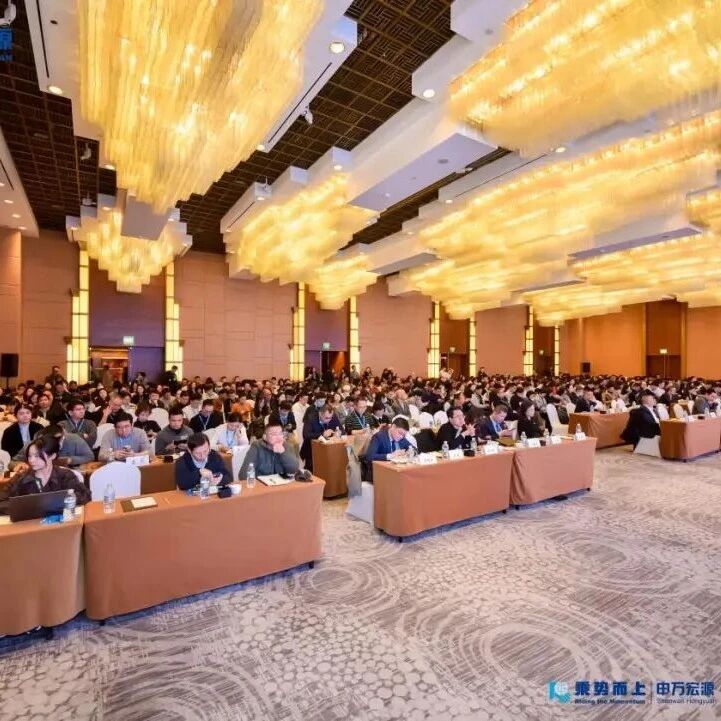
Core Viewpoint - The 2026 Capital Market Investment Conference hosted by Shenwan Hongyuan emphasizes the importance of technological innovation and data as new driving forces for economic growth, suggesting a shift in investment strategies towards new sectors and opportunities [3][6][7]. Group 1: Economic Outlook - Liu Jian, Chairman of Shenwan Hongyuan, highlighted that the "14th Five-Year Plan" prioritizes technological innovation, which will lead to breakthroughs in industries such as artificial intelligence, biomedicine, and hydrogen energy [6]. - The conference suggests that the future growth of the Chinese economy will rely on new factors of production rather than traditional drivers, opening new spaces for capital market investments [7]. Group 2: Market Strategy - The research team at Shenwan Hongyuan proposed a "two-stage bull market" outlook, predicting that the first stage, driven by technological structure, will peak in spring 2026, followed by a comprehensive bull market in the second half of 2026 [7][8]. - The team anticipates significant improvements in A-share profitability in 2026, marking the first time in five years that both non-profitability and net profit growth will show double-digit increases [8]. Group 3: Macroeconomic and Bond Market Insights - Chief Economist Zhao Wei noted that the reforms during the "14th Five-Year Plan" will focus on systemic effectiveness, with 2026 expected to be a pivotal year for comprehensive reform and development [9]. - The bond market is entering a new phase where the core variables will shift towards price and capital flow, with a particular focus on inflation throughout 2026 [9].


申万宏源:2026年下半年可能启动“牛市2.0”,或将是一轮全面牛市
中国基金报· 2025-11-18 09:02
Core Insights - The 2026 Capital Market Investment Conference hosted by Shenwan Hongyuan emphasizes the theme "Ride the Momentum," covering various sectors including asset allocation, high-end manufacturing, artificial intelligence, consumption, and cyclical industries [2][3] Group 1: Economic and Technological Insights - Liu Jian, Chairman of Shenwan Hongyuan, highlighted the importance of technological innovation in the "14th Five-Year Plan," focusing on original innovation and breakthroughs in future industries such as AI, biomedicine, hydrogen energy, and sixth-generation mobile communication [5][6] - The "14th Five-Year Plan" identifies data elements as a new driving force for economic growth, with digital content services and emotional consumption leading new consumption patterns [5][6] - Liu Jian predicts that future economic growth in China will shift from old momentum to new factor-driven momentum, creating new investment opportunities in the capital market [6] Group 2: Market Strategy and Outlook - The research team at Shenwan Hongyuan proposes a "Two-Stage Bull Market" theory, suggesting that the technology-driven bull market will reach a peak in spring 2026, followed by a comprehensive bull market in the second half of 2026 [8] - The team believes that the shift of Chinese residents' asset allocation towards equity assets is still in its early stages, indicating that the A-share market's profit accumulation is undergoing a qualitative change [8] - Predictions for 2026 include significant improvements in A-share profitability, with expectations of the first effective rebound in non-profitability and double-digit growth in net profit for the first time in five years [8] Group 3: Macroeconomic and Bond Market Analysis - Chief Economist Zhao Wei notes that the reforms during the "14th Five-Year Plan" will emphasize systemic and effective governance, marking 2026 as a year of comprehensive reform and development [10] - The bond market is transitioning to a new phase where "prices + capital flows" are gaining attention, with the core variable for 2026 being inflation, which will impact the market throughout the year [10]
申万宏源:牛市1.0高点看26年春季 关注储能、存储、创新药与国防军工
智通财经网· 2025-11-16 22:53
Core Viewpoint - The report from Shenwan Hongyuan indicates that the current "Bull Market 1.0" is at a high point, with insufficient long-term cost-effectiveness in the technology sector. The technology structural bull market of 2025 is part of this phase, and a potential peak may occur in the spring of 2026 [1][2]. Group 1: Market Phases - The "Bull Market 1.0" is characterized by high resistance to further upward movement, with cyclical trends still in a "running ahead" phase. The conditions for the initiation of "Bull Market 2.0" are not yet complete [2][4]. - The current A-share AI industry chain is compared to previous market phases, indicating a state of "ongoing industry trend with small fluctuations and long-term low cost-effectiveness." Future movements are expected to be divided into "high-level oscillation" and "adjustment" phases [2][3]. Group 2: High-Level Oscillation Phase - In the high-level oscillation phase, it becomes increasingly difficult to earn valuation gains, and new industry catalysts or sustained high growth in performance are less likely to lead to upward breakthroughs. This phase typically lasts at a quarterly level [3][4]. - The adjustment phase is usually triggered by intermediate disturbances in industry trends, which do not signify the end of the structural bull market but may lead to reasonable adjustments [3][4]. Group 3: Investment Opportunities - Short-term opportunities in technology growth are expected to arise from small rebounds, focusing on sectors with new catalysts and significant industry space, particularly in energy storage and storage solutions [4][5]. - The report emphasizes the importance of focusing on Alpha logic in both cyclical and technology investments, with a particular interest in sectors like basic chemicals, industrial metals, innovative pharmaceuticals, and national defense [5]. Group 4: 2026 Outlook - The spring of 2026 is anticipated to be a potential peak, but it is unlikely to represent the highest point of the entire bull market. The market is expected to face three challenges: long-term low cost-effectiveness in technology, intermediate disturbances in industry trends, and the conditions for "Bull Market 2.0" not being mature yet [4][5]. - The report suggests that the A-share market will continue to see mid-term gains from cyclical improvements, asset allocation shifts towards equities, and China's increasing global influence [5].
申万宏源:科技“性价比不足”,顺周期“逻辑有断点”,“牛市2.0”条件不具备,现在是“牛市1.0”高位震荡
Hua Er Jie Jian Wen· 2025-11-16 09:51
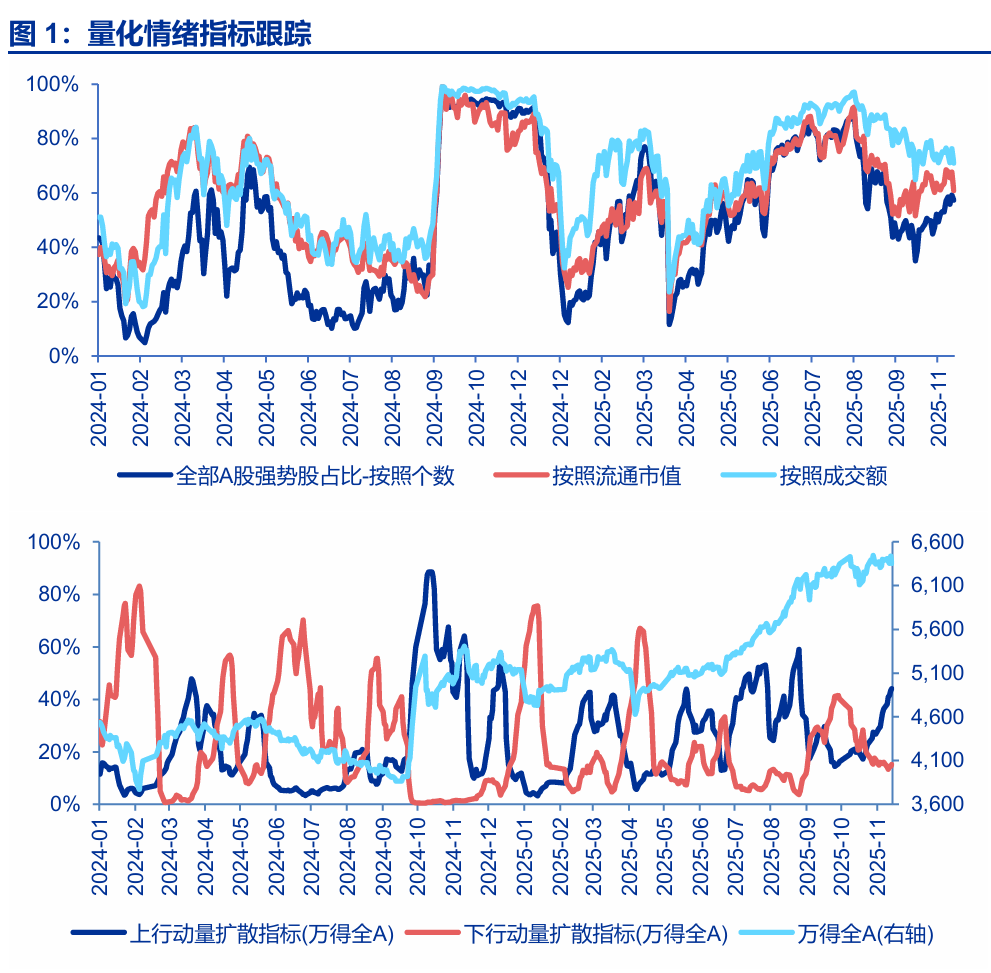
Core Viewpoint - The current A-share market is in the high position of "Bull Market 1.0," with insufficient long-term cost-effectiveness in the technology sector and logical breaks in the cyclical market. Conditions for the initiation of Bull Market 2.0 are not yet complete [1] Group 1: Market Conditions - The A-share AI industry chain is in a state of "long-term low cost-effectiveness" similar to previous years in various sectors, indicating a high-level consolidation phase followed by an adjustment phase [2] - The high-level consolidation phase typically lasts at a quarterly level, and adjustments are triggered by mid-level disturbances in the industry trend, but this does not signify the end of the industry trend [2] Group 2: Cyclical Market Analysis - The recent cyclical market is characterized by short-term price increases and expectations of PPI turning positive by mid-2026, but there is significant divergence regarding the pace of PPI improvement [3] - The cyclical market is approaching a differentiation phase as cost-effectiveness decreases, and the sustainability of price increases becomes more critical [3] Group 3: Future Challenges - By spring 2026, the A-share market may face three major challenges: the technology sector's long-term low cost-effectiveness, a critical verification period for demand, and immature conditions for the transition to Bull Market 2.0 [4][5] - The market is expected to experience a two-stage bull market, with the first stage being the structural bull market in 2025 and a potential peak in spring 2026 [4][6] Group 4: Investment Opportunities - In the current high-level consolidation phase, the focus should be on Alpha opportunities in both cyclical and technology sectors, with an emphasis on sectors with favorable supply-demand dynamics and high dividend yields [7] - Short-term opportunities in technology growth are expected to arise from small rebounds, particularly in sectors with new catalysts or significant industry space, such as energy storage and innovative pharmaceuticals [7]
申万宏源策略一周回顾展望(25/11/10-25/11/15) :牛市“1.0”阶段的高位区域
Shenwan Hongyuan Securities· 2025-11-15 13:37
Core Insights - The report indicates that the current "Bull Market 1.0" phase is at a high level, with insufficient long-term cost-effectiveness in the technology sector, and increasing resistance to further upward breakthroughs. The cyclical market is still in a "running ahead" phase, with mid-term logic showing gaps, and conditions for the initiation of "Bull Market 2.0" are not yet complete. It is advised to focus on small wave rhythms based on short-term cost-effectiveness in a high-level oscillation market [1][4][6] - The A-share AI industry chain is currently in a state of "the major industrial trend has not ended + small fluctuations + long-term low cost-effectiveness area." Historical experience suggests that future trends will typically be divided into "high-level oscillation phase" and "adjustment phase" [1][4][6] - The report outlines three challenges that the A-share market may face in the spring of 2026, which could be a potential peak: 1. Long-term low cost-effectiveness in technology, which may trigger adjustments; 2. A critical verification period for demand-side conditions; 3. Conditions for the transition to "Bull Market 2.0" are not yet mature [1][6][7] Market Phases - The high-level oscillation phase makes it increasingly difficult to earn valuation money, and new industrial catalysts or sustained high growth in performance are less likely to lead to upward breakthroughs. This phase typically lasts at a quarterly level, and adjustments may not occur immediately [4][5][6] - The adjustment phase is usually triggered by intermediate disturbances in industrial trends, which do not signify the end of structural bulls but may adjust to reasonable levels between bull and bear markets [5][6][7] Investment Focus - In the current high-level oscillation zone, both cyclical and technology sectors should focus on Alpha opportunities. Short-term cyclical investments should prioritize sectors with favorable supply-demand dynamics, such as basic chemicals and industrial metals, as well as high-dividend-rewarding coal and leading oil companies in Hong Kong [1][6][7] - Short-term opportunities in technology growth mainly come from small wave rebounds, with a focus on sectors with new catalysts or significant industrial space, particularly energy storage and storage solutions. Additionally, sectors with upward economic outlooks and relatively high cost-effectiveness may see early gains before spring 2026, especially in innovative pharmaceuticals and national defense industries [1][6][8]