用户隐私保护

Search documents
欧盟拟推新规终结Cookie弹窗困扰,简化用户隐私设置流程
Huan Qiu Wang· 2025-11-20 02:35
Core Points - The European Commission has proposed a reform to address the long-standing issue of cookie pop-ups that have troubled European internet users, aiming to create a more convenient online experience [1][3] Group 1: Reform Details - The reform is part of the EU's "Digital Package Reform" and aims to simplify digital regulatory rules while balancing user privacy protection and online convenience [3] - Users will be able to set global cookie preferences at the browser level, eliminating the need to click "accept" or "reject" for each website [3] - The reform will be implemented in phases, starting with a simplified "yes/no" option for cookie prompts, reducing user operational costs [3] Group 2: Compliance and Implementation - Websites will be required to adhere to user cookie choices for at least six months and are prohibited from displaying unnecessary cookie banners for "harmless purposes" like website traffic statistics [3] - The European Commission noted that the current prevalence of cookie pop-ups leads users to make quick, uninformed choices rather than genuine privacy decisions [3] - The proposal is currently in the legislative process and requires approval from the European Parliament and the 27 EU member states before it can take effect [3]

杭州银行针对《微信渠道用户隐私保护协议》文本进行修订完善
Jin Tou Wang· 2025-10-30 03:23
Core Points - Hangzhou Bank announced the revision of the "Hangzhou Bank WeChat Channel User Privacy Protection Agreement" to enhance user privacy protection and ensure compliance with operational standards in WeChat mini-programs [1][2] Summary by Sections Revision Details - The revision expands the scope of the agreement from the original single login channel of WeChat Business Hall to include WeChat channels, which now encompasses both WeChat Business Hall and WeChat mini-programs [2] - A new list of third-party SDKs and marketing authorization agreements has been added to the agreement [2] - Modifications have been made to align with the newly revised "Children's Personal Information Protection Rules," specifically regarding the handling of minors' information [2] Implementation - The updated "Hangzhou Bank WeChat Channel User Privacy Protection Agreement" will take effect on October 31, 2025, requiring customers to re-sign the new agreement upon logging into Hangzhou Bank's WeChat channels [2] - Customers who do not agree with the updated terms can request to terminate their services with Hangzhou Bank [2]

苹果Siri录音在法国遭调查,用户隐私再成焦点
Huan Qiu Wang Zi Xun· 2025-10-07 03:43
Core Points - Apple is under investigation in France regarding the use of voice recordings collected by its Siri voice assistant, raising significant concerns about user privacy protection [1][3] - The investigation was initiated by the French Human Rights League (LDH) based on testimony from a former Apple contractor, Thomas Le Bonniec, who revealed that sensitive user recordings, including those of cancer patients, were analyzed [3] - The case is being handled by the Paris prosecutor's office's cybercrime division, and the investigation is ongoing with results yet to be announced [3] Company Practices - The core issue of the investigation revolves around Apple's practice of collecting user recordings through Siri, which is integrated into most of its devices and has the capability to record and store audio interactions [3] - Apple claims that the recording feature is optional for users and is intended to improve service quality, with some data potentially retained for up to two years and reviewed by contractors [3] - In January, Apple emphasized that it does not retain audio recordings of Siri interactions unless users explicitly choose to help improve Siri, and even then, the recordings are used solely for that purpose [3]

登顶热搜,“支付宝账号解除授权”引关注,你关了没?
猿大侠· 2025-09-17 04:11
Core Viewpoint - The recent surge in discussions about "Alipay account authorization management" highlights the importance of user awareness regarding personal data sharing and the need for regular audits of authorized applications [1][2]. Group 1: User Authorization Insights - Users have discovered a significant number of applications authorized through Alipay, with some individuals reporting up to 171 authorization entries dating back to 2015 [2][4]. - The authorized applications primarily fall into two categories: e-commerce services and transportation-related mini-programs, with some authorizations traceable to a decade ago [4][9]. Group 2: User Guidance and Recommendations - Alipay customer service recommends that users regularly clean up authorizations for applications that are infrequently used or no longer in service, such as those related to temporary services like hotel charging or transportation mini-programs [6][11]. - The process for revoking application authorization is straightforward and can be done through the Alipay app by navigating to the "User Protection Center" [7][9]. Group 3: Privacy and Data Security - Alipay emphasizes its commitment to user privacy and data security, stating that third-party applications can only access user information after explicit user consent, adhering to principles of "user explicit authorization" and "minimization" [11][12]. - Users are also advised to be cautious of the "no-password payment/automatic deduction" feature, which can lead to unintended charges even after an application has been uninstalled [12][14].

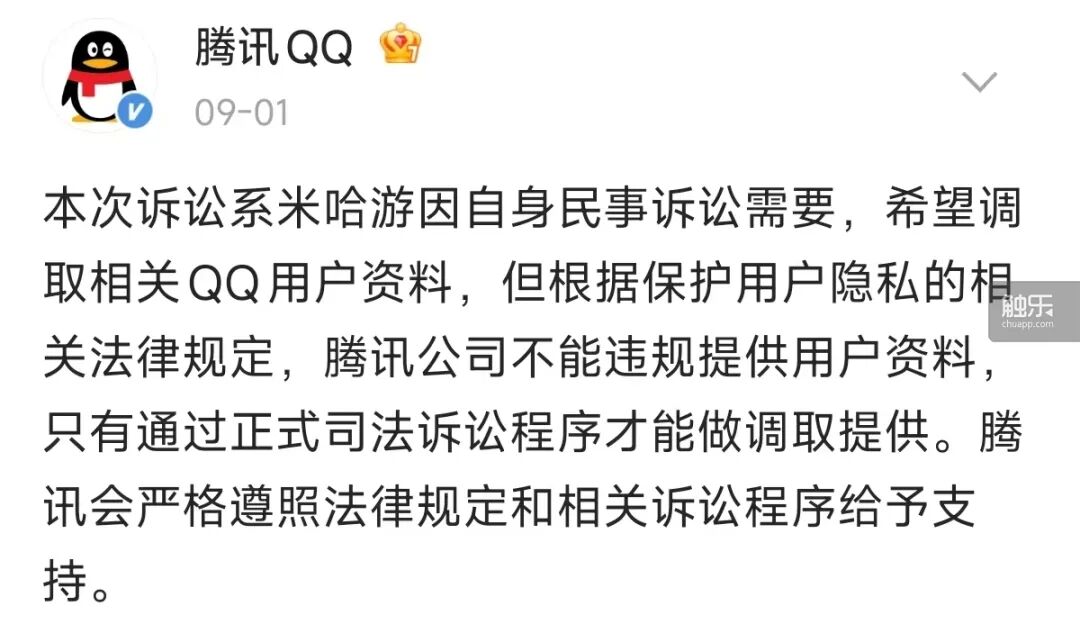
米哈游为何起诉腾讯?
3 6 Ke· 2025-09-05 13:30
Core Points - The lawsuit initiated by MiHoYo against Tencent is primarily to obtain user data related to a civil case, highlighting the legal process for data retrieval in privacy matters [1][4] - Tencent's response emphasizes its compliance with privacy laws, stating that it cannot provide user data without a formal judicial request [1][4] - The case is linked to MiHoYo's efforts to combat leaks of unreleased game content, as indicated by previous actions against individuals sharing confidential information [2][7] Group 1: Legal Context - MiHoYo's lawsuit is a common legal strategy to access user data from platforms when pursuing claims against individuals for privacy violations [1][5] - Tencent's refusal to provide user information without judicial authorization is a protective measure under the Cybersecurity Law and Personal Information Protection Law of China [4][7] - The legal framework requires platforms to safeguard user data and only disclose it under specific circumstances, such as user consent or legal mandates [4][7] Group 2: Evidence and Investigation - MiHoYo may have identified some leakers but requires Tencent's data to uncover additional anonymous individuals involved in the leaks [7][8] - The lawsuit allows MiHoYo to formally request evidence, including chat logs and file transfer records, which could substantiate claims of intellectual property infringement [5][8] - The ability to access detailed records from Tencent could provide critical evidence for MiHoYo's case, including the identity of leakers and the specifics of the leaked content [7][8]

马斯克旗下Grok被曝出隐私问题,超37万条用户对话泄露
Sou Hu Cai Jing· 2025-08-21 03:35
Core Points - The article discusses a privacy breach involving xAI's chatbot Grok, which has raised significant concerns about user privacy in the competitive AI chatbot market [1][4] - xAI has been criticized for sharing user conversations without adequate consent, leading to the indexing of over 370,000 user interactions by Google [3] Group 1: Privacy Breach Details - xAI published chat logs from Grok, allowing users to generate unique URLs for sharing conversations, which were also indexed by search engines like Google and Bing [3] - Sensitive information, including names, personal details, and passwords, was exposed through these shared conversations, posing a risk to user privacy [3] - Affected users, such as journalist Andrew Clifford, expressed dissatisfaction over the lack of consent for sharing their conversation content [3] Group 2: Implications and Responsibilities - The incident highlights the need for xAI to uphold its responsibility to protect user privacy as a prominent player in the AI industry [4] - There is a call for increased regulatory oversight of AI companies to ensure the protection of user rights and privacy [4]

开发者新的选择!OPPO、vivo、小米、荣耀联合推出隐私权限新标准
36氪· 2025-08-20 09:31
Core Viewpoint - The article discusses the launch of a new privacy permission system by five major smartphone manufacturers in collaboration with Google, aimed at enhancing user privacy within the Android ecosystem [3][6][12]. Group 1: Privacy Permission System - The new privacy permission system allows for the reasonable opening of 19 categories of privacy data, significantly improving privacy protection capabilities in the Android ecosystem [3][12]. - The system emphasizes a dual-track approach to data and access, balancing privacy protection with user convenience [16][24]. - A unified permission review platform has been established to evaluate the rationality of permission requests and to prevent misuse [17][18]. Group 2: Industry Collaboration - The collaboration among OPPO, vivo, Xiaomi, Honor, and Lenovo signifies a shift towards a unified standard in the Android ecosystem, enhancing user experience [6][22]. - The Mobile Intelligent Terminal Ecological Alliance (ITGSA) plays a crucial role in this initiative, aiming to provide clear privacy protection guidelines for developers and applications [21][24]. - The involvement of Google indicates a transition in the Android ecosystem towards a collaborative model between manufacturers and the system [24][25]. Group 3: User Experience and Developer Impact - The new system allows users to have more precise control over their data sharing, which will shift the core competitive advantage of applications back to functionality and user experience [24]. - Developers can now integrate with a unified standard interface, reducing the effort required for multi-platform adaptation and allowing them to focus on delivering better services [24][25]. - The introduction of system controls, such as the Photo Picker, enables applications to access only selected data, thus enhancing user privacy while maintaining core functionalities [15][16].

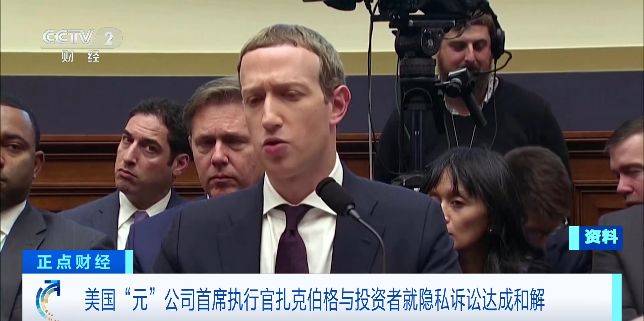
美国“元”公司首席执行官扎克伯格与投资者就隐私诉讼达成和解
Sou Hu Cai Jing· 2025-07-18 07:04
Core Points - Meta Platforms Inc., the parent company of Facebook, has reached a settlement in a privacy lawsuit with investors, agreeing to resolve claims that executives allowed user privacy violations, resulting in significant financial losses for the company [1][3][4] - The lawsuit sought damages amounting to $8 billion (approximately 57.5 billion RMB) against CEO Mark Zuckerberg and 10 other current and former executives [1][3] Summary by Sections - **Settlement Agreement** - A settlement agreement was reached just before the scheduled court hearing, although specific details of the agreement were not disclosed [4] - The presiding judge, Katherine McCormick, acknowledged the settlement and adjourned the court [4] - **Allegations and Claims** - Investors accused the executives, including Mark Zuckerberg and board member Marc Andreessen, of negligence regarding user privacy, leading to substantial economic damages for the company [3][6] - The lawsuit aimed to hold the defendants accountable for billions in fines and legal costs incurred by the company over recent years [3] - **Previous Penalties** - In 2019, the Federal Trade Commission imposed a $5 billion fine on Facebook for failing to comply with a data protection agreement established in 2012 [6] - The plaintiffs are seeking personal asset compensation from the defendants, who have denied all allegations, labeling them as "extreme claims" [6]

扎克伯格与Meta股东和解,了结80亿美元脸书隐私案
Feng Huang Wang· 2025-07-17 23:11
Core Points - Meta CEO Mark Zuckerberg and current and former directors and executives have agreed to settle a privacy lawsuit claiming damages of $8 billion [1][2] - The lawsuit accused them of allowing Facebook users' privacy to be violated, resulting in significant losses for the company [1] - The specific details of the settlement agreement have not been disclosed, and the judge congratulated both parties on reaching a resolution [1] Group 1 - The lawsuit was initiated by Meta shareholders who sought to hold Zuckerberg and other executives accountable for billions in fines and legal fees incurred by the company [1] - The Federal Trade Commission fined Facebook $5 billion in 2019 for failing to comply with a data protection agreement established in 2012 [1] - Billionaire venture capitalist Marc Andreessen, a defendant in the case and a Meta board member, was scheduled to testify but the trial concluded with the settlement [1] Group 2 - The defendants denied the allegations, labeling them as "extreme claims" [2] - Meta, which rebranded from Facebook in 2021, is not a defendant in the lawsuit and has refrained from commenting on the matter [2] - Since 2019, Meta has reportedly invested billions of dollars to enhance user privacy protections [2]
Mark Zuckerberg, Sheryl Sandberg spared from testifying after settling Meta shareholders' $8B privacy lawsuit
New York Post· 2025-07-17 15:33
Core Viewpoint - Meta Platforms, along with Mark Zuckerberg and other current and former directors, has agreed to settle claims from shareholders seeking $8 billion for alleged damages related to privacy violations of Facebook users [1][4][5]. Group 1: Settlement Details - The settlement details were not disclosed, and the trial was adjourned by Judge Kathaleen McCormick just before it was set to enter its second day [2][6]. - The plaintiffs' lawyer indicated that the agreement was reached quickly [2]. Group 2: Background of the Case - Shareholders sued Zuckerberg, Marc Andreessen, and other former officials, including Sheryl Sandberg, aiming to hold them accountable for billions in fines and legal costs incurred by the company [5][11]. - The Federal Trade Commission (FTC) fined Facebook $5 billion in 2019 for failing to comply with a 2012 agreement regarding user data protection [5][12]. Group 3: Implications and Reactions - The settlement may provide relief to the involved parties but has been criticized as a missed opportunity for public accountability [7][16]. - The case was expected to include testimonies from notable figures, including former board members Peter Thiel and Reed Hastings [8].