
电力短缺

Search documents
电力短缺成AI算力扩张新瓶颈!光伏ETF龙头(560980)、电网ETF(159320)逆势上涨,年内大幅跑赢同赛道
Ge Long Hui· 2025-11-07 05:20
Group 1 - The core viewpoint is that the power supply is becoming a critical bottleneck for AI expansion, with significant growth in the photovoltaic, grid, and battery sectors despite market adjustments [1][2] - The leading photovoltaic ETF (560980) has increased by 0.91% recently, with a year-to-date gain of over 57%, while the grid ETF (159320) has risen significantly, with a year-to-date increase of over 73% [1] - The largest and most liquid battery ETF (159755) has seen a year-to-date increase of 70%, and the energy storage battery ETF (159305) has risen over 66% this year, indicating high industry prosperity [1] Group 2 - The photovoltaic ETF tracks the top 30 photovoltaic companies and has outperformed the photovoltaic industry index by nearly 10% this year [2] - Microsoft’s CEO Nadella highlighted that the real bottleneck for AI chip deployment is not chip supply but rather the availability of power and physical space in data centers [2] - The grid ETF closely follows the Hang Seng A-share grid equipment index, which has outperformed the CSI grid equipment index by 34% this year [2]
电网严重滞后!美国数据中心甚至转向“孤岛化”,脱离电网运行
Hua Er Jie Jian Wen· 2025-11-07 01:27
Core Insights - The report from Barclays highlights a critical reality behind the AI frenzy: power supply has become a significant bottleneck in the industry [1] - The data center industry is facing severe shortages of electricity, labor, and resources, leading to a "scarcity mindset" among developers, utility companies, and equipment vendors [1][2] - The industry is being forced to adopt aggressive self-rescue measures, including the establishment of "island" projects that operate independently from the grid [3] Group 1: Industry Challenges - The demand driven by AI has pushed the data center industry to a breaking point, with participants believing that growth has surpassed resource capacity [2] - The key issue is not a lack of generation capacity but rather an outdated transmission network that cannot handle the concentrated demand surges [2] - Some utility companies are struggling to even respond to requests from data center developers, indicating a significant operational gap [2] Group 2: Shift to "Island" Operations - The move towards "island" operations is no longer a temporary solution but has become the only way to achieve timely computing power deployment [3] - Developers are not choosing to build their own power plants voluntarily; rather, they are compelled to do so due to the inadequacies of the existing grid [3] Group 3: Risks of AI Workload Fluctuations - "Island" operations present new risks due to the extreme power fluctuations associated with AI workloads, which can spike from idle to peak power in milliseconds [4] - The scarcity of engineers capable of conducting necessary power system studies poses a significant challenge, with only 1-2% of engineers specializing in this area [4] - The rush to implement "island" projects without adequate planning and expertise could lead to substantial operational risks, complicating the investment landscape further [4]


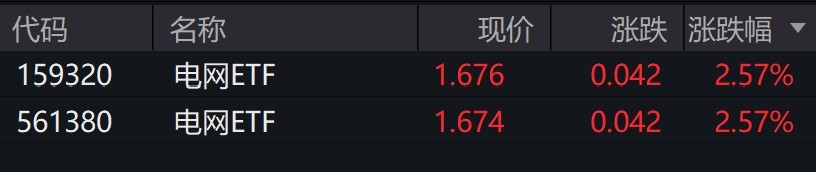
电网概念股震荡走强,电网ETF涨超2%
Mei Ri Jing Ji Xin Wen· 2025-11-06 02:39
Core Viewpoint - The power grid concept stocks have shown strong fluctuations, with notable increases in share prices for companies such as TBEA, Siyuan Electric, Zhongtian Technology, and Zhejiang Rongtai, driven by a surge in demand for power equipment due to the AI industry's growth and its impact on electricity supply [1][2]. Group 1: Stock Performance - TBEA's stock price increased by over 6%, while Siyuan Electric and Zhongtian Technology rose by more than 5%, and Zhejiang Rongtai saw an increase of over 3% [1]. - The Electric Grid ETF experienced a rise of over 2% [1]. Group 2: Industry Demand - The AI industry's continuous expansion is leading to a global electricity shortage, making power equipment a focal point in the market [2]. - According to EIA forecasts, electricity demand from data centers is expected to increase by over 150% from 2023 to 2030, with AI-driven data centers projected to account for 9% of the total electricity load in the U.S., resulting in a 14 GW installation gap [2].
AI产业链,哪些环节是“耗电大户”?
财联社· 2025-11-05 11:43
Core Viewpoint - The AI industry is facing power shortages, impacting the operation of AI models and data centers, as highlighted by Microsoft's CEO Satya Nadella, who noted that their data centers are nearing power and physical space limits, leading to many AI chips being unable to operate and remaining in storage [1]. Power Consumption in AI Industry - Model training is a significant power consumer, requiring vast amounts of data and high-performance computing. The training of OpenAI's GPT-3 model consumes approximately 1.287 GWh, equivalent to the annual electricity usage of 120 American households [4]. - In addition to model training, model inference also contributes to ongoing power consumption, with ChatGPT alone requiring 500,000 kWh daily to meet the demands of over 200 million users [6]. Auxiliary Facilities and Their Impact - Auxiliary facilities such as cooling systems and power supply systems are essential for the operation of AI models, consuming additional electricity and generating heat that necessitates cooling solutions [9]. Investment Opportunities in the Power Sector - Huatai Securities predicts that the AI narrative will accelerate the construction of the U.S. power system, leading to a delay in coal power phase-out and an increase in solar storage and solid oxide fuel cells (SOFC). They foresee a flourishing of various segments within the new energy sector during this transition [10]. - CITIC Securities emphasizes the long-term opportunities in ultra-high voltage, flexible DC transmission, and smart grid sectors, driven by the "14th Five-Year Plan." They expect a structural demand rebound in transmission and transformation equipment [12].


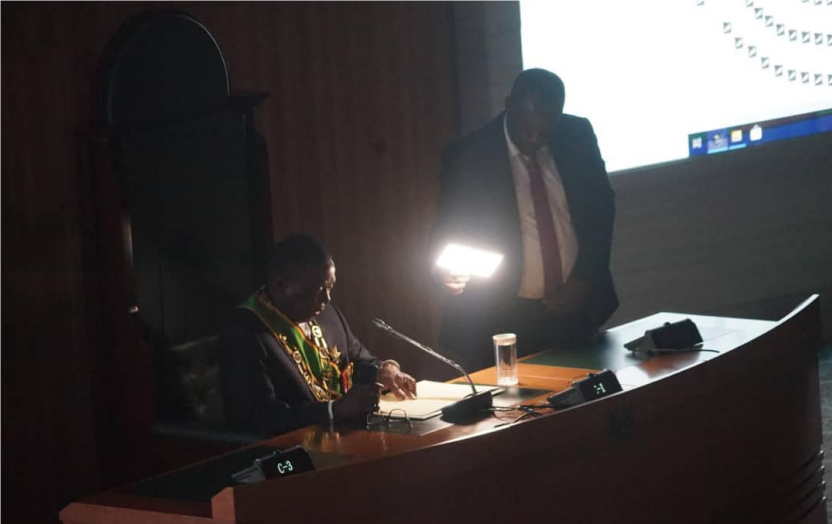
讲话期间突然停电,津巴布韦总统借手电筒照明完成剩余发言
Huan Qiu Wang· 2025-10-29 02:25
Core Points - The incident of power outage during President Mnangagwa's speech highlights ongoing issues with Zimbabwe's electricity supply and infrastructure [1][3] - The decision to rent a generator instead of using the national power grid was made to prevent a repeat of a previous outage during a significant budget report [3] - Zimbabwe continues to face severe electricity shortages, with many households and businesses experiencing daily power cuts exceeding five hours [3] Group 1 - The power outage occurred during a parliamentary session, forcing President Mnangagwa to use a flashlight to continue his speech [1] - The outage was caused by a malfunction of the rented generator, which failed to switch to the national grid due to an installation error [3] - The Speaker of Parliament, Mudenda, apologized to the President and suggested possible sabotage, promising to investigate and punish those responsible [1][3] Group 2 - The power supply issues are indicative of broader challenges within Zimbabwe's energy sector, which is struggling to meet demand [3] - The incident underscores the need for improvements in the country's electrical infrastructure and reliability [3]
美国可再生能源行业再遭特朗普打击!企业高管警告:将加剧电力短缺并推高电价
智通财经网· 2025-08-25 00:20
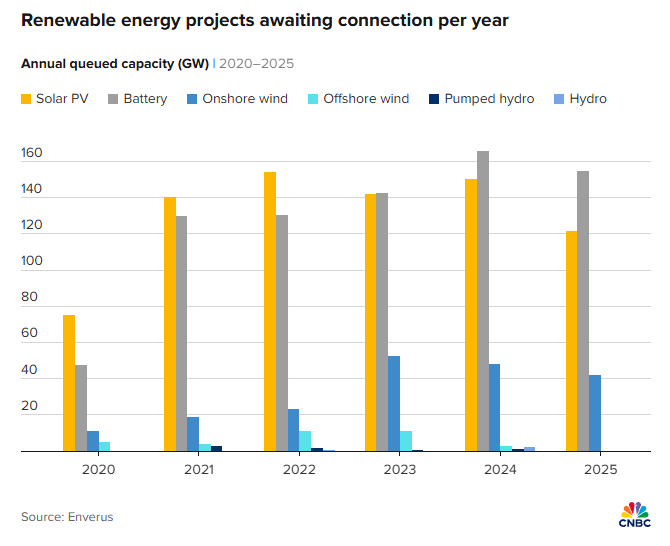
Core Viewpoint - The recent statements by President Trump against renewable energy projects, particularly solar and wind, may lead to increased energy prices for consumers and exacerbate the already strained power grid due to rising electricity demand [1][2]. Group 1: Impact on Renewable Energy Development - Trump's administration has halted approvals for solar and wind projects, raising concerns among industry executives about the potential slowdown in the growth of the renewable energy sector [1][2]. - The Department of the Interior's new permitting authority is viewed as an unprecedented political review that could hinder the development of renewable energy projects [1][2]. - Executives from major renewable energy developers Arevon, Avantus, and Engie North America express that the permitting delays will significantly impact the industry's progress [1][2]. Group 2: Economic and Investment Uncertainty - The bureaucratic processes and rising costs due to tariffs on metals are creating market instability, making it difficult for companies to plan and execute contracts [2][5]. - Engie North America has reduced its planned investments in the U.S. by 50% due to regulatory uncertainties and tariffs, indicating a shift in perception of the U.S. as a stable business environment [5]. - The cost of solar and battery storage projects has increased by up to 30% due to metal tariffs, leading developers to renegotiate electricity prices with utility companies [6]. Group 3: Future Projections and Challenges - The termination of key tax credits for solar and wind projects by the end of 2027 will further complicate the financial viability of new renewable energy projects, potentially leading to higher electricity bills for consumers [6][7]. - The anticipated decline in new renewable energy generation from late 2026 to 2028 could result in the exit of smaller players from the market due to financial risks [7]. - The increasing demand for electricity from data centers and AI systems may lead to power shortages, as the current renewable energy capacity may not meet the rising needs [8][9].
【环球财经】记者观察:伊拉克夏季“电荒”背后的发展短板
Xin Hua She· 2025-08-13 13:48
Core Viewpoint - Iraq is facing a severe electricity shortage exacerbated by rising temperatures and inadequate power supply infrastructure, despite its rich oil and gas resources [1][2][4]. Group 1: Electricity Supply and Demand - Over 50% of Iraq's provinces are experiencing extreme heat, leading to increased electricity demand that the current supply cannot meet [1]. - Iraq's claimed total installed power generation capacity is 40 GW, but actual peak generation capacity during summer is only about 27 GW, falling short of the peak demand of 45 GW [2]. Group 2: Structural Issues in Power Sector - The pricing of electricity in Iraq is significantly below the cost of generation, leading to a chaotic billing and regulatory system that hampers infrastructure development [3]. - In Baghdad, the national grid can only provide about 12 hours of electricity daily during summer, forcing residents to rely on expensive diesel generators [3]. Group 3: Fuel Supply Challenges - Iraq's electricity generation heavily relies on natural gas, with 20% to 25% of its power production depending on imports from Iran [4]. - The actual export volume of natural gas from Iran has fluctuated significantly, impacting Iraq's power generation capacity by at least 3,800 MW due to reduced imports [4]. Group 4: Wasted Resources and Economic Loss - Iraq is wasting a significant amount of associated gas, with flaring volumes in 2023 exceeding 17.7 billion cubic meters, accounting for nearly 12% of the global total [6]. - The economic loss from flaring is estimated to exceed $2 billion annually, and effective recovery could potentially add at least 10 GW of power generation capacity [6]. Group 5: Need for Reform - The historical exploitation of Iraq's energy resources has led to a lack of development in domestic gas processing capabilities, resulting in the inefficient burning of associated gas [5][6]. - There is a consensus among energy experts in Iraq that eliminating gas flaring and improving recovery methods is essential to alleviate the ongoing electricity crisis [6].
越南总理:今年要避免在任何情况下出现电力短缺。
news flash· 2025-05-05 03:08
Core Viewpoint - The Vietnamese Prime Minister emphasizes the need to avoid any power shortages this year [1] Group 1 - The government is taking proactive measures to ensure a stable electricity supply [1] - There is a focus on enhancing the capacity of power generation and distribution [1] - The Prime Minister's statement reflects the urgency of addressing potential energy crises [1]