社会主义现代化

Search documents
金湾“十四五”收官之年GDP近千亿,今年目标增长6%
Nan Fang Du Shi Bao· 2026-02-03 04:52
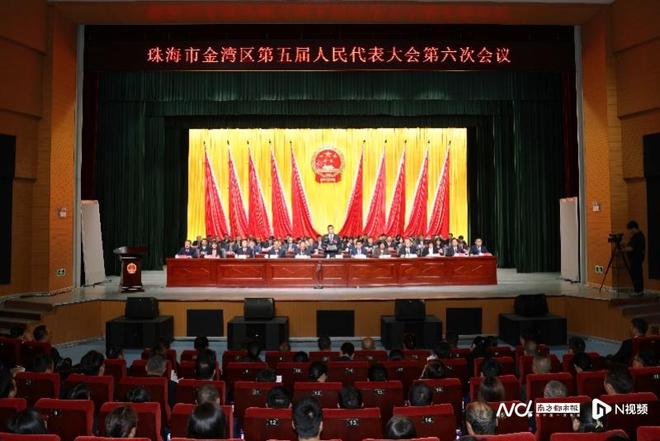
南都讯 记者李洁琼 2月3日,珠海市金湾区第五届人民代表大会第六次会议开幕。区长刘军向大会作政 府工作报告,回顾"十四五"时期发展成就与2025年工作,明确"十五五"时期主要目标及2026年重点工 作。 会议还听取了区人大常委会、区人民法院、区人民检察院工作报告,表决通过相关选举及票决办法,书 面审查了"十五五"规划纲要草案及计划、预算报告。 区长刘军向大会作政府工作报告。 过去一年,金湾重点推进六方面工作:抓项目促升级,稳固现代化产业体系根基;强科技、兴教育、聚 人才,增强基础性战略支撑;促改革、优环境,释放发展活力动力;提品质、聚人气,加快建设西部城 市中心;解民忧、暖民心,持续改善民生福祉;防风险、除隐患,维护社会和谐稳定。 "十五五"瞄准基本实现社会主义现代化,今年GDP预期增长6% 珠海市金湾区第五届人民代表大会第六次会议开幕。 "十四五"时期工业主阵地地位巩固,人均GDP预计突破21万元 报告指出,"十四五"时期是金湾发展历史上具有里程碑意义的五年。 五年来,金湾坚持"工业主阵地"定位,推动传统产业智能化转型、新兴产业高端化攀升、未来产业前瞻 性布局,高质量发展实体根基持续巩固;秉承"人民城市"理 ...

甘肃省第十四届人民代表大会财政经济委员会关于甘肃省国民经济和社会发展第十五个五年规划纲要草案的审查结果报告
Xin Lang Cai Jing· 2026-01-30 00:59
甘肃省第十四届人民代表大会财政经济委员会关于甘肃省国民经济和社会发展第十五个五年规划纲要草 案的审查结果报告 (2026年1月29日省十四届人大四次会议主席团第三次会议通过) 省十四届人大四次会议主席团: 甘肃省第十四届人民代表大会第四次会议审查了省人民政府提出的《甘肃省国民经济和社会发展第十五 个五年规划纲要(草案)》(以下简称《纲要草案》)。财政经济委员会根据各代表团和有关专门委员 会的审查意见,又作了进一步审查。现将审查结果报告如下。 一、关于"十四五"规划纲要实施情况的总体评价 财政经济委员会认为,"十四五"时期是甘肃发展极不寻常、极不平凡的五年。全省上下坚持以习近平新 时代中国特色社会主义思想为指导,全面贯彻党的二十大和二十届历次全会精神,深入贯彻习近平总书 记视察甘肃重要讲话重要指示精神,按照省委工作部署,加快构建"一核三带"区域发展格局,大力实 施"四强"行动,扎实做好"五量"文章,深入推进"引大引强引头部"行动,着力打造"七地一屏一通道", 有力有效应对疫情冲击和突如其来的自然灾害,顶压前行、迎难而上,综合经济实力大幅跃升,现代化 产业体系加速构建,科技创新水平持续提升,改革开放激发发展活力, ...
新旧动能转换攻坚,经济第一大省广东展望新五年
第一财经· 2026-01-26 14:54
2026.01. 26 本文字数:1969,阅读时长大约3分钟 作者 | 第一财经 宋婕 在地区生产总值从11.37万亿元提高到14.58万亿元之后,广东提出用13年(2022年到2035年)实现经济总 量倍增的愿景。 1月26日,广东省十四届人大五次会议开幕,省长孟凡利在开幕会上作政府工作报告。 2026年广东的主要预期目标是地区生产总值增长4.5%~5%,在实际工作中全力争取更好结果,地方一般 公共预算收入增长3%左右,居民收入增长与经济增长同步。 根据广东省政府工作报告,广东"十五五"时期经济社会发展的主要目标有,地区生产总值年均增长5%左 右,高质量发展取得显著成效,科技自立自强水平大幅提高、城乡区域发展更加协调、进一步全面深化改革 取得新突破等。展望未来,从党的二十大到二〇三五年,用13年时间基本实现社会主义现代化,经济总量 实现倍增,人均地区生产总值达到中等发达国家水平。 中山大学岭南学院经济学系教授、港澳珠江三角洲研究中心副主任林江在接受第一财经记者采访时表示,可 以用务实、转型、稳预期来评价该目标。"广东经济体量大、基数高,4.5%~5%的年度增速和'十五五'时期 年均5%左右,对应的增量依然 ...
锚定率先基本实现社会主义现代化目标 全面建设好新时代伟大祖国的首都
Xin Lang Cai Jing· 2026-01-26 00:26
Core Insights - The government work report and the "14th Five-Year" plan outline a commitment to achieving high-quality development in Beijing, emphasizing the importance of modernizing the capital and aligning with central government directives [1][2] Group 1: Government Work Report - The report is praised for its high political stance and comprehensive summary of achievements, reflecting a strong confidence in the capital's development during the "15th Five-Year" period [1] - Key representatives expressed support for various initiatives, including carbon governance, healthcare for the elderly, cultural integration, and tourism branding [1] Group 2: Modernization Goals - The "15th Five-Year" period is identified as crucial for achieving socialist modernization, with a focus on elevating the overall level of modernization in Beijing [2] - The city aims to enhance its role as a political, cultural, international exchange, and technological innovation center, promoting a vibrant and inclusive environment [3] Group 3: Economic Development Strategies - Emphasis on optimizing internal demand and consumption-driven growth, while balancing investments in both physical and human capital [3][4] - The government aims to create a market-oriented, law-based, and international business environment to attract world-class institutions and talent [4] Group 4: Social Welfare and Urban Governance - Initiatives to improve public services in line with demographic changes, focusing on healthcare, food safety, and transportation [4] - The goal is to enhance urban governance and community well-being, ensuring a harmonious and warm city environment [4]
“跳一跳能实现”!2026年经济增长目标怎么定的?北京市发改委解读
Bei Jing Shang Bao· 2026-01-25 04:53
Core Viewpoint - The economic growth target for Beijing in 2026 is set at around 5%, reflecting a balance between ambitious and practical goals, while considering both current and long-term needs [2][4]. Group 1: Economic Growth Target - The target for Beijing's GDP growth in 2026 is approximately 5% [2]. - To achieve the goal of doubling the economic total by 2035 compared to 2020, an average annual growth rate of about 4.5% is required over the next decade [2]. Group 2: Supporting Factors - Over the past five years, Beijing's economy has crossed two trillion-yuan thresholds, with a growth rate of 5.4% in 2025, surpassing the national average by 0.4% [3]. - Key supporting conditions include the deep integration of technological and industrial innovation, continuous market vitality from reforms, and the strengthening of high-tech industries [3]. - In 2025, the industrial added value of Beijing's large-scale industries is expected to grow by 6.5%, with total industrial output reaching 2.8 trillion yuan [3]. Group 3: Policy and Implementation - The municipal government has outlined seven measures to ensure the achievement of the economic growth target for 2026 [4]. - The approach emphasizes a balance between confidence-boosting and adherence to economic principles, ensuring that goals are realistic and achievable [4].
为北京率先基本实现社会主义现代化提供坚强保障
Xin Lang Cai Jing· 2026-01-21 00:03
Core Viewpoint - The key to advancing Chinese-style modernization lies in the Party's comprehensive leadership, with Beijing playing a crucial role in achieving this goal through various initiatives and reforms [1]. Group 1: Political Supervision and Party Leadership - Strengthening political supervision is essential to ensure the implementation of major decisions made by the Central Committee [2]. - Continuous adherence to the Central Eight Regulations is necessary to promote long-term and normalized work style construction [2]. - There is a need to regulate and supervise the allocation and operation of power, tightening institutional frameworks [2]. Group 2: Anti-Corruption and Governance - A comprehensive approach to combating corruption is vital, enhancing the overall effectiveness of governance [2]. - The responsibility for strict party governance must be firmly enforced, fostering a collaborative effort in party management [2]. - A disciplined and accountable environment will accelerate the formation of an innovative and vibrant entrepreneurial atmosphere in Beijing [2]. Group 3: Commitment to Modernization - Party organizations and members must cultivate a strong sense of responsibility and mission, focusing on the Party's core tasks [3]. - The discipline inspection and supervision agencies should embody the spirit of self-revolution, enhancing their capabilities in supervision [3]. - A clean political ecology will harness collective strength, contributing to a more remarkable chapter in Beijing's modernization efforts [3].
市政协九届五次会议 提案委员会第二次全体会议召开
Xin Lang Cai Jing· 2026-01-21 00:01
Group 1 - The core viewpoint of the article highlights the ongoing efforts of the Jiaxing Municipal Political Consultative Conference to review and select key proposals during its 9th session, emphasizing the importance of aligning with the city's development goals [1] - A total of 392 proposals were submitted by the conference members, with 346 officially accepted and 40 combined with others for review, indicating active participation and engagement from various stakeholders [1] - The proposals focus on high-quality economic development and improving people's livelihoods, reflecting the political awareness and commitment of the conference members to contribute to the democratic process and local governance [1] Group 2 - The proposals are aligned with the strategic goals set by the Jiaxing Municipal Party Committee, aiming to accelerate the city's development as a key center in the Yangtze River Delta urban agglomeration [1] - The conference emphasizes the importance of practical and actionable suggestions, showcasing the dedication of the members to address the needs and expectations of the local population [1] - The overall theme of the proposals is centered around the "Six Priorities" initiative, which aims to ensure significant progress towards common prosperity and the realization of socialist modernization within the city [1]
衢州市民热盼两会绘就现代化市域发展新蓝图
Xin Lang Cai Jing· 2026-01-20 17:50
Core Viewpoint - The article emphasizes the expectations of citizens in Quzhou for the upcoming two sessions, focusing on industrial development, transportation infrastructure, urban renewal, and improved public services as part of the city's strategic goals for the 14th Five-Year Plan [1][2][5]. Industrial Development - Citizens hope for a clearer industrial roadmap during the two sessions, particularly in advanced manufacturing clusters such as new materials, new energy, integrated circuits, and high-end equipment [2]. - There is a strong desire for the city to attract large projects and enhance innovation platforms, with a focus on the development of the four-province science and technology corridor [2]. Transportation Infrastructure - Public expectations include the expansion of transportation networks beyond the ongoing Hangzhou-Quzhou high-speed rail, aiming for more rapid connections to core cities in the Yangtze River Delta and central regions [3]. - Enhancements to Quzhou Port's shipping capabilities and the resolution of local transportation issues, such as "dead-end roads" and optimizing micro-bus networks, are also key concerns [3]. Urban Renewal - Residents express a need for urban renewal initiatives, including the installation of elevators in old residential buildings, the development of parking facilities, and the improvement of community public service facilities [3]. - Rural residents are focused on the continuous investment in rural revitalization, seeking policies that support rural tourism, ecological agriculture, and e-commerce [3]. Public Services and Governance - There is a call for improved community services, particularly in elderly care and education, with a focus on equitable distribution of quality educational resources and mental health services for youth [4]. - Citizens are advocating for smarter governance solutions to address urban issues like traffic congestion and safety, as well as environmental sustainability in line with carbon neutrality goals [4]. Conclusion - The article concludes with a call for the two sessions to transform citizen expectations into actionable policies, aiming to enhance Quzhou's status as a four-province center city and a bridgehead for inland openness in the Yangtze River Delta [5].
中央政法委:全力服务经济建设这个中心
Zhong Guo Jing Ji Wang· 2026-01-19 14:36
Core Viewpoint - The meeting emphasizes the importance of focusing on economic construction and maintaining social stability during critical periods, highlighting the need for the legal and political sectors to support high-quality economic development and ensure national security [1] Economic Development - By 2025, China plans to optimize its visa-free entry policy, expecting 40.6 million foreign visitors, a year-on-year increase of 27.2%, with visitors from 77 visa-free countries accounting for 63% of total entries [1] National Security and Stability - The meeting underscores that national security is fundamental to national rejuvenation, and social stability is a prerequisite for national strength, acknowledging current challenges in economic growth and social stability [1] Role of Legal and Political Sectors - The legal and political sectors are urged to align closely with economic development, ensuring the maintenance of a socialist market economy order and contributing to the establishment of a high-level socialist market economic system [1]
我国GDP首破140万亿元 意味着什么?
Bei Ke Cai Jing· 2026-01-19 13:19
Economic Performance Overview - In 2025, China's GDP reached 140 trillion yuan, marking a 5.0% increase from the previous year, showcasing the resilience and potential of the Chinese economy amidst global challenges [4][5][20] - The economic performance is summarized by the four words "stability, progress, innovation, and resilience" [3][11] Contribution to GDP Growth - The contributions to GDP growth in 2025 were as follows: final consumption expenditure at 52.0%, capital formation at 15.3%, and net exports at 32.7% [5][6] - The retail sales of consumer goods surpassed 50 trillion yuan, with final consumption expenditure's contribution to economic growth increasing by 5 percentage points compared to the previous year [6][12] Structural and Qualitative Improvements - The increase in GDP is not merely quantitative but reflects structural improvements and enhanced quality, with high-tech manufacturing and service sectors showing significant growth [10][20] - High-tech manufacturing's value added accounted for 17.1% of total industrial value added, indicating a shift towards more advanced production capabilities [13][19] Innovation and Patent Growth - China became the first country to hold over 5 million valid domestic invention patents, with a leading position in international patent applications [8][19] - R&D expenditure intensity reached 2.8%, surpassing the OECD average for the first time, highlighting a commitment to innovation [14] Employment and Stability - The urban unemployment rate averaged 5.2% in 2025, indicating overall employment stability [12] - The foreign exchange reserves exceeded 3.3 trillion USD, contributing to economic stability [12] Future Economic Goals - The next target is to reach a GDP of 150 trillion yuan, with a focus on new quality productivity and internal demand, particularly consumption [23][24] - The growth drivers for the next phase include strategic emerging industries, service consumption, and the digital transformation of traditional manufacturing [24]