
科技创新和产业创新融合发展

Search documents
习言道|凝心聚力推动经济稳定向好
Zhong Guo Xin Wen Wang· 2025-12-09 00:44
Core Viewpoint - The meeting held by the Central Committee of the Communist Party of China emphasized the importance of gathering opinions from various democratic parties and non-partisan representatives regarding the current economic situation and future economic work, highlighting the need for proactive macroeconomic policies to achieve development goals [1][4]. Group 1 - The Central Committee aims to unite and lead the entire party and people to face challenges and strive for progress, balancing domestic and international situations [4]. - The meeting discussed the achievements over the past five years, noting significant advancements in economic strength, technological capabilities, and overall national power as the "14th Five-Year Plan" approaches completion [6]. - Various democratic parties and non-partisan representatives have actively conducted research on issues such as technological innovation, industrial integration, and expanding domestic demand, providing important recommendations for the Central Committee's decision-making [8]. Group 2 - The Central Committee expressed three hopes for democratic parties and non-partisan representatives: to deeply understand the spirit of the 20th Central Committee's Fourth Plenary Session, to actively contribute to the formulation and implementation of the "15th Five-Year Plan" [10].

创新笔谈 | 监督促进国有企业科技创新
Zhong Yang Ji Wei Guo Jia Jian Wei Wang Zhan· 2025-12-01 00:40
Core Viewpoint - The integration of technological innovation and industrial innovation is essential for developing new productive forces, as emphasized by General Secretary Xi Jinping during the discussions at the Jiangsu delegation of the 14th National People's Congress [1]. Group 1: Technological and Industrial Innovation - The Jiangsu Environmental Protection Group, as a leading high-tech environmental enterprise, is committed to implementing the central government's strategies on technological and industrial innovation [1]. - The group is focused on identifying and addressing bottlenecks and challenges in the integration of technological and industrial innovation through targeted supervision and practical measures [1]. Group 2: Responsibility and Collaboration - The group’s discipline inspection committee is reinforcing the regulatory responsibilities of various departments, including organization, personnel, finance, and technology, to enhance collaboration and share supervisory outcomes [2]. - There is a strong emphasis on monitoring the implementation of innovation-driven development strategies and addressing integrity risks in project evaluations and financial management [2]. Group 3: Institutional Support and Innovation Incentives - Effective institutional support is crucial for fostering the integration of technological and industrial innovation, with the group working to improve innovation incentive mechanisms and policies [3]. - The group is implementing a "challenge-based" mechanism for technology R&D projects, granting autonomy to teams in decision-making processes related to project execution [3]. - Strengthening the construction of a part-time technical manager team is aimed at facilitating the transformation and industrial application of technological achievements [3].
江小涓:产业创新和科技创新的融合发展,不仅仅是一个表述
腾讯研究院· 2025-11-17 08:33
Core Viewpoint - The forum emphasizes the integration of technological innovation and industrial innovation, highlighting the importance of enterprises in driving innovation in the digital intelligence era [3][4][16]. Group 1: Technological and Industrial Innovation - The recent Fourth Plenary Session's recommendations for the 14th Five-Year Plan stress accelerating high-level technological self-reliance and the integration of technological and industrial innovation [3][4]. - The new focus on "promoting the integration of technological innovation and industrial innovation" signifies a shift in the innovation paradigm, emphasizing the role of enterprises as the main body of innovation [4][16]. Group 2: Role of Enterprises in Innovation - In the digital intelligence era, enterprises have become the leaders in innovation, moving beyond merely being the heads of technology transfer [7][10]. - The importance of enterprises in the innovation chain has fundamentally increased, as they can leverage vast amounts of data and advanced algorithms to drive new discoveries and applications [6][7][8]. Group 3: Investment Trends - There is a notable shift in funding sources for innovation, with corporate venture capital (CVC) becoming more prominent as traditional venture capital (VC) and private equity (PE) face challenges [12][14]. - Major tech companies like Alibaba and Tencent are leading investments in cutting-edge technologies, indicating a trend where enterprises directly invest in early-stage projects [12][14]. Group 4: Challenges and Opportunities - The complexity of modern technological innovations requires a combination of various factors, including materials, processes, and market needs, which are best addressed by enterprises [9][10]. - While corporate investments can enhance the overall competitiveness of the industry, there are concerns about potential monopolistic behaviors that could stifle competition in the venture capital space [13][14]. Group 5: Future Directions - The integration of technological and industrial innovation is crucial for building an innovative nation, necessitating increased support for enterprises in terms of project approvals, talent acquisition, and funding [16]. - The dual drive of theoretical logic and data insight remains essential, as the complexity of scientific problems requires both foundational knowledge and advanced data-driven approaches [15].

国家统计局:深入推进科技创新和产业创新融合发展,培育壮大新质生产力
Mei Ri Jing Ji Xin Wen· 2025-11-14 03:12
Core Viewpoint - The economic structure adjustment in China is steadily progressing, with some growing pains in the transition from old to new driving forces. However, the future outlook is positive, with the cultivation of new productive forces, the continuous growth of new energy, and a favorable trend towards high-quality economic development [1] Group 1 - The focus for the next phase will be on promoting high-quality development as the main theme [1] - There will be an emphasis on deepening the integration of technological innovation and industrial innovation [1] - Continuous optimization of the economic structure is a priority, alongside the cultivation and expansion of new productive forces [1]
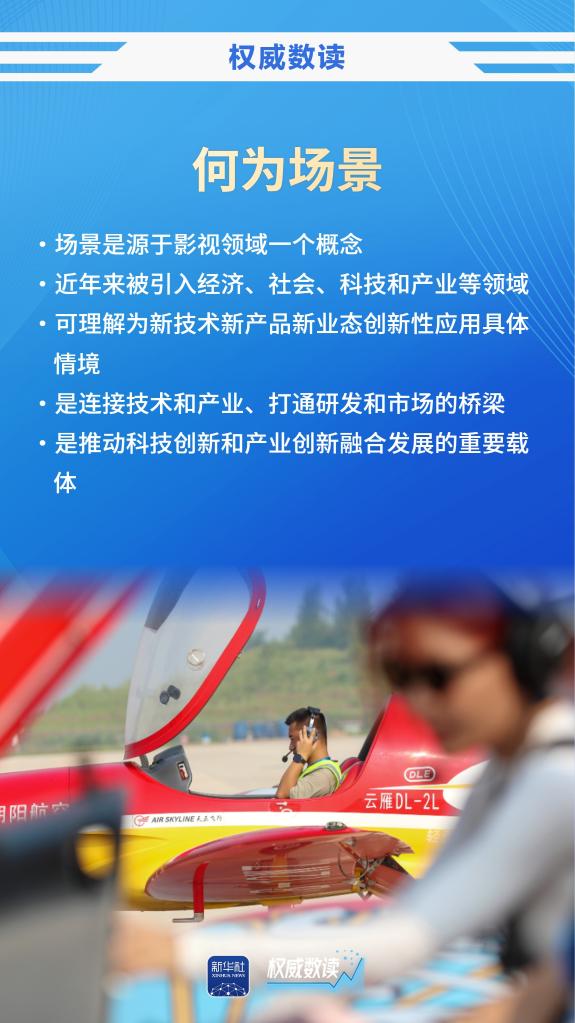
权威数读|聚焦场景培育,这场吹风会有啥看点?
Xin Hua She· 2025-11-10 14:10
Core Viewpoint - The State Council has issued implementation opinions to accelerate the cultivation and open promotion of new application scenarios, marking a systematic deployment at the national level, which has garnered significant public attention [1] Group 1: Definition of Scenarios - Scenarios originated from the film industry and have been introduced into various fields such as economy, society, technology, and industry [4] - Scenarios can be understood as specific contexts for the innovative application of new technologies, products, and business models [4] - They serve as a bridge connecting technology and industry, facilitating the integration of research and market [4] - Scenarios are important carriers for promoting the integration of technological and industrial innovation [4] Group 2: Objectives of the Implementation Opinions - The primary goal is to leverage China's vast market and rich application scenarios through scenario cultivation and open new methods [6] - It aims to create a "testing ground" for new technologies and products, an "accelerator" for emerging industries, and a "touchstone" for institutional reform and innovation [6] - The initiative seeks to accelerate the large-scale industrial application and development of new technologies and products [6] Group 3: Key Areas and Measures - The implementation opinions outline five main areas and 22 key application scenarios for scenario cultivation and openness [11] - It specifies the main pathways for scenario openness and proposes measures to promote fair and efficient allocation of scenarios [11] - There is a focus on strengthening policy support for scenario cultivation and openness [11] Group 4: Application in Manufacturing - The Ministry of Industry and Information Technology has selected a first batch of 111 advanced applicable technologies to encourage promotion by industry associations and professional institutions [15] - Policies for insurance compensation for the first set of major technical equipment and the first batch of new materials have been implemented [15] - Pilot projects for the large-scale application of Beidou in the industrial and information sectors and integrated applications for intelligent connected vehicles are being developed [15] Group 5: Central Enterprises' Role - Central enterprises have established 190 pilot verification platforms, providing over 400 pilot services to society and laying out more than 800 AI+ application scenarios [19] - They collaborate with various ownership enterprises, universities, and research institutes to build an industrial ecosystem [19] - A green channel for the procurement of first sets, first batches, and first versions has been established, along with the launch of the open-source "AI Renewal Community" [19]
打造一批新领域新赛道应用场景
Zhong Guo Zheng Quan Bao· 2025-11-07 20:11
Core Viewpoint - The Chinese government has issued implementation opinions to accelerate the cultivation and large-scale application of new scenarios, emphasizing the importance of integrating technology and industry to promote innovation and economic development [1][2]. Group 1: New Application Scenarios - The opinions focus on creating new application scenarios in five areas: digital economy, artificial intelligence, industrial transformation, social governance, and improving people's livelihoods, with 22 key areas for scenario cultivation and opening [2]. - In the digital economy, the government aims to explore applications of technologies such as the metaverse, virtual reality, and robotics, enhancing the integration of the digital and real economies [2]. - For artificial intelligence, the emphasis is on strengthening core technology breakthroughs and promoting high-value application scenarios to meet diverse development needs across various sectors [2][3]. Group 2: Industrial Transformation and Upgrading - In the manufacturing sector, the focus is on smart manufacturing, green manufacturing, and service-oriented manufacturing, with support for innovative production lines and digital parks [3]. - The transportation sector will see the introduction of new technologies for smart traffic management and optimization of urban transport structures, enhancing efficiency while ensuring safety [3]. - The opinions also highlight the need for collaborative reforms in market access, scenario cultivation, and resource allocation to support the development of new productive forces [3].
市委常委会召开会议:牢记嘱托 感恩奋进,全力打造“五个中心”,努力建设现代化大武汉
Chang Jiang Ri Bao· 2025-10-20 13:04
Core Points - The meeting emphasized the importance of implementing Xi Jinping's directives for Wuhan's development, highlighting the need for a strong commitment to high-quality growth and innovation [1][2][3] - The focus is on enhancing technological and industrial innovation, promoting regional coordination, and establishing Wuhan as a significant hub in the domestic and international economic landscape [2][3] Group 1 - The meeting reiterated the significance of Xi Jinping's six visits to Wuhan, which provide guidance for the city's development and underscore the expectations placed on it [1] - There is a strong emphasis on transforming the expectations from the central leadership into actionable strategies for economic and social development [1][2] - The meeting called for a concerted effort to improve urban governance and environmental sustainability, aiming for a comprehensive green transition in economic and social development [2][3] Group 2 - The leadership aims to strengthen the city's core functions and enhance its development capabilities, focusing on the integration of the Wuhan metropolitan area and surrounding regions [2] - There is a commitment to fostering a beautiful Wuhan through ecological protection and continuous improvement of environmental quality [2] - The meeting highlighted the need for a robust political ecosystem that supports reform and development, ensuring a clean and efficient governance structure [2][3]
李乐成在陕西调研科技创新和产业创新融合发展
Zheng Quan Shi Bao Wang· 2025-10-11 13:56
Core Viewpoint - The Ministry of Industry and Information Technology emphasizes the integration of technological innovation and industrial innovation, guided by the directives of General Secretary Xi Jinping, to enhance reform and drive development in the industry [1] Group 1: Policy and Strategy - The ministry aims to promote seamless integration of the innovation chain and industrial chain through reform measures, ensuring robust policy support for industry innovation [1] - There is a focus on strengthening the implementation mechanism for key core technology breakthroughs and enhancing disruptive technology innovation [1] Group 2: Enterprise Support - The ministry plans to improve management and services for quality enterprises, guiding innovation resources to concentrate on enterprises [1] - National major projects in technology will leverage the role of enterprises to enhance their specialization and competitiveness [1] Group 3: Innovation Platforms - The ministry encourages enterprises to lead the establishment of new innovation platforms and accelerate the industrialization of high-tech achievements [1] - There is a strategic layout for national manufacturing innovation centers to facilitate this process [1] Group 4: Industry Development - The ministry aims to upgrade traditional industries and foster emerging and future industries, promoting the development of innovative industrial clusters and advanced manufacturing clusters [1] - The goal is to create new momentum and advantages for industrial development tailored to local conditions [1]
经济日报评论员:促进科技创新和产业创新融合发展
Jing Ji Ri Bao· 2025-09-24 00:06
Group 1 - The core viewpoint emphasizes the importance of integrating technological innovation and industrial innovation to seize competitive advantages and foster new development momentum [1] - Jiangsu Province's Yancheng City is leveraging the rapid growth of green energy to enhance traditional industries, support emerging industries, and guide future industrial layouts, providing a practical example of deep integration between technological and industrial innovation [1] - Yancheng has initiated a series of activities such as "Breakthrough Year," "Promotion Year," and "Enhancement Year" to implement innovation, reflecting decision-makers' understanding of the critical role of technological innovation in shaping the city's future [1] Group 2 - Companies are identified as the main drivers of integrating technological and industrial innovation, and there is a need to address the lack of collaboration between industry, academia, and research institutions [2] - The article highlights the necessity for continuous reform to support companies in collaborating with universities and research institutions to tackle industry-specific technological challenges and cultivate talent [2] - Building infrastructure for the conversion of technological achievements into practical productivity is crucial, including establishing platforms for concept validation and reducing the costs associated with technology transfer [2] Group 3 - The establishment of cross-departmental and cross-regional coordination mechanisms is essential to break down information silos and resource barriers, thereby enhancing the innovation ecosystem [3] - Optimizing resource allocation and strengthening service guarantees are necessary to unlock the potential of technological innovation and industrial upgrading [3]
北京发布科技创新和产业创新融合发展“北京模式”
Xin Jing Bao· 2025-09-12 11:57
Group 1 - The core viewpoint of the news is the establishment of a new mechanism in Beijing to promote the integration of technological innovation and industrial innovation, showcasing a new model for development [1][6] - The new mechanism focuses on innovation sources, industrial transformation, application scenarios, and industrial landing, aiming to create a comprehensive development model known as the "Beijing Model" [1][6] Group 2 - Beijing will leverage its advantages in higher education and research institutions to enhance high-quality technological supply, emphasizing the integration of basic and applied research [2][6] - The city plans to utilize a joint funding model involving the natural science fund to address fundamental scientific issues faced by enterprises [2][3] Group 3 - There are currently 1,475 companies in Beijing with established technology innovation centers, and over 1,000 national-level specialized and innovative "little giant" enterprises, indicating strong corporate innovation vitality [3][4] - The city aims to strengthen the "research institution + enterprise" model in key application-driven industries such as blockchain and advanced computing [3][4] Group 4 - Beijing will promote the application of technological achievements by establishing incubation platforms tailored to industry characteristics and enhancing the common platform system [4][5] - The government will play a crucial role in facilitating the transformation of scientific achievements, particularly in highly regulated industries like healthcare [4][5] Group 5 - The city has established a city-level inter-departmental mechanism for technological innovation and industrial integration, focusing on original innovation and enhancing the capacity for technology transfer and industrialization [5][6] - Beijing plans to develop productive service industries such as intellectual property and legal services, and establish a technology finance service system to support innovation [5][6]