关键核心技术攻关

Search documents
关键核心技术要不来等不来:全国两会上原始创新“出圈”
第一财经· 2026-03-04 15:59
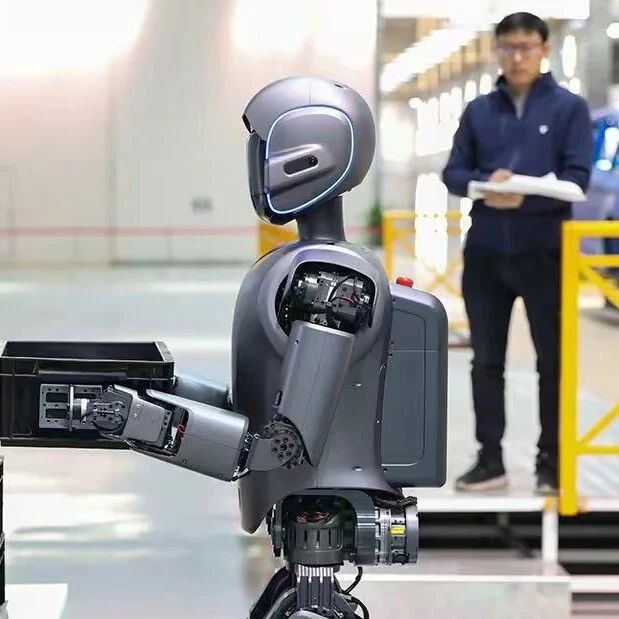
Core Viewpoint - The article emphasizes the importance of independent innovation and the development of core technologies in China, particularly in the context of emerging industries like artificial intelligence and quantum computing [2][4]. Group 1: Original Innovation and Key Technologies - The "14th Five-Year Plan" aims to strengthen original innovation and tackle key core technology challenges, promoting deep integration of technological and industrial innovation [6]. - The article highlights the success of China's quantum computing advancements, including the development of a high-precision strontium atomic optical lattice clock, which can operate with an error of less than one second over 300 billion years [4]. - The story of overcoming "bottleneck" challenges in quantum computing, particularly the development of a dilution refrigerator, showcases China's ability to achieve international advanced levels in critical technology [4][6]. Group 2: Role of Enterprises in Innovation - Enterprises are identified as the main drivers of innovation, with companies like CATL investing over 20 billion yuan annually in R&D and employing over 21,000 people in independent research [7]. - CATL's commitment to innovation has resulted in over 50,000 patents and a strong supply chain, enabling its products to be used in over 2 million vehicles worldwide [7]. - The article stresses the need for companies to increase R&D investments, particularly in artificial intelligence and new materials, to maintain a competitive edge [9]. Group 3: Artificial Intelligence and Robotics - The article discusses the advancements in humanoid robots, which integrate artificial intelligence, high-end manufacturing, and new materials, indicating a significant leap in technology and application scenarios [9][10]. - The importance of "embodied intelligence" in manufacturing and the need for breakthroughs in this area are highlighted, with suggestions for establishing national key R&D projects to support deep applications of embodied intelligence [10]. - The development of a robust information infrastructure, including the largest 5G network globally, is noted as a critical factor in enhancing the capabilities of artificial intelligence and related technologies [12]. Group 4: Governance and Ethical Considerations - The article mentions the need for governance in artificial intelligence, addressing issues such as liability in autonomous driving and copyright in AI-generated content [13]. - Suggestions for creating a collaborative governance ecosystem and establishing ethical standards for AI are presented, emphasizing the importance of a structured approach to managing risks associated with rapid technological advancements [13].

瞭望 | 关键核心技术攻关织网破局
Xin Hua She· 2026-02-24 09:01
Core Insights - The article emphasizes the transformation in China's approach to tackling key core technologies, shifting from a linear model of research to a networked collaborative model that focuses on real industrial needs and practical applications [1][4][6]. Group 1: Innovation Ecosystem - Various innovation entities, including universities, research institutions, enterprises, and government, are collaborating through knowledge sharing and capability complementarity to achieve a seamless connection from basic research to industrialization [1][4]. - The new collaborative model, termed "networked collaboration," is essential for overcoming "bottleneck" technologies and building a self-controlled industrial chain [4][6]. Group 2: Case Studies of Collaborative Efforts - The Qin Chuan Machine Tool Group in Shaanxi has formed a collaborative attack consortium with Xi'an Jiaotong University and other partners to address the challenges in high-end manufacturing, demonstrating a successful cross-entity approach to technology breakthroughs [2][3]. - The establishment of the New Power System Joint R&D Center by State Grid and Xi'an Jiaotong University exemplifies the shift from isolated efforts to integrated research, focusing on real-world energy needs [6][7]. Group 3: Advancements in Technology - Significant advancements have been made in high-end CNC machine tools, with successful applications of temperature control systems and error compensation algorithms, enhancing China's capabilities in high-end manufacturing [3][4]. - The development of a megawatt-level commercial floating wind power system marks a significant milestone in high-altitude wind energy applications, showcasing the potential of innovative technologies [9][11]. Group 4: Investment and Resource Allocation - Early-stage investments in emerging technologies, such as high-altitude wind energy, are crucial for fostering innovation and addressing future industrial needs [9][10]. - The concept of "superior incubation" and "deep incubation" is gaining traction, focusing on supporting technologies from their nascent stages to ensure successful commercialization [11][12]. Group 5: Systematic Approach to Innovation - The transition from merely replicating existing technologies to fostering original innovations is highlighted as a key strategy for advancing core technology breakthroughs [9][12]. - A systematic approach to technology development is being adopted, emphasizing proactive engagement with future industry needs rather than reactive responses to current demands [12].
经济日报金观平:夯实未来产业发展基石
Xin Lang Cai Jing· 2026-02-19 02:32
Core Insights - The emphasis is on leveraging the advantages of a new type of national system to enhance key core technology breakthroughs and accelerate the application of scientific research achievements [1][2] Group 1: Technology and Industry Development - The future industries driven by cutting-edge technologies exhibit significant foresight, strategic importance, disruptive potential, and uncertainty [1] - The speed, breadth, and depth of future industry development are largely determined by the extent of technological breakthroughs [1] - The new round of technological revolution and industrial transformation is accelerating, with emerging technologies leading and supporting the rapid rise of future industries [1] Group 2: Research and Innovation - Strengthening basic research is crucial as it serves as the foundation for all technological issues [2] - Transitioning from "technical bonsai" to "industrial forest" requires strategic, forward-looking, and systematic layout of basic research to enhance original innovation capabilities [2] - There is a need for a comprehensive policy support system and the establishment of relevant concept verification, pilot testing platforms, and application scenario bases to facilitate efficient technology transfer [2] Group 3: Strategic Focus - The new type of national system is viewed as a vital tool for concentrating efforts on major tasks and winning key core technology battles [1] - It is essential to gather human, material, and financial resources to target critical areas such as high-performance chips and to increase R&D investment [1] - The current positive momentum in future industries, particularly in quantum technology, indicates a need to solidify the technological foundation and strategically position for the next wave of technological revolution and industrial transformation [2]
夯实未来产业发展基石 加快科技成果转化应用
Jing Ji Ri Bao· 2026-02-19 01:56
Group 1 - The core viewpoint emphasizes the importance of leveraging the advantages of a new type of national system to enhance key core technology breakthroughs and accelerate the application of scientific and technological achievements [1][2] - The future industries driven by cutting-edge technologies exhibit significant foresight, strategic importance, disruptive potential, and uncertainty, with the degree of technological breakthroughs largely determining the speed, breadth, and depth of future industrial development [1] - The new type of national system is highlighted as a crucial tool for concentrating resources to tackle key core technology challenges, with a call for collaboration across society to focus on critical areas such as high-performance computing chips [1] Group 2 - Strengthening basic research is identified as essential for addressing all technological issues, with a strategic, forward-looking, and systematic layout needed to enhance original innovation capabilities [2] - The transition from "technological bonsai" to "industrial forest" requires not only improved basic research but also a robust policy support system and the establishment of platforms for concept verification and application scenario bases [2] - The current positive momentum in future industries, particularly in quantum technology, indicates a need to solidify the technological foundation and strategically position for the next round of technological revolution and industrial transformation [2]
夯实未来产业发展基石
Jing Ji Ri Bao· 2026-02-18 22:12
Group 1 - The core viewpoint emphasizes the importance of leveraging the advantages of a new type of national system to enhance key core technology breakthroughs and accelerate the application of scientific and technological achievements [1][2] - The future industries driven by cutting-edge technologies exhibit significant foresight, strategic importance, disruptive potential, and uncertainty, with the degree of technological breakthroughs largely determining the speed, breadth, and depth of future industrial development [1] - The new type of national system is highlighted as a crucial tool for concentrating resources to tackle key core technology challenges, requiring collaboration across various sectors to achieve decisive breakthroughs in critical areas such as high-performance chips [1] Group 2 - Strengthening basic research is identified as essential for addressing all technological issues, with the ability of future industries to progress being fundamentally linked to advancements in basic research [2] - The transition from "technological bonsai" to "industrial forest" necessitates a strategic, forward-looking, and systematic layout of basic research, alongside the enhancement of original innovation capabilities and the establishment of supportive policy frameworks [2] - The current positive momentum in future industries, particularly in quantum technology, indicates a rapid acceleration, underscoring the need to solidify the technological foundation and strategically position for the next wave of technological revolution and industrial transformation [2]
从“十四五”17个重大专项,看质谱仪的三大趋势
Xin Lang Cai Jing· 2026-02-06 11:26
Core Insights - The article highlights the evolution of domestic mass spectrometry technology in China, transitioning from addressing shortcomings to building modular capabilities, ultimately moving towards "catching up" and "leading" in the field [1][6][12] Policy and Planning - During the "14th Five-Year Plan" period, 26 mass spectrometry-related projects were laid out, with 16 officially approved and one pending approval for 2025, reflecting a strong policy drive to enhance core technologies [1][8] - 20 provinces have included "scientific instruments" in their "15th Five-Year Plan" proposals, focusing on key technology breakthroughs and industry cluster development [1][8] Project Development Stages - In the early phase (2021-2022), projects focused on improving machine performance, particularly in high resolution and sensitivity, addressing critical indicators that have historically constrained domestic mass spectrometry [3][10] - By mid-phase (2023), the focus shifted towards application-driven projects, emphasizing high-end scientific instruments and the autonomy of core components, aiming to reduce reliance on imports in the life sciences sector [4][11] - In the later phase (2024-2025), projects became more targeted, aligning closely with current research and detection needs, such as nucleic acid mass spectrometry for public health and high molecular weight protein analysis for structural proteomics [5][12] Technological Advancements - Key components like interface cones, ion traps, and dissociation modules became focal points for development, indicating a shift from complete machine usability to enhancing modular capabilities [4][11] - The increasing participation of enterprises in leading projects reflects a collaborative approach between research institutions and industry, enhancing the overall innovation ecosystem [4][11] Future Outlook - The ongoing improvements in the autonomy of core components and increased enterprise involvement suggest that domestic mass spectrometry is transitioning from "following" to "keeping pace" and potentially "leading" in certain niches [6][12] - The establishment of a major project for a high-performance chromatography-mass spectrometry system, currently pending approval, indicates a forward-looking strategy for nurturing young scientific talent and ensuring future technological reserves [5][12]

展望2026|释放创新驱动强势能
Jing Ji Ri Bao· 2026-01-28 09:18
Core Viewpoint - China is positioning itself to lead in global technology by 2026, focusing on innovation-driven development and strengthening its technological capabilities through a new model of national governance and strategic investments in key areas [1][2]. Group 1: Investment in Research and Development - By 2025, China's R&D expenditure intensity is projected to reach 2.8%, surpassing the OECD average for the first time, with basic research funding accounting for 7.08% of total R&D, a historical high [2]. - The government aims to enhance the proportion of basic research funding in total R&D expenditures, narrowing the gap with developed countries [3]. Group 2: Focus on Core Technologies - The "14th Five-Year Plan" emphasizes breakthroughs in critical core technologies across various sectors, including integrated circuits and advanced materials, to ensure industrial and national security [4]. - In the semiconductor sector, China plans to overcome key technological challenges and promote the large-scale application of domestic chips in consumer electronics and industrial control [4]. Group 3: Strategic Technological Forces - China will strengthen collaboration among national laboratories, research institutions, and leading technology enterprises to build a cohesive strategic technological force [5]. Group 4: New Quality Productivity - The development of new quality productivity is a key focus, with an emphasis on creating application scenarios and platforms for technology verification [7]. - The integration of AI into manufacturing and service sectors is expected to transform production processes and enhance service efficiency [7]. Group 5: International Cooperation and Innovation Community - China aims to foster international cooperation in technology to address global challenges, advocating for a fair and open international governance system [11]. - The establishment of regional innovation centers in Beijing, Shanghai, and the Guangdong-Hong Kong-Macau Greater Bay Area will promote collaborative development and resource sharing [12]. Group 6: Innovation Ecosystem Optimization - Continuous reforms in the scientific and technological system will be implemented to eliminate barriers to innovation and create a supportive environment for research and development [13]. - The promotion of a culture that values innovation and scientific achievement is essential for enhancing the overall innovation landscape [13]. Group 7: Financial Support for Technology - The government plans to enhance financial services for major technological projects and small to medium-sized tech enterprises, ensuring adequate funding for innovation [14][15]. - A comprehensive financial support system will be established to facilitate the financing of key technology sectors and projects [15].
专家共读报告 | 广东科技创新,如何激发“新动能”?
Nan Fang Du Shi Bao· 2026-01-26 05:30
Core Insights - The Guangdong Provincial Government's work report emphasizes the importance of strengthening the role of enterprises in innovation and advancing original innovation and key core technology breakthroughs to enhance technological development and competitiveness [1][2]. Group 1: Original Innovation and Key Technologies - Original innovation is identified as the source of technological innovation and is crucial for overcoming reliance on key technologies from external sources [2]. - The report highlights that strengthening original innovation and key technology breakthroughs is a significant decision for Guangdong, impacting national strategic missions and regional competitive dynamics [2][5]. - Experts suggest that focusing on original innovation will help Guangdong gain more self-owned intellectual property rights and occupy a more proactive position in global industrial and value chains [5]. Group 2: Strengthening Enterprise Innovation - The report calls for reinforcing the role of enterprises as the main body of technological innovation and the core vehicle for transforming scientific achievements [6]. - To enable enterprises to take the lead in innovation, a "demand-driven" mechanism should be established, allowing major industry players to regularly publish significant technology demand lists [8]. - Suggestions include building closer industry-academia-research collaboration and ensuring that research and development align with real industry challenges [9]. Group 3: Artificial Intelligence Applications - The report outlines a clear vision for the high-level application of artificial intelligence (AI) across all sectors, recognizing AI as a strategic technology leading the new round of technological revolution [10]. - AI is expected to enhance traditional industries by optimizing production processes and improving efficiency, thus revitalizing existing value [13]. - The integration of AI into various sectors is anticipated to create new growth points and ensure sustainable development through inclusive technology and governance [13].
政府投资基金管理有了系统规范
Sou Hu Cai Jing· 2026-01-18 23:14
Core Insights - The government investment funds are moving towards a more precise and strategic approach with the release of the "Work Method" and "Management Method," which provide systematic guidelines for fund allocation and evaluation [1][2][3] Group 1: Government Investment Fund Guidelines - The "Work Method" outlines a clear roadmap for the layout and direction of government investment funds, while the "Management Method" establishes a scientific evaluation framework for fund allocation [1] - The focus is on enhancing the effectiveness of fiscal fund usage, guiding social capital, and serving national strategies [1][2] - Key investment areas include industries that align with national productivity layout, encourage industrial structure adjustments, and support provincial key industries [2][3] Group 2: Fund Allocation and Evaluation - The "Work Method" specifies detailed regulations for national and local fund allocations to avoid homogenization, with national funds focusing on modern industrial systems and local funds tailored to regional needs [3] - The "Management Method" emphasizes post-investment supervision, combining positive guidance with negative constraints to create a comprehensive evaluation system for fund operations [3][4] - Evaluation results will influence future budget arrangements, fund adjustments, and management team incentives, ensuring accountability and performance improvement [3][4] Group 3: Implementation and Optimization - The documents aim to shift the focus of government investment funds from quantity and scale to quality and effectiveness, promoting the role of funds as strategic, patient, and intelligent capital [4] - There is a call for enhanced execution and dynamic optimization of policies to ensure that government investment funds effectively support national strategies and technological innovation [4]
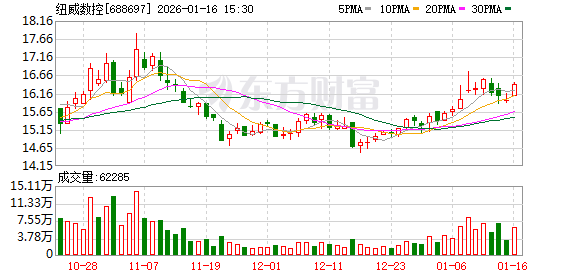
纽威数控:公司生产经营情况一切正常
Zheng Quan Ri Bao· 2026-01-16 10:47
Core Viewpoint - The company, Nuwei CNC, is maintaining normal production and operational conditions, with future growth plans in place despite current economic pressures in China [2] Company Summary - Nuwei CNC has developed a five-year strategic plan, with Phase IV expected to be operational by May 2025 and Phase V anticipated to commence production by July 2027 [2] - The company has a sufficient backlog of orders, indicating strong demand for its products [2] Industry Summary - The CNC machining rate in China's machine tool industry has increased from 30% in 2015 to an expected 51% by 2024, highlighting significant growth potential compared to developed countries with rates of 70%-80% [2] - From January to November this year, China's metal cutting machine imports totaled $4.31 billion, a slight decrease of 0.5% year-on-year, while exports reached $5.66 billion, reflecting a year-on-year growth of 12.3% [2] - The national "14th Five-Year Plan" emphasizes the need for breakthroughs in key core technologies in critical fields such as integrated circuits and high-end machinery, supporting the long-term growth of the machine tool market in China [2]