
第四次产业革命

Search documents
中辉有色观点-20250804
Zhong Hui Qi Huo· 2025-08-04 01:41
Report Summary 1. Industry Investment Ratings - Gold: Cautiously long [1] - Silver: Stabilize and test long [1] - Copper: Buy on dips [1] - Zinc: Sell on rallies [1] - Lead: Resistance on rallies [1] - Tin: Resistance on rallies [1] - Aluminum: Under pressure [1] - Nickel: Under pressure [1] - Industrial Silicon: Cautiously bearish [1] - Polysilicon: Cautiously bearish [1] - Lithium Carbonate: Cautiously long [1] 2. Core Views - The weak US data has increased the expectation of interest rate cuts and the risk of stagflation, leading to an inflow of safe - haven funds and a significant increase in gold prices. The long - bull logic of gold remains unchanged in the long term [3][4]. - For copper, short - term supply - demand contradictions are due to seasonal factors and inventory pressure, while long - term contradictions lie in demand uncertainty and potential demand growth. After the non - farm payroll data was disappointing, the dollar index weakened, and copper prices rebounded [8][9]. - Zinc supply is abundant, and demand is weak during the off - season. It is recommended to hold short positions and seize opportunities to short on rallies [10][12]. - Aluminum prices are under pressure due to downstream weakness and inventory accumulation [13][15]. - Nickel prices face pressure due to weak supply - demand and inventory accumulation, and stainless steel also faces over - supply in the off - season [17][19]. - Lithium carbonate inventory has decreased, and with potential supply risks and improved demand, it is recommended to go long on dips [21][23]. 3. Summary by Directory Gold and Silver - **Market Review**: Weak US data increased the expectation of interest rate cuts, and the risk of stagflation reappeared. Safe - haven funds flowed in, causing a significant increase in gold prices [3]. - **Basic Logic**: US data increased the expectation of interest rate cuts; "reciprocal tariffs" are about to take effect; global gold demand is growing strongly. The long - bull logic of gold remains unchanged in the long term [4]. - **Strategy Recommendation**: Pay attention to the support around 770 for gold in the short term. For silver, it has fallen back to the previous range, and it is recommended to enter long positions after stabilization [5]. Copper - **Market Review**: Shanghai copper stopped falling and fluctuated narrowly [8]. - **Industry Logic**: Short - term supply - demand contradictions are related to seasonal factors and inventory pressure. Medium - term contradictions are the coexistence of tight copper concentrate supply and high electrolytic copper production. Long - term contradictions are between demand uncertainty and potential demand growth [8]. - **Strategy Recommendation**: After the non - farm payroll data was disappointing, the dollar index weakened, and copper prices rebounded. It is recommended to buy on dips in the short term and be bullish on copper in the long term. Pay attention to the price range of Shanghai copper [77500, 79500] and LME copper [9650, 9850] [9]. Zinc - **Market Review**: Shanghai zinc fluctuated weakly [11]. - **Industry Logic**: Zinc concentrate supply is abundant, processing fees are rising, and demand is weak during the off - season [11]. - **Strategy Recommendation**: It is recommended to hold previous short positions and take partial profits. Seize opportunities to short on rallies in the long term. Pay attention to the price range of Shanghai zinc [21800, 22600] and LME zinc [2650, 2850] [12]. Aluminum - **Market Review**: Aluminum prices were under pressure, and alumina also showed a downward trend [14]. - **Industry Logic**: For electrolytic aluminum, costs have decreased, inventory has increased, and downstream demand is weak. For alumina, supply is abundant, and inventory is accumulating [15]. - **Strategy Recommendation**: It is recommended to sell on rallies for Shanghai aluminum in the short term and pay attention to inventory changes. The main operating range is [20000 - 20700] [16]. Nickel - **Market Review**: Nickel prices were under pressure, and stainless steel rebounded and then fell [18]. - **Industry Logic**: Nickel supply - demand is weak, and inventory is accumulating. Stainless steel has over - supply issues in the off - season [19]. - **Strategy Recommendation**: It is recommended to sell on rallies for nickel and stainless steel and pay attention to downstream inventory changes. The main operating range for nickel is [118000 - 121000] [20]. Lithium Carbonate - **Market Review**: The main contract LC2509 reduced positions for five consecutive days, with a significant decline in trading volume and a gain of over 1% [22]. - **Industry Logic**: The inventory has stopped increasing, and the supply - demand situation may improve. The compliance risk of mining licenses is a key factor [23]. - **Strategy Recommendation**: There are still expectations of supply speculation. It is recommended to go long on dips in the range of [68000 - 71500] [24].
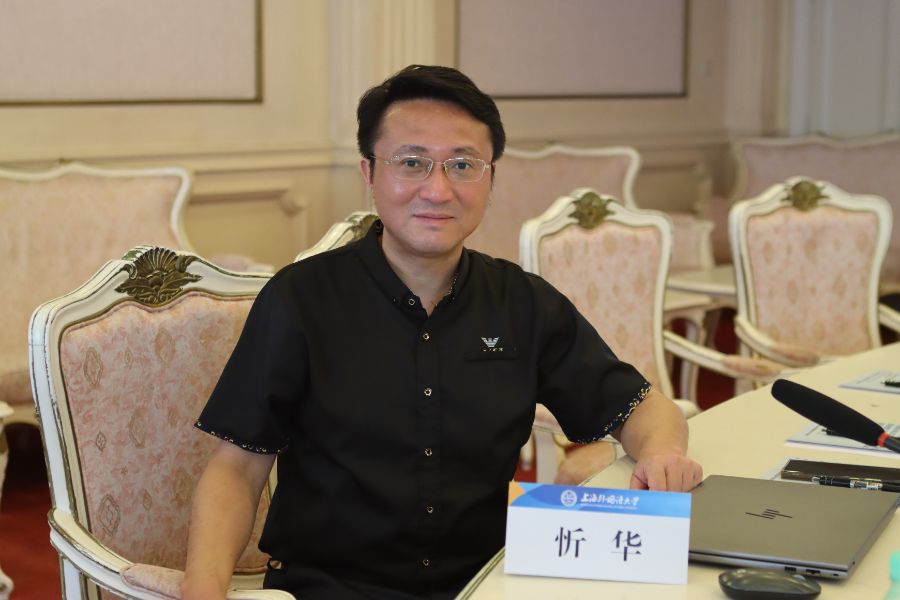
上海外国语大学忻华:彼此认知存落差,美欧关系如何重构?
2 1 Shi Ji Jing Ji Bao Dao· 2025-07-08 14:50
Core Viewpoint - The ongoing US-EU trade negotiations are facing significant challenges, with both sides having substantial differences in their core demands, making a comprehensive agreement unlikely [1][5][6]. Group 1: Trade Negotiations - The EU is striving to reach a preliminary bilateral trade agreement with the US by July 9, while also preparing for all possible outcomes, including a retaliatory list [1]. - The US currently imposes a 50% tariff on EU steel and aluminum products, a 25% tariff on automobiles, and a 10% baseline tariff on nearly all other goods [1]. - The EU has decided to postpone retaliatory measures against US products worth €210 billion until July 14 to allow more time for negotiations [1]. Group 2: Strategic Perspectives - The political leadership in the US has undergone a profound change in its strategic perception of the EU, while European political elites have not yet adjusted their views, leading to a significant gap in mutual understanding [2]. - The Biden administration emphasizes the importance of European allies, but the return of Trump has altered the strategic dynamics, with the US viewing the EU as a contributor to its trade deficit [2][3]. Group 3: Internal EU Disagreements - Within the EU, there are significant internal disagreements regarding the acceptance of a 10% baseline tax rate, with countries like Germany and Italy being more amenable compared to France [5]. - The EU is willing to make concessions on purchasing US agricultural products and liquefied natural gas, but the US insists on addressing its trade deficit, focusing on non-tariff barriers [5]. Group 4: Future Relations - The relationship between the US and EU is expected to remain fraught with distrust and conflict, extending beyond trade to include technology, investment, and geopolitical strategies [6]. - European political elites are increasingly anxious about their competitive position in the global technology race, leading to a consensus on the need for strategic autonomy and resilience [7][12]. Group 5: Economic and Technological Interaction - The US and EU are both adopting protective measures in their economic policies, leading to increased competition and mutual suspicion [9][10]. - The US is focusing on protecting traditional industries and advancing critical technologies, while the EU aims to bolster its own industries and regulatory frameworks [9][10]. Group 6: Supply Chain Security - Both the US and EU are restructuring their supply chains to enhance economic resilience, but they are doing so independently [11]. - The US has been actively forming agreements with countries for critical mineral supply chains, while the EU is prioritizing supply chain security as a core economic strategy [11]. Group 7: Strategic Autonomy - In response to the "America First" policy, Europe is seeking to strengthen its strategic autonomy by enhancing its industrial policies and reducing reliance on the US [12]. - The EU is also working on developing its own security frameworks, recognizing the need to rely less on NATO and the US for defense [12].

有色(新质生产力元素)牛市持续
2025-06-30 01:02
Summary of Key Points from Conference Call Records Industry Overview - The non-ferrous metals market is experiencing a bull market driven by demand from new energy, high-end materials, and supply constraints due to dual carbon policies, pandemic impacts, and trade frictions. This has led to tight supply of metals like copper and aluminum, supporting high profits [1][2][6] - The small metals market, including molybdenum, rare earths, selenium, and uranium, is seeing price increases due to growing demand from high-end manufacturing and supply limitations. Molybdenum prices have surged significantly since 2016, reflecting the increasing demand from China's high-end manufacturing sector [1][3][4] Key Companies and Their Performance - **Dongmu Co.**: - In the automotive sector, Dongmu's powder metallurgy gear business has shown continuous growth for 67 years, with a 18% growth rate in Q1 2025. - In the consumer electronics sector, partnerships with major companies like Huawei, Apple, and Samsung are expected to drive revenue growth from 2 billion yuan last year to 3 billion yuan this year, a 50% increase [7][8] - In the robotics sector, Dongmu is the only company capable of mass-producing disc motors, with expected revenue growth from 10 million yuan last year to 40-50 million yuan this year [9] - **Longi Technology**: - Achieved qualification as a supplier for AI chip inductors, marking its transition from a raw materials company to a device company. The automotive inductor business is gradually ramping up, laying the foundation for future growth [10] - **Bokang New Materials**: - The only company capable of producing high-end nano powders below 80 nanometers, with expected demand growth of 10 times in the coming years. Also, it is one of the few companies able to produce photovoltaic copper paste as a silver paste substitute, which could significantly impact revenue and profits [11] Market Dynamics - The copper market in 2025 is facing supply disruptions due to various factors, including damage to Freeport-McMoRan's smelting plant in Indonesia, leading to a reduction of 100,000 tons in copper output. Overall, the expected increase in copper supply has dropped from 500,000-600,000 tons to 200,000-300,000 tons [13] - Copper consumption is projected to grow by 2.8% to 3% in 2025, shifting the market from a previously expected surplus of 100,000 tons to a potential deficit of 100,000-200,000 tons [14] - The aluminum industry is expected to maintain a tight balance despite a slight decline in photovoltaic demand, with prices projected to fluctuate between 20,000 and 21,000 yuan [18] Strategic Metals Insights - The small metals sector, including tin, molybdenum, tungsten, and others, is expected to see significant investment opportunities due to their strategic value and increasing demand driven by geopolitical factors [19][20] - The uranium market is experiencing stable growth, with demand expected to increase by 3% to 5% annually due to the expansion of nuclear power in countries like China and the U.S. [21] - The supply side of the uranium market is characterized by high concentration and vulnerability, with Kazakhstan, Canada, and Namibia dominating global supply [22] Rare Earth Market Analysis - China maintains a dominant position in the global rare earth market, controlling 70% of mining and over 90% of refining and separation capacity. A slowdown in quota growth could lead to supply tightness and price support [29][35] - The consumption potential for rare earth magnets is significant, particularly in humanoid robots, with projections indicating a compound annual growth rate exceeding 14% over the next three years [30] Conclusion - The non-ferrous metals and strategic metals markets are poised for growth driven by technological advancements and supply constraints. Companies with strong positions in high-demand sectors, such as Dongmu and Bokang, are well-positioned for future profitability. The overall market dynamics suggest a favorable environment for investment in these sectors, particularly in light of geopolitical factors and evolving technological needs.
