
粤港澳大湾区建设

Search documents
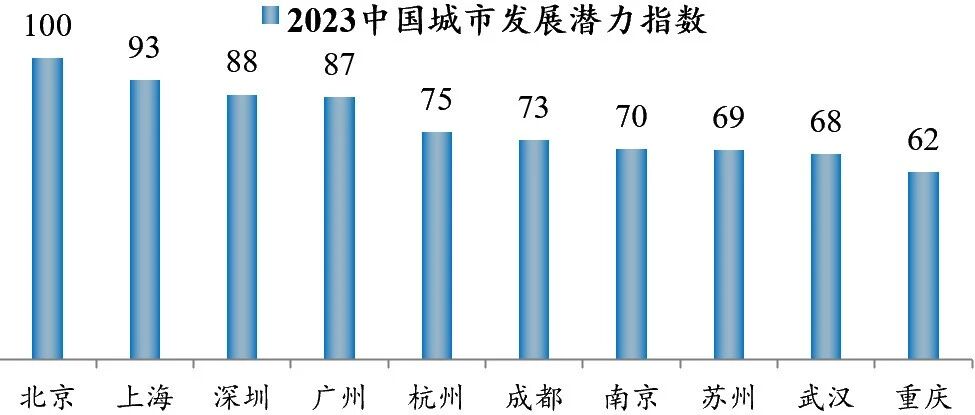
中国十大最具发展潜力城市
泽平宏观· 2026-02-20 16:05
Core Viewpoint - The article discusses the competitive landscape of Chinese cities, highlighting the rapid urbanization and the emergence of new economic centers, while ranking the development potential of 337 cities in China, with Beijing, Shanghai, Shenzhen, and others leading the list [2]. Group 1: Beijing - Beijing is positioned as the political, cultural, international exchange, and technological innovation center of China, with a GDP exceeding 4.1 trillion yuan in 2022, making it the second-largest city after Shanghai [9][10]. - The service sector accounts for 84% of Beijing's economy, with finance, headquarters economy, and technological innovation as key pillars [10]. - Future plans include transforming Beijing into a world-class harmonious city while optimizing population distribution to enhance urban vitality [11][13]. Group 2: Shanghai - Shanghai has established itself as an international economic center, with a GDP of approximately 4.5 trillion yuan in 2022, and aims to rival New York in global economic influence [16][24]. - The city’s industrial structure is supported by the automotive, electronics, and financial sectors, with finance contributing 19.3% to the GDP [17][19]. - Shanghai plans to continue its open policies and develop into a globally competitive city, enhancing the Yangtze River Delta region [24]. Group 3: Shenzhen - Shenzhen's GDP surpassed 3.2 trillion yuan in 2022, marking it as the third-largest city in China, with a significant annual population increase of around 600,000 [25][26]. - The city is recognized as a leading innovation hub, with strategic emerging industries accounting for over 41% of its GDP [26]. - Future initiatives focus on enhancing collaboration within the Guangdong-Hong Kong-Macau Greater Bay Area to solidify its status as a global innovation city [29]. Group 4: Guangzhou - Guangzhou's GDP reached approximately 2.9 trillion yuan in 2022, ranking fifth nationally, with a strong manufacturing base in automotive and electronics [30][31]. - The city faces challenges in innovation capacity and financial sector development, with financial services contributing only 9.2% to the GDP [33]. - Future goals include enhancing its role as a national center city and participating in global economic cooperation [34]. Group 5: Hangzhou - Hangzhou's economy has shown robust growth, with a GDP of around 1.9 trillion yuan in 2022, driven by a vibrant private and digital economy [36][37]. - The city is recognized for its strong digital economy, with core digital industries contributing 27.1% to the GDP [37]. - Plans for the future include improving transportation infrastructure and fostering a more open and innovative business environment [41][42]. Group 6: Chengdu - Chengdu's GDP exceeded 2 trillion yuan in 2022, accounting for 36.7% of Sichuan province's economy, and it is recognized as a key economic hub in Western China [43][44]. - The electronics sector is a major contributor, with a significant portion of the industrial output [44]. - Future strategies involve enhancing its role as a national center city and collaborating with Chongqing to develop the Western economic highland [49]. Group 7: Nanjing - Nanjing's GDP approached 1.7 trillion yuan in 2022, with a per capita GDP of 179,000 yuan, ranking fifth among major cities [50][51]. - The city is focusing on developing its automotive, steel, electronics, and petrochemical industries while nurturing emerging sectors [51]. - Future aspirations include becoming an "innovation city" and enhancing its influence in the Yangtze River Delta region [54]. Group 8: Suzhou - Suzhou's GDP reached nearly 2.4 trillion yuan in 2022, making it the top city among prefecture-level cities in China [56]. - The city is recognized as a global industrial powerhouse, with significant contributions from electronics and manufacturing sectors [56]. - Future plans emphasize its role in the Yangtze River Delta urban cluster and advancing towards a high-tech manufacturing base [59].

狮子洋上“守岁人”(新春走基层)
Ren Min Ri Bao· 2026-02-14 23:30
Core Viewpoint - The construction of the Lion Rock Channel in Guangdong, which will feature the world's first double-deck suspension bridge exceeding 2000 meters, is a significant infrastructure project aimed at enhancing connectivity within the Guangdong-Hong Kong-Macau Greater Bay Area, with the potential to set five world records upon completion [2][5]. Group 1: Project Overview - The Lion Rock Channel is positioned as a new transportation artery in the Greater Bay Area, with existing infrastructure such as the Nansha Bridge and Humen Bridge nearby [2]. - The project is managed by Chen Bingyao, who has progressed from a junior role to a managerial position since joining the construction industry in 2016 [2][3]. - The construction team consists of over 350 workers who are dedicated to ensuring the project progresses efficiently, especially as it approaches critical milestones like the main tower's completion [3]. Group 2: Cultural and Community Impact - The construction site fosters a strong sense of community, with workers celebrating the Lunar New Year together, engaging in activities like making dumplings and decorating the site with traditional decorations [3]. - The project is seen as a source of pride for local residents, enhancing connectivity and reducing travel times between cities in the region, exemplified by personal anecdotes from friends and family [4]. Group 3: Future Aspirations - Upon completion, the bridge is expected to significantly improve transportation efficiency, allowing for quicker travel between key cities in the Greater Bay Area, which will facilitate the movement of industry, talent, and logistics [4][5]. - Chen Bingyao envisions sharing the story of the bridge's construction with his family, highlighting the broader development of the Greater Bay Area [5].
新春走基层丨大湾区“东大门”的守卫者
Ren Min Ri Bao· 2026-02-14 11:46
Core Insights - The article highlights the role of the Sanmen Island Customs in enhancing the efficiency of customs operations to support the high-quality development of the Guangdong-Hong Kong-Macao Greater Bay Area [2][5] Group 1: Customs Operations - Sanmen Island Customs is one of the four mid-way supervision customs in the country and one of the nine challenging island border customs [2] - The customs has improved its smart regulatory capabilities, reducing the inspection time for passing vessels from over 1 hour to approximately 40 minutes [2] - In 2025, the volume of inspected vessels at Sanmen Island Customs increased by 66% year-on-year, with a notable case of illegal domestic transportation being classified as a typical case by the General Administration of Customs [4] Group 2: Environmental Challenges - Sanmen Island faces extreme weather conditions, including typhoons and heavy rainfall, with nine significant weather events recorded in 2025 [4] - Customs officers have established a "Island Customs Farm" to cultivate vegetables and raise poultry, addressing the lack of commercial supermarkets and shipping services on the island [4] Group 3: Commitment to Excellence - The leadership at Sanmen Island Customs emphasizes a commitment to "guarding the country and pursuing excellence," aiming to strengthen maritime regulatory networks and maintain customs order [5]
香港政制及内地事务局:务实推进湾区互联建设 加强香港与各省市紧密协作
智通财经网· 2026-02-13 04:06
Core Viewpoint - The Hong Kong government is committed to deepening cooperation with mainland provinces and cities, focusing on pragmatic and incremental approaches to enhance collaboration and achieve mutual benefits, thereby better integrating into the national development framework [1][2]. Group 1: Cooperation and Integration - Hong Kong will continuously strengthen collaboration with other cities in the Greater Bay Area (GBA) to promote high-level connectivity and market integration [1]. - The Hong Kong government is actively maintaining close communication with relevant central ministries, the Guangdong provincial government, and the Macao SAR government to deepen regulatory alignment and mechanism integration among the three regions [1][2]. - Efforts are being made to facilitate the efficient flow of essential production factors such as people, goods, capital, and information within the GBA, aiming for policy breakthroughs that benefit Hong Kong and promote regional integration [1]. Group 2: Unique Advantages and Promotion - Hong Kong will leverage its unique advantages under the "one country, two systems" framework to enhance its status as an international financial, shipping, and trade center, serving as a platform for outbound initiatives [2]. - The government plans to promote the significant opportunities of GBA development to local, mainland, and overseas audiences through various channels, including traditional media, online platforms, and physical events [2]. - Hong Kong is actively engaging in close cooperation with various provinces and municipalities in mainland China across multiple levels and fields, seeking broader development opportunities to better serve national needs [2]. Group 3: Cooperation Mechanisms - The current government has been proactive in strengthening cooperation mechanisms with various provinces and cities, establishing cooperation frameworks with regions such as Chongqing, Zhejiang, Beijing, Shanghai, Guangdong (including Shenzhen), Fujian, Hubei, and Sichuan [2]. - Recent meetings have been held to advance cooperation, including the inaugural meetings for the Chongqing-Hong Kong and Zhejiang-Hong Kong cooperation mechanisms, as well as meetings for Fujian-Hong Kong, Beijing-Hong Kong, and Shanghai-Hong Kong cooperation [2][3]. Group 4: Scope of Cooperation - The cooperation projects between Hong Kong and other provinces and municipalities cover a wide range of areas, including finance, logistics, trade, innovation and technology, law, education, youth development, and tourism [3].
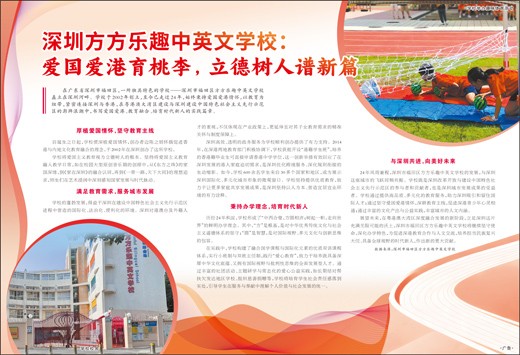
深圳方方乐趣中英文学校:爱国爱港育桃李,立德树人谱新篇
Ren Min Ri Bao· 2026-02-11 03:49
Core Viewpoint - Shenzhen Futian Fangfang Fun English School has been dedicated to fostering patriotism and cultural integration between Hong Kong and mainland China since its establishment in 2002, contributing to the development of the Guangdong-Hong Kong-Macao Greater Bay Area and the construction of a socialist demonstration zone with Chinese characteristics [1][3][7] Group 1: Educational Philosophy - The school emphasizes patriotism as the foundation of moral education, integrating it into daily teaching through various artistic expressions, such as original musicals that reflect national development and cultural identity [3][4] - The school has developed a distinctive educational philosophy that combines traditional Chinese culture with international perspectives, aiming to cultivate well-rounded individuals with critical thinking skills [5][6] Group 2: Response to Educational Needs - The school's growth is supported by Shenzhen's international, legal, and convenient environment, which addresses the educational needs of families from Hong Kong and other regions [4][7] - The establishment of classes for Hong Kong students in 2014 has allowed graduates to apply directly for secondary school placements in Hong Kong, showcasing Shenzhen's commitment to cross-border educational services [4] Group 3: Community Engagement and Development - The school actively engages in community service and charitable activities, fostering a sense of social responsibility among students and linking personal values with societal development [6][7] - Through its diverse educational offerings, the school contributes to Shenzhen's ability to attract and retain international talent, enhancing the city's cultural richness [7]
APEC经济委员会主席:广东与APEC贸易增长受益于开放政策
2 1 Shi Ji Jing Ji Bao Dao· 2026-02-09 12:34
Group 1 - The core viewpoint is that China's commitment to openness and welcoming foreign investment is a fundamental reason for the trade growth between Guangdong and other APEC economies [1] - The construction and development of the Guangdong-Hong Kong-Macao Greater Bay Area injects strong momentum into the growth of APEC's trade and economy [1] - The trade relationship between Guangdong and APEC economies has been continuously warming, becoming a highlight in regional economic cooperation [1] Group 2 - By 2025, Guangdong's import and export volume with other APEC economies is projected to reach 6.16 trillion yuan, an increase of 3.3% year-on-year [1] - The export of new driving forces such as integrated circuits, drones, and "new three samples" is experiencing rapid growth [1] - In 2025, private enterprises in Guangdong are expected to have an import and export volume of 3.77 trillion yuan with APEC economies, growing by 4.1%, while foreign-invested enterprises are projected to reach 2.17 trillion yuan, growing by 6.2% [1]
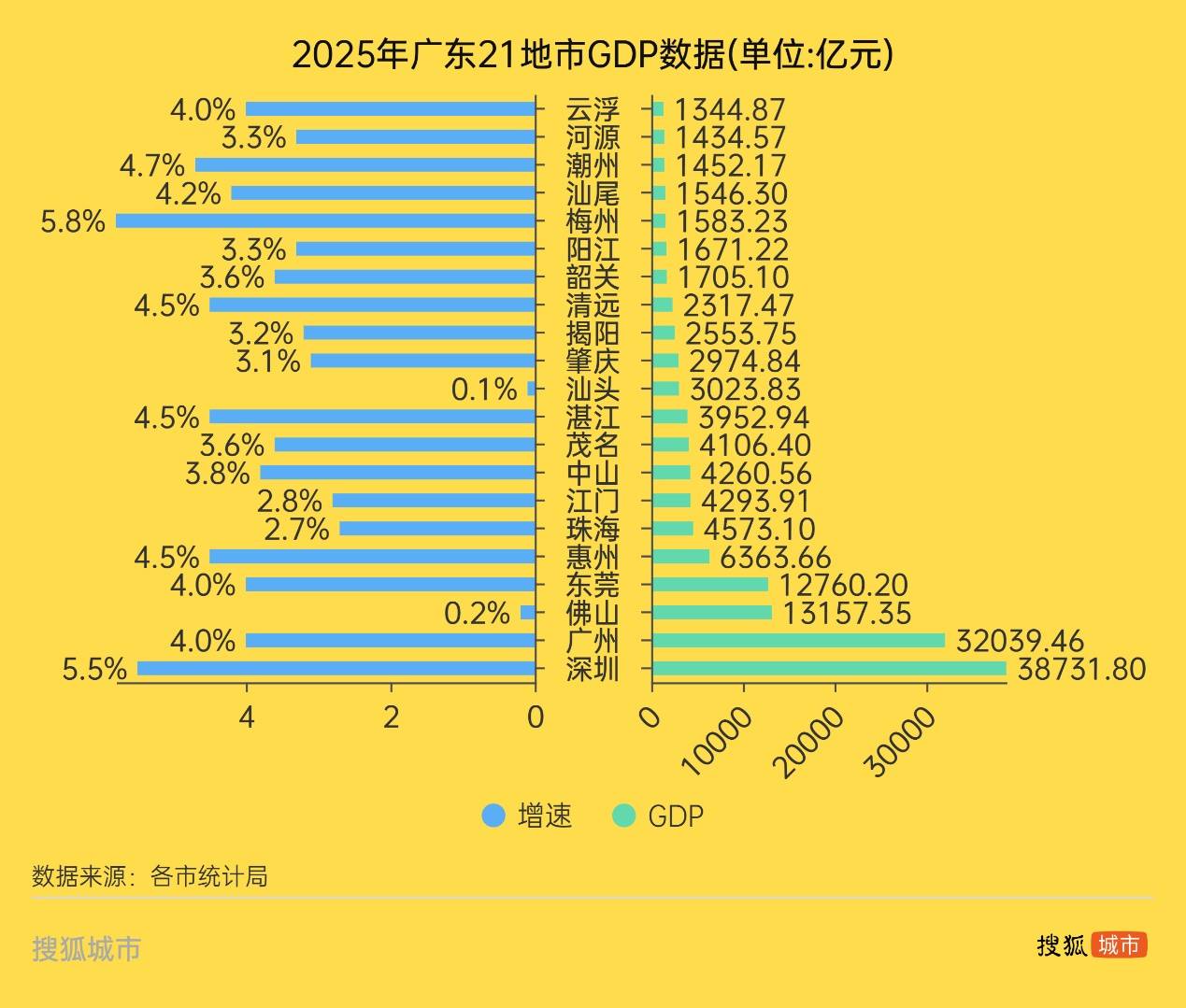
广东21地市GDP出炉:佛山和汕头名义增速负增长
Sou Hu Cai Jing· 2026-02-09 10:30
Economic Overview - Guangdong's GDP for 2025 is projected at 14,584.68 billion yuan, with a growth rate of 3.9%, lower than the national average of 5% [1][13] - Among the 21 cities in Guangdong, only Shenzhen (5.5%) and Meizhou (5.8%) outperformed the national growth rate, while 11 cities fell below the provincial average [1][3] City Performance - Meizhou leads the province with a growth rate of 5.8%, driven by strong performance in high-tech manufacturing, with industrial output increasing by 8.6% [5][10] - Shantou and Foshan reported minimal growth rates of 0.1% and 0.2%, respectively, with Shantou experiencing negative nominal growth [5][8] - The economic performance of cities like Zhuhai, Jiangmen, and Zhongshan is hindered by declining fixed asset investments, with decreases of 25.6% and 22.6% respectively [3][4] Industrial Insights - The industrial performance of cities correlates with economic growth, with cities like Zhanjiang showing a 10.7% increase in industrial output, supported by green petrochemicals and modern agriculture [4] - In contrast, Shantou's second industry saw a decline of 7.3%, indicating structural issues in its economy [5][8] Economic Challenges - Guangdong has faced challenges with its GDP growth consistently falling below expectations for four consecutive years, attributed to a declining real estate market and pressures from industrial restructuring [11][13] - The province's economic growth target for 2026 is set between 4.5% and 5%, with a focus on enhancing the Guangdong-Hong Kong-Macao Greater Bay Area [13]
新皇岗口岸今年开通 深港间推广新型合作查验和非接触式快捷通关模式
Sou Hu Cai Jing· 2026-02-09 09:13
Core Viewpoint - Shenzhen aims to enhance its role as a core engine in the Guangdong-Hong Kong-Macao Greater Bay Area and as a driving force in national coordinated development through various strategic initiatives [2] Group 1: Regional Development Strategy - Shenzhen will implement a regional coordinated development strategy to better leverage its position in the Greater Bay Area [2] - The city plans to open the new Huanggang Port and promote innovative cooperation inspection and non-contact fast customs clearance [2] - There will be active promotion of the planning and construction of the Hong Kong-Shenzhen Western Railway and the Hong Kong North Circular Line [2] Group 2: Urban Circle Construction - Shenzhen will advance the construction of intercity rail projects such as the Shenzhen-Huizhou and Shenzhen-Da cities [2] - The city will accelerate the preliminary work for the aviation fuel pipeline project from Dongguan Lisha Island to Shenzhen Airport [2] - Collaboration with Dongguan and Huizhou will focus on creating globally influential advanced manufacturing industry clusters [2] Group 3: Infrastructure and Economic Development - Shenzhen will deepen cross-administrative cooperation to enhance commuting efficiency, industrial allocation, and public service sharing [2] - Preparatory work for the Guangzhou-Shenzhen Second High-Speed Railway will be prioritized [2] - The city will actively promote the inclusion of the Shenzhen-Zhuhai Channel into regulatory frameworks [2] Group 4: Industrial Cooperation and Economic Growth - High-quality co-construction of industrial cooperation parks will be pursued, along with the orderly development of a "headquarters—outpost" economy [2] - Exploration of inter-regional industrial collaboration and benefit-sharing mechanisms will be conducted to expand industrial reach and economic depth [2] - The "Hundred Million Project" will be implemented with a focus on promoting the leapfrog development of the Shenzhen-Shan Special Cooperation Zone [2]

力争GDP增5.2% 机器人产业集群超40亿
Nan Fang Du Shi Bao· 2026-02-08 23:13
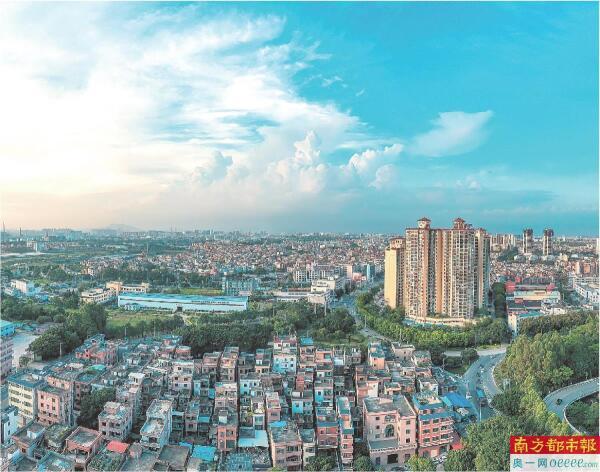
Core Viewpoint - The strategic goal for Wangniudun Town is to achieve a GDP growth of 5.2% this year while deeply integrating into the Guangdong-Hong Kong-Macao Greater Bay Area construction, ensuring a good start for the 14th Five-Year Plan [4][8]. Group 1: Strategic Goals and Economic Plans - Wangniudun Town aims to implement "six major projects" focusing on industrial upgrading, urban-rural integration, and public welfare to achieve reasonable quantitative growth and effective qualitative improvement [5][8]. - The town's development targets include a GDP growth of 5.2%, a 2% increase in total retail sales of consumer goods, and a 2% growth in total import and export volume [8]. Group 2: Implementation of Major Projects - The "Industrial Upgrade Renewal" project focuses on building a modern industrial system, emphasizing high-end equipment manufacturing, new-generation electronic information, and new energy industries [5][6]. - The "Comprehensive Quality Improvement" project aims to optimize urban-rural spatial layout and enhance living environment quality through various infrastructure projects and ecological construction [6][7]. - The "Public Welfare Enhancement" project seeks to improve public services, including education and healthcare, while promoting cultural activities and community engagement [7][8]. Group 3: Promoting Local Products and Cultural Tourism - The town plans to enhance foreign trade and investment by expanding international markets and supporting local enterprises in obtaining certifications to improve their global competitiveness [9][10]. - Efforts will be made to develop local cultural resources into unique tourism IPs, integrating traditional culture with consumer experiences to attract visitors [10]. - A platform for production and sales will be established to facilitate the distribution of local products, enhancing the overall market presence of "Guangdong goods" [10].

家国同心,血脉里的文化印记
Xin Lang Cai Jing· 2026-02-08 03:00
Group 1 - The theme of reunion during the Spring Festival reflects the deep emotional connection of Chinese people, both domestically and abroad, emphasizing the importance of family and national identity [2][3] - Economic growth in Hong Kong is steady, with the government focusing on reforms to address housing and other social issues, while actively integrating into the Guangdong-Hong Kong-Macao Greater Bay Area [2] - Macau is promoting moderate economic diversification, with significant progress in the construction of the Hengqin Guangdong-Macao Deep Cooperation Zone [2] Group 2 - The 20th Central Committee's Fourth Plenary Session outlines strategic goals for the "14th Five-Year Plan," emphasizing the importance of Hong Kong and Macau's long-term prosperity and stability, as well as the peaceful development of cross-strait relations [3] - The integration of Taiwan compatriots and enterprises into mainland development is expected to expand, contributing to the modernization of China and benefiting both sides of the strait [3] - The anticipated increase in cross-border traffic through the Hong Kong-Zhuhai-Macao Bridge is projected to reach over 31.34 million people and 6.8 million vehicles by 2025, marking significant growth [2]