
新三样

Search documents
2025年江苏省外贸进出口近6万亿元,规模创历史新高
Shang Wu Bu Wang Zhan· 2026-02-14 04:02
Core Insights - Jiangsu Province's total foreign trade import and export value reached 5.95 trillion yuan in 2025, an increase of 6% year-on-year, which is 2.2 percentage points higher than the national average, accounting for 13.1% of China's total import and export value during the same period [1] Group 1: Trade Characteristics - General trade remains the primary mode of import and export, with an increase in the proportion of processing trade. In 2025, general trade accounted for 3.31 trillion yuan, growing by 3.6%, representing 55.6% of the province's total foreign trade, contributing 2.1 percentage points to the overall growth [2] - Processing trade reached 1.99 trillion yuan, growing by 10.1%, with its share increasing by 1.2 percentage points to 33.4%, contributing 3.3 percentage points to the overall growth [2] Group 2: Driving Forces - Foreign investment and private enterprises are driving forces, with foreign-invested enterprises' import and export value at 2.78 trillion yuan, growing by 6.2%, accounting for 46.7% of the total, contributing 2.8 percentage points to the overall growth [2] - Private enterprises' import and export value reached 2.65 trillion yuan, growing by 4.1%, representing 44.5% of the total, contributing 1.9 percentage points to the overall growth [2] - State-owned enterprises saw a significant increase in import and export value, reaching 525.43 billion yuan, growing by 15.8% [2] Group 3: Trade with Belt and Road Countries - Trade with Belt and Road countries increased to 2.98 trillion yuan, growing by 11.3%, contributing 5.4 percentage points to the overall growth, with its share rising by 2.4 percentage points to 50.1% [3] - Exports to ASEAN reached 1.07 trillion yuan, growing by 18.5%, while exports to South Korea were 617.57 billion yuan, growing by 8% [3] - Exports to the EU and Latin America were 831.79 billion yuan and 409.28 billion yuan, growing by 6.4% and 5% respectively [3] Group 4: Product Composition - The export of electromechanical products exceeded 70% for the first time, totaling 2.8 trillion yuan, growing by 11.6%, contributing 7.9 percentage points to the overall export growth, accounting for 70.7% of total exports [3] - Key exports included electrical equipment and ships, valued at 239.96 billion yuan and 142.75 billion yuan, growing by 18% and 37% respectively, with "new three types" products exporting 184.98 billion yuan, growing by 14.5% [3] - Electromechanical product imports reached 1.17 trillion yuan, growing by 6.3%, with its share increasing by 2.6 percentage points to 58.5% [3] - Significant imports included electronic components, measuring and control instruments, and electrical equipment, valued at 619.92 billion yuan, 46.86 billion yuan, and 43.78 billion yuan, growing by 13.6%, 6.7%, and 4.8% respectively [3]
APEC经济委员会主席:广东与APEC贸易增长受益于开放政策
2 1 Shi Ji Jing Ji Bao Dao· 2026-02-09 12:34
Group 1 - The core viewpoint is that China's commitment to openness and welcoming foreign investment is a fundamental reason for the trade growth between Guangdong and other APEC economies [1] - The construction and development of the Guangdong-Hong Kong-Macao Greater Bay Area injects strong momentum into the growth of APEC's trade and economy [1] - The trade relationship between Guangdong and APEC economies has been continuously warming, becoming a highlight in regional economic cooperation [1] Group 2 - By 2025, Guangdong's import and export volume with other APEC economies is projected to reach 6.16 trillion yuan, an increase of 3.3% year-on-year [1] - The export of new driving forces such as integrated circuits, drones, and "new three samples" is experiencing rapid growth [1] - In 2025, private enterprises in Guangdong are expected to have an import and export volume of 3.77 trillion yuan with APEC economies, growing by 4.1%, while foreign-invested enterprises are projected to reach 2.17 trillion yuan, growing by 6.2% [1]
上海今年GDP目标增长5%:强化内需主导,全力稳外资外贸
第一财经· 2026-02-03 06:31
Core Viewpoint - Shanghai's economy is showing resilience with a GDP growth of 5.4% in 2025, exceeding expectations, and a clear target of 5% growth for 2026, emphasizing the importance of domestic demand and external trade stability [5][8]. Economic Performance - Shanghai's GDP reached 5.67 trillion yuan, with a growth rate of 5.4%, outperforming expectations [5]. - The total import and export volume reached 4.51 trillion yuan, growing by 5.6%, with exports increasing by 10.8% [5]. - Actual foreign investment amounted to 16.06 billion USD, equivalent to 114.8 billion yuan [5]. Foreign Trade and Investment - Shanghai's foreign trade achieved counter-cyclical growth, attributed to targeted policies and diversified trade partnerships, with imports and exports to ASEAN and Belt and Road countries growing by 10.4% and 12.1%, respectively [6]. - The city has implemented measures to support foreign investment, including a plan to encourage reinvestment by foreign enterprises and the establishment of foreign-funded projects in key sectors like new energy vehicles and biomedicine [6][11]. Future Economic Goals - The government aims for a GDP growth target of around 5% for 2026, focusing on enhancing domestic demand and integrating consumption and investment strategies [9]. - Plans include boosting consumption through various initiatives, such as enhancing service consumption and promoting tourism, while also stabilizing foreign trade and investment [10][11]. Five-Year Plan and Development Goals - The "15th Five-Year Plan" outlines ambitious goals for Shanghai, including doubling per capita GDP from 2020 levels by 2035 and achieving significant advancements in high-quality development and urban governance [13][14]. - The plan emphasizes the development of five centers: international economic, trade, shipping, financial, and technological innovation centers, with a focus on enhancing the service sector and fostering world-class enterprises [15][16]. Collaborative Development - The government stresses the importance of synergistic development among the five centers to enhance overall effectiveness and regional coordination [17].

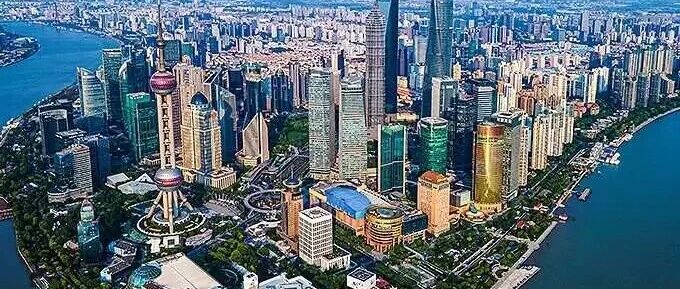
【读年报·看亮点·谋发展】外贸稳量提质多元转型
Jing Ji Ri Bao· 2026-01-29 13:14
Core Insights - In 2025, China's foreign trade demonstrated resilience and vitality, achieving a record total import and export value exceeding 45 trillion yuan, marking a 3.8% growth and maintaining growth for nine consecutive years since joining the WTO [1] Group 1: High-Tech Product Exports - High-tech products played a crucial role in China's export growth, with exports reaching 5.25 trillion yuan, a 13.2% increase, contributing 2.4 percentage points to overall export growth [2] - Exports of "new three samples" and wind turbine generators surged by 27.1% and 48.7%, respectively, while self-branded products saw a 12.9% increase, raising their share of total exports by 1.4 percentage points [2] - Specialized equipment, high-end machine tools, and industrial robots experienced significant export growth of 20.6%, 21.5%, and 48.7%, respectively, with China becoming a net exporter of industrial robots [2] Group 2: Market Dynamics - Over 780,000 market entities recorded import and export activities, with private enterprises continuing to be the main drivers of foreign trade, achieving 26.04 trillion yuan in imports and exports, a 7.1% increase, and accounting for 57.3% of total trade [3] Group 3: Trade Structure Optimization - China's foreign trade foundation is solidifying, with new trade dynamics accelerating due to a combination of institutional, market, and industrial advantages [4] - Since 2025, the government has implemented various policies to stabilize foreign trade, including 29 pilot measures that have been well-received by localities and businesses, with 25 measures being promoted nationwide [4] - In 2025, China imported 18.48 trillion yuan worth of goods, maintaining about 10% of global imports, driven by an upgraded business environment and the dual push of digital and green initiatives [5] Group 4: Trade Innovation Development - Promoting trade innovation is essential for the continuous optimization of trade structure, with the 20th Central Committee emphasizing the importance of technological innovation and the integration of innovation and industrial chains [6][7] - There is significant potential for growth in service trade, which currently represents a low proportion of total trade, necessitating the integration of goods and service trade to create new growth areas [7] - The establishment of the Hainan Free Trade Port in December 2025 marks the beginning of a new phase of opening up, expected to enhance trade structure optimization and innovation development [7]
从传统货物到“新三样”
Ren Min Ri Bao· 2026-01-28 23:16
Core Insights - The Lizi Port in Tibet, which opened in November 2023, is experiencing increased activity with domestic electric vehicles queuing for export, indicating a shift in trade dynamics [1] - By September 2025, the port is expected to link with the Shigatse International Land Port, with export values projected to exceed 100 million yuan [1] - The trade structure is evolving from primarily exporting basic products like mineral salt to higher value-added products such as "new three samples" and large machinery [1] Trade and Economic Impact - In 2025, the Lizi Port is projected to handle 13,710 tons of cargo with a total value of 75.4 million yuan [1] - The port's operations have facilitated smoother movement of goods and people, with approximately 46,000 travelers recorded in 2025, marking a year-on-year increase of over 50% [1] - Local economic development is being stimulated by the port, with initiatives like the establishment of specialty shops to promote local products, such as dried beef, benefiting the community [1]
走稳中国外贸转型升级之路
Zhong Guo Jing Ji Wang· 2026-01-28 23:13
Core Viewpoint - In 2025, China's total foreign trade import and export value reached 45.47 trillion yuan, a year-on-year increase of 3.8%, marking a historical high despite global trade challenges [1] Group 1: Export Performance - Exports reached 26.99 trillion yuan, growing by 6.1%, demonstrating the resilience of China's foreign trade and the positive effects of improved export structure and manufacturing competitiveness [1] - High-tech product exports amounted to 5.25 trillion yuan, increasing by 13.2%, with green products like "new three items" and wind turbines growing by 27.1% and 48.7% respectively [2] - The export structure is shifting from quantity expansion to quality enhancement, driven by long-term collaboration between industrial policies, technological innovation, and market mechanisms [2] Group 2: Policy and Market Environment - The enhancement of export resilience is closely linked to the deep implementation of policies, such as the 167 national standard projects for the "new three items" industry established by the State Administration for Market Regulation [2] - In 2025, the export of industrial robots exceeded imports for the first time, growing by 48.7%, indicating a transition to becoming a net exporter of industrial robots [2] Group 3: Future Outlook - China's private enterprises accounted for over 70% of the foreign trade value of specialized "little giant" companies, with a 9.2% increase in exports through market procurement [3] - The domestic market's vast potential and ongoing technological innovation and industrial upgrades are expected to provide high-quality supply that meets international market demands [3] - The current global economic landscape is undergoing significant adjustments, necessitating a commitment to high-quality development in foreign trade through higher levels of openness [3]
外贸稳量提质多元转型
Jing Ji Ri Bao· 2026-01-28 21:58
Core Insights - In 2025, China's foreign trade demonstrated resilience and vitality despite global economic slowdown, achieving a record total import and export value exceeding 45 trillion yuan, marking a 3.8% growth and the longest continuous growth since joining the WTO [1] Group 1: High-Tech Product Exports - High-tech product exports reached 5.25 trillion yuan, growing by 13.2%, contributing 2.4 percentage points to overall export growth [2] - Exports of "new three samples" and wind turbine generators increased by 27.1% and 48.7%, respectively [2] - The export of industrial robots surged by 48.7%, making China a net exporter of industrial robots [2] Group 2: Market Dynamics - Over 780,000 market entities engaged in import and export activities, with private enterprises playing a crucial role, accounting for 26.04 trillion yuan in trade, a 7.1% increase, and representing 57.3% of total trade [3] Group 3: Trade Structure Optimization - China's foreign trade foundation is solidifying, with new trade dynamics accelerating due to institutional, market, and industrial advantages [4] - In 2025, imports totaled 18.48 trillion yuan, maintaining a 10% share of global imports, driven by an upgraded business environment and the dual push of digital and green initiatives [5] Group 4: Trade Innovation Development - Promoting trade innovation is essential for the continuous optimization of trade structure, with a focus on integrating technology innovation into the industrial chain [6][7] - The establishment of Hainan Free Trade Port marks a new phase of expanded openness, enhancing trade structure optimization and innovation development [7]
达沃斯上的中国声音:坚定支持自由贸易,维护多边主义
Hua Xia Shi Bao· 2026-01-23 03:38
Core Viewpoint - China demonstrates significant certainty in a volatile global environment, providing strong momentum for global economic growth [2] Group 1: Economic Performance - In 2025, China's foreign trade reached 45.47 trillion yuan, marking a 3.8% increase and achieving a historical high for the first time surpassing 45 trillion yuan [5] - China's exports grew by 5% in 2025, with a notable resilience despite previous concerns, maintaining a high share in global exports [5] - The export growth was supported by a strong performance in high-tech products, which reached 5.25 trillion yuan, growing by 13.2% [8] Group 2: International Relations and Trade - The ongoing U.S.-China competition remains a critical variable affecting both China's and the global economy, with exports expected to maintain around 5.5% growth in 2026 [5][6] - China's engagement with non-U.S. countries is deepening, with discussions held at the Davos Forum to address economic issues with the U.S. and the UK [7] - The diversification of export markets, particularly to emerging markets and countries along the Belt and Road Initiative, has reduced reliance on any single market [8] Group 3: Future Outlook - Predictions for 2026 indicate continued strong growth in China's imports and exports, driven by a temporary easing of U.S.-China tensions and rising global investment demands in AI infrastructure [10] - The integration of AI into manufacturing is expected to enhance China's competitive edge, with optimism for sustained export growth extending into 2027 and 2028 [9][10]

量质提升,中国外贸实现新突破
Zhong Guo Xin Wen Wang· 2026-01-21 13:55
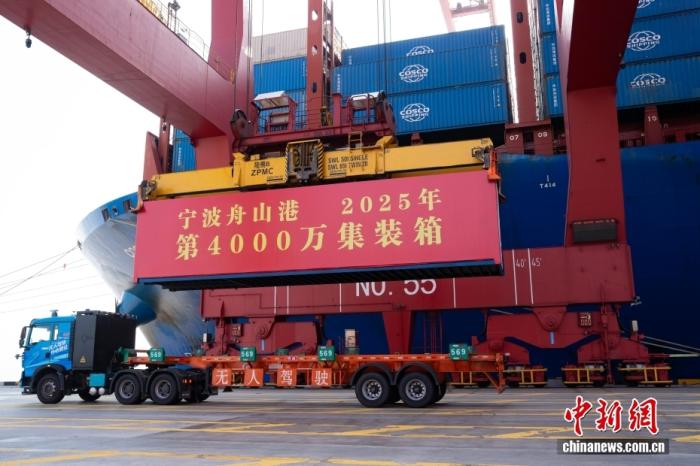
Core Insights - China's ports have achieved record-breaking cargo throughput, with Ningbo-Zhoushan Port surpassing 1.4 billion tons and Shanghai Port handling over 55.06 million TEUs, maintaining their positions as the world's top ports for 17 and 16 consecutive years respectively [1][2] - In 2025, China's total import and export value exceeded 45 trillion yuan, marking a historical high and solidifying its status as the world's largest goods trading nation [2] Group 1: Trade Growth - China's foreign trade has maintained growth for nine consecutive years, the longest period since joining the WTO, with December 2025's monthly import and export value reaching 4.26 trillion yuan, a year-on-year increase of 4.9% [2] - The number of countries and regions trading with China reached 249 in 2025, with significant increases in trade volume with countries involved in the Belt and Road Initiative [2][4] Group 2: Policy Support - The Chinese government has implemented a series of policies to stabilize foreign trade, which has helped businesses secure orders and expand markets despite external challenges [5] - In 2025, over 780,000 enterprises recorded import and export activities, with private enterprises accounting for 26.04 trillion yuan, representing 57.3% of the total trade value [5] Group 3: Industrial Strength - China possesses the most comprehensive industrial system globally, with a strong integration of technological and industrial innovation, allowing it to adapt to international market demands [6] - High-tech product exports reached 5.25 trillion yuan in 2025, growing by 13.2%, with significant increases in green product exports [6] Group 4: Port Infrastructure - Since the 14th Five-Year Plan, China has added 379 berths for vessels over 10,000 tons, totaling 2,971, with over 70% of major coastal port areas having rail access [6] - The development of efficient and intelligent port clusters has been crucial for maintaining trade flow, enabling faster and more direct shipping routes [6] Group 5: Future Outlook - The ongoing construction of smart and green ports is expected to enhance China's role in facilitating global trade liberalization and convenience [8] - The future of China's foreign trade appears promising, with continued potential for growth [9]
增长5.5%!2025年浙江GDP94545亿元
Xin Lang Cai Jing· 2026-01-21 06:12
Economic Overview - In 2025, Zhejiang Province's GDP reached 94,545 billion yuan, growing by 5.5% year-on-year, surpassing the national growth rate of 5.0% [1][2][12] - The primary industry added value was 2,657 billion yuan (3.9% growth), the secondary industry 35,682 billion yuan (5.1% growth), and the tertiary industry 56,206 billion yuan (5.8% growth) [2][12] Production Supply Expansion - Agricultural production remained stable with grain output at 6.619 million tons (1.8% growth) and fruit output at 7.734 million tons (3.8% growth) [3][13] - Industrial production increased by 6.2%, with significant growth in sectors such as automotive (19.7%) and computer communication electronics (16.5%) [3][13] - The service sector contributed over 60% to GDP growth, with notable increases in information technology services (9.6%) and finance (7.9%) [3][12] Market Demand Release - Retail sales of consumer goods totaled 3.92 trillion yuan, up 4.0%, with online retail growing by 18.2% [4][14] - Fixed asset investment decreased by 9.1%, but manufacturing investment rose by 6.2%, accounting for 25.7% of total investment [4][14] - The import and export values were 5.55 trillion yuan, with exports growing by 7.2% [5][15] Price Stability - The Consumer Price Index (CPI) remained stable, with overall prices holding steady compared to the previous year [6][16] - Industrial producer prices fell by 2.0%, with a narrowing decline compared to the previous year [6][16] Economic Structure Optimization - The artificial intelligence sector saw revenues of 629.4 billion yuan, growing by 21.6% [8][17] - High-tech manufacturing and strategic emerging industries reported growth rates of 12.4% and 10.0%, respectively [8][18] - Traditional industries are also seeing increased investment, particularly in food processing and chemical fibers [18] Business Entity Growth - In 2025, 1.646 million new businesses were established, with a total of 11.64 million registered entities, a 6.3% increase [9][19] - The contribution of private enterprises to industrial growth was significant, with a 7.2% increase in value added [9][19] Economic Circulation - Freight volume increased by 8.1%, indicating a robust logistics sector [10][20] - Financial institutions reported a 7.3% growth in deposits and an 8.0% increase in loans [10][20] Common Prosperity Initiatives - The per capita disposable income reached 70,240 yuan, marking a 4.8% nominal increase [11][21] - Urban employment figures showed stability, with 1.158 million new jobs created, exceeding the annual target [11][21]