
粮食安全保障

Search documents
数读“十四五”答卷丨年均收购量超4亿吨!一组数据读懂如何守住、管好“大国粮仓”
Yang Guang Wang· 2025-10-15 07:59
Core Points - The press conference highlighted the achievements in grain circulation reform and development during the "14th Five-Year Plan" period, emphasizing the importance of maintaining and managing China's grain reserves [1] Group 1: Grain Acquisition and Storage - The average annual grain acquisition volume exceeds 400 million tons [5] - The total capacity of standard grain storage facilities has surpassed 730 million tons, an increase of 58 million tons compared to the end of the "13th Five-Year Plan" [15] - The capacity for low-temperature and controlled-temperature storage has reached 220 million tons, an increase of 70 million tons compared to the end of the "13th Five-Year Plan" [15] Group 2: Market and Policy Developments - Market-oriented grain acquisition has become the dominant method, accounting for over 90% of total acquisition volume, effectively enhancing circulation and vitality in the market [12] - During the "14th Five-Year Plan" period, a new law, the "Food Security Guarantee Law," was enacted, and several regulations were revised to strengthen the grain circulation management framework [8] Group 3: Emergency Supply and Investment - The emergency supply capacity for grain has improved, with 36 major cities maintaining a reserve of finished grain and oil that ensures market supply for over 15 days [22] - By 2025, the first batch of 40 major grain-producing counties will implement over 270 projects aimed at improving grain circulation quality and efficiency, driving a total investment of nearly 10 billion yuan [25]

荒地复耕、种粮补贴、转种补偿!《广东省粮食安全保障条例》修订了这些内容
Nan Fang Nong Cun Bao· 2025-10-13 10:32
Core Viewpoint - The revised "Guangdong Province Food Security Guarantee Regulations" aims to enhance food security through comprehensive measures including land protection, grain production, storage, circulation, emergency response, and supervision management, effective from January 1, 2026 [2][3][4]. Group 1: Land Protection and Management - The regulations emphasize the importance of protecting arable land, with specific requirements for compensation and verification of supplementary arable land [6][7][9]. - Local governments are mandated to implement a compensation system for occupied arable land and ensure the long-term stability of supplementary arable land usage [7][9]. - The regulations also call for the establishment of high-standard farmland and the optimization of construction layouts to improve land quality [11][12][14]. Group 2: Grain Production Enhancement - The regulations detail measures to support the breeding and promotion of quality grain varieties, ensuring the protection and development of seed resources [21][22]. - Specific provisions are made for improving irrigation infrastructure to address water supply issues in agricultural areas [23][25]. - The regulations encourage the use of agricultural mechanization and technology promotion to stabilize and enhance overall grain production capacity [27][28]. Group 3: Food Storage and Emergency Response - The regulations establish a three-tiered food storage system at the provincial, municipal, and county levels, enhancing macro-control capabilities for food security [35][44]. - Provisions are made for the supervision of food reserves, ensuring quality and safety through enhanced monitoring and information technology [82][88]. - The regulations outline the establishment of an emergency food supply network and encourage cross-regional cooperation to improve emergency response capabilities [70][72]. Group 4: Compensation and Support Mechanisms - The regulations include provisions for compensating farmers for losses incurred due to land use changes for grain production [95][105]. - Specific measures are outlined for the policy-based storage of key grain varieties to protect the interests of grain producers in the province [99][101]. - The regulations also detail the process for loss write-off in cases of force majeure affecting food reserves, ensuring the financial stability of storage entities [106][109].

省十四届人大常委会第二十一次会议召开 黄楚平主持会议
Nan Fang Ri Bao Wang Luo Ban· 2025-10-11 01:41
Group 1 - The Guangdong Provincial People's Congress held its 21st meeting, focusing on various legislative proposals and reports related to modern enterprise systems, transportation development, and housing regulations [1] - The meeting included discussions on the adjustment of the provincial budget for 2025 and government debt management, highlighting the importance of fiscal planning and oversight [2] - Reports were presented on the integration of culture and tourism, elderly meal assistance services, and the construction of a talent team for elderly care services, indicating a focus on social welfare and economic development [2] Group 2 - The meeting addressed the implementation of laws related to the circular economy and high-quality development in the manufacturing sector, emphasizing the commitment to sustainable economic practices [2] - Personnel appointments and removals were also discussed, reflecting ongoing governance and administrative changes within the provincial government [2]
《广东省粮食安全保障条例(修订草案)》提请审议
Nan Fang Nong Cun Bao· 2025-10-10 03:02
Core Viewpoint - The Guangdong Provincial People's Congress is reviewing the revised draft of the "Guangdong Provincial Grain Security Guarantee Regulations," which aims to enhance grain security through various measures and innovations [2][3]. Summary by Relevant Sections - **Technological Innovation**: The revised draft emphasizes the role of technological innovation in supporting grain security and includes detailed provisions to enhance this aspect [4][5]. - **Support for Grain Industry**: The draft adds content to promote the high-quality development of the grain industry, indicating a focus on improving industry standards and practices [5]. - **Food Waste Reduction**: It introduces measures for food waste reduction and strengthens public education on grain conservation, separating these topics into distinct provisions for clarity [6]. - **Seed Source Assurance**: The draft includes enhancements to ensure the security of grain crop seeds and improve production efficiency through provisions related to seed source protection, mechanization, and agricultural technology promotion [7][8]. - **Grain Reserve System**: Modifications have been made to clarify and improve the grain reserve system, including adjustments to the conditions for government grain reserve entities and the establishment of emergency response plans and cross-regional grain emergency guarantee centers [9][10]. - **Supervision and Monitoring**: The draft supplements measures for effective supervision and inspection, incorporating the use of information technology for network monitoring and remote dynamic regulation [11].
决胜“十四五” 打好收官战|“齐鲁粮仓”持续丰盈——山东多措并举确保粮食稳产增产
Xin Hua She· 2025-09-19 13:52
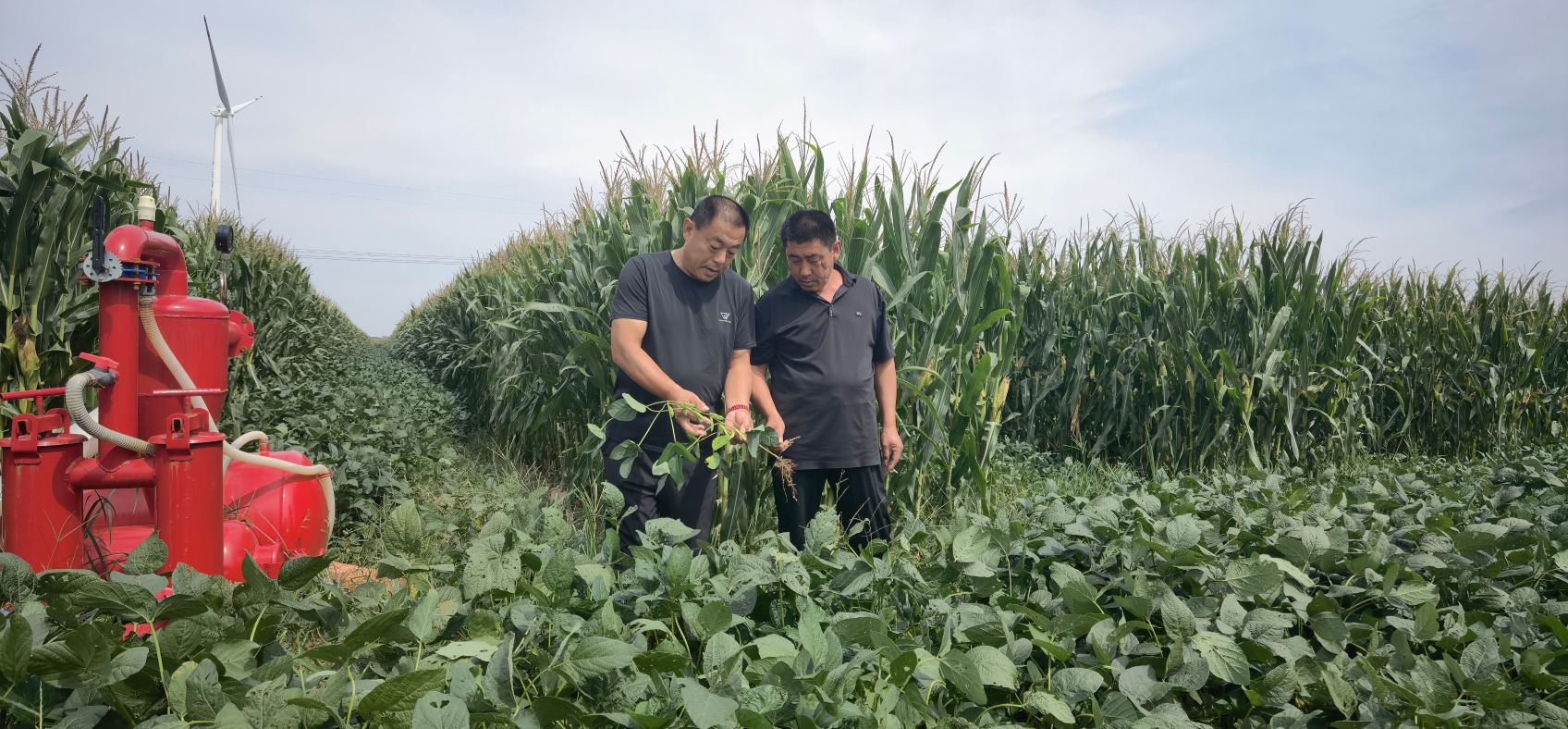
Core Insights - The article highlights the successful agricultural practices in Shandong Province, particularly in Jining City, where soybean cultivation is thriving with advanced techniques and high-yield potential [1][3]. Group 1: Agricultural Development - Jining City has 140,000 acres of soybeans entering the podding stage, showcasing robust growth [1]. - The Shandong Huaya Agricultural Technology Co., Ltd. is utilizing drones for pest control and has developed a new generation of high-oil, high-yield soybeans with a potential yield exceeding 640 jin per mu [1]. - The province has established a diversified food supply system integrating various agricultural resources, enhancing food security through regulations and initiatives [1]. Group 2: Technological Integration - Shandong has built 77.59 million acres of high-standard farmland and promoted over 2 million acres of quality seed varieties [1][3]. - Advanced agricultural equipment, such as "Beidou Navigation+" and high-performance seeders, are widely adopted, with 73.1% of high-yield cultivation models in use [1]. - The integration of technology in farming practices, including drip irrigation and water-fertilizer integration, is expected to increase yields by over 5% in composite planting areas [1]. Group 3: Grain Production Achievements - Shandong has seen continuous growth in summer grain production for three consecutive years, with a record summer grain planting area of 60.444 million acres, an increase of 81,000 acres year-on-year [3]. - The summer grain yield reached 452.8 kg per mu, with a total production of 54.74 billion jin, an increase of 410 million jin compared to the previous year [3]. - The province is actively preparing for the autumn harvest by implementing key technologies for pest monitoring and loss reduction, supported by 18,000 agricultural technicians [4].
陕西省实施《中华人民共和国粮食安全保障法》办法
Shan Xi Ri Bao· 2025-08-28 22:46
Core Points - The announcement details the implementation of the "Measures for the Implementation of the Food Security Guarantee Law of the People's Republic of China" in Shaanxi Province, effective from October 1, 2025 [2][25] - The measures emphasize the importance of food security, aligning with national strategies and ensuring stable food production and supply [3][4] Group 1: Food Security Responsibilities - The provincial government is responsible for ensuring food security within its jurisdiction, with specific duties assigned to various departments [4][5] - Local governments are required to include funding for food security in their budgets and collaborate across departments to enhance food security efforts [4][6] Group 2: Technological and Research Support - The government will increase investment in agricultural technology and research to improve food security and production capabilities [6][9] - Collaboration between enterprises and research institutions is encouraged to foster innovation in food production technologies [6][9] Group 3: Agricultural Production and Quality - The measures promote the development of high-quality seed resources and support for agricultural mechanization to enhance production efficiency [9][14] - Local governments are tasked with improving agricultural infrastructure and promoting sustainable practices to protect arable land [8][9] Group 4: Emergency Preparedness and Response - The establishment of a food emergency response system is mandated, ensuring readiness for food supply disruptions [30][31] - Regular drills and training for emergency plans will be conducted to ensure effective response capabilities [20][31] Group 5: Public Awareness and Education - The government will promote awareness campaigns to reduce food waste and encourage responsible consumption among the public [21][23] - Educational initiatives will be implemented to instill a culture of food conservation and waste reduction [22][23]
《山东省粮食安全保障条例》9月1日起施行
Da Zhong Ri Bao· 2025-08-01 00:57
Core Viewpoint - The "Shandong Province Grain Security Guarantee Regulations" will take effect on September 1, 2025, aiming to enhance grain security through legislative measures, focusing on local characteristics and systematic thinking [2]. Group 1: Legislative Framework - The regulations consist of 11 chapters and 64 articles, covering aspects such as farmland protection, grain production, storage, circulation, processing, emergency measures, conservation, supervision, and legal responsibilities [2]. - The legislation emphasizes the importance of farmland as the foundation of grain production, implementing strict controls on the occupation of farmland and prohibiting harmful practices [2]. Group 2: Promotion of Grain Production - The regulations include measures to promote high-quality development in seed industry and strengthen technological support for grain production, ensuring that grain producers' income is protected [3]. - Local governments are required to implement income protection mechanisms for grain producers and enhance agricultural support systems [3]. Group 3: Grain Storage and Management - The regulations assign responsibilities to local governments for grain storage, mandating the establishment of government grain reserves with a structured management approach [4]. - It is stipulated that enterprises responsible for grain storage must ensure the quantity, quality, and safety of stored grain, along with a reporting system for any risks [4]. Group 4: Quality Development and Resource Management - The regulations aim to advance the high-quality development of the grain industry, improve grain circulation, and establish a comprehensive emergency mechanism [4]. - There is a focus on developing a diversified food supply system, integrating agriculture, forestry, fishery, and livestock, and promoting sustainable resource management [3].
《陕西省实施〈中华人民共和国粮食安全保障法〉办法》十月起施行
Shan Xi Ri Bao· 2025-07-31 00:09
Core Points - The "Implementation Measures for the Food Security Guarantee Law of the People's Republic of China" in Shaanxi Province was passed and will take effect on October 1, focusing on ensuring food security and addressing structural contradictions in food supply and demand [1][2] Group 1: Legislative Framework - The provincial government aims to enhance the support system for new agricultural management entities in food production, including family farms and agricultural cooperatives [1] - The legislation emphasizes the importance of a comprehensive approach to food production, procurement, storage, processing, and sales, with specific regulations on land protection and resource conservation [1] Group 2: Financial Support and Incentives - The measures require local governments to improve food production support policies, including planting subsidies and agricultural insurance, to boost farmers' income and encourage grain production [2] - Enhanced subsidy and insurance policies are expected to alleviate concerns for large-scale grain producers regarding the expansion of production [2] Group 3: Agricultural Innovation and Research - Shaanxi Province is leveraging the Yangling Seed Industry Innovation Center to focus on breeding high-yield, high-quality, and drought-resistant crop varieties [2] - The legislation encourages the development of seed industry and the protection of genetic resources, promoting collaboration between leading enterprises and base farms for seed breeding [2] Group 4: Soil Management and Utilization - The measures mandate local governments to manage saline-alkali land effectively, promoting the use of salt-tolerant crop varieties and improving agricultural infrastructure to prevent soil salinization [2]
三菱商事将成为世界第2大三文鱼养殖企业
日经中文网· 2025-07-18 02:39
Core Viewpoint - Mitsubishi Corporation plans to acquire three salmon farming companies from Grieg Seafood, increasing its annual salmon production from approximately 200,000 tons to 250,000 tons, elevating its global ranking from 4th to 2nd [1][3]. Group 1: Acquisition Details - The acquisition involves a total cost of approximately 10 billion Norwegian Krone (around 7 billion RMB), including inherited debts [1]. - The targeted farming operations are located in three regions: northern Norway and the east and west coasts of Canada [3]. - Mitsubishi aims to increase production efficiency, targeting an annual output of 280,000 tons by the fiscal year 2027 [3]. Group 2: Market Context and Demand - Global demand for salmon is expanding due to its low feed requirements and environmental impact compared to other protein sources [1][4]. - The global salmon market is projected to reach a size of $49.3 billion by 2029, which is 1.5 times that of 2024 [4]. - Salmon is increasingly viewed as a substitute for beef and pork, with rising demand in developed countries due to health consciousness and the popularity of Japanese cuisine [4]. Group 3: Financial Projections - The net profit from the acquired businesses is expected to exceed 10 billion yen by the fiscal year 2027 [4]. - The overall net profit target for the entire aquaculture business, centered around Cermaq, is projected to be over 40 billion yen in 2027, approximately 2.9 times that of 2024 [4]. Group 4: Industry Challenges - The salmon farming industry faces challenges such as price volatility and diseases, which can lead to significant fluctuations in production [7]. - Despite these challenges, the demand for Atlantic salmon has led to a tripling of farming prices over the past 20 years [7]. - Mitsubishi Corporation plans to implement measures to stabilize production, including the introduction of laser equipment to eliminate parasites [7].
山东省粮食安全保障条例(草案)进行立法听证,高标准农田管护、粮食生产者收益保障受关注
Da Zhong Ri Bao· 2025-06-06 01:06
Core Viewpoint - The legislative hearing on the draft of Shandong Province's Grain Security Guarantee Regulations focuses on high-standard farmland management and ensuring the income of grain producers, highlighting the importance of legislative support for agricultural practices and food security [1][2]. Group 1: High-Standard Farmland Management - The construction of high-standard farmland can generally increase grain production capacity by about 10% [2]. - Suggestions were made to further detail the responsibilities and duties of operators in the management of high-standard farmland, as well as to establish a supervision and assessment mechanism [3]. - The need for clear accountability for negligence in management and more stringent regulations on the use of funds for high-standard farmland was emphasized [3]. Group 2: Income Security for Grain Producers - There is a continuous concern about attracting more individuals to engage in grain production, with suggestions to enhance the income security mechanism for grain producers [4]. - Recommendations include supporting regional specialty development and strengthening the social service system to encourage participation from village organizations and social service entities [4]. - The importance of collaboration between research institutions and farmers to promote high-yield, drought-resistant varieties and water-saving technologies was highlighted [4]. Group 3: Grain Storage and Safety - The establishment of a government grain storage inspection system is crucial for ensuring food security, with calls for clear accountability and penalties for quality and safety violations [5]. - Suggestions were made to empower regulatory bodies with enforcement authority to ensure compliance with storage and quality standards [5]. - The proposal to incorporate "smart grain storage" initiatives to achieve comprehensive IoT monitoring across all grain storage facilities was discussed [5].