
成品粮油

Search documents
货架上的中亚美味从“厂门到厂门”直达 装满百姓采购年货“购物车”
Yang Shi Wang· 2026-01-23 04:29
Core Viewpoint - The arrival of a China-Europe freight train from Kazakhstan to Xi'an, carrying specialty products, is enhancing the local market ahead of the New Year celebrations [1]. Group 1: Freight Train Operations - The China-Europe freight train is loaded with agricultural products such as finished grain, oil, and honey from Kazakhstan, which are quickly made available for local consumers [6]. - This freight train operates directly from a grain and oil enterprise in Kazakhstan to the domestic factory in Xi'an, achieving seamless "door-to-door" delivery without the need for truck transfers [7]. - Currently, the China-Europe freight train service from Xi'an has opened 18 international main lines, covering all major sources of goods in Eurasia [9].

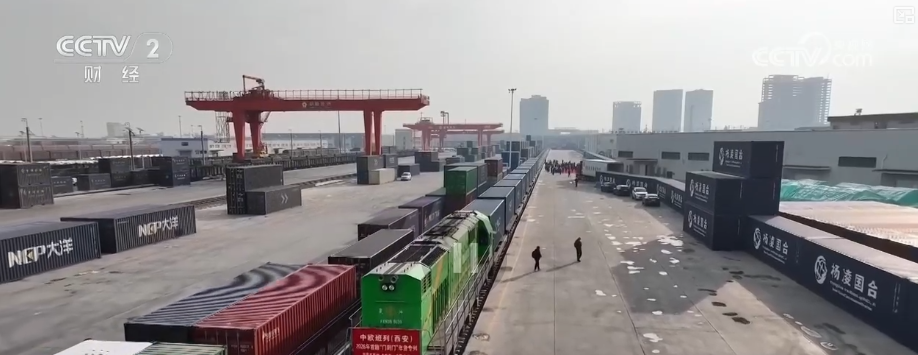
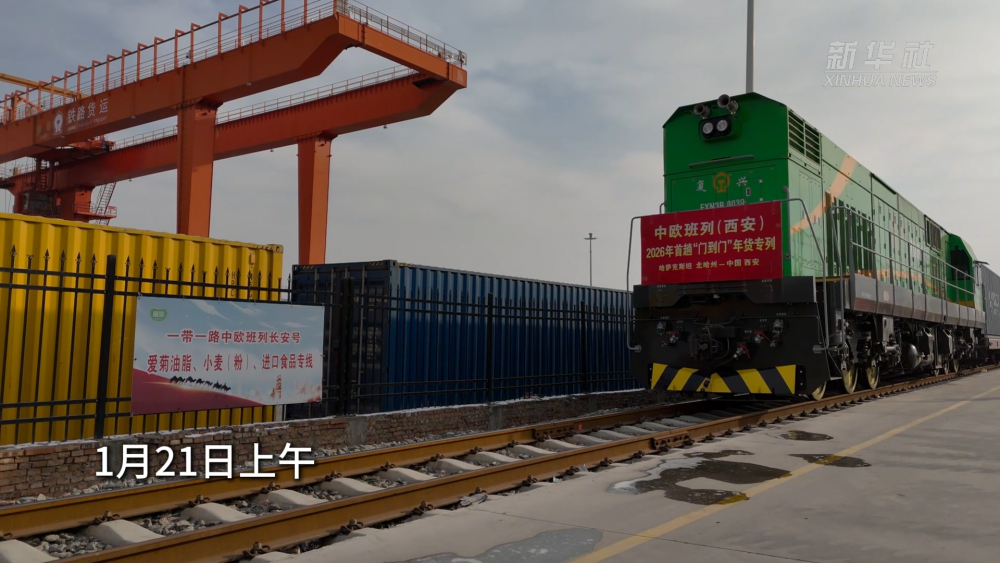
中欧班列(西安)“门到门”年货专列开抵西安
Xin Hua She· 2026-01-22 07:09
Group 1 - The first China-Europe freight train of 2026, carrying agricultural products from Kazakhstan, has successfully completed a "door-to-door" delivery to the Aijiu Grain and Oil Industrial Group in Xi'an [1] - The train departed from a dedicated line at Aijiu Group's overseas factory in North Kazakhstan and arrived directly at the Aijiu Group's factory in Xi'an via a railway connection [1]
“十四五”山东粮食储备体系更加完善
Zhong Guo Fa Zhan Wang· 2025-12-26 12:36
Core Viewpoint - The article emphasizes the importance of grain reserves as a cornerstone for national food security, highlighting the improvements in Shandong Province's grain reserve system during the 14th Five-Year Plan period [1]. Group 1: Grain Reserve Scale - The total grain reserve scale in Shandong has significantly increased, with local reserves exceeding the national plan by 55%, marking a 27% growth since the end of 2020, positioning Shandong as the second-largest in the country [1]. - The province has effectively ensured market stability through robust grain inventory and supply management, enhancing the foundation for food security [1]. Group 2: Grain Reserve Layout - The distribution of local grain reserves has been optimized across all administrative regions in Shandong, with the provincial reserve coverage expanding from 8 to 14 cities, thereby improving the overall support capacity [1]. Group 3: Structure of Reserve Varieties - The variety structure of reserves has been enhanced, ensuring comprehensive coverage of major raw grain types, including wheat, rice, corn, and soybeans, transitioning from food self-sufficiency to supply chain security [2]. Group 4: Finished Grain and Oil Reserves - Finished grain and oil reserves are sufficient, with 16 cities establishing reserves that can meet market demand for 27 days and 56 days, respectively, ensuring readiness in emergency situations [2]. Group 5: Multi-faceted Reserve System - A more robust multi-faceted reserve system has been developed, incorporating social responsibility reserves from grain processing enterprises, with 239 companies identified and a total of 27,000 tons established as social responsibility reserves [2].
“粮食安全看山东”之枣庄:聚焦重点环节,强化协同保障
Zhong Guo Fa Zhan Wang· 2025-12-03 14:22
Core Viewpoint - Shandong Province's Zaozhuang City is enhancing its grain security system by focusing on storage, regulation, industry optimization, and emergency preparedness to ensure food security in line with national directives [1] Group 1: Strengthening Grain and Oil Reserves - Zaozhuang City is improving its grain and oil reserve capabilities, exceeding provincial targets, with current reserves sufficient for over four months of consumption for the local population [2] - The city is implementing a government purchase program for grain and oil reserves, ensuring reliable access during critical times [2] - A comprehensive reserve system is being established, integrating government and social responsibility reserves to enhance overall food security [2] Group 2: Market Stability through Acquisition - The city is coordinating market and policy-based acquisitions, securing 1.147 billion yuan in credit support for summer and autumn grain purchases to ensure farmers receive timely payments [3] - Efforts are being made to streamline the selling process for farmers, including appointment-based sales to reduce wait times [3] - The implementation of a minimum purchase price policy for wheat has led to the acquisition of 64,900 tons, stabilizing market prices and ensuring farmer income [3] Group 3: Regulatory Enforcement - Zaozhuang is conducting rigorous inspections and joint enforcement actions to combat illegal activities in the grain sector [4] - A complaint hotline is operational to address public concerns and improve regulatory response rates [4] - The city is enhancing its regulatory framework through an information system for grain transactions, improving oversight efficiency [4] Group 4: Green Initiatives and Infrastructure - The city is investing in new storage facilities and green storage upgrades, with a 20% increase in total storage capacity compared to the 13th Five-Year Plan [5] - Advanced grain storage technologies are being adopted, achieving an 80% application rate across state-owned storage enterprises [6] - Innovative storage methods have resulted in a low grain loss rate of less than 0.5% annually, positioning the city at the forefront of smart grain storage technology in the province [6] Group 5: Industry Foundation and Brand Development - Zaozhuang is fostering a robust grain industry cluster, with 36 large-scale grain and oil processing enterprises and an annual processing capacity of 2.43 million tons [7] - The city is implementing favorable electricity pricing policies for grain processing, benefiting 73 enterprises and enhancing industry growth [7] - Public branding initiatives are being developed to strengthen market presence and expand sales channels for local grain products [7]
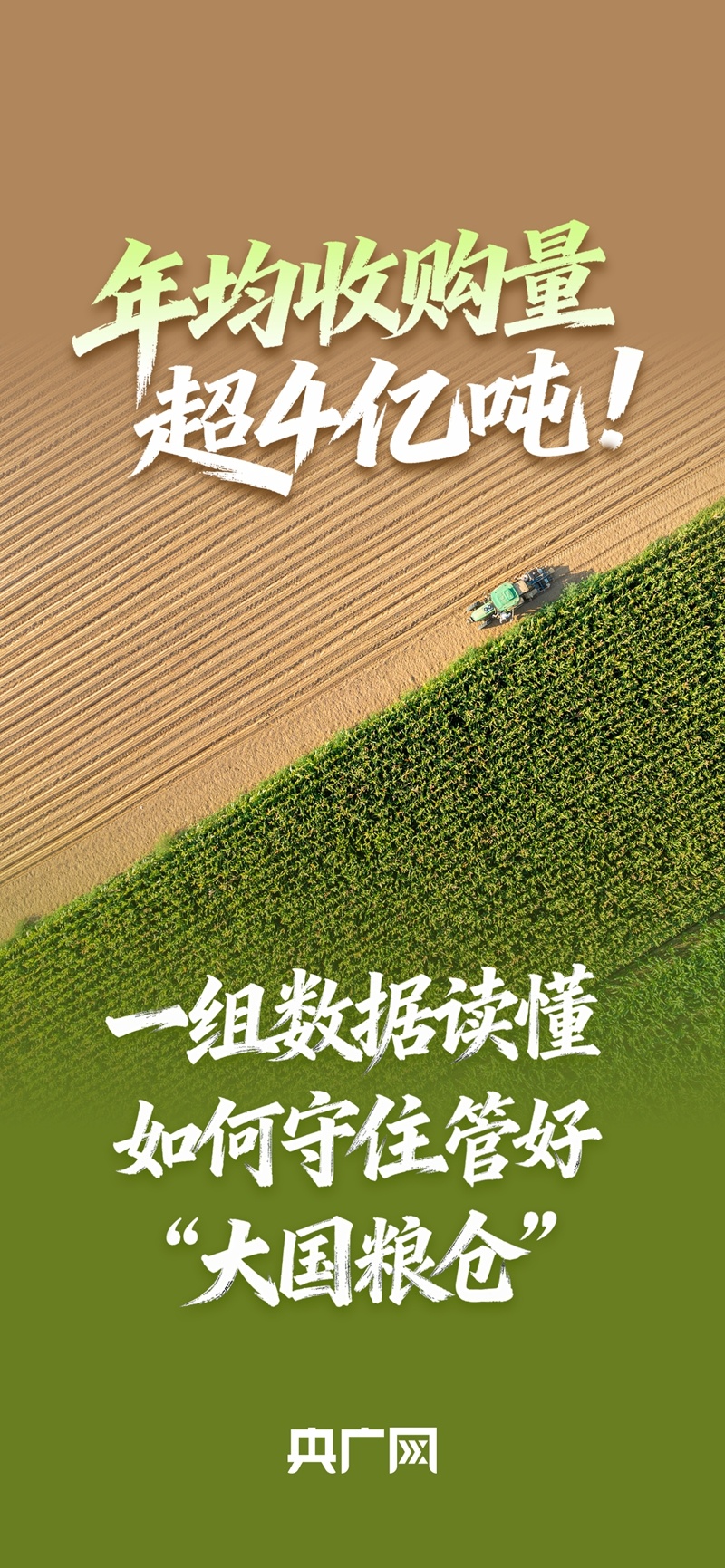
数读“十四五”答卷丨年均收购量超4亿吨!一组数据读懂如何守住、管好“大国粮仓”
Yang Guang Wang· 2025-10-15 07:59
Core Points - The press conference highlighted the achievements in grain circulation reform and development during the "14th Five-Year Plan" period, emphasizing the importance of maintaining and managing China's grain reserves [1] Group 1: Grain Acquisition and Storage - The average annual grain acquisition volume exceeds 400 million tons [5] - The total capacity of standard grain storage facilities has surpassed 730 million tons, an increase of 58 million tons compared to the end of the "13th Five-Year Plan" [15] - The capacity for low-temperature and controlled-temperature storage has reached 220 million tons, an increase of 70 million tons compared to the end of the "13th Five-Year Plan" [15] Group 2: Market and Policy Developments - Market-oriented grain acquisition has become the dominant method, accounting for over 90% of total acquisition volume, effectively enhancing circulation and vitality in the market [12] - During the "14th Five-Year Plan" period, a new law, the "Food Security Guarantee Law," was enacted, and several regulations were revised to strengthen the grain circulation management framework [8] Group 3: Emergency Supply and Investment - The emergency supply capacity for grain has improved, with 36 major cities maintaining a reserve of finished grain and oil that ensures market supply for over 15 days [22] - By 2025, the first batch of 40 major grain-producing counties will implement over 270 projects aimed at improving grain circulation quality and efficiency, driving a total investment of nearly 10 billion yuan [25]
“十四五”时期 我国粮食应急保供能力稳步提升
Jing Ji Wang· 2025-10-14 07:27
Core Insights - The "14th Five-Year Plan" period has seen a steady improvement in China's grain emergency supply capacity, with a comprehensive emergency response system established at national, provincial, municipal, and county levels [1][2] Group 1: Emergency Response System - A four-level grain emergency response system has been established, including national, provincial, municipal, and county levels [1] - Seven regional grain emergency guarantee centers have been organized, covering key areas such as Beijing-Tianjin-Hebei, Yangtze River Delta, and others, enhancing the collaborative emergency response mechanism [1] Group 2: Capacity and Infrastructure Development - The number of grain emergency processing enterprises increased from 5,448 to 6,872, a growth of 26% during the "14th Five-Year Plan" [2] - Daily processing capacity of grain and oil emergency increased from 1.2 million tons to 1.78 million tons, a growth of 48% [2] - The number of grain emergency supply points rose from 43,000 to 59,000, a growth of 37%, with daily supply capacity of finished grain and oil increasing from 1.06 million tons to 1.67 million tons, a growth of 57% [2] Group 3: Strategic Partnerships - Large grain and oil processing and logistics companies have been designated as national-level emergency guarantee enterprises, ensuring rapid response and efficient operation [1]
国家粮食和储备局:“十四五”期间粮食产业规模、效益齐头并进
Xin Hua Cai Jing· 2025-10-14 05:26
Core Insights - The high-quality development of the grain industry during the 14th Five-Year Plan period is characterized by simultaneous growth in scale and efficiency, with innovative policy support and implementation mechanisms [1][2] Group 1: Financial Support and Investment - The Ministry of Finance and the National Grain and Material Reserve Bureau have initiated projects to enhance grain circulation quality and efficiency, focusing on major grain-producing counties [2] - As of September 2023, local governments have allocated 46.2 billion yuan in fiscal funds, attracting over 84 billion yuan in social investment, leading to the implementation of more than 8,400 projects [1] - The first batch of support for 40 major grain-producing counties includes over 270 projects, driving total investment close to 10 billion yuan [2] Group 2: Policy Implementation and Equipment Upgrades - The use of ultra-long-term special government bond funds is aimed at promoting new equipment for processed grain oil, staple foods, feed processing, and comprehensive utilization of grain deep processing and by-products [1][2] - Significant progress has been made in updating grain and oil processing equipment, with specific machinery like grain dryers and color sorters included in agricultural machinery subsidy programs [2] Group 3: Future Planning and Strategic Goals - The planning for the 15th Five-Year Plan for grain circulation is underway, with a focus on optimizing industrial structure, extending the industrial chain, and enhancing the value chain [3] - The goal is to strengthen policy implementation and project execution to assist enterprises in overcoming challenges and promote high-quality development in the grain industry [3]
“粮食安全看山东”之齐河:探索保障粮食安全新路径
Zhong Guo Fa Zhan Wang· 2025-09-23 08:13
Core Viewpoint - Food security is a crucial component of national security, and Shandong Province's Qihe County is actively exploring new pathways to ensure food security [1] Group 1: Local Reserve Management - Qihe County has implemented strict management of local reserve grain and oil, ensuring storage safety and meeting the grain reserve standards of "three months in production areas and six months in sales areas" [2] - The county has established a regular supervision mechanism for reserve grain management, conducting monthly inspections to ensure the authenticity and quality of stored grain [2] - Information technology is being utilized to enhance grain supervision, achieving comprehensive coverage of dynamic monitoring for reserve grain and oil [2] Group 2: Emergency Supply System - Qihe County has built a food emergency supply system with 16 supply points, including a demonstration point at the county government and 15 grassroots points in townships [3] - Regular emergency supply drills are conducted, with a recent drill on August 20 focusing on fire safety and emergency grain supply, enhancing the county's emergency response capabilities [3] Group 3: Market Regulation and Risk Prevention - Strengthened enforcement checks are in place to maintain order in the grain circulation market, focusing on key areas such as grain collection, storage, and sales [4] - The county conducts monthly statistical reporting on grain circulation data to support macro-control and market monitoring [4] - Risk prevention measures are being implemented to protect the interests of grain farmers, enterprises, and consumers [4] Group 4: Innovation and Waste Reduction - Qihe County is promoting grain loss reduction across the entire supply chain while ensuring high yields [5] - The establishment of comprehensive grain service centers and smart storage facilities has significantly reduced post-harvest losses, with a drying capacity of 11,000 tons per day [5] - The county is actively promoting awareness campaigns on grain conservation and anti-food waste initiatives [5] Group 5: Future Plans - Qihe County aims to strengthen local reserve grain management, improve emergency supply systems, and enhance circulation regulation to ensure the stability of the grain market [6] - The focus will be on maintaining the authenticity, quality, and safety of local reserve grain, while effectively utilizing these reserves for government macro-control [6]
四川省储备粮管理集团成品粮油有限公司成立,注册资本2000万
Xin Lang Cai Jing· 2025-08-20 03:53
Core Insights - A new company named Sichuan Reserve Grain Management Group Finished Grain and Oil Co., Ltd. was established on August 18, with a registered capital of 20 million RMB [1] - The company is fully owned by Sichuan Reserve Grain Management Group Co., Ltd. and its business scope includes food sales, grain and oil storage services, grain purchasing, and wholesale of edible agricultural products [1] Company Information - The legal representative of the newly established company is Cui Jie Ling [1] - The registered capital of the company is 20 million RMB, indicating a significant investment in the food and agricultural sector [1] Industry Implications - The establishment of this company reflects ongoing developments in the food and agricultural industry in Sichuan province, particularly in grain management and storage services [1] - The focus on food sales and agricultural products suggests potential growth opportunities in the local market for grain and oil products [1]