
经济学

Search documents
让人“爱恨交织”的经济学
Jing Ji Ri Bao· 2025-08-16 01:01
Core Viewpoint - The book "Unexpected Economics" by Timothy Taylor emphasizes that while economic thinking is essential, it often lacks a human touch, leading to conclusions that may seem logical but can be perceived as harsh or insensitive [1][5]. Group 1: Economic Concepts - The book illustrates the concept of "negative externalities" through traffic congestion, where individuals perceive themselves as victims while also contributing to the problem [3][5]. - It discusses how government responses to negative externalities typically involve imposing costs on those causing the negative impact, such as pollution regulations [3][4]. - The analysis highlights that even a single vehicle can contribute significantly to societal costs during traffic delays, demonstrating the broader impact of individual actions [4][5]. Group 2: Human Behavior and Economics - The narrative includes a humorous anecdote about three friends, showcasing how economic reasoning can sometimes overlook empathy and social norms [1][2]. - The book suggests that understanding one's role in societal issues can reduce feelings of frustration, as individuals realize they are part of the problem rather than just victims [5]. - It introduces the idea of "positive externalities," where individuals can mitigate negative impacts through self-awareness and responsible behavior [5].
【有本好书送给你】从超市排队到核战争:看懂这场叫‘人生’的无限博弈
重阳投资· 2025-08-13 07:32
Core Viewpoint - The article emphasizes the importance of reading and its role in personal growth and understanding complex concepts, particularly in economics [1][2][6]. Group 1: Reading and Engagement - The publication encourages readers to maintain a habit of reading and offers a platform for discussion through comments [2][4]. - Each issue will feature a book review, book list, or excerpts, fostering a community of readers [3]. Group 2: Featured Book - The highlighted book is "Unexpected Economics" by Timothy Taylor, which explores how economics applies to everyday life and decision-making [8]. - An interactive topic invites readers to share their experiences related to the book's theme, specifically the practical applications of economics in daily life [8]. Group 3: Economic Concepts - The article discusses various economic scenarios, such as queueing at supermarkets and airline overbooking, illustrating how these situations reflect human decision-making and economic principles [9][12]. - It introduces the concept of the "prisoner's dilemma" to explain how individual rational choices can lead to collective disadvantages [13][15]. Group 4: Solutions to Economic Dilemmas - The article outlines strategies to overcome the prisoner's dilemma, including repeated interactions, punishment mechanisms, institutional design, and signaling to reduce misjudgments [18][20][22][23]. - It emphasizes that competition can be a form of cooperation, highlighting the interconnectedness of market dynamics [24][27]. Group 5: The Essence of Economics - The article argues that economics is not merely about greed but involves understanding human behavior and decision-making under constraints [29][30]. - It stresses the importance of designing choice frameworks that respect individual decisions while promoting collective welfare [30].


经济学博士孟景伟,任安徽安庆市委书记
2 1 Shi Ji Jing Ji Bao Dao· 2025-08-01 08:22
Group 1 - Meng Jingwei has been appointed as the new Secretary of Anqing Municipal Committee, as decided by the Anhui Provincial Committee [1] - Meng Jingwei, born in May 1974, has a strong academic background with a PhD in Economics and has published several papers on economic development [1] - Prior to this appointment, Meng held various positions in Beijing, including Deputy Director and Director of the Budget Department of the Beijing Municipal Finance Bureau [1] Group 2 - The trend of appointing leaders with an economics background is evident in the Yangtze River Delta region, with several officials, including Jiang Dongdong and He Zhongwei, holding PhDs in Economics [2] - Zhang Xiangan served as the Secretary of Anqing Municipal Committee from March 2021 until his recent resignation in January 2023, when he became the Vice Chairman of the Anhui Provincial Political Consultative Conference [2]
这5本入门级经典,值得收藏
Sou Hu Cai Jing· 2025-06-18 05:50
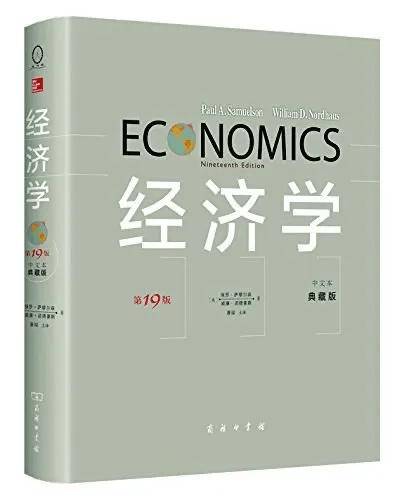
Core Viewpoint - The articles highlight five essential economics books that are foundational for understanding economic principles and theories, emphasizing their historical significance and impact on the field of economics [1][3][5][8][9]. Group 1: Key Books and Their Contributions - "Economics" (19th Edition) by Paul Samuelson and William Nordhaus is a classic textbook that has sold over four million copies globally, significantly influencing generations of economists, particularly in China [1][3]. - "The Wealth of Nations" by Adam Smith is regarded as a cornerstone of modern economics, introducing the concept of the "invisible hand" and is considered one of the greatest books in history [3][5]. - "The Theory of Economic Development" by Joseph Schumpeter is recognized for introducing the "innovation theory," linking innovation with economic development and cycles, and remains influential in contemporary economics [8][9]. - "The General Theory of Employment, Interest, and Money" by John Maynard Keynes is pivotal in macroeconomics, proposing the effective demand theory, which argues that insufficient demand leads to unemployment and economic downturns [9][11]. Group 2: Historical Context and Impact - The 19th edition of "Economics" incorporates contemporary economic data and discussions on monetary policy, economic growth, and inflation, reflecting the changes in the economic landscape [3]. - Adam Smith's "The Theory of Moral Sentiments" is noted for its moral framework that complements market economics, emphasizing the importance of equitable distribution of economic gains for social stability [5]. - Max Weber's "The Economic History" provides a comprehensive analysis of the evolution of the world economy, particularly the origins of capitalism, and compares various economic systems [7].
经济学,对个人意味着什么?
Hu Xiu· 2025-05-14 02:44
Group 1 - The core idea of the article emphasizes the importance of understanding economic behavior from an individual perspective, particularly in the context of survival and living standards in society [2] - The article discusses the roots of poverty and famine, highlighting that hunger is not solely a matter of food supply but also of distribution and power dynamics [3][4] - It mentions that poverty is a relative concept and understanding its true causes is essential for effective solutions, as proposed by Amartya Sen [3] Group 2 - The article outlines individual demand, consumption, and division of labor, referencing Keynes' theory of effective demand as a key driver for employment and output [5] - It explains that consumption is the ultimate goal of economic activity, leading to cooperation and division of labor among individuals and families [6][7] - The text also discusses the role of social cohesion and moral standards in economic life, as highlighted by Durkheim [7] Group 3 - The article describes the necessity for individuals to engage in market operations to accumulate wealth, emphasizing the role of free markets and the importance of government regulation [8][9] - It discusses mercantilism and the importance of trade balance in national wealth, suggesting that individuals can benefit from exporting their products [10] - The article highlights the significance of savings and investment, explaining that savings are a result of consumption behavior and investment decisions [10] Group 4 - Decision analysis is presented as crucial for individuals to navigate market opportunities and challenges, with a focus on understanding decision-making rules and their implications [11] - The article concludes that economics reflects the dynamic interplay between individual survival and development, emphasizing the continuous evolution of economic interactions [12]
被击穿的“事实”:经济学有态度,但不需要预设立场
Sou Hu Cai Jing· 2025-05-10 23:30
Group 1 - The article emphasizes that economics should be based on reality and facts, rather than personal biases or predetermined stances [2][4][6] - It critiques the shifting opinions of economists, such as Yao Yang from Peking University, who changes his views on the real estate market based on prevailing conditions, indicating a lack of consistent analysis [4][6] - The discussion highlights the importance of distinguishing between subjective interpretations and objective analysis, as seen in the differing responses from AI models regarding China's economic growth [8] Group 2 - The article points out that a 5% economic growth rate in 2024 does not necessarily indicate that China is surpassing the US, as many core indicators are diverging [6][8] - It raises concerns about the implications of issuing 12 trillion yuan in long-term special bonds, suggesting that this may not reflect genuine economic recovery but rather a reliance on increased debt [6] - The piece warns against the dangers of AI potentially reinforcing biases and misinformation if left unchecked, highlighting the need for critical thinking in economic analysis [8]

豆瓣评分9+!名著8种
Sou Hu Cai Jing· 2025-04-25 06:43
Group 1 - The book by Samuelson and Nordhaus is essential for understanding both macro and microeconomics, providing a comprehensive overview of the subject [1] - The book is regarded as the "Bible" of Western economics, summarizing the experiences of capitalist development in various countries and offering a systematic description of national economic operations [3] - Irving Fisher is recognized as a leading figure in the monetary school and a pioneer in econometrics, with his book being a milestone in interest theory [5] Group 2 - Fisher's work discusses the factors leading to economic crises, including the Great Depression, and proposes fundamental solutions to these issues [7] - Commons argues that legal relationships precede economic ones, suggesting that the emergence of capitalism was facilitated by legal protections that dismantled feudal systems [9] - The book following Marx's analytical methods serves as an introductory text to Marxist political economy principles [11] Group 3 - Mises' final work posits that the history of economics is based on human action, synthesizing themes from his previous writings [13] - Wang Yanan's representative work combines teaching and research, recognized in a collection of influential economic texts in New China [15]

幸福的人不爱吵架
Hu Xiu· 2025-04-21 08:50
Group 1 - The article discusses the dynamics of public criticism and the economic principles behind it, highlighting that those with less fame tend to gain more from criticizing others due to lower costs and higher perceived benefits [5][6][8] - It emphasizes that ignoring criticism can be a strategic choice, as responding may increase the critic's visibility while incurring higher costs for the individual being criticized [9] - The article also touches on the concept of "cost and benefit" in the context of reputation management, suggesting that companies should consider legal action against defamation to impose costs on those spreading false information [16][17] Group 2 - The discussion includes the implications of media behavior, where sensationalism and fabricated stories can lead to legal consequences for the creators, thereby increasing the costs associated with spreading false information [18] - The article references the "prisoner's dilemma" to illustrate how understanding costs and benefits can lead to better decision-making in competitive situations, which can be applied to corporate strategies [20][21] - It concludes by encouraging continuous learning and application of knowledge in real-life scenarios, suggesting that companies should remain vigilant and adaptive in their strategies [22]